
Devore, San Bernardino County
Changing Your Locks in Devore, Explained by a Locksmith
Short answer: To change locks in Devore, you have two real options: rekey the cylinders you already have so every old key stops working, or install new hardware. Rekeying fits when the locks are sound and you like them. Replacement fits worn, damaged, mismatched or low-grade hardware. Julian's Locksmith does either on-site after verifying that you live at or own the property.
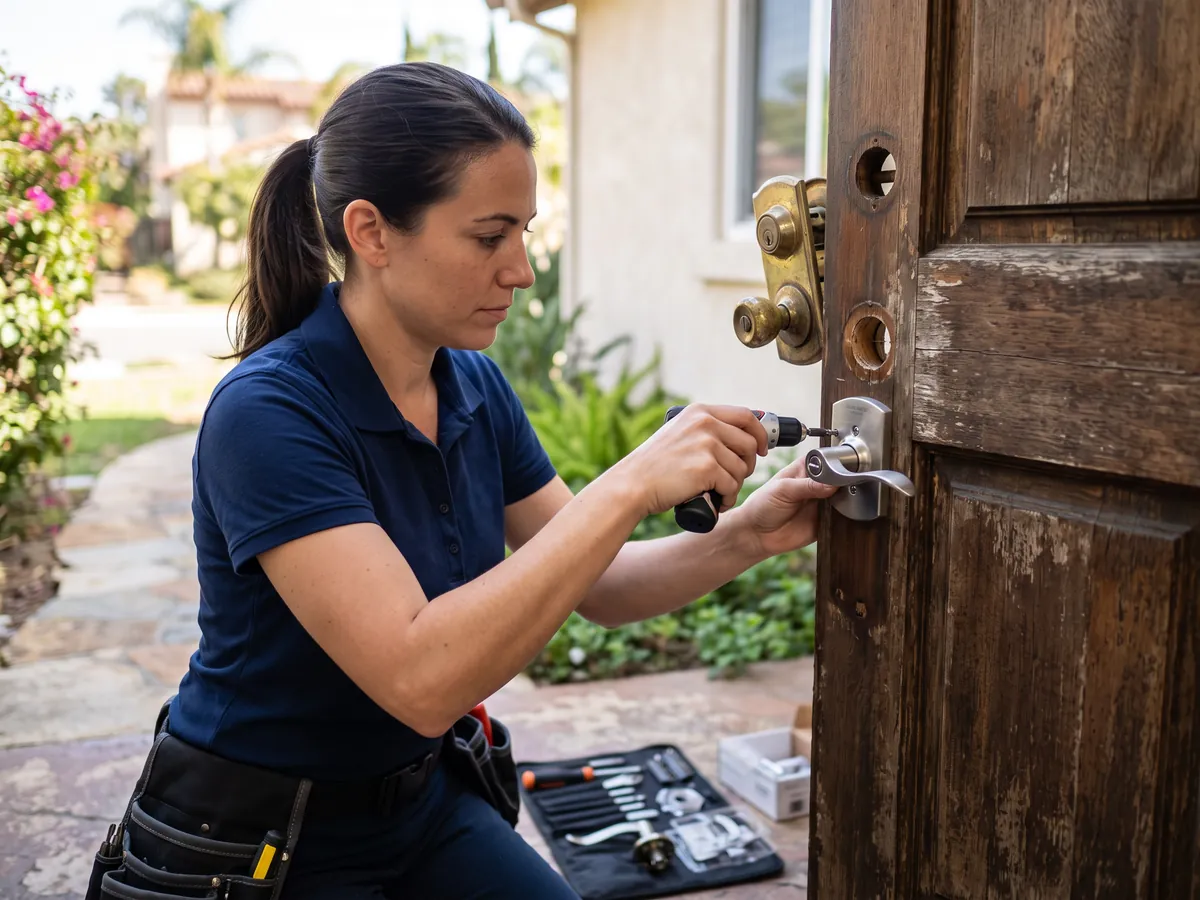
A lock change isn't one job; it's a walk around the house. In Devore, a typical home has keyed cylinders on the front deadbolt and handle, the door from the garage into the house, a side or back door, often a security screen door, and a padlock on the side gate. Each one gets its own decision. A solid Schlage deadbolt might only need re-pinning. A wobbly, sun-faded knob on the back door is a candidate for replacement. Julian's Locksmith carries pins and hardware on the van, measures backset and bore before suggesting anything new, and keys everything to one key when the brands allow it.
Changing locks means swapping the hardware itself, and in Devore the reasons are usually practical. The old knob has worn out from dust and wind, the deadbolt is a cheap builder model on a ranch house with forty years of use, or the lock no longer suits the style after a remodel. If the lock is sound and your only concern is old keys, rekeying is the cheaper choice and we'll tell you so. If the hardware itself is the problem, a change is right. Renters have particular rights. In California, a landlord must provide working deadbolts on the main swinging entry doors of a rental unit (Civil Code §1941.3). Under Civil Code §§1941.5–1941.6, a landlord must change the locks within 24 hours of a tenant's written request in certain situations involving a protective order or similar documentation. Talk to your landlord first, because an unauthorized change can violate a lease. A typical lock change here includes removing the old hardware, checking the door prep, installing the new lock and strike, and testing the throw. Every key is cut or confirmed on site. We verify ID and residence first, and for a rental we ask for the landlord's consent.
How this works in Devore
For renters and landlords in Devore, a lock change sits inside a few California rules worth knowing. Civil Code 1941.3 requires the landlord to install and maintain an operable deadbolt on each main swinging entry door, and a newly installed bolt must extend at least 13/16 inch beyond the door edge when locked. Windows designed to open need working locks, with some exceptions. The tenant's job is to report a lock that stops working. Most leases also say a tenant can't change or add locks without consent, and Civil Code 1954 gives the landlord a right to enter with proper notice, which is why landlords expect a key. Civil Code 1941.5 and 1941.6 add separate rules for certain situations involving a protective order or similar documentation: the landlord must change the locks within 24 hours of the tenant's written request. And a landlord may never change locks to force a tenant out; California treats that as an illegal lockout. We follow these rules on every rental job.
What we can do on-site
- Handlesets and front-door entry sets. A handleset is the most visible lock on the house, so finish matters as much as function. Oil-rubbed bronze and matte black tend to hold up better in direct sun than cheap polished brass. We match the new set to the door's prep, rekey it to your house key, and adjust the latch so the door closes with one push.
- Smart lock swaps and code resets. Retrofit smart locks such as the August keep your existing exterior cylinder, which means old keys still open the door. If you add one, pair it with a rekey. We also flag hinge-side drag and warped doors, because a motorized bolt that binds will drain batteries fast in the summer heat around Devore.
- Keying every door alike. Keying alike is convenient, but sometimes you want exceptions: a side gate key for the gardener that doesn't open the house, or a workshop key only you carry. We can set those up as separate keys or, on compatible hardware, build a simple master arrangement so your key opens everything while helpers' keys open only their areas.
- Rental turnover lock changes. A turnover is a good time to check compliance. California requires an operable deadbolt on each main swinging entry door and working window locks where they apply. We confirm the deadbolt throws at least 13/16 inch, replace hardware that falls short, and flag window latches that don't lock, so the Devore unit is ready for the next tenant.
- Older doors, mortise locks and unusual prep. Some older doors were bored at 1-1/2 inches or set at a 5-inch backset, and modern locks won't fit without help. We use conversion plates, enlarge bores carefully, or source compatible hardware. When a door is too damaged or thin to hold a new lock securely, we say so and suggest a door or carpentry repair first.
Local factors in Devore
Older homes often hide more keyed locks than people expect: original mortise locks, service porch doors, and decades of add-on deadbolts. Before you change locks in an older Devore house, we check whether original hardware can be rekeyed and serviced instead of replaced, which preserves period trim and avoids filling oversized door pockets. Where doors were bored at odd sizes or old jambs won't hold a modern strike, we explain the fix honestly, including when a carpenter should go first.
Inland heat is hard on locks. Doors expand, strikes misalign, and dark finishes on sun-facing doors fade or peel. When you change locks in Devore, choose finishes that tolerate direct sun and keypad locks rated for outdoor heat, and expect batteries to need replacing more often in summer. We set strikes with enough tolerance that the deadbolt still throws easily on the hottest afternoons.
Long commutes mean long empty hours at home, and a lock change for commuters should account for that. In Devore, many households add a smart deadbolt that reports its status, so you can confirm the door is locked from the office. We can schedule a lock change early, starting at 6:30 a.m. every day of the week, so you don't lose a full day of work.
Situations this covers
Consider a tenant in a rented house off Kenwood Avenue whose front door lock has stopped latching since the first cold snap. She has already told her landlord, who gave written permission to replace it. We'd confirm that with a quick call, remove the old knob, install a new deadbolt and lever set sized to the same door, and leave two keys with her. The landlord keeps his own key on file.
- Suppose a purse is stolen from a car at a gym, and inside are house keys and a driver's license showing the address. The owner cancels the cards first, then calls us. Because a stranger now holds both the keys and the address, we'd treat it as same-day work: rekey the front and garage entry doors first, then the remaining locks, and change the garage keypad code.
- For example, a 1930s Spanish revival home near Glen Helen Regional Park still has its original mortise lock behind a handsome but worn brass escutcheon. The owner assumed that the only way to change locks was a new door. We'd remove the mortise cylinder, rekey or replace it, clean and service the lock body, and keep the original trim so the door keeps its character.
- For instance, a newer Devore home sells with a Wi-Fi deadbolt that the sellers still control from their phones. They're cooperative but slow to remove themselves from the app. We'd factory-reset the lock, delete stored codes, enroll the new owner as administrator, connect it to the new owner's network, and rekey the override cylinder, because the key the sellers kept would otherwise still open the door.
From your call to the finished job
- Tell us the reason and count the doors. On the phone, we ask a few practical questions: how many doors, which brands, whether anything is damaged or sticking, and whether you rent or own. Photos of each lock help. The answers shape the quote and tell us whether to bring extra hardware or a high-security cylinder to your Devore address.
- Verify residence or ownership. Verification isn't a formality. A lock change is exactly what someone attempting an illegal lockout would ask for. So we match photo ID to proof of residence or ownership, confirm a property manager's authorization in writing, and decline work that would shut out someone with a legal right to be there.
- Inspect each lock and choose rekey or replace. At each door we test the key, the latch, the deadbolt throw and the strike alignment, then note brand, keyway and condition. Sound locks get rekeyed. Worn, damaged or poorly graded locks get a replacement recommendation with options. You see the plan and the quote before we begin.
- Re-pin or install the hardware. For rekeys, we remove each cylinder, slide the plug out with a follower, replace the key pins to a new bitting and reassemble. For replacements, we remove the old lockset, clean up the bore and edge, install the new latch, deadbolt and trim, and tighten the through-bolts evenly so nothing binds.
- Test every key on every door. Each new key gets tried in each lock it should open, with the door open and again with it closed, because a strike that binds only shows up when the door is shut. We check the inside thumbturn, the deadbolt's full throw, and that the latch catches on its own.
- Hand over keys and records. We leave you with practical next steps: where to keep a spare, how to change keypad codes, when to lubricate, and what to watch for as doors shift with the seasons. If a lock feels different in the following days, call and describe it; small strike adjustments are common as new hardware settles.
How we quote the job
- Rekey versus new hardware. The single biggest factor is whether your locks can be rekeyed. A rekey uses pins and labor, while a replacement adds the price of each lockset. Many homes split the difference: rekey the good hardware, replace only what's worn. We quote both options per door so you can see where the money goes.
- Keys, key control and smart features. If you manage several doors or units, a simple master arrangement adds design time and extra pins but saves money each turnover. We explain the tradeoffs honestly: master pins slightly reduce pick resistance, and a lost master key means a larger rekey, so it isn't right for every property.
- Timing, travel and urgency. Our hours are 6:30 a.m. to 11:30 p.m., seven days a week. A late-evening lock change within those hours is possible, and we'll tell you on the phone whether timing affects the quote. Planned move-in rekeys are the easiest to schedule.
Every job gets a clear quote before any work starts. Call (951) 903-3193 with the details and we'll tell you what to expect for your situation in Devore.
What to do before we arrive
- Keep one spare key somewhere smarter than a planter, a fake rock or the ledge above the door. A trusted neighbor, a relative who lives nearby, or a code-protected key box whose code you change now and then all beat the obvious spots. Anyone walking a Lytle Creek street looking for an easy target knows where people hide keys.
- Use dry lubricant on exterior locks in dusty inland areas. Graphite or a PTFE-based dry spray keeps pins moving without attracting grit. Oily sprays feel smooth for a week, then collect dust blown in by Santa Ana winds and gum up the cylinder. A puff in the keyway twice a year is plenty for most residential locks.
- Ask for keys cut from code rather than copied from another copy. A key duplicated from a worn duplicate inherits its wear and gets sloppier with every generation. When we change locks, we cut original keys from the bitting on our machine, so every key you receive is as crisp as the first one.
- Test your deadbolt with the door closed. Turn the thumbturn slowly; if you feel it drag, or you have to push or lift the door, the strike is out of line and the bolt may not be fully extended. A partly thrown bolt is far weaker. Mention it when you call so we can realign it during the lock change.
Common errors that cost time and money
- Over-tightening the through-bolts. Cranking the screws that hold a knob, lever or deadbolt together squeezes the mechanism and makes the latch or bolt drag. The lock feels solid at first and then starts sticking, especially when heat swells the door. Snug and even is correct; the door should close with one easy push.
- Spraying oily lubricant into the keyway. It frees a sticky lock briefly, then attracts dust and turns into paste around the pins, especially in windy inland neighborhoods. If you've already done it, a solvent flush and dry lubricant may save the cylinder; otherwise a rekey with clean pins solves the problem.
- Changing only the front door lock. Burglars and former key holders don't care which door they use, and the garage entry door is often the weakest one in the house. If you change locks, change all of them, or rekey the rest to match, so no old key still works anywhere on the property.
Getting to Devore
Devore is about 8 miles from our San Bernardino base, roughly 14 minutes in light traffic via Kendall Drive or Palm Avenue to I-215 North, through the Devore junction onto I-15 North, exit Kenwood Avenue for Devore Heights. When you call, you get an arrival estimate based on where the technician is and the traffic at that moment.
Homes and businesses just off Kimbark Avenue are routine stops for us. Give the suite or unit number and any gate instructions, and say whether the van can park out front or should pull into a side lot.
About Devore: Kimbark Elementary, a K-6 technology and environmental science magnet school in the San Bernardino City Unified School District, opened on Kenwood Avenue in 1968.
| Neighborhoods | Verdemont, Kimbark Avenue area, Devore Heights, Kimbark Canyons, Kenwood Avenue corridor, Keenbrook |
|---|---|
| ZIP codes | 92407 |
| Main routes | I-15, I-215, Cajon Boulevard, Kenwood Avenue |
| From our San Bernardino base | about 8 miles via Kendall Drive or Palm Avenue to I-215 North, through the Devore junction onto I-15 North, exit Kenwood Avenue for Devore Heights; Devore Road exit for Glen Helen and lower Cajon Boulevard |
New or replacement locks in Devore?
Call (951) 903-3193 and tell us which doors and what kind of hardware you have in mind. If you already bought the lock, keep the box handy so we can check it fits the door, and we'll quote the install before any work starts.
Frequently asked questions
Will you install locks I bought myself?
Yes. We install customer-supplied hardware and rekey it to your house key so you don't end up with a separate key for one door. Before buying, check that it's rated for exterior use, fits your door thickness and backset, and matches your existing bore. Have the box and every part at the door; strikes and screws go missing surprisingly often.
What happens to my old locks and keys?
Rekeyed locks stay on your door; only the internal pins change, and the old keys become scrap metal. When we replace hardware, you can keep the old locks for a shed or tool cabinet, or we can take them away. If an old key turns up later, try it in a new lock once for your own confidence, then throw it out.
My ex has a key. Can I change the locks?
If you're the only owner, or the only tenant on the lease with landlord consent, yes, after verification. If you both own the home or are both on the lease, a lock change doesn't erase the other person's legal rights, and excluding them can create legal trouble. A protective order changes that picture. Talk with an attorney or legal aid if you're unsure, then call us.
Does changing my locks stop old garage door remotes?
No. Garage openers are a separate system. After you change locks, clear the opener's memory using the learn button on the motor unit, reprogram your own remotes and car buttons, and change the exterior keypad code. If your garage connects to the house, key the door between them with the rest, because anyone with a working old remote can reach it.
Can all my locks work with one key?
If they share a keyway, yes: we rekey them all to the same new key. Schlage and Kwikset cylinders don't accept each other's keys, so a house with mixed brands needs some cylinders or locks replaced to match. Padlocks, security screen doors and gate locks can often join the system too. We'll list which locks can be keyed alike before quoting.
Can a renter change the locks in California?
Usually not without the landlord's consent. Most leases require it, and the landlord has a right to enter with proper notice. Ask in writing, offer to pay, and give the landlord a key. The exception is a tenant protected by a qualifying court order or police report: if the landlord doesn't change the locks within 24 hours of a written request, the tenant may have them changed.
How far is Devore from your base?
Devore is about 8 miles from our San Bernardino base, roughly 14 minutes in light traffic. Arrival time depends on traffic and on the job the technician is finishing, so we give you an estimate on the phone before you commit.
Related services in Devore
Change Locks in nearby cities
- Change Locks in Glen HelenSan Bernardino County
- Change Locks in MuscoySan Bernardino County
- Change Locks in North FontanaSan Bernardino County
- Change Locks in RialtoSan Bernardino County
- Change Locks in FontanaSan Bernardino County
- Change Locks in EtiwandaSan Bernardino County
- Change Locks in San BernardinoSan Bernardino County
- Change Locks in BloomingtonSan Bernardino County