
Devore, San Bernardino County
Devore Apartment Lock Replacement for Renters and Owners
Short answer: A single apartment lock replacement in Devore is normally finished in one visit: we verify who authorized it, remove the old hardware, install and key the new lock, and test it from both sides. Batches of units are scheduled around residents. We work every day from 6:30 a.m. to 11:30 p.m.
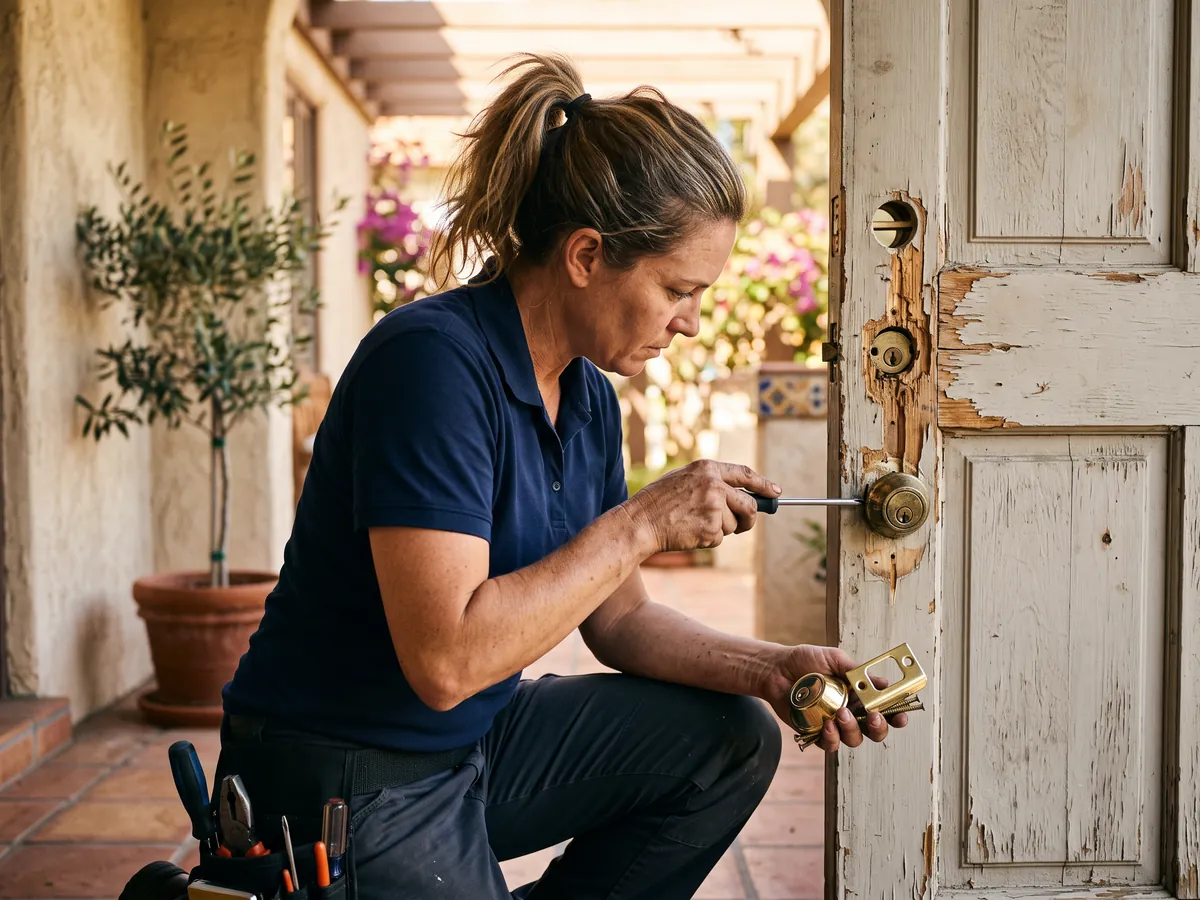
Replacing a lock on an apartment door isn't quite the same job as replacing one on a house. California's rental rules require an operable deadbolt on each main entry door, and a newly installed bolt must reach at least 13/16 inch into the jamb. Corridor doors in many buildings carry fire labels and need listed hardware. The landlord needs access with proper notice, so keys have to end up with the right people. Apartment lock replacement in Devore has to satisfy all of that and still feel smooth to the resident who uses the door a dozen times a day. That's the standard Julian's Locksmith works to on every unit.
What to know first in Devore
Not every bad lock needs replacing. Some apartment locks only need a strike adjustment or a cleaning, and many only need a rekey after a tenant leaves. Apartment lock replacement makes sense when the hardware itself is the problem: a bolt that won't extend fully, a cracked housing or thumbturn, a spring cage that has given out, a lock bent in a break-in, or a model so old that parts and compatible cylinders are hard to find. Compliance is another reason. When an older short-throw deadbolt is replaced, the new one should meet the 13/16-inch standard. A double-cylinder deadbolt on a unit's main door should become a thumbturn model so nobody needs a key to escape. A lock installed with no regard for a fire label may need to be swapped for listed hardware. And sometimes owners simply want an upgrade: heavier locks, levers instead of knobs, interconnected sets for senior residents, or keypad deadbolts for easier access management between tenants. We'll tell you honestly which category your lock falls into. If a rekey or a repair solves the problem for less, that's what we'll recommend.
How we can help in Devore
- Interconnected lockset installation. Interconnected locks need a specific door prep: a deadbolt bore and a latch bore at a fixed spacing, usually drilled from a manufacturer's template. If your apartment doors were built for them, replacement is straightforward. If not, we'll tell you whether conversion is practical or whether separate deadbolt and lever replacements suit the door better.
- Keying new locks to the building system. Some complexes standardize on user-rekeyable cylinders such as Kwikset SmartKey so maintenance staff can rekey at turnover. If that's your system, we match it. If restricted or patented keyways are part of the building's key control, we'll tell you upfront whether cylinders must come through the dealer that holds the key agreement.
- Fire-rated corridor door locks. A common problem on corridor doors is a past retrofit gone wrong: an oversized hole, an unlisted residential deadbolt, a closer that was taken off. When we replace those locks, we point out anything that may affect the door's rating so the owner can plan repairs. Fire inspectors look closely at these doors, and so do adjusters after a fire.
- Sliding patio door lock replacement. Ground-floor and balcony sliders are a weak point on many apartments. The mortise hook latch inside the stile wears out, the hook stops catching, and the panel can be jiggled or lifted open. We replace the latch with one that matches the screw spacing and faceplate, then adjust the rollers so the hook engages the keeper solidly.
- Smart and keypad lock replacement. Keypad locks on west-facing apartment doors take a beating from afternoon sun, and battery life drops in heat. When replacing one, we look for models with outdoor-rated keypads and a solid mechanical backup, and we route low-battery alerts to whoever is responsible for changing them, the tenant or the management office.
Local factors in Devore
Older apartment buildings in Devore often still have their original locks: knob sets with tired springs, deadbolts with half-inch bolts, or mortise locks in thick wood doors. Replacing them means checking the door prep first, since older bores and backsets don't always match modern hardware. Where a mortise lock body is still sound, rebuilding it can be smarter than a full replacement, and we'll tell you so.
Inland heat takes a toll on apartment door hardware. West-facing doors in Devore swell in the afternoon, deadbolts start binding, and keypad batteries drain faster. When we replace locks on sun-exposed doors, we check alignment during the warm part of the day when we can, choose finishes that hold up, and recommend outdoor-rated keypads for smart lock installs. Dark metal doors get especially hot.
Common situations
- For example, a ground-floor unit is broken into through the front door while the resident is at work. The jamb is split at the strike and the deadbolt bolt is visibly bent. We'd photograph the damage, install a new deadbolt and lever, add a heavy strike with long screws into the framing, and tell the owner plainly if the jamb needs a carpenter before the repair can be called finished.
- Two roommates sharing a three-bedroom apartment want keyed locks on their bedroom doors. A sensible approach: the leaseholder asks the landlord in writing, the landlord approves, and we replace the interior passage sets with keyed entry levers. Each lock still opens from inside without a key, and the landlord receives a copy of every key so emergency access keeps working.
- Picture a corridor-style building where a resident's lever droops and the door no longer latches after it swings shut. The door carries a fire label on the hinge edge, so a hardware-store lever isn't appropriate. We'd replace it with a listed lockset, adjust the closer so the door pulls itself closed and latches, and note the work for the owner's inspection records.
- For example, a small complex near a college keeps losing control of keys because students copy them freely at kiosks. With several deadbolts due for replacement anyway, the owner switches to cylinders on a restricted keyway so copies come only through an authorized source. We'd install them on the units being turned and the shared laundry door first, then follow the lease calendar.
From your call to the finished job
- Confirm who authorizes the work. Before we load parts, we confirm the paperwork: a property manager's authorization, an owner's proof of ownership, or a tenant's ID plus the landlord's written okay. It keeps everyone's records straight and protects the tenant from a lease dispute over hardware that technically belongs to the owner.
- Identify the door and existing prep. If you can, tell us the brand stamped on the lock face and describe the shape of the key. Those details reveal whether the replacement can drop into the same holes, take the building's existing keys, or needs adapters and a different product line to fit.
- Choose hardware and keying. Some choices carry trade-offs we'll explain plainly. Smart locks add convenience but need batteries and code management. Restricted keyways control copies but require an authorized source. Interconnected locks speed exits but need specific prep. We help you choose based on the building, not a sales sheet.
- Remove the old lock and check the door. Removal tells us a lot. A worn latch may reveal that the door has dropped on its hinges, and a bent bolt may show the strike was misaligned for years. We correct alignment, deepen the strike pocket if needed, and replace short strike screws with ones that reach framing.
- Install, key and test. For interconnected locks, we confirm one motion of the inside lever retracts both bolts. For smart locks, we test the keypad, app and mechanical override, then enter codes with the resident or manager present. For sliders, we check the hook from inside and try lifting the panel from outside.
- Hand off keys and records. We finish with a short record: unit number, hardware installed, keyway, and whether the lock sits under the master. Owners managing many units appreciate that trail, because the next replacement, rekey or lockout goes faster when someone knows what's on the door.
How we quote the job
- Type and grade of replacement lock. A standard deadbolt replacement costs less than an interconnected lockset, and a keypad or smart lock sits above both. Grade matters too: Grade 1 and Grade 2 hardware is heavier and lasts longer under apartment traffic than builder-grade Grade 3. We quote hardware and labor separately so you see where the money goes.
- Door and frame condition. Break-in damage changes the scope. A bent bolt is a hardware problem; a split frame is a carpentry problem. We can reinforce with wrap plates and heavy strikes, but if the frame itself is broken, we'll say so and explain what we can handle versus what needs a carpenter.
- Fire-rated and special doors. Corridor doors with fire labels need listed hardware, which often costs more than residential locks. Hollow metal doors may need through-bolted locksets and specific strikes. If a previous retrofit left the door out of compliance, correcting it adds parts and labor that we list separately on the quote.
Every job gets a clear quote before any work starts. Call (951) 903-3193 with the details and we'll tell you what to expect for your situation in Devore.
Practical tips before you call
- For smart lock replacements, decide before installation who owns the admin account. When management controls it, codes survive tenant changes. When the tenant controls it, management still needs a key override or its own code. Settle this in writing before the first code is ever programmed.
- Keep a simple record for each unit: lock brand, keyway, date installed and who holds keys. Even a basic spreadsheet speeds up the next turnover, lockout or apartment lock replacement, and it lets you answer a resident's question about their door without sending someone out to look.
- Ask that every replacement deadbolt come with a strike screwed through the jamb into the framing with screws at least 3 inches long. It's a small, inexpensive step during an apartment lock replacement, and it's what keeps a door from giving way when somebody kicks it.
- Lubricate unit locks once a year with a dry graphite or PTFE product rather than household oil. Oil collects dust and grit from landscaping crews and dry winds, and a gummed-up cylinder is a common reason residents force keys and snap them. A clean lock outlives a neglected one by years.
What not to do
- Putting a residential hardware-store lock on a fire-rated corridor door. The label calls for listed hardware, and an unlisted lock or extra holes can compromise the rating. The fix later usually means replacing the lock again, and sometimes the whole door, after an inspector flags it.
- Treating a misaligned door as a lock failure. When a deadbolt binds only with the door closed, a new lock won't help, because the door has dropped, the frame has shifted or the strike pocket is shallow. Fix the alignment first or the replacement will bind just like the old one.
- Installing a double-cylinder deadbolt on an apartment entry door. A lock that needs a key to get out can trap residents during a fire, and it conflicts with egress requirements for exit doors. Use a thumbturn deadbolt on the inside, and address a nearby glass panel with other measures.
Service in Devore
Devore is about 8 miles from our San Bernardino base, roughly 14 minutes in light traffic via Kendall Drive or Palm Avenue to I-215 North, through the Devore junction onto I-15 North, exit Kenwood Avenue for Devore Heights. When you call, you get an arrival estimate based on where the technician is and the traffic at that moment.
Our path into Devore depends on where the previous job wrapped up. Sometimes that's a straight run via Cajon Boulevard; other times it's surface streets the whole way. Either way, you get a heads-up call when the technician is close.
About Devore: The community sits at an elevation of roughly 2,510 feet, just outside the boundary of the San Bernardino National Forest.
| Neighborhoods | Keenbrook, Devore Heights, Glen Helen, Kimbark Avenue area, Cajon Boulevard corridor, Kimbark Canyons |
|---|---|
| ZIP codes | 92407 |
| Main routes | I-15, I-215, Cajon Boulevard, Kenwood Avenue |
| From our San Bernardino base | about 8 miles via Kendall Drive or Palm Avenue to I-215 North, through the Devore junction onto I-15 North, exit Kenwood Avenue for Devore Heights; Devore Road exit for Glen Helen and lower Cajon Boulevard |
New or replacement locks in Devore?
Call (951) 903-3193 and tell us which doors and what kind of hardware you have in mind. If you already bought the lock, keep the box handy so we can check it fits the door, and we'll quote the install before any work starts.
Frequently asked questions
How long does an apartment lock replacement take in Devore?
A straightforward deadbolt or lever replacement on a standard door usually takes well under an hour once we're on site. Interconnected locks, fire-rated doors, frame repairs and smart lock programming take longer. When we quote, we'll estimate the time at the door, and when you call we'll give you an honest ETA based on where we are.
Can you replace the lock on my apartment's sliding patio door?
Yes. We measure the old latch's screw spacing and faceplate, then fit a matching mortise hook latch and adjust the door's rollers so the hook catches the keeper. On ground-floor units or easily reached balconies, we also suggest a secondary lock and anti-lift screws. As with entry locks, the owner should approve changes to the door.
Can I put a double-cylinder deadbolt on my apartment door?
We don't recommend it and generally won't install one on a unit's main entry door. A deadbolt that needs a key from the inside can trap residents during a fire, and building codes call for exit doors to open from inside without a key. If glass near the lock is your worry, there are safer ways to address it, and we're happy to suggest some.
Can I replace the lock on my apartment without asking my landlord?
Usually not. Most leases require written consent for lock changes, and the landlord needs a key to enter with proper notice. The main exception covers tenants protected by a qualifying court order or police report: if the landlord doesn't change the locks within 24 hours of a written request, the protected tenant may have it done and must give the landlord a key.
Are you licensed to replace locks in California apartments?
Yes. Julian's Locksmith holds California locksmith company license LCO7891, issued by the Bureau of Security and Investigative Services, and you can verify it at search.dca.ca.gov. California's Locksmith Act governs locksmith work statewide. Checking a license before anyone works on your unit or your property is a smart habit, and we're glad when customers do it.
Who pays for apartment lock replacement in California?
If the lock wore out or failed through normal use, it's generally the landlord's cost, since California requires landlords to maintain an operable deadbolt on each main entry door. If a tenant or guest damaged it, the landlord may bill the tenant or deduct the cost from the deposit. For upgrades a tenant requests, expect to pay unless the owner agrees otherwise.
How far is Devore from your base?
Devore is about 8 miles from our San Bernardino base, roughly 14 minutes in light traffic. Arrival time depends on traffic and on the job the technician is finishing, so we give you an estimate on the phone before you commit.
Related services in Devore
- Apartment Locksmith in Devore
- Apartment Lock Rekey in Devore
- Locksmith for Rental Property in Devore
- Landlord Locksmith in Devore
- Apartment Master Key System in Devore
- Deadbolt Replacement in Devore
- Tenant Turnover Rekey in Devore
- Smart Lock for Rental Property in Devore
- Lock Replacement in Devore
- Apartment Building Locksmith in Devore
Apartment Lock Replacement in nearby cities
- Apartment Lock Replacement in Glen HelenSan Bernardino County
- Apartment Lock Replacement in MuscoySan Bernardino County
- Apartment Lock Replacement in North FontanaSan Bernardino County
- Apartment Lock Replacement in RialtoSan Bernardino County
- Apartment Lock Replacement in FontanaSan Bernardino County
- Apartment Lock Replacement in EtiwandaSan Bernardino County
- Apartment Lock Replacement in San BernardinoSan Bernardino County
- Apartment Lock Replacement in BloomingtonSan Bernardino County