
Devore, San Bernardino County
Estate Locksmith in Devore for Executors and Trustees
Short answer: An estate locksmith in Devore works for the person legally in charge of a deceased or incapacitated owner's property. That means getting inside without damage, rekeying so only the executor or trustee controls access, opening safes and locked cabinets, and cutting keys for estate vehicles. Julian's Locksmith checks your letters or trust paperwork and photo ID first. Call (951) 903-3193.
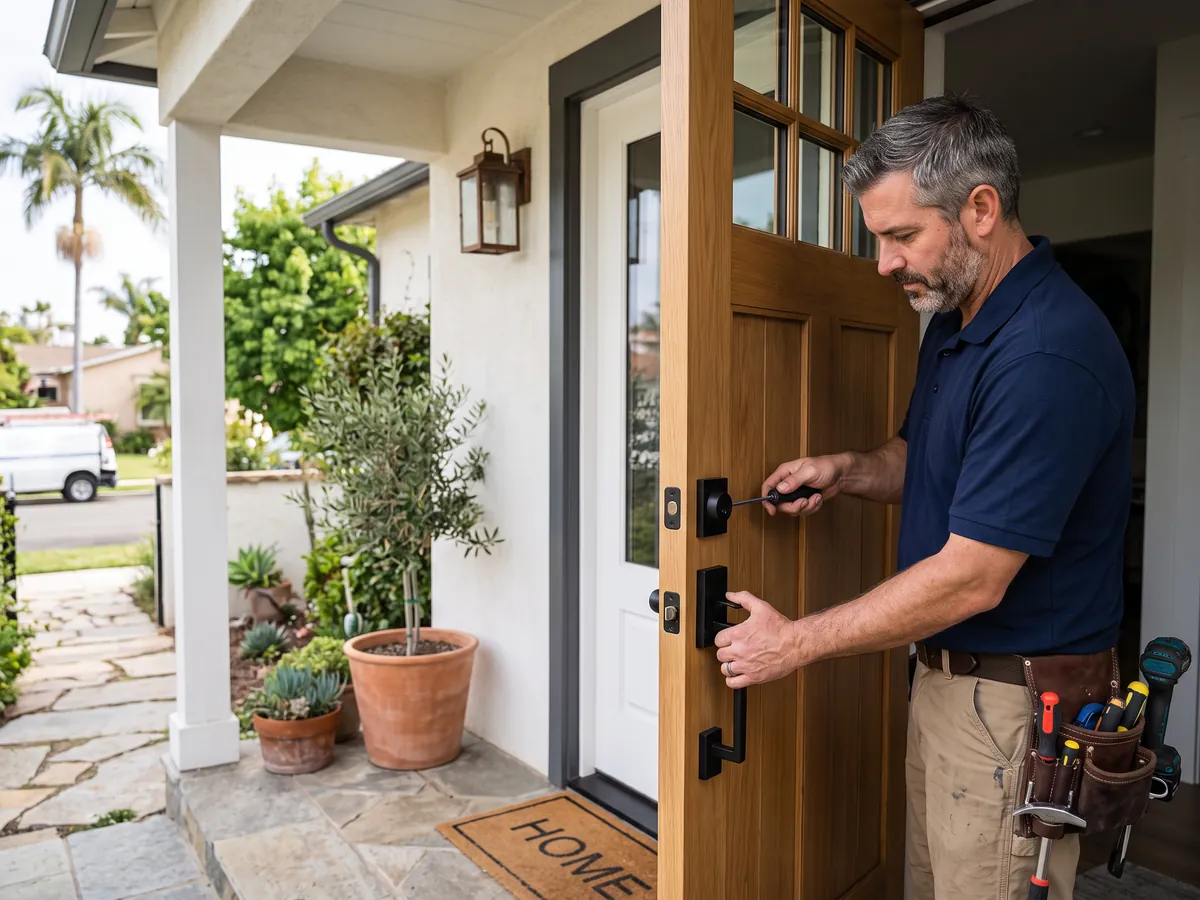
Clearing out a lifetime of belongings usually turns up two things: a heavy safe nobody can open and a coffee can full of keys nobody can identify. An estate locksmith in Devore handles both. We sort the keys by type, so you can tell a safe deposit box key from a filing cabinet key or a padlock key, and we open the safe by the least destructive method that works, ideally with a second family member watching. Julian's Locksmith confirms the executor's or trustee's authority first, quotes the work before starting, and treats an old cast-iron safe with the same care as a modern gun safe.
What to know first in Devore
The first instinct after a death is to round up the keys. It rarely works. Over decades, a homeowner hands copies to the neighbor who watered the roses, a housekeeper, two or three caregivers, the contractor who redid the kitchen and a grandchild away at college. Add the hide-a-key under a planter and the garage keypad code taped inside a cupboard, and there's no realistic way to know who can still get in. Rekeying fixes that in one visit. An estate locksmith removes each cylinder, replaces the pins so the old key no longer lifts them to the shear line, and cuts a fresh set for the executor. Handles, deadbolts and finishes stay where they are, which matters when the house will be listed soon and the hardware looks good. We also look at everything that isn't a keyed lock: keypad deadbolts that need new codes, smart locks tied to the decedent's phone, gate remotes and the garage door's emergency release. Each can let someone inside, so each gets addressed or written down for you.
How we can help in Devore
- Rekeying every exterior lock. Rekeying swaps the pins inside each cylinder so old keys stop turning it, while the doors keep their existing deadbolts, handles and finish. For an inherited house we rekey the front, back, side, garage-entry and slider locks to one new key, so the executor carries a single key rather than a ring of mismatched ones.
- Desks, file cabinets, gun cabinets and lockboxes. Locked gun cabinets and handgun lockboxes need extra care because of what they hold. We open the container for the person with legal authority and leave the firearms exactly where they are. California has specific rules for transferring guns that pass through an estate, so check with the estate attorney or a licensed dealer before moving them.
- Smart locks and keypads tied to old accounts. Some smart locks also report to a home hub or alarm panel that keeps sending alerts to the decedent's email. We reset and re-enroll the lock itself, while the alarm company or the platform's support line handles the account side. We'll write down each model and its reset steps so the executor can coordinate the rest.
- Restricted keys when several heirs need access. When three siblings each need to get into the house over several months, ordinary keys can be copied at any hardware counter and the executor quickly loses track. A restricted or patented keyway, such as those from Medeco or Mul-T-Lock, limits duplication to authorized channels, so the keys in circulation stay exactly what the executor approved.
- Access plans for estate sales, appraisals and listings. When the house goes under contract, the last step is new keys for the buyer. Some estates handle that before closing; others leave it to the buyer. Either way, an estate locksmith can rekey on short notice in Devore, confirm the old keys are dead, and hand the new set to whoever the executor directs.
Local factors in Devore
Inland heat is hard on a vacant estate home. Smart lock and keypad batteries drain faster in summer, and a dead battery on an empty house can strand the executor outside. Sun-baked deadbolts on west-facing doors stiffen, and gate latches warp out of line. During an estate visit we swap batteries, lubricate sticky cylinders, and add a keyed backup wherever a keypad is the only way in.
Estates in older parts of Devore often come with original hardware: brass mortise locks, glass knobs, skeleton-key closet doors and a deadbolt someone added in the 1980s. Much of it is worth keeping. We can usually rekey or service vintage cylinders, add a proper deadbolt where the front door has none, and fix the sticky back door everyone quit locking years ago, all without stripping out the character buyers of older homes look for.
On a larger parcel outside the center of Devore, an estate locksmith job can stretch across an acre or more: the house, a detached garage, a workshop, a pump house, an RV gate and a chained driveway. We bring padlocks keyed alike, rekey outbuilding doors where the hardware allows, and help the executor inventory every lock before equipment and tools are appraised or sold.
Situations this covers
- For example: an executor flies in from out of state to handle her late mother's 1960s ranch house in Devore Heights. The keys left in a purse that went home with a cousin, and at least two former caregivers had copies. We'd check her Letters Testamentary and ID on the porch, pick the front deadbolt, rekey all four exterior locks to one new key, and hand her three counted keys.
- During a cleanout near Cajon Boulevard, a nephew finds a small wall safe behind a framed print in a hallway closet, and the combination isn't anywhere in the files. We'd confirm he's acting for the administrator, attempt manipulation on the dial first, and drill only if necessary, opening it with the administrator on a video call while everything inside is photographed.
- A typical estate call: a successor trustee finds his father's gun safe in the garage with a dark keypad and no code written anywhere. We'd verify his trust certification, power the keypad to see whether it responds, and work through the manufacturer's recovery route before considering a precise drill point. His sister would be present as it opens, and the firearms would stay inside until the attorney advises.
- A typical call: the family can't get past the Kwikset Halo on their mother's front door because the app lives on her passcode-locked phone, and nobody has found the backup key. We'd decode or bypass the backup cylinder, then factory-reset the lock from inside, so the executor can pair it to his own phone, delete the old codes and set new ones for the siblings.
From your call to the finished job
- Call with the property details and your role. Call (951) 903-3193 and tell us your role: executor, administrator, trustee, conservator or agent under a power of attorney. Describe the property: how many exterior doors, any outbuildings, safes or vehicles, and whether anyone still lives there. That lets us bring the right pins, blanks and safe tools on the first visit.
- Have your authority documents ready. Paperwork protects everyone, including you. If a dispute among heirs surfaces later, a record showing who authorized each opening and rekey is valuable. We note the document type and your ID on the work order. If your appointment is still pending in court, call anyway, and we'll explain what can sensibly happen before it's granted.
- Walk the property and list every lock. We test any keys you've found against each lock as we go, tagging the matches. By the end of the walk you'll know which keys still work, which locks have no key at all, and what this estate locksmith visit needs to cover today versus on a later trip.
- Open what's locked. In an estate, an opening is about preserving value as much as gaining access. An antique secretary desk, a vintage safe or a quality gun cabinet is worth more intact. We take the slower, careful route whenever it works, then leave each lock functioning with a key or a reset combination.
- Rekey and set up key control. With everything open, we rekey the exterior locks to a single new key, adjust or replace any lock that's failing, and reset keypad and smart lock codes. The executor decides how many keys to cut and who gets them, and we can stamp keys with numbers for a simple sign-out record.
- Paperwork for the estate file. Keep the work order and invoice with the rest of the probate or trust paperwork. If the estate later needs keys made for the buyer, a temporary cylinder swapped back, or a combination changed after distribution, that history lets us pick up right where we left off.
Pricing factors
- How many locks the property has. Larger estates often have more than the obvious locks: a casita, a pool equipment room, a wine closet, a gated side yard. We price them separately and tell you which ones affect security right now. That way the estate pays for what protects it, rather than every keyhole on the property at once.
- Condition and age of the hardware. Older homes may have discontinued brands, vintage mortise locks or cylinders that no longer accept standard pins. Keeping them can take more labor than installing new deadbolts. Sometimes that's worth it for character and resale, sometimes not, so we give the executor both options with a price for each.
- Safe and container openings. Safe openings vary more than anything else in estate work. A gun safe with a dead keypad may need only power and a reset. A dial safe with a lost combination takes skilled manipulation time. A higher-rated safe with hardplate may need precise drilling and repair afterward. We quote after seeing the safe, its make and its rating.
Every job gets a clear quote before any work starts. Call (951) 903-3193 with the details and we'll tell you what to expect for your situation in Devore.
What not to do
- Changing the locks on a house where a relative still lives. Even if they aren't on the deed, an occupant may have legal rights, and locking them out can amount to an unlawful lockout. Talk to the estate attorney about the proper process before calling a locksmith for that purpose.
- Leaving the old garage keypad code and remotes active. Families often rekey every door and forget the garage, which usually opens straight into the house. Clear the opener's remote memory and set a new keypad code on the same day the locks change.
- Discarding a locked box without opening it, or letting a locked file cabinet go out with the estate sale. Locked containers are exactly where people keep wills, deeds, vehicle titles and savings bonds. Open everything before anything leaves the property.
What to do before we arrive
- Tell the HOA or park management in writing that you're the executor or trustee, and ask whether they hold a key or gate credential for the home. Many associations keep emergency keys, and a rekey will make theirs useless unless you arrange a replacement.
- Keep every estate locksmith invoice with the probate or trust records. Securing estate property is typically treated as an administration expense, and your attorney or accountant will want itemized receipts showing what was done, when it happened and who requested it.
- Photograph every room before the cleanout begins and again right after the rekey. If an heir later claims an item disappeared, dated photos and a record of when the locks changed show that the property was protected from the day you took responsibility for it.
- If you plan to keep vintage hardware, such as a glass doorknob set or an original mortise lock, say so before work starts. It can usually be rekeyed or serviced rather than replaced, and buyers of older homes often value those original details more than shiny new levers.
Reaching Devore
Devore is about 8 miles from our San Bernardino base, roughly 14 minutes in light traffic via Kendall Drive or Palm Avenue to I-215 North, through the Devore junction onto I-15 North, exit Kenwood Avenue for Devore Heights. When you call, you get an arrival estimate based on where the technician is and the traffic at that moment.
Rush hour on Kendall Drive can stretch a drive considerably. We'd rather give you a realistic arrival window than an optimistic one, and we'll call you if a closure or a crash changes the plan.
About Devore: The Devore Animal Shelter on Shelter Way is the San Bernardino County shelter for unincorporated areas of the county as well as Highland and Yucaipa.
| Neighborhoods | Kimbark Canyons, Kimbark Avenue area, Keenbrook, Glen Helen, Devore Heights, Lytle Creek |
|---|---|
| ZIP codes | 92407 |
| Main routes | I-15, I-215, Cajon Boulevard, Kenwood Avenue |
| From our San Bernardino base | about 8 miles via Kendall Drive or Palm Avenue to I-215 North, through the Devore junction onto I-15 North, exit Kenwood Avenue for Devore Heights; Devore Road exit for Glen Helen and lower Cajon Boulevard |
Home lock work in Devore?
Call (951) 903-3193 with the address and a quick description of the doors and locks involved. We'll quote the job before any work starts.
Frequently asked questions
Can you open a bank safe deposit box?
No. Safe deposit boxes sit inside the bank's vault, and banks follow their own procedures for opening boxes when the key is lost or the renter has died. Take the key, if you find one, plus your letters or trust paperwork to the bank. We can help you work out whether a key you found is likely to be a safe deposit key in the first place.
How many keys should I have cut after rekeying an inherited home?
Fewer than you might think. One for the executor, one backup stored somewhere secure, and only as many more as there are people who truly need regular access. Estate-sale crews and contractors can share a temporary key that gets collected afterward. Every extra key is one more to track, and in an empty house each one adds risk.
A relative is living in the house. Can I change the locks?
Not as a first step. Someone living in the home may have legal rights as an occupant or tenant, and locking them out without a court process can expose the estate to liability. Talk with the estate attorney about the correct approach. Once that's settled, we can still help with locks on rooms, safes or containers the executor clearly controls.
When are you available for estate work?
Julian's Locksmith works every day from 6:30 a.m. to 11:30 p.m. Weekends are included. Estate jobs are usually planned rather than urgent, so a call a few days ahead lets us set aside enough time for the house, any safes and any vehicles in a single visit.
Will you open a safe that belonged to my late father?
Yes, once we've confirmed you have authority over the estate's contents. We try the gentlest methods first, such as an override key, power for a dead keypad, the manufacturer's recovery process or dial manipulation, and drill only when needed. We recommend a second person present and photos as the door opens. We open the safe but don't handle or inventory what's inside.
What happens with smart locks tied to the decedent's phone?
You don't need the phone to regain control of most smart locks. After we get in through the key backup or a bypass, the lock can be factory-reset from the inside and paired to the executor's own account. Video doorbells, alarm systems and hubs are a separate matter handled with each provider. Note the model names before you call so we bring the right tools.
How far is Devore from your base?
Devore is about 8 miles from our San Bernardino base, roughly 14 minutes in light traffic. Arrival time depends on traffic and on the job the technician is finishing, so we give you an estimate on the phone before you commit.
Related services in Devore
Estate Locksmith in nearby cities
- Estate Locksmith in Glen HelenSan Bernardino County
- Estate Locksmith in MuscoySan Bernardino County
- Estate Locksmith in North FontanaSan Bernardino County
- Estate Locksmith in RialtoSan Bernardino County
- Estate Locksmith in FontanaSan Bernardino County
- Estate Locksmith in EtiwandaSan Bernardino County
- Estate Locksmith in San BernardinoSan Bernardino County
- Estate Locksmith in BloomingtonSan Bernardino County