
Bloomington, San Bernardino County
Bloomington Estate Locksmith: Securing an Inherited Home
Short answer: Over the years a homeowner hands keys to caregivers, neighbors, housekeepers and grandkids, and nobody keeps a list. Collecting them back is hopeless, so an estate locksmith rekeys the Bloomington house instead. Sound hardware stays on the doors, new pins go into the cylinders, and the executor receives a counted set of fresh keys. Call (951) 903-3193 to plan it.
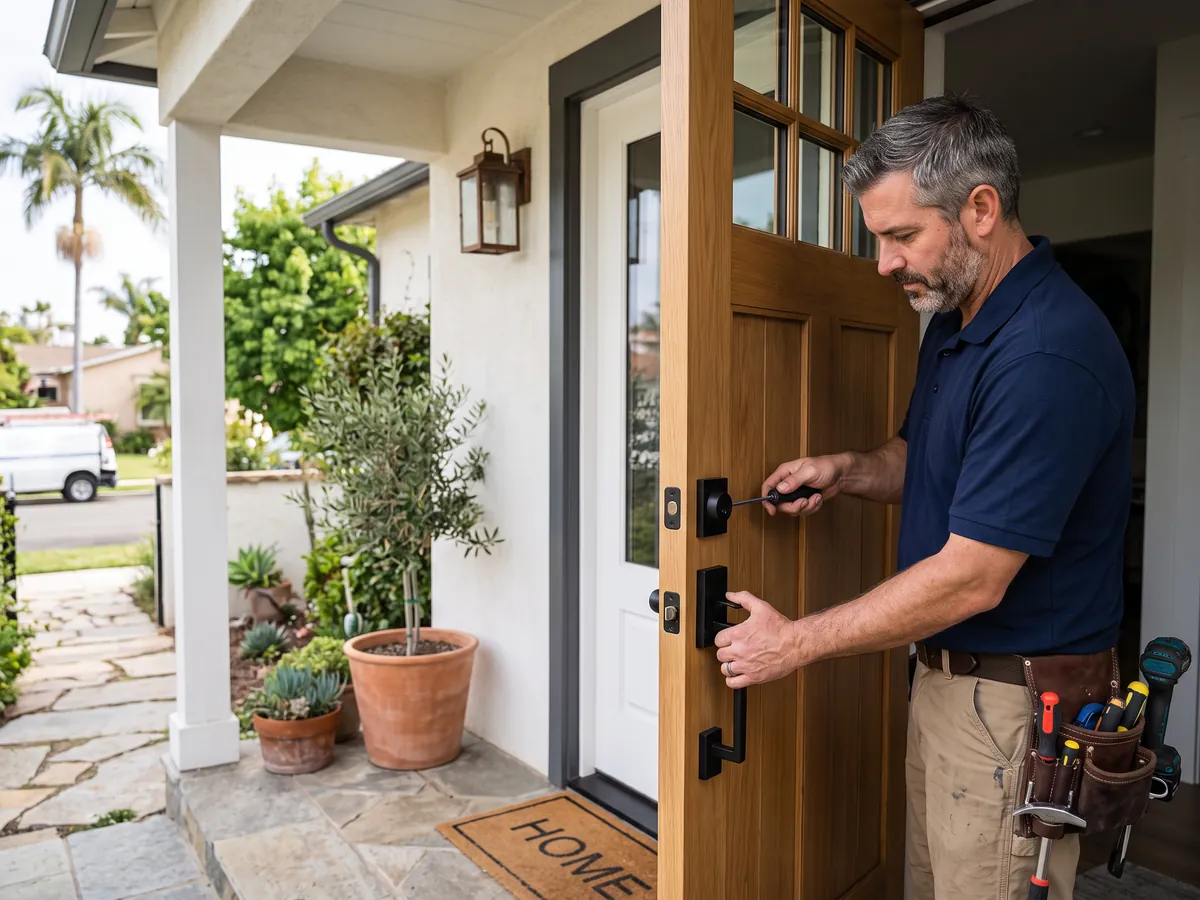
Many executors live hours or several states away from the home they've been asked to manage, and they arrive with a short window and a long list. If that's you, an estate locksmith visit is worth booking for your first full day in Bloomington. We can meet you at the property, look over your paperwork, get you inside, and rekey the doors so you leave holding the only working keys. If the house contains a safe, locked file drawers or a car with no key, mention it when you call so we load the right equipment. Julian's Locksmith works every day from 6:30 a.m. to 11:30 p.m., which helps when a flight lands late.
Estate Locksmith in Bloomington: what to expect
The first instinct after a death is to round up the keys. It rarely works. Over decades, a homeowner hands copies to the neighbor who watered the roses, a housekeeper, two or three caregivers, the contractor who redid the kitchen and a grandchild away at college. Add the hide-a-key under a planter and the garage keypad code taped inside a cupboard, and there's no realistic way to know who can still get in. Rekeying fixes that in one visit. An estate locksmith removes each cylinder, replaces the pins so the old key no longer lifts them to the shear line, and cuts a fresh set for the executor. Handles, deadbolts and finishes stay where they are, which matters when the house will be listed soon and the hardware looks good. We also look at everything that isn't a keyed lock: keypad deadbolts that need new codes, smart locks tied to the decedent's phone, gate remotes and the garage door's emergency release. Each can let someone inside, so each gets addressed or written down for you.
How we can help in Bloomington
- Getting in when the keys are missing. Most residential deadbolts and knob locks in an older home can be picked open without damage, which leaves the cylinder ready for a rekey a few minutes later. When a lock has seized from months of disuse or carries a high-security cylinder, we explain the options and their cost before deciding together whether drilling is justified.
- Opening the decedent's safe. Gun safes, home safes and old dial safes all turn up during estate cleanouts. We start with the least invasive approach: fresh power for a dead keypad, an override key, the manufacturer's recovery process where one exists, or manipulation of a mechanical dial. Drilling comes last, done precisely so the safe can usually be repaired and used again.
- Desks, file cabinets, gun cabinets and lockboxes. The paperwork an executor needs often sits behind small locks: a rolltop desk, a steel file cabinet, a fire box, a locked gun cabinet in the den. We pick or decode these locks instead of prying, so the furniture keeps its value for heirs or the estate sale, and we can often cut a working key on the spot.
- Keys for an estate vehicle. Estate vehicles are often older sedans or trucks with basic transponder keys, which are straightforward to originate from the door lock or the VIN. Newer cars with smart fobs take more equipment and time. If the battery has died from sitting, we may need to jump it before programming, so mention how long the car has been parked.
- Sheds, outbuildings, gates and padlocks. On larger lots, outbuildings can matter as much as the house. Barns, well houses, RV storage and detached garages may contain tools and equipment that belong to the estate. We'll walk the whole parcel with you and list every lock, so nothing ends up stranded behind a lock only the decedent knew how to open.
What's different about Bloomington
Most estate calls in Bloomington's family neighborhoods involve a three- or four-bedroom tract house where a parent lived for decades. Grandkids, neighbors and a long line of babysitters may all have had keys at one point. The fix is usually simple: rekey all exterior doors to one key, clear the garage keypad and remotes, and give each sibling who needs access a numbered copy.
On a larger parcel outside the center of Bloomington, an estate locksmith job can stretch across an acre or more: the house, a detached garage, a workshop, a pump house, an RV gate and a chained driveway. We bring padlocks keyed alike, rekey outbuilding doors where the hardware allows, and help the executor inventory every lock before equipment and tools are appraised or sold.
Horse properties need quick attention in an estate because the animals still need daily care. The feed room, tack room and barn often carry locks of their own, and whoever handles feedings needs access while everything else stays secured. We can key the barn separately from the house, so a caretaker holds only what the job requires, and replace a rusted tack room hasp before saddles start walking off.
Common situations
- A typical non-probate call: a son holds durable power of attorney for his mother, who moved into memory care last month. A combination lockbox the home health agency used still hangs on her porch rail, and the code was shared widely. We'd remove the lockbox, rekey the doors, help him reset the garage keypad, and cut a second key for the neighbor he trusts.
- For example, a man's aunt passes away in a manufactured home inside a 55-plus park. The park office wants proof he's the administrator before anyone works on the unit, and the door has a worn latch with a tiny cylinder. We'd take his letters to the office first, replace the latch lock with a sturdier keyed deadbolt, and rekey the shed so the old spare in the office no longer fits.
- A typical estate call: a successor trustee finds his father's gun safe in the garage with a dark keypad and no code written anywhere. We'd verify his trust certification, power the keypad to see whether it responds, and work through the manufacturer's recovery route before considering a precise drill point. His sister would be present as it opens, and the firearms would stay inside until the attorney advises.
- Picture a house that sat closed for more than a year while a will was contested. The back door deadbolt has rusted solid, boxes block the slider, and the cleanout crew starts Monday. We'd open the front door, free or replace the seized deadbolt, add a secondary bar lock to the slider, and rekey everything to the court-appointed administrator's new key.
Step by step with Julian's Locksmith
- Call with the property details and your role. If you're calling for an executor, perhaps as the estate-sale manager or listing agent, we'll want to hear from the executor too, or receive their written authorization. Give us the Bloomington address, a good time to meet and a sense of the property's size, and we'll give you an honest ETA and a clear quote.
- Have your authority documents ready. Bring photo ID plus the document that gives you authority: Letters Testamentary or Letters of Administration from the probate court, a certification of trust with the death certificate, or conservatorship letters. A clear copy on your phone works for most jobs. For a safe opening, we may ask to see a certified copy.
- Walk the property and list every lock. Once inside, we walk the house and grounds with you and list every lock: entry doors, sliders, garage entry, side gates, sheds, mailbox, safes and cabinets. You see the whole picture, choose what to rekey, open or leave alone, and approve a quote before anything gets worked on.
- Open what's locked. We handle openings in an order that suits the estate: the house first, then the room or container holding documents the executor needs right away, then everything else. If a safe needs specialist work beyond what's practical that day, we'll say so and schedule it rather than rush it.
- Rekey and set up key control. This is the moment the property becomes the executor's to control. Old keys stop working, stored codes are cleared, padlocks are matched to one key, and if the house will sit for months, a restricted keyway can stop casual copies. Every key we cut is counted and handed directly to the person with authority.
- Paperwork for the estate file. Keep the work order and invoice with the rest of the probate or trust paperwork. If the estate later needs keys made for the buyer, a temporary cylinder swapped back, or a combination changed after distribution, that history lets us pick up right where we left off.
Pricing factors
- How many locks the property has. Each cylinder rekeyed carries its own labor and pins, so the total depends on how many doors you want on the new key. Not every lock needs attention on day one; an interior office lock or a garden shed can wait if the budget is tight while the estate is still being valued.
- Safe and container openings. If an estate holds several locked containers, opening them on the same visit as the rekey usually costs less overall than separate trips. Tell us about every safe, cabinet and lockbox when you call, with brand names or photos if possible, so we bring the right tools and give an accurate number.
- Key control choices. How the keys are controlled affects the bill more than how many you cut. Ten standard keys cost less than four restricted ones. Numbered keys, a temporary cylinder for an estate sale and a final rekey at closing each add to the total, and each can be decided separately as the estate moves along.
Every job gets a clear quote before any work starts. Call (951) 903-3193 with the details and we'll tell you what to expect for your situation in Bloomington.
Common errors that cost time and money
- Letting several relatives copy keys at a hardware store during probate. Within weeks nobody knows how many copies exist, and the executor can't show who had access if something goes missing. Decide early who gets a key, keep a written list, and consider a restricted keyway if copying is a worry.
- Discarding a locked box without opening it, or letting a locked file cabinet go out with the estate sale. Locked containers are exactly where people keep wills, deeds, vehicle titles and savings bonds. Open everything before anything leaves the property.
- Assuming a power of attorney still works after death. A POA ends when the person who signed it dies, and an agent who keeps acting on it invites trouble with banks, relatives and service providers. After a death, authority comes from the will, the trust or the probate court.
What to do before we arrive
- Photograph every room before the cleanout begins and again right after the rekey. If an heir later claims an item disappeared, dated photos and a record of when the locks changed show that the property was protected from the day you took responsibility for it.
- If the house will sit vacant, call the homeowner's insurance carrier and ask about vacancy provisions. Many policies change coverage once a home has been unoccupied for a set period. The insurer may also ask what you've done to secure the property, and an itemized rekey invoice answers that question.
- Don't toss unidentified keys during the cleanout. Bag them, label where each was found, and have a locksmith sort them. A key tucked in a jewelry box or bedside drawer may point to a safe deposit box, a storage unit or a second property the estate has to account for.
- Book the final rekey before the buyer gets keys. A house sold through probate shouldn't arrive with a single key once held by the estate-sale crew, the cleanout team or a contractor. A short visit near closing settles it, and the buyer starts with keys only they hold.
Reaching Bloomington
Bloomington is about 14 miles from our San Bernardino base, roughly 22 minutes in light traffic via Belmont Avenue and Palm Avenue to I-215 South, SR-210 West to the Riverside Avenue exit. When you call, you get an arrival estimate based on where the technician is and the traffic at that moment.
Commercial jobs on busy stretches like Slover Avenue sometimes need a parking plan, especially for storefront doors or roll-up gates. Let us know about loading zones, red curbs or parking structures before we arrive.
About Bloomington: The older Crestmore community sits between Locust and Larch Avenues south of Jurupa Avenue and extends to the Riverside County line.
| Neighborhoods | Locust Avenue and Alder Avenue horse properties, North Bloomington, Crestmore, Kessler Park area, Slover Avenue industrial strip, Cedar Avenue corridor |
|---|---|
| ZIP codes | 92316, 92335 |
| Main routes | I-10, Cedar Avenue, Valley Boulevard, Slover Avenue |
| From our San Bernardino base | about 14 miles via Belmont Avenue and Palm Avenue to I-215 South, SR-210 West to the Riverside Avenue exit, then south on Riverside Avenue and west on Bloomington Avenue; the alternate is I-215 South to I-10 West and the Cedar Avenue exit, about 17 miles |
Home lock work in Bloomington?
Call (951) 903-3193 with the address and a quick description of the doors and locks involved. We'll quote the job before any work starts.
Frequently asked questions
Can you tell what a bag of old keys opens?
We can usually tell you what kind of lock each key belongs to: house, padlock, cabinet, mailbox, vehicle, safe or safe deposit box. Some keys carry stamped codes or brand names that narrow it further, and we test keys against every lock on the property during the visit. That won't always solve the mystery, but it often points to a storage unit or account worth checking.
Who can authorize a locksmith to open or rekey a deceased person's house?
Usually the executor or administrator appointed by the probate court, who holds letters from that court, or the successor trustee if the house was held in a trust. A conservator can act for a living person under court supervision. An agent under a power of attorney loses authority at death. Bring the relevant document plus photo ID, and we'll review both before touching a lock.
How many keys should I have cut after rekeying an inherited home?
Fewer than you might think. One for the executor, one backup stored somewhere secure, and only as many more as there are people who truly need regular access. Estate-sale crews and contractors can share a temporary key that gets collected afterward. Every extra key is one more to track, and in an empty house each one adds risk.
What if the will is being contested?
When authority over the property is disputed, we take direction only from the person the court has appointed, or under a written agreement signed by the parties. Otherwise we'd be taking sides in a family dispute, which isn't our role. If the court has appointed someone, bring those letters, and we can secure the house so neither side has to worry about the contents.
Probate hasn't started yet. Can I still have the locks changed?
Possibly, depending on the circumstances. If you're a close family member trying to secure an empty house and nobody disputes your role, we can discuss limited steps that protect the property. Opening safes and handling contents should wait for formal authority. Call (951) 903-3193 and describe the situation; your estate attorney can also advise on what's appropriate before letters are issued.
Do you help when a parent moves into assisted living?
Yes. That's a living-person situation, so authority usually comes from a durable power of attorney or a conservatorship, or from your parent's own written consent if they can still give it. The work resembles an estate visit: rekey the doors, remove old lockboxes, clear keypad codes caregivers knew, and secure the filing cabinets holding financial records.
How far is Bloomington from your base?
Bloomington is about 14 miles from our San Bernardino base, roughly 22 minutes in light traffic. Arrival time depends on traffic and on the job the technician is finishing, so we give you an estimate on the phone before you commit.
Related services in Bloomington
Estate Locksmith in nearby cities
- Estate Locksmith in RialtoSan Bernardino County
- Estate Locksmith in FontanaSan Bernardino County
- Estate Locksmith in ColtonSan Bernardino County
- Estate Locksmith in RubidouxRiverside County
- Estate Locksmith in Grand TerraceSan Bernardino County
- Estate Locksmith in North FontanaSan Bernardino County
- Estate Locksmith in Jurupa ValleyRiverside County
- Estate Locksmith in San BernardinoSan Bernardino County