
Devore, San Bernardino County
Deadbolt Repair in Devore, Done at Your Door
Short answer: Open the door and work the deadbolt with the key and thumbturn. If it moves freely, the problem is alignment: a sagging door, shifted strike plate or swollen frame. If it sticks even with the door open, the cylinder, cam or bolt is at fault. That one test sorts most deadbolt repair calls in Devore. Julian's Locksmith fixes either kind on site; call (951) 903-3193.
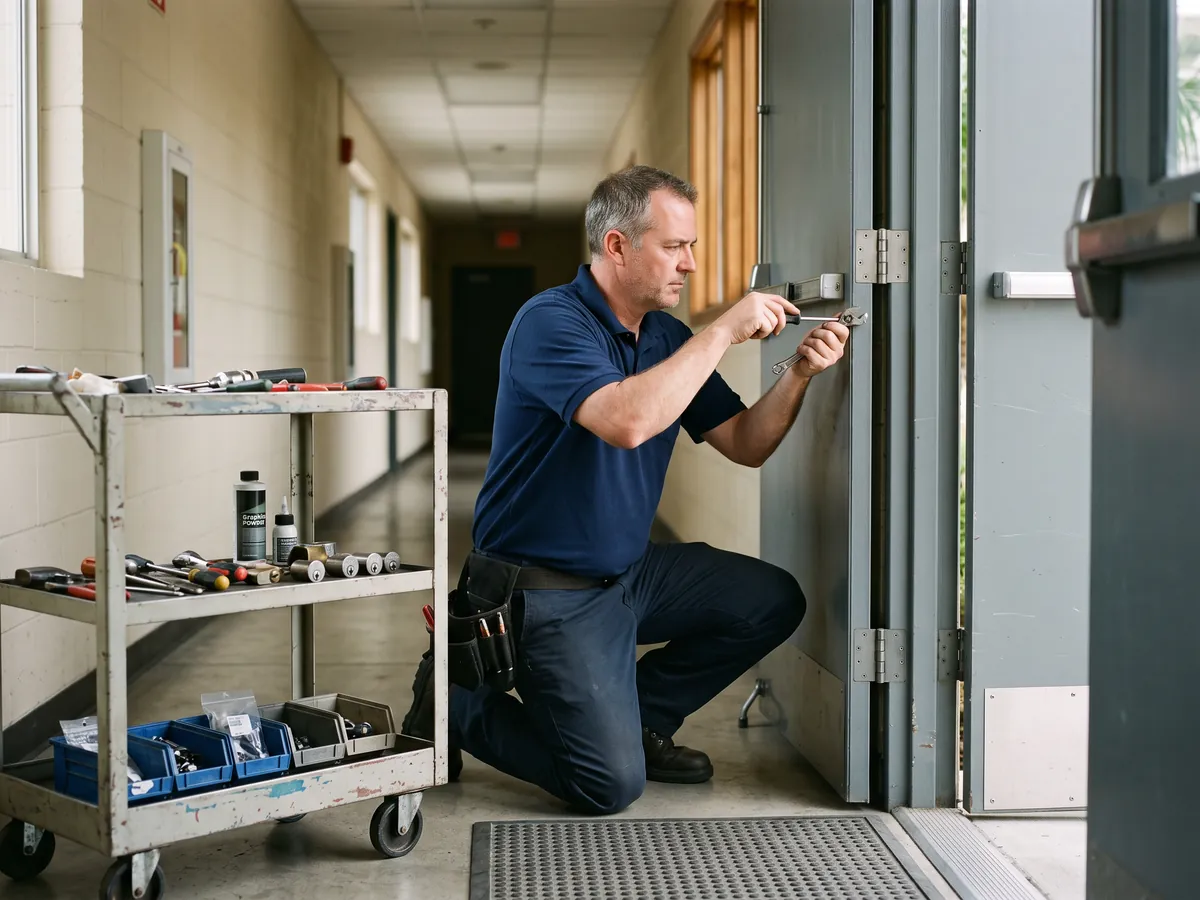
Does your deadbolt behave in the morning and bind by the afternoon? Intermittent sticking is a clue. Doors move with temperature and humidity, and a bolt that clears the strike on a cool morning can grab it on a hot afternoon, or after a week of damp weather swells the wood. Grit in the keyway also arrives in patterns, such as after a windy day. Because the lock itself may be perfectly sound, this kind of deadbolt repair means finding what moves rather than swapping parts. Julian's Locksmith checks both. Call (951) 903-3193 from Devore and tell us when it sticks.
Deadbolt Repair in Devore: what to expect
A repaired deadbolt should do three things: throw its full length, hold in a frame that can take force, and let you out of the house without a hunt for a key. The first is a matter of alignment and clean parts. The second often means a strike plate with three-inch screws that reach the wall stud, and sometimes a reinforced jamb. The third deserves attention if you have a double-cylinder deadbolt, which needs a key on both sides. California's residential building code generally requires the main exit door to open from inside without a key, so many jurisdictions restrict keyed-both-sides locks on required exits; check with your city's building department. Renters have a separate protection: California Civil Code §1941.3 requires landlords to provide and maintain working deadbolts on main swinging entry doors. We repair with all of that in mind, not just the one symptom that made you call.
What we can do on-site
- Strike plate and alignment correction. Sagging doors cause more deadbolt trouble than failing locks do. We tighten hinge screws and replace the top hinge's short screws with three-inch ones that bite into the stud, which lifts the door back into line. Once the door sits right, the bolt meets the strike without you lifting or pushing.
- Spinning and stiff thumbturns. A thumbturn that spins freely without moving the bolt usually has a stripped drive or a broken tab on the interior assembly. Many brands sell the interior half separately, so we can often swap it and keep your exterior cylinder and keys. We test the full stroke from both sides before we leave.
- Bolts that stop short, creep or won't hold. If a bolt retracts by itself, or the thumbturn drifts back as you let go, the mechanism isn't holding position. That usually means a worn retainer or spring, and it is not a lock you can trust at night. We replace the faulty parts or the whole lock, depending on grade and availability.
- Motorized and smart deadbolts. Keypad and touchscreen deadbolts from Schlage, Kwikset and Yale pair a standard bolt with a motor or manual key cylinder. We repair the mechanical side, replace keyed cylinders and fix alignment. When the failure is in the electronics or firmware, we tell you plainly and point you toward the right support.
- Older, surface-mounted and specialty deadbolts. Double-cylinder deadbolts need a key on both sides, and their interior cylinders wear and fail like exterior ones. We repair or replace them, and we also talk through the safety question: whether you want a key-only exit at night, or a single-cylinder bolt with a thumbturn on the inside.
How Devore shapes the job
Long driveways, detached garages and workshops mean deadbolts that sit unused for weeks and gather dust, spiders and moisture. When you finally need them, they stick. We clean and relubricate, fix doors that have sagged on their posts, and replace worn cylinders with weather-rated ones. Give us the nearest road, such as Shelter Way, or your gate code, so we can find the right building the first time.
Foothill and canyon homes see dust, ash, pollen and wind that slip into keyways and bolt bores. After a dry, windy week, deadbolts can feel gritty even when the lock is sound. We flush cylinders with a lock-safe solvent, lubricate dry, and check weatherstripping that wind has shifted. Near Glen Helen Regional Park, doors on sloped lots can also settle with the ground, so we check alignment before replacing anything.
Heat is the quiet cause of many sticking deadbolts. Dark doors in direct sun grow slightly through the afternoon, and a bolt that cleared the strike at breakfast rubs by four o'clock. Lubricants dry out, plastic parts inside budget locks soften, and keyways collect fine dust. In Devore, we treat the heat as a clue: we check clearance at the strike, use dry lubricants that survive hot weather, and sometimes suggest lighter paint on a west-facing door.
Common situations
- A family with a double-cylinder deadbolt can't turn the interior key because the cylinder is stiff, and they realize nobody knows where the key is kept at night. We'd repair or replace the cylinder, talk through the safety questions around keyed-both-sides locks, and offer a single-cylinder deadbolt with a thumbturn if they'd prefer an easy exit.
- Someone tried to pry a back door open overnight near Devore Animal Shelter. The deadbolt still turns, but the bolt is bent and the jamb has a hairline crack by the strike. We'd replace the bolt assembly, repair and reinforce the jamb, fit a heavy strike with three-inch screws, and suggest photographing the damage and keeping the old parts if an insurance claim is likely.
- A typical summer call: a steel front door on a west-facing wall, and a deadbolt that works every morning but binds by four in the afternoon, at a house near Cajon Wash. Heat expands the slab slightly and the bolt grabs the strike. We'd check the hinges, move the strike a fraction, ease the bolt hole, and show the owner how to check the same alignment next summer.
- A property manager has twelve apartments where the same builder-grade deadbolts have started sticking. We'd test all twelve, repair the ones with simple alignment or cam trouble, recommend replacing the worst, and rekey the new ones to match the building's key plan. A written summary by door number helps the manager schedule the rest and plan realistically.
From your call to the finished job
- Describe the failure and answer a few questions. Mention what has changed lately: new weatherstripping, a repaint, a hard slam, a forced attempt, or a switch to a smart lock. Deadbolts rarely fail for no reason, and the recent change is often the cause. We also confirm you're authorized to work on the lock.
- Run the open-door and closed-door tests. We also check the door itself: gaps along the latch side, hinge screws, the way weatherstripping presses on the door, and signs of dragging at the top corner. A door that has moved a few millimeters can make a good deadbolt behave like a bad one.
- Open the lock and inspect the parts. Cylinders get special attention. We test the key, check the pins for wear, and look for broken fragments or debris. A cylinder that turns smoothly with a new key but not an old one tells us the key, not the lock, needs replacing.
- Compare repair and replacement. When replacement is the better value, we show options in your finish and grade, match the backset and handing, and offer to rekey to your existing key. If you prefer to keep the lock you have, we explain the trade-offs and still do the work properly.
- Repair, reset the strike and refit. If the door needs adjusting, we handle the small things that matter: tightening hinge screws, shimming a hinge, easing the strike opening or taking a hair off a tight edge. Big carpentry belongs to a carpenter, and we'll tell you if that is what your door needs.
- Cycle, close and hand over. We cycle the bolt many times from both sides, close the door firmly the way a real day would, and check that the bolt meets the strike without scraping. If anything is stiff, we adjust until it runs smooth with the key, the thumbturn and the door closed.
What affects the cost
- What actually failed. Early calls cost less. A deadbolt that sticks a little is often a cleaning and alignment job, while one that has been forced for months may have a broken key, a damaged cam and a worn bolt. Catching it at the first sticky turn nearly always saves money.
- Grade, brand and parts. High-security cylinders from Medeco, Mul-T-Lock or ASSA Abloy often need restricted blanks and authorization to duplicate keys. That affects timing and cost. If you have one, tell us at booking, and we'll explain what we can handle on site and what needs a factory order.
- The repair-versus-replace line. Sentimental or special locks change the math. A decorative deadbolt, a matched hardware set or a lock tied to a restricted key system may be worth repairing even at a higher cost. Tell us what matters to you, and we'll quote repair and replacement honestly side by side.
Every job gets a clear quote before any work starts. Call (951) 903-3193 with the details and we'll tell you what to expect for your situation in Devore.
What not to do
- Ignoring a key that turns with no effect. A key that spins freely while the bolt stays put means something inside has broken. If you keep turning, the parts can shift into a position that makes access harder. Stop, and note whether the bolt is thrown or retracted.
- Spraying WD-40 or oil into the keyway. It frees a stuck lock for a day, then collects dust and turns into sludge that jams the pins. A dry graphite or PTFE lubricant is the better choice, and a professional cleaning sorts out the sludge once it has built up.
- Forcing the key or twisting it with pliers. A stuck cylinder tempts you to apply more force, but keys are soft brass and snap at the shoulder. A broken key inside a deadbolt turns a minor repair into an extraction, and often into a new cylinder.
Practical tips before you call
- Cut fresh keys from the original, not from a copy of a copy. Each duplicate adds a bit of error, and a worn key chews up the cylinder pins. If your deadbolt has begun to stick, try the original or a brand-new copy before blaming the lock.
- Lubricate the keyway once a year with dry graphite or PTFE, and rub a little on the bolt edge. Avoid oil, silicone sprays in the keyway and heavy grease; they hold dust in our dry climate and gum up the pins. A light dry coat keeps a good cylinder smooth.
- After adding weatherstripping or a door sweep, test the deadbolt again. New seals can push the door away from the stop just enough that the bolt no longer lines up with the hole. A small adjustment to the strike or the seal is easier than replacing the lock later.
- Keep paint out of the strike. When repainting a door or frame, mask the strike plate and the bolt hole, or remove the plate first. Paint buildup narrows the opening and sticks to the bolt tip, and over time it makes a good bolt feel sticky.
Service in Devore
Devore is about 8 miles from our San Bernardino base, roughly 14 minutes in light traffic via Kendall Drive or Palm Avenue to I-215 North, through the Devore junction onto I-15 North, exit Kenwood Avenue for Devore Heights. When you call, you get an arrival estimate based on where the technician is and the traffic at that moment.
Traffic matters more than mileage. We check conditions on Palm Avenue and its connecting routes before quoting you a time, and we don't pretend a long drive through heavy congestion is a short one.
About Devore: Cajon Boulevard through Devore is an original stretch of U.S. Route 66, which crossed the Cajon Pass from 1926 until 1979, when Interstate 15 replaced it.
| Neighborhoods | Cable Canyon, Glen Helen, Lytle Creek, Verdemont, Kenwood Avenue corridor, Keenbrook |
|---|---|
| ZIP codes | 92407 |
| Main routes | I-15, I-215, Cajon Boulevard, Kenwood Avenue |
| From our San Bernardino base | about 8 miles via Kendall Drive or Palm Avenue to I-215 North, through the Devore junction onto I-15 North, exit Kenwood Avenue for Devore Heights; Devore Road exit for Glen Helen and lower Cajon Boulevard |
Lock or door hardware trouble in Devore?
Call (951) 903-3193 with the address and what the door or lock is doing. We'll quote the repair before any work starts.
Frequently asked questions
My deadbolt sticks in summer but works in winter. Why?
Heat expands doors, frames and bolts. A dark door in afternoon sun can grow just enough for the bolt to rub the strike. Wood also moves with humidity, and dust or dried lubricant gums up in heat. We check clearance at the strike, hinge tightness and lubricant condition rather than replacing a lock that is mechanically sound.
What does it mean when the bolt only comes out halfway?
Something is blocking its full travel. It could be debris or paint in the bore, a damaged bolt, a worn guide, or the strike hole being too shallow once the door is closed. With the door open, check whether the bolt extends fully. If it does, the problem is the strike. If not, the assembly needs cleaning or replacement.
I rent. Who is responsible for a broken deadbolt?
Report it to your landlord or property manager in writing first. Under California Civil Code §1941.3, landlords must provide and maintain working deadbolts on main swinging entry doors of rental units. Many managers hire us directly, and we can work with them. Please don't change or remove a landlord's lock without permission.
How much does deadbolt repair cost?
We don't quote a flat price over the phone because the job depends on the cause. Factors include what failed, the lock's grade and brand, the condition of the door and frame, whether you need keys or a rekey, and the distance from our San Bernardino base. Call (951) 903-3193 for a quote based on your symptoms, which we confirm once we've tested the lock.
The thumbturn spins and doesn't lock the door. Can it be fixed?
Usually. A freely spinning thumbturn means the drive tab or the interior assembly has stripped or broken. On many brands the interior half can be replaced without changing the exterior cylinder or your keys. We match the assembly, test the bolt from both sides, and offer a larger thumbturn if gripping is difficult.
Will I need a new key after the repair?
Not necessarily. Many repairs, such as strike alignment, cams, bolts and thumbturns, don't touch the key. If we replace the cylinder, we can rekey it to your existing key. You only get new keys if you ask for them, or if the old key is too worn to work reliably.
How far is Devore from your base?
Devore is about 8 miles from our San Bernardino base, roughly 14 minutes in light traffic. Arrival time depends on traffic and on the job the technician is finishing, so we give you an estimate on the phone before you commit.
Related services in Devore
Deadbolt Repair in nearby cities
- Deadbolt Repair in Glen HelenSan Bernardino County
- Deadbolt Repair in MuscoySan Bernardino County
- Deadbolt Repair in North FontanaSan Bernardino County
- Deadbolt Repair in RialtoSan Bernardino County
- Deadbolt Repair in FontanaSan Bernardino County
- Deadbolt Repair in EtiwandaSan Bernardino County
- Deadbolt Repair in San BernardinoSan Bernardino County
- Deadbolt Repair in BloomingtonSan Bernardino County
