
Devore, San Bernardino County
Lock Repair in Devore: Find the Failing Part, Fix What's Worth Fixing
Short answer: Lock repair isn't always an emergency, but a door that won't secure is. In Devore, Julian's Locksmith takes repair calls every day from 6:30 a.m. to 11:30 p.m. Weekends are included. If the door can't be locked tonight, we explain how to hold it shut until we arrive. Call (951) 903-3193.
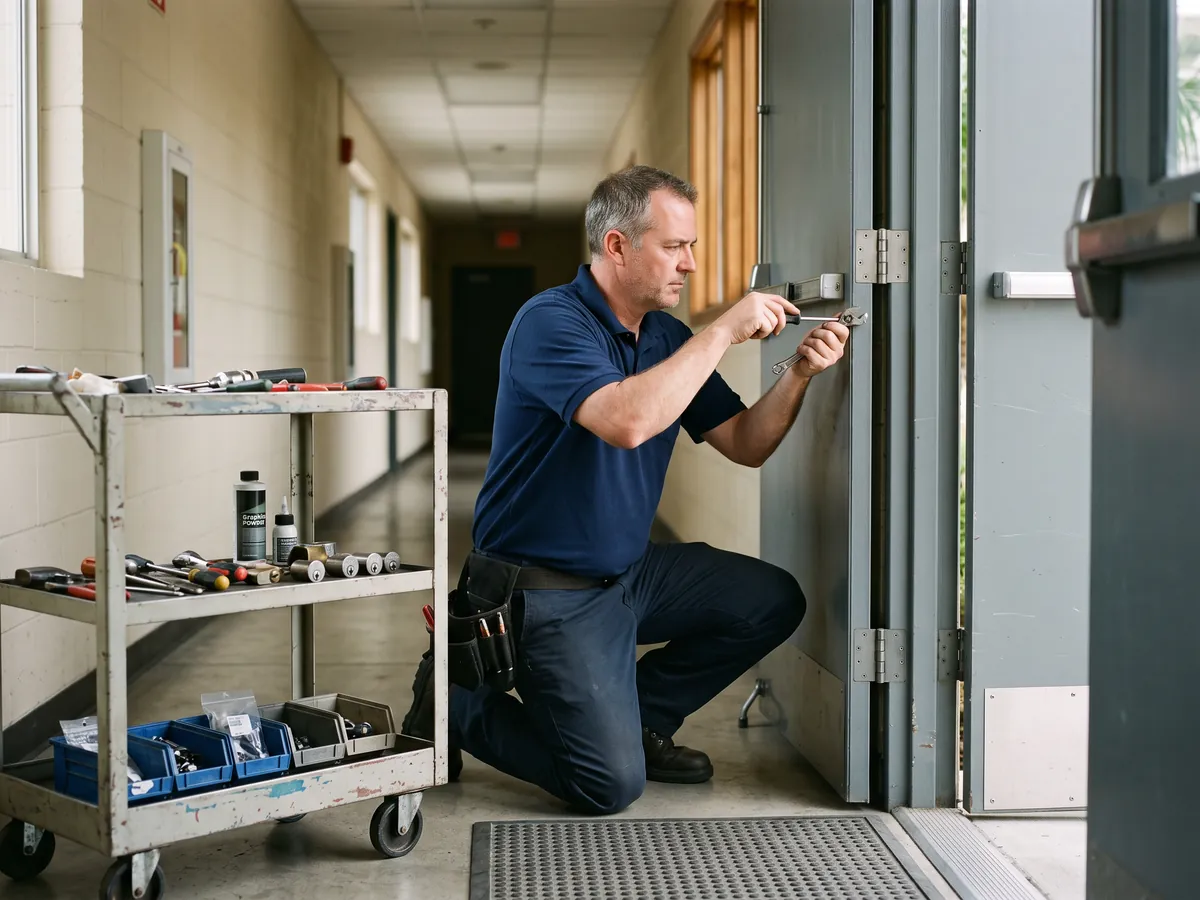
The scariest lock isn't the broken one. It's the one that still works most of the time. A bolt that sometimes stops short, a knob with a little play, a key that needs coaxing: each is an early warning, and each tends to fail on the worst day, usually while you're running late or your hands are full. Lock repair in Devore is simplest and cheapest when you catch the symptom early. We look at the lock while it still functions, find the worn part before it snaps, and fix it on the spot where we can. You leave with a lock you trust, not one you plan around.
Lock Repair in Devore: what to expect
What you do before the visit matters. Don't force a key that won't turn, because bending or snapping it adds a second problem. Skip penetrating oil in the cylinder, which tends to gum up with dust; a puff of dry graphite is safer. Try the spare key, then see whether the trouble appears with the door open or shut. With a keypad lock, replace the batteries first. If the lock can't secure the door, think about interim protection: use another entrance, wedge a chair or doorstop bar under the knob from inside, or block a sliding door's track with a dowel. Take photos of the lock, the door edge and any brand marking you can see, and note when the problem started and whether anything changed, such as painting, a storm or a move. If the cause is a break-in, touch as little as possible and keep photos. These few steps shorten the visit and help us bring the right parts for lock repair in Devore.
Work included on a typical visit
- Symptom diagnosis in place. Diagnosis happens at the door because that's where the fault shows up. A lock bench-tested in a shop can behave perfectly, while the same lock fights a sagging hinge or swollen jamb at your entrance. We test under real conditions first, then decide whether the lock comes off at all.
- Worn or bent keys and fresh cuts. A surprising number of hard-to-turn locks turn out to have healthy cylinders and a tired key. Copies of copies lose accuracy, and bent keys drag on the pins. We cut a fresh key from the original or by code, test it, and sometimes that single step ends the repair without removing the lock.
- Latch and deadbolt mechanism repair. Bolts stick for specific reasons: a bent bolt, a gummed-up mechanism, a screw rubbing the inside of the door. We open the mechanism, find the contact point, clean or straighten as needed, and replace the latch or bolt assembly when it's beyond saving.
- Strike plate and jamb correction. Doors move with heat, humidity and settling, and their locks follow. If the latch no longer hits the strike hole squarely, we adjust the plate or recut the pocket, and drive a long screw through the top hinge if the door has sagged. The lock is often fine; the geometry changed.
- Mortise, multipoint and patio locks. Patio doors and French doors rely on hooks, rollers and multipoint bars that wear and misalign over time. Rather than replace the whole mechanism, we adjust the strikes, lubricate moving parts and replace the broken link. When the bar itself is bent, we source a matching one.
How Devore shapes the job
Inland summers bake lubricant out of cylinders, soften plastic parts and swell wood doors, so locks that work in the morning stick by afternoon. We use dry lubricants that don't run or varnish, adjust strikes for seasonal movement, and check hinge screws that loosen as metal expands. West-facing doors and dark finishes take the worst of it. A yearly dry-lube service on exposed locks is cheap insurance.
Dust, distance and outbuildings shape lock repair on larger lots. Shop doors, barns and gates get little attention until they stop working. Grit works into cylinders, long driveways make a second trip costly, and padlocks and gate latches take weather abuse. We bring a broad range of parts and plan the visit around every lock on the property. Gates and padlocks get checked on the same visit.
Houses with original hardware bring mortise cases, glass or porcelain knobs, skeleton keys and plaster walls, and parts that were last made decades ago. Lock repair here is closer to restoration: we clean and rebuild what can be rebuilt, fit new springs and cams where they exist, and tell you honestly when a lock is worth saving. Soft jambs and short old screws often deserve attention too.
Common situations
- A keypad deadbolt on a back door starts beeping and stalling after the last storm, and the owner assumes the electronics are dead. We change the batteries, find that the door has swollen slightly so the bolt rubs, ease the strike and test the lock through several cycles. The keypad was fine; the door was fighting it.
- After someone tried to pry a side door in a neighborhood off Shelter Way, the deadbolt still turns, but the jamb is splintered and the strike is bent. We secure the door during the visit, replace the strike with a reinforced one, repair the wood with long screws into framing, and suggest rekeying if any keys might have been taken.
- A homeowner repainted the front door without removing the hardware, and now the latch sticks and the strike pocket is packed with dried paint. We scrape the paint from the latch face and strike, clean the mechanism, lightly lubricate it with a dry product and check that the door closes freely without catching on anything.
- A garage entry door sticks every afternoon in summer, then behaves by evening. Heat swells the wood slightly and presses the latch into the strike. The lock isn't the problem. We adjust the strike position, ease the hinge side of the door and check the weatherstripping, so the latch has room to move in every season.
Step by step with Julian's Locksmith
- Tell us exactly what the lock does. Call (951) 903-3193 and describe the symptom in your own words: where it happens, when it started and what it sounds or feels like. Mention the type of door, whether the problem appears open or shut, and anything you've tried. Those details help us bring the right tools and parts.
- Confirm ownership and try the key. Before opening anything, we confirm you're entitled to have the lock repaired: ID plus proof of residence, or authorization from the owner or manager. Then the key goes in, first yours, then any spare. That simple test can change the whole direction of the repair.
- Isolate key, cylinder, latch or door. We check the usual suspects methodically: loose mounting screws, a rubbing latch, a swollen or sagging door, worn pins, a cracked cam. Whichever link fails first, we show it to you, so you can see what we found rather than taking our word for it.
- Quote the repair beside the alternative. We put the options side by side: repair this lock, replace it, or repair and rekey. Each comes with its trade-offs in plain language, including the security grade you'd have afterward. If the honest answer is that repair isn't worth it, we say so.
- Repair, rekey or replace as agreed. The work follows the agreement. That might be re-pinning a cylinder, rebuilding a latch, repositioning a strike or swapping the lock. We keep your trim and finish when we can and protect the paint and wood around the door while we work.
- Test under real conditions and leave care notes. Before we go, you try the key, the thumbturn and the door several times. We point out any remaining weakness, such as an old lock we'd eventually replace, so you leave knowing the state of the hardware, not just that it works today.
How we quote the job
- Repair versus replacement. When a repair is likely to be followed by another one soon, replacement is often the better value. We weigh the lock's age, grade and condition against the cost of the fix. If the repair approaches the cost of a new lock, we say so and quote both.
- How many locks and what kind of property. The number of locks, the type of door and the kind of property all shape the quote. A single deadbolt is straightforward. A business with rated doors, panic hardware or a master key system needs more care and sometimes coordination with the building owner.
- Timing, travel and temporary securing. A planned repair earlier in the week is the simplest to schedule. A door that won't lock tonight can mean extra steps to secure it, then a follow-up repair. We explain your options, including what you can safely do yourself until we arrive.
Every job gets a clear quote before any work starts. Call (951) 903-3193 with the details and we'll tell you what to expect for your situation in Devore.
Mistakes to avoid
- Forcing a key or using pliers to turn it. A key that binds is telling you something, and brute force bends the blade, damages the pins or breaks the key off inside. Stop, back the key out, try the spare and let the symptom guide the repair.
- Replacing the lock when the problem is the door. If hinges have loosened or the frame has moved, a new lock fails the same way within weeks. A quick test with the bolt detached from the door shows whether the lock or the door is at fault before any parts are bought.
- Repairing a forced lock and forgetting the frame and the keys. After attempted entry, a split jamb or bent strike weakens the whole assembly, and any missing keys remain a risk. Check the structure and consider rekeying before declaring the door fixed.
Practical tips before you call
- Photograph the lock, the door edge and any brand or model marks on the faceplate. Add a quick measurement of the distance from the door edge to the center of the lock. With those details, we can tell right away whether a part is easy to find and often arrive with the right one.
- Lift the door gently by the handle while you turn the key or the thumbturn. If the lock suddenly works, your hinges have let the door sag. That points to a hinge or screw repair, not a lock repair, and it means a new lock would only fail the same way within a few months.
- Don't make copies from copies. Each generation loses a little accuracy, and the worn key then wears the pins. Keep an original or a code-cut master somewhere safe and cut new keys from that. We can cut by code for many locks, which gives you a clean key without an original.
- Use dry graphite or a PTFE-based dry lubricant in a sticking cylinder, and skip oil and general-purpose sprays. Wet products leave a film that collects dust and gums up in summer heat. A short puff of powdered graphite, worked in by inserting and withdrawing the key a few times, is far gentler on the pins.
Service in Devore
Devore is about 8 miles from our San Bernardino base, roughly 14 minutes in light traffic via Kendall Drive or Palm Avenue to I-215 North, through the Devore junction onto I-15 North, exit Kenwood Avenue for Devore Heights. When you call, you get an arrival estimate based on where the technician is and the traffic at that moment.
Stuck on the shoulder or in a parking lot along I-15? Get somewhere safe, turn on your hazards, and give us the nearest exit or business so we can find the car without guessing.
About Devore: Cajon Boulevard through Devore is an original stretch of U.S. Route 66, which crossed the Cajon Pass from 1926 until 1979, when Interstate 15 replaced it.
| Neighborhoods | Verdemont, Devore Heights, Cable Canyon, Kimbark Avenue area, Glen Helen, Kenwood Avenue corridor |
|---|---|
| ZIP codes | 92407 |
| Main routes | I-15, I-215, Cajon Boulevard, Kenwood Avenue |
| From our San Bernardino base | about 8 miles via Kendall Drive or Palm Avenue to I-215 North, through the Devore junction onto I-15 North, exit Kenwood Avenue for Devore Heights; Devore Road exit for Glen Helen and lower Cajon Boulevard |
Lock or door hardware trouble in Devore?
Call (951) 903-3193 with the address and what the door or lock is doing. We'll quote the repair before any work starts.
Frequently asked questions
What if my door won't lock and you're closed?
We take calls every day from 6:30 a.m. to 11:30 p.m. Weekends are included. If the door can't be locked, use another entrance, brace it from inside with a security bar, and keep valuables out of sight. Call at the next opening and we'll schedule the repair.
Can you repair any brand of lock?
We repair common residential and commercial brands such as Schlage, Kwikset, Yale, Baldwin, Medeco, Sargent and Corbin Russwin, plus many older mortise locks. Parts availability varies by model and age. If a part for a discontinued or imported lock can't be found, we tell you right away and quote the closest suitable replacement.
Do I need to be there for the repair?
Someone with authority must be present or reachable. We verify ID and proof of residence or ownership before working on a lock. For rentals and businesses, the owner or property manager can authorize by phone or in writing. We don't repair a lock for someone who can't show they're entitled to.
Is it okay to use WD-40 on a sticking lock?
It might loosen things briefly, but wet sprays leave a film that traps dust and can gum up the pins, especially in inland summer heat. Dry graphite or a PTFE-based lubricant is better for cylinders. If a lock keeps sticking, the cause is usually a worn key, grit or alignment, which a spray won't cure.
Will repairing the lock change my keys?
Not unless you ask. Cleaning, replacing a spring or cam, and adjusting a strike leave your key working as before. If you've lost keys or want to cut off old copies, we can rekey the cylinder during the same visit, and you get new keys while the lock stays in place.
What does lock repair include?
It covers everything from a fresh key and a cleaned cylinder to replacing a cam, spring, latch or strike, plus correcting door alignment when that's the real cause. We also repair mortise, patio and keypad locks. At your door we test first, then explain the fix and quote before we start. If repair isn't worthwhile, we say so.
How far is Devore from your base?
Devore is about 8 miles from our San Bernardino base, roughly 14 minutes in light traffic. Arrival time depends on traffic and on the job the technician is finishing, so we give you an estimate on the phone before you commit.
Related services in Devore
Lock Repair in nearby cities
- Lock Repair in Glen HelenSan Bernardino County
- Lock Repair in MuscoySan Bernardino County
- Lock Repair in North FontanaSan Bernardino County
- Lock Repair in RialtoSan Bernardino County
- Lock Repair in FontanaSan Bernardino County
- Lock Repair in EtiwandaSan Bernardino County
- Lock Repair in San BernardinoSan Bernardino County
- Lock Repair in BloomingtonSan Bernardino County
