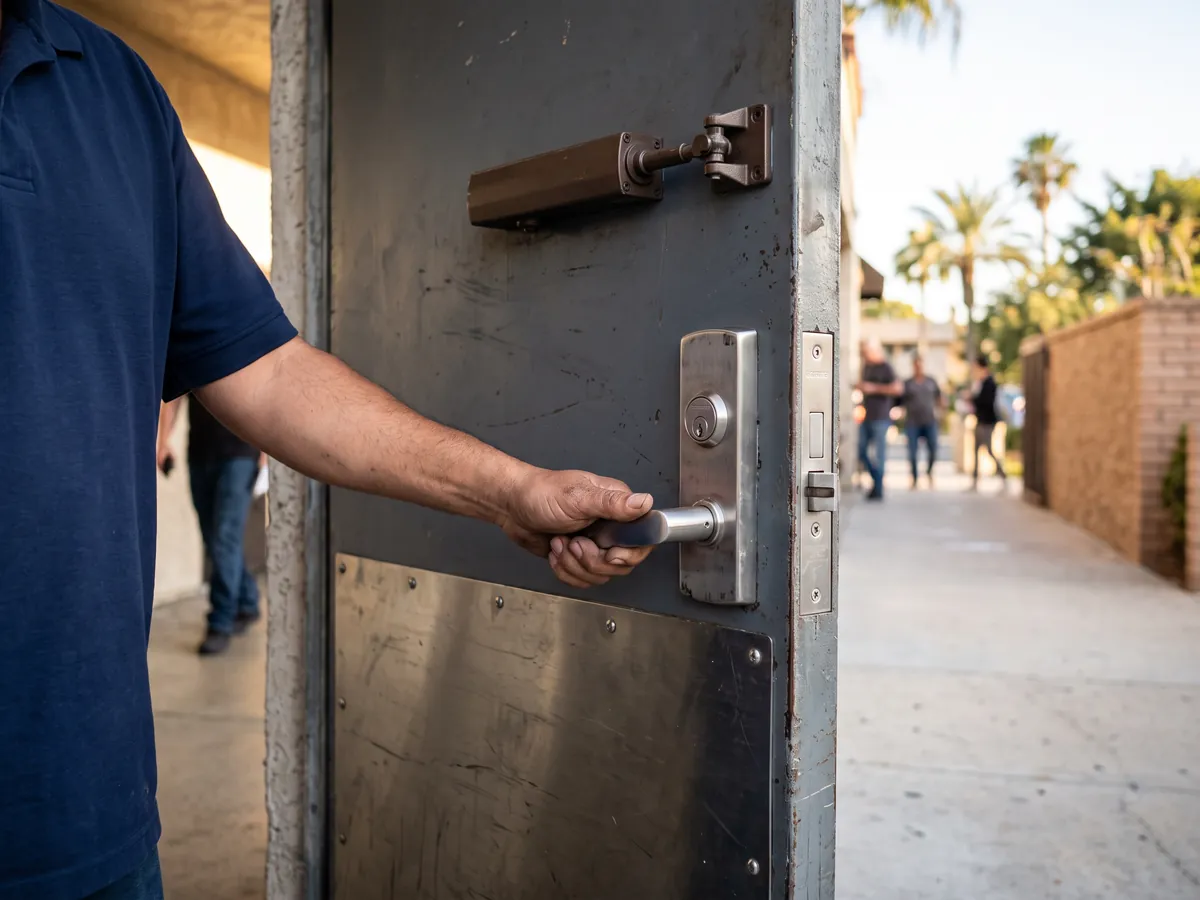
Devore, San Bernardino County
Fixing a Loose Door Lock in Devore: Tighten, Repair or Replace
Short answer: A loose door lock in Devore nearly always comes down to four causes: mounting screws that backed out, a trim ring that spun free, a worn spindle or cylinder, or stripped holes in the door. Snugging the two long screws fixes many. If it keeps loosening, call Julian's Locksmith at (951) 903-3193 and we'll repair or replace it at your door.
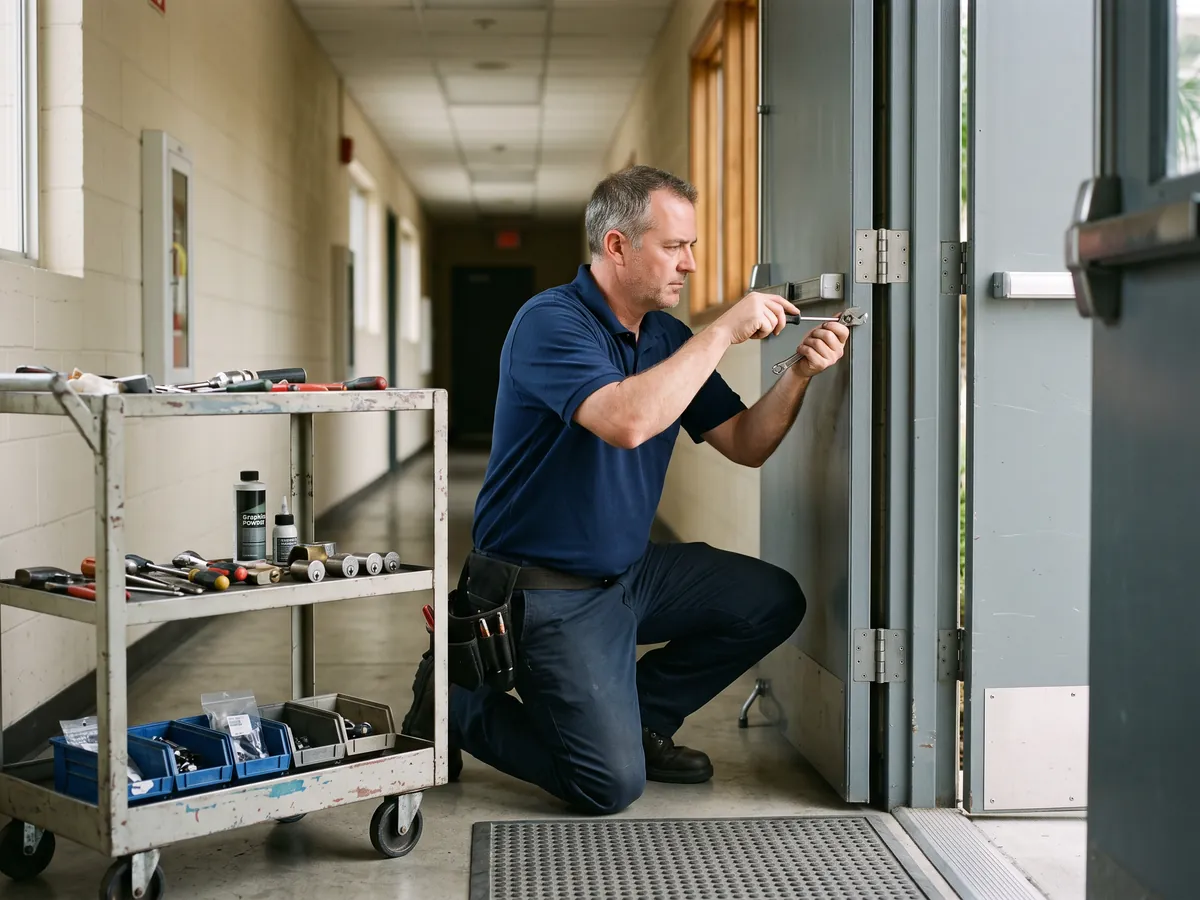
Doors move. In Devore, a wood door can swell with winter moisture and shrink again during a dry Santa Ana spell, a dark steel door on a west wall bakes through summer afternoons, and a stucco house shifts a little as the ground settles. Each movement twists the lock against the screws that hold it. After enough seasons, that twisting backs out a mounting screw or pulls a latch faceplate loose. It is why a loose door lock so often shows up after a change in weather rather than after any single event. Julian's Locksmith corrects the lock and, where we can, the door movement that loosened it.
What to know first in Devore
Locks loosen for ordinary reasons. Every time you turn a knob, a small twisting force travels into the screws, and doors that get slammed, caught by wind or leaned on by kids add shock on top of it. Heat and cold add more, since metal and wood expand at different rates and each cycle works against the threads. Inexpensive locksets raise the odds, because many builder-grade sets use thin zinc castings and short thread engagement that stop holding after a few years. Painters and previous owners contribute too: a lock pulled off for painting and reinstalled in a hurry often goes back with crossed threads, mismatched screws or an over-tightened plate that distorts the latch. Understanding the cause points to the right fix. If the screws are the only issue and the threads are healthy, a proper re-torque with a dab of removable thread-locker can last for years. If the lock keeps working loose, something underneath is worn or damaged, and repeated tightening only delays the replacement.
What we can do on-site
- Loose deadbolt cylinders and thumbturns. When the key turns the whole cylinder instead of the bolt, the cylinder isn't held firmly in the door. It may have lost its mounting ring, its screws may have backed out, or the tailpiece may be engaging poorly. We remove the thumbturn side, re-seat the cylinder, correct the tailpiece orientation and secure the assembly.
- Knobs that spin without opening the door. When the handle turns freely but the latch doesn't move, the connection between handle and latch has failed. The spindle may have rounded off, the set screw may have slipped, or the latch retractor may have broken inside the door. We open the lock up, find the break and replace the weak part so the door opens normally again.
- Stripped screw holes and oversized bores. Wood screws that spin without biting are the classic reason a lock won't stay tight. We pack the hole with glued hardwood dowels, let the glue set, then drill a clean pilot hole for a fresh screw. On hinge and strike screws, longer ones reach the framing behind the jamb and give the hardware something solid to pull against.
- Patio, garage-entry and side doors. Side doors live outdoors, where sun, sprinklers and dust speed up looseness. We tighten, protect the threads, and swap in weather-rated hardware when the old lock has corroded past the point of being worth saving. Tell us when you call which door it is and what it's made of.
- Mortise sets and older hardware. Old brass and bronze knobs frequently loosen because the set screw has worn flats into the spindle. We can dress the spindle, fit a new set screw and, when needed, reproduce a missing one. Where hardware is truly beyond repair, a replacement in a similar style keeps the look of a vintage door intact.
Local factors in Devore
Inland heat is hard on door hardware. Dark steel and fiberglass doors facing the sun expand through the afternoon and contract at night, which works mounting screws loose and tightens latch tolerances. Plastic parts in budget sets can soften and crack. If your loose door lock sits on a south or west wall in Devore, expect to re-torque it each season, use thread-locker, and consider a lock with brass or steel internals. Shade or weatherstripping on the door helps too.
Out on larger lots, workshops, garages and outbuildings often have older locks and wood doors that move with the weather. Dust, dogs and farm equipment mean doors get slammed and leaned on, and a loose lockset may have been patched with whatever screws were handy. Give us the address or nearest road, such as Kendall Drive, when you book. We bring reinforcement plates and weather-rated hardware, and fix the lock and the door edge together so the repair lasts through the seasons.
Foothill homes near BNSF Cajon Subdivision rail line catch wind-driven dust and grit, plus big swings between day and night temperatures, and wood doors flex with them. Santa Ana gusts also slam poorly latched doors and pound the hardware. Grit in the latch makes a lock feel sticky and tempts people to force it. We clean, lubricate with dry products that don't hold dust, set the strike so the latch seats firmly without banging, and check hinge screws that wind may have worked loose.
Situations this covers
- In a 1960s ranch house, the latch faceplate and strike screws have been tightened three times in two years, and each time they chew out of the soft wood again. We would rebuild the holes with dowels and fit a reinforced strike with long screws, then show the owner why the earlier fixes never held.
- Suppose a small office's side door, used daily by the cleaning crew, has a handle held on by two stripped screws and a lot of hope. The manager only noticed when the door stopped latching on its own. We'd stop by during the workday, rebuild the screw bosses, replace the lever if it is too worn, and make sure the door locks behind everyone.
- A homeowner swaps in a keyless deadbolt over a weekend and finds the new lock wobbles and the bolt drags. The cause is a backset mismatch and a slightly oversized bore that nobody noticed during the do-it-yourself install. We'd correct the latch setting, true up the bore, and confirm the bolt travels freely before batteries ever go in.
- A garage-to-house door is a classic: steel slab, a lever that wiggles, and a closer that slams it every day. The slam is what loosened the lock. We'd tighten the hardware with thread-locker, confirm the strike still catches the latch cleanly, and suggest adjusting the closer speed so the door stops shaking the lock loose again.
Step by step with Julian's Locksmith
- Tell us exactly what moves. Tell us how the problem behaves. Does it loosen overnight or over weeks? Does it get worse in heat or after the door slams? Has anyone worked on the lock lately? Those clues narrow the cause before we arrive, and they hint at whether the door itself is involved.
- Get a quote and a time. We give you an honest arrival estimate and a price based on what you've described. It's a plan, not a trap, and we'll adjust it only if we find something different on site. If the problem sounds bigger than a simple tightening, we'll explain what that could involve.
- Test and diagnose on site. Next, the interior trim comes off. We look at the screws, spindle, cylinder and bore, check for cracked plastic or worn brass, and test the latch by hand. The inspection shows whether a tune-up is enough or whether we're dealing with worn-out hardware.
- Choose repair or replacement. If replacement makes sense, we show you options in your finish, match your existing backset and, if you like, rekey the new lock to the keys you already carry. That avoids a new key ring and keeps any keyed-alike locks working together.
- Refit and test under load. After repairs, we reassemble in the right order and tighten the screws gradually, checking the handle after each pass. We apply removable thread-locker where it helps, confirm the latch retracts fully, and make sure the door closes and latches without a push.
- Hand-off and follow-up checks. You'll leave with a simple routine: a quick wiggle test on each lock every few months, a note on how to tighten screws properly, and our number, (951) 903-3193, in case anything starts moving again. Small checks keep a good repair good.
How we quote the job
- How deep the problem goes. The biggest swing is between a lock that only needs tightening and one that needs parts. Re-torquing screws with thread-locker is a short job. Replacing a spindle, spring or cylinder, or rebuilding the door opening, takes more time and materials. We diagnose first, then quote the real cause rather than the symptom.
- Door and frame condition. Materials matter. Solid wood is easy to dowel and re-drill, steel doors usually need only careful re-seating, and thin hollow-core doors take reinforcement hardware. Aluminum patio doors may need inserts or different screws. Each approach has its own time and parts cost, and we'll explain which one applies.
- Keys, rekeying and matching. Keyed-alike setups make matching more involved. If the front and back doors share one key and we replace one lock, the new cylinder has to be rekeyed to match. We'll ask which doors share keys and handle the pinning as part of the work.
Every job gets a clear quote before any work starts. Call (951) 903-3193 with the details and we'll tell you what to expect for your situation in Devore.
Mistakes to avoid
- Spraying oil all over a loose or sticky lock. Heavy oil washes into the latch, collects dust and eventually turns the mechanism gummy, which makes it harder to repair. Stick to dry graphite or PTFE in the keyway and a drop of light lubricant on the latch.
- Putting up with it because the door still works. A loose lock is a countdown. The wear spreads from the screws to the spindle to the latch, and the failure tends to happen at the least convenient moment, like when you are leaving for work or guests are waiting outside.
- Using longer screws that weren't made for the lock. Random hardware-store substitutes can bottom out, bind the chassis or strip the soft zinc posts inside. Use the original screws or exact matches, and replace them one at a time instead of mixing sizes.
What to do before we arrive
- Check your hinges while you're at it. A door that has sagged even a few millimeters pulls the latch against the strike and stresses the lock every time you close it. Tightening the hinge screws, or replacing one with a three-inch screw that reaches the framing, often calms a loose-feeling lock.
- Do the wiggle test each season. Grab every knob, lever and deadbolt thumbturn and give it a firm, honest rock. A little play you feel today becomes a lot of play by summer. Catching it early means a screwdriver may be all you need.
- Think about the latch before removing a lock from a closed door. With the knob gone, the spring latch can pop out and leave you on the wrong side of a shut door. Keep a screwdriver nearby, prop the door open, or hold the latch back with tape while you work.
- Before you take a lock apart, take a photo. A quick picture of the interior trim, the spindle and the screw positions makes reassembly easy. It also helps us identify the brand when you call, which means we arrive with parts that actually fit your lock.
Reaching Devore
Devore is about 8 miles from our San Bernardino base, roughly 14 minutes in light traffic via Kendall Drive or Palm Avenue to I-215 North, through the Devore junction onto I-15 North, exit Kenwood Avenue for Devore Heights. When you call, you get an arrival estimate based on where the technician is and the traffic at that moment.
Commercial jobs on busy stretches like Kimbark Avenue sometimes need a parking plan, especially for storefront doors or roll-up gates. Let us know about loading zones, red curbs or parking structures before we arrive.
About Devore: Kimbark Elementary, a K-6 technology and environmental science magnet school in the San Bernardino City Unified School District, opened on Kenwood Avenue in 1968.
| Neighborhoods | Cable Canyon, Glen Helen, Cajon Boulevard corridor, Kenwood Avenue corridor, Verdemont, Keenbrook |
|---|---|
| ZIP codes | 92407 |
| Main routes | I-15, I-215, Cajon Boulevard, Kenwood Avenue |
| From our San Bernardino base | about 8 miles via Kendall Drive or Palm Avenue to I-215 North, through the Devore junction onto I-15 North, exit Kenwood Avenue for Devore Heights; Devore Road exit for Glen Helen and lower Cajon Boulevard |
Lock or door hardware trouble in Devore?
Call (951) 903-3193 with the address and what the door or lock is doing. We'll quote the repair before any work starts.
Frequently asked questions
Why is my door lock loose?
Most loose locks come from mounting screws that have gradually backed out through daily use, slamming and seasonal door movement. Other causes include a worn spindle, a cylinder that isn't held firmly, stripped holes in the door, or a loose cover plate. Where the movement happens decides the fix. Julian's Locksmith can sort it out on a visit anywhere in Devore; call (951) 903-3193 and describe which part wobbles.
What if the screw holes in my door are stripped?
In wood, we fill the hole with a glued hardwood dowel or repair plug, let it set, and drill a clean pilot hole for a fresh screw. On hinges and strike plates, longer screws reach the framing behind the jamb. Hollow-core and steel doors need different fixes, such as reinforcers or inserts. Tell us the door material when you call.
Why does my lever handle droop?
A drooping lever usually has a worn or broken return spring inside the lock, or a loose connection between the lever and the spindle. Heavy levers and busy doors wear springs faster. Some models take a replacement spring cassette; on others it is more practical to replace the lever. We test the spring and tell you which route makes sense.
Can I tighten a loose door lock myself?
Often, yes. Remove the interior trim or cover plate, find the two long mounting screws, and snug them evenly while checking that the handle still turns freely. A dab of blue thread-locker helps them stay. If the screws spin without gripping, the lock still wobbles after tightening, or the latch starts to bind, stop and call us before something strips.
What do you need from me before you start?
Confirmation that you live at the address, own the property or are authorized to have the work done. Photo ID is usually enough, along with something showing the address, such as a utility bill or lease. For rentals, we may ask for the landlord's okay. It protects you and the property, and it takes only a moment.
Is a loose door lock a security risk?
It can be. A lock that moves on the door is easier to twist, pry or wear out, and looseness throws the bolt and latch out of line with the strike so they don't engage fully. It is also a sign that parts are wearing. A quick repair now usually costs much less than replacing the lock later, so don't leave it for months.
How far is Devore from your base?
Devore is about 8 miles from our San Bernardino base, roughly 14 minutes in light traffic. Arrival time depends on traffic and on the job the technician is finishing, so we give you an estimate on the phone before you commit.
Related services in Devore
Loose Door Lock in nearby cities
- Loose Door Lock in Glen HelenSan Bernardino County
- Loose Door Lock in MuscoySan Bernardino County
- Loose Door Lock in North FontanaSan Bernardino County
- Loose Door Lock in RialtoSan Bernardino County
- Loose Door Lock in FontanaSan Bernardino County
- Loose Door Lock in EtiwandaSan Bernardino County
- Loose Door Lock in San BernardinoSan Bernardino County
- Loose Door Lock in BloomingtonSan Bernardino County