
Devore, San Bernardino County
Door Latch Repair in Devore: Find the Real Problem
Short answer: Most latch repairs are small: dry lubricant, a tightened hinge screw, a repositioned strike or a new spring latch that drops into your existing knob. We quote before starting. If someone in Devore is trapped behind a jammed door and in distress, call 911 first; for anything calmer, call (951) 903-3193.
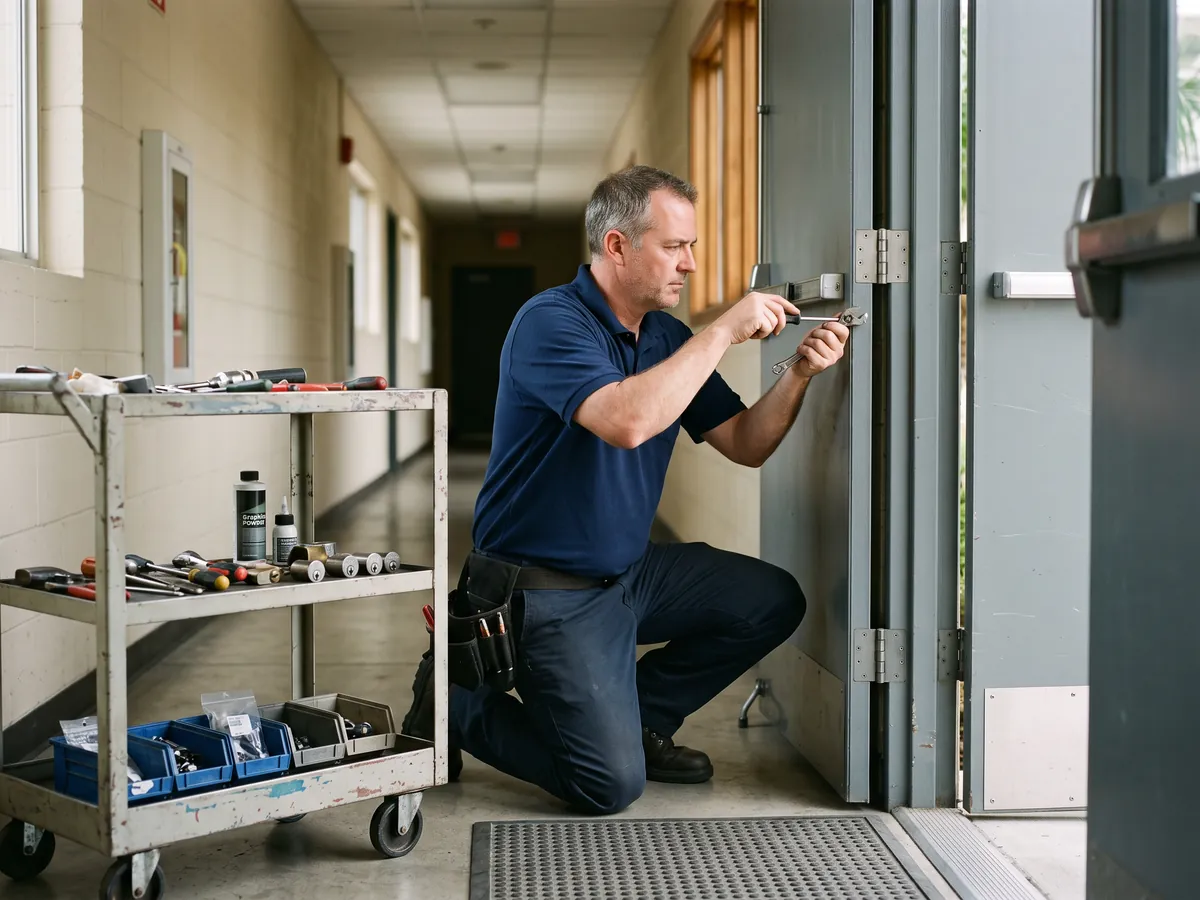
Renters and property managers in Devore call about latches more than you might expect. A tenant can ask the landlord in writing for the repair; a manager can send us with a work order and we treat a bedroom door as seriously as a front door. Entry doors matter most, because California Civil Code section 1941.3 expects working deadbolts on the main swinging entry doors of rentals, and a front door that won't latch properly makes the deadbolt hard to use. We confirm who authorized the work, fix the part that failed, and tell you plainly what's a repair and what's a replacement.
Latch Repair in Devore: what to expect
A door latch looks simple, which is why people are surprised when it fails. The visible part is the beveled tongue in the door's edge, but behind it sit a spring, a retractor linked to your knob or lever, and a faceplate that screws to the door. In a typical residential lock the latch slides into a one-inch hole bored from the edge and meets a cross bore drilled through the face of the door. The backset, the distance from the door's edge to the center of that cross bore, is usually 2-3/8 or 2-3/4 inches, and those numbers decide which replacement fits. Latches fail in a few predictable ways: dirt or paint locking the tongue, a spring that gives up, a retractor tab that snaps so the handle spins freely, or a faceplate that has worked loose and lets the whole assembly rock. Each has a different cure, and none of them needs the whole lockset replaced. Our job on a latch repair in Devore is to work out which part has failed, repair it where that makes sense and replace it where it doesn't.
How we can help in Devore
- Sticking and gummed-up latch bolts. Paint is the usual culprit on interior doors in Devore: someone rolled the edge of the door with the latch closed, and the tongue is now glued to its faceplate. We score the paint, free the tongue and clean the barrel. If the spring has been pinched too long, we swap the latch rather than nurse it along.
- Knobs and levers that turn without retracting the latch. When the knob turns but the latch stays put, the link between handle and latch has broken. On many Kwikset and Schlage sets that link is a small tab on the latch itself, or a cracked spindle. We take the handle off, test each part and replace whichever one failed rather than the whole lockset.
- Strike plate and latch alignment. Older homes often have a strike painted into the jamb, so the tongue hits paint and stops short. We scrape the plate clean, deepen the pocket and refit it. Filing the latch to fit would only hide the real problem and weaken the part, so we fix the opening instead.
- Replacing the latch assembly. Swapping a latch is quick when the new one matches. Where an old oversize latch has chewed the door edge, we may need to square the bore or fit a wider faceplate. We sand and finish the cut so the edge looks clean and the plate sits flush instead of rocking against the jamb.
- Freeing a door that a failed latch has jammed shut. Before anybody puts a shoulder into a stuck door, know that a forced door usually costs more than the original problem. Splintered jambs, cracked strike plates and torn stops add carpentry. We free the latch by hand and replace the failed part so the same door doesn't trap anyone again.
What's different about Devore
Inland heat bakes finishes, dries out lubricant and moves doors. A door that fit in spring can bind on an August afternoon, and metal latch parts expand just enough to stick in a tight barrel. In Devore we use dry lubricants that won't run or gum in the heat, and we make sure the latch side of the door keeps a small, even gap. South- and west-facing doors suffer most. If your latch sticks mainly in the afternoon, mention the time of day.
Older houses in Devore have doors that have been painted a dozen times and hung on hinges that have moved with the house. Latches there fail from paint layers in the strike, tongues filed to fit, and original knobs whose parts are no longer made. We try cleaning and realigning first, since original hardware is part of the home's character, and we replace latches inside old knobs where we can. Old mortise latches get their own care, and we'll tell you honestly when a part is simply gone.
On larger properties in San Bernardino County, latch problems show up on barns, shop doors, guest houses and side doors where nobody checks the hardware. Dust, animals and wide temperature swings wear latches fast, and hinge sag on heavy doors is common. We make mobile visits to farther addresses, so tell us your road, any gate codes and whether the driveway is dirt. For outbuilding latches, send a photo so we bring suitable parts.
Common situations
- Picture a property manager's call: the tenant's front door in an apartment off Palm Avenue won't catch, and the deadbolt only throws if the door is held tight. The manager authorizes the work by phone and meets us at the unit. We'd find the strike buried under paint, reset it, fit a new latch, and the tenant gets a door that closes and locks with normal effort.
- Consider a rental turnover where a painter sprayed every interior door with the knobs still on. Three latches won't retract because paint has cemented the tongue to the faceplate. We'd score the paint, free the tongues, clean the barrels and swap any that stay sticky. Doing the whole unit in one visit beats the next tenant calling about door after door.
- Imagine a neighbor advised filing the latch tongue shorter so it would fit the strike. Now the door rattles, the tongue barely catches and a gust pushes it open. We'd show what was removed, replace the latch with a new one, and realign the strike to the correct line, which is what should have been done in the first place.
- For example, a parent in Devore hears a toddler crying behind a bathroom door whose privacy button has jammed. If the child seems hurt or panicked, 911 comes first. Otherwise, keep the child talking, try the emergency hole with a small screwdriver, and call us at (951) 903-3193 if it fails. We'd open the door from the hall side and replace the broken mechanism.
Step by step with Julian's Locksmith
- Tell us what the door is doing. Call (951) 903-3193 and tell us what you see and hear. Does the door stay shut? Does the knob feel springy or loose? Is the tongue stuck out? Which side fails? Two or three details narrow the field, and a phone photo of the door edge and the knob helps us bring the right latch.
- Confirm who we're working for. Ownership checks apply to latch repairs, not just lockouts. Tell us if you're a tenant calling for the landlord, a family member helping a parent, or a manager sending a vendor, and we'll explain which paperwork or call settles it. Then we get on with the door itself.
- Test the door open and closed. We also test the extras: whether a deadlatch plunger depresses, whether a privacy button releases, whether the handle returns by itself. A latch that works flawlessly with the door open can fail once the door's weight or the weatherstrip pushes back, so the closed-door test counts as much as the bench check.
- Quote the repair and the alternative. If the latch is the problem, the quote covers the part, the labor and any door-edge work. If the door is the problem, we explain what we can do and what belongs to a carpenter. No work starts until you've approved the number, and anything we find later gets requoted first.
- Repair, adjust or replace the latch. The repair itself is usually short. Cleaning and lubricating a latch takes only a few minutes, and a replacement goes quickly when parts match. Door-edge damage and odd sizes add time. We carry common latches and finishes, so most doors in Devore can be completed during the same visit.
- Test everything and hand off. A repaired latch should close with the door barely pushed, hold against a light tug and release without effort. We run the door through its full range, including a firm close, and confirm the deadlatch plunger engages on entry doors. You pay the price we quoted.
What affects the cost
- What the door and frame are doing. Door condition drives time. A well-hung door with a worn latch is a quick fix. A door that has sagged, scraped or warped may need hinge work first, or the new latch will fail for the same reason. We tell you what we see before we start.
- Entry-door security work. On front and back doors, a latch repair often comes with a strike upgrade: a heavier plate and 3-inch screws into the stud. It's optional but modest compared with the protection it adds. We quote it separately so the repair price stays clear.
- How many doors need attention. Whole-house latch tune-ups are common when a home is bought, sold or rented out. Interior doors get cleaned and aligned, a few tired latches get replaced, and the entry doors get a closer look. We quote the visit as a whole instead of treating each door as its own trip.
Every job gets a clear quote before any work starts. Call (951) 903-3193 with the details and we'll tell you what to expect for your situation in Devore.
Common errors that cost time and money
- Taping the tongue back or stuffing folded paper into the strike to keep a door shut. It stops the rattle and removes any latching action, so the door opens to a light push. On an entry door, it also hides the problem from everyone who lives there.
- Spraying a penetrating oil or general-purpose lubricant into the latch. It frees the tongue for a short while, then collects dust and lint and hardens into a sticky film. A dry PTFE or graphite lubricant lasts longer and doesn't turn the barrel into paste.
- Replacing the whole lockset when only the latch failed. A complete new set means new keys, a different finish and sometimes mismatched backsets, all for a part that sits in a hole in the door edge. Ask for a diagnosis first and decide afterward.
Advice before you book
- Pay attention to when a door sticks. If it catches fine in the morning and binds after a hot afternoon, wood movement is involved, and the cure is alignment rather than a new latch. Telling your locksmith the pattern changes what we bring and what we try first.
- Pocket door hooks and edge pulls sit on tiny screws in soft wood. If you hear the hook click but the door still slides open, the hold has stripped. Stop pulling on it, because the next hard tug can rip the whole pull out of the door edge.
- Rub chalk, lipstick or a soft pencil on the latch tongue, close the door and open it again. The mark on the strike shows where the latch lands. If it's high or low by more than a sixteenth of an inch, you're looking at alignment, not a broken latch.
- Tighten every hinge screw before you touch the latch. The top hinge carries most of the load, and a loose one lets the door drop and drag. If a screw just spins, replace it with a 3-inch screw that reaches the wall stud, and the door often pulls back into line.
Getting to Devore
Devore is about 8 miles from our San Bernardino base, roughly 14 minutes in light traffic via Kendall Drive or Palm Avenue to I-215 North, through the Devore junction onto I-15 North, exit Kenwood Avenue for Devore Heights. When you call, you get an arrival estimate based on where the technician is and the traffic at that moment.
Once the evening commute thins out on Kendall Drive, drive times usually shrink. That makes an evening call before closing a practical option for non-urgent jobs that you couldn't fit into the workday.
About Devore: A two-story Santa Fe depot served Devore as a railroad station from 1908 to 1930 and was demolished around 1958.
| Neighborhoods | Lytle Creek, Kimbark Canyons, Devore Heights, Verdemont, Keenbrook, Cajon Boulevard corridor |
|---|---|
| ZIP codes | 92407 |
| Main routes | I-15, I-215, Cajon Boulevard, Kenwood Avenue |
| From our San Bernardino base | about 8 miles via Kendall Drive or Palm Avenue to I-215 North, through the Devore junction onto I-15 North, exit Kenwood Avenue for Devore Heights; Devore Road exit for Glen Helen and lower Cajon Boulevard |
Lock or door hardware trouble in Devore?
Call (951) 903-3193 with the address and what the door or lock is doing. We'll quote the repair before any work starts.
Frequently asked questions
Why does my door latch fine in the morning and stick in the afternoon?
Wood swells and shrinks with temperature and humidity, and a house shifts slightly as the day warms. A door that's snug in its frame can start to bind by late afternoon, especially on sun-facing walls, and a loose hinge makes it worse. The fix is alignment: tighten hinges, adjust the strike, sometimes ease the door edge. A new latch rarely helps.
Is the latch the same as the deadbolt?
No. The latch is the beveled, spring-loaded tongue that holds the door closed when you turn the handle. The deadbolt is a separate square bolt, thrown by a key or thumbturn, that actually locks the door. A latch repair doesn't change your key or deadbolt. On entry doors the two should work together, which is why we check the strike and screws for both.
Can I just file the strike plate to make the latch catch?
A small, careful adjustment to the opening in a strike plate is a legitimate fix when the tongue misses by a hair. Filing the tongue itself, or opening the strike far beyond the plate, hides the problem and weakens the door. If the tongue is more than a sixteenth of an inch off, look at the hinges first. We can show you both.
Can you fix a latch that's stuck out and won't retract?
Yes. A tongue stuck out of the door edge is usually jammed with paint or grime, or its retractor is broken. If the door is closed, we release it by working the tongue through the gap or removing the hardware, without cutting the door. Then we clean or replace the latch. If someone is trapped and in distress, call 911 first.
Could a thief slip my latch open with a card?
A plain spring latch can often be pushed back from the gap, which is why locked doors rely on deadbolts. Entry-door latches include a deadlatching plunger meant to stop this once the door is closed and properly aligned. We check that on every entry door, but the deadbolt is the lock you should rely on. A reinforced strike with long screws helps too.
Do I need a new lockset, or just a new latch?
Often just the latch. It's a replaceable part inside most knob and lever sets, so we can swap it and keep your handles, keys and finish. A new lockset makes sense when handles are loose or worn, the finish is failing, the brand has been discontinued, or you want a different function or key system. We explain both options and let you choose.
How far is Devore from your base?
Devore is about 8 miles from our San Bernardino base, roughly 14 minutes in light traffic. Arrival time depends on traffic and on the job the technician is finishing, so we give you an estimate on the phone before you commit.
Related services in Devore
Latch Repair in nearby cities
- Latch Repair in Glen HelenSan Bernardino County
- Latch Repair in MuscoySan Bernardino County
- Latch Repair in North FontanaSan Bernardino County
- Latch Repair in RialtoSan Bernardino County
- Latch Repair in FontanaSan Bernardino County
- Latch Repair in EtiwandaSan Bernardino County
- Latch Repair in San BernardinoSan Bernardino County
- Latch Repair in BloomingtonSan Bernardino County
