
Key Fob Access Control in Chino: How It Works
By Julian's Locksmith, , 7 min read
A plain-language guide to how key fob access control systems work in Chino, covering credentials, readers, wiring, and what to plan for before installing one.
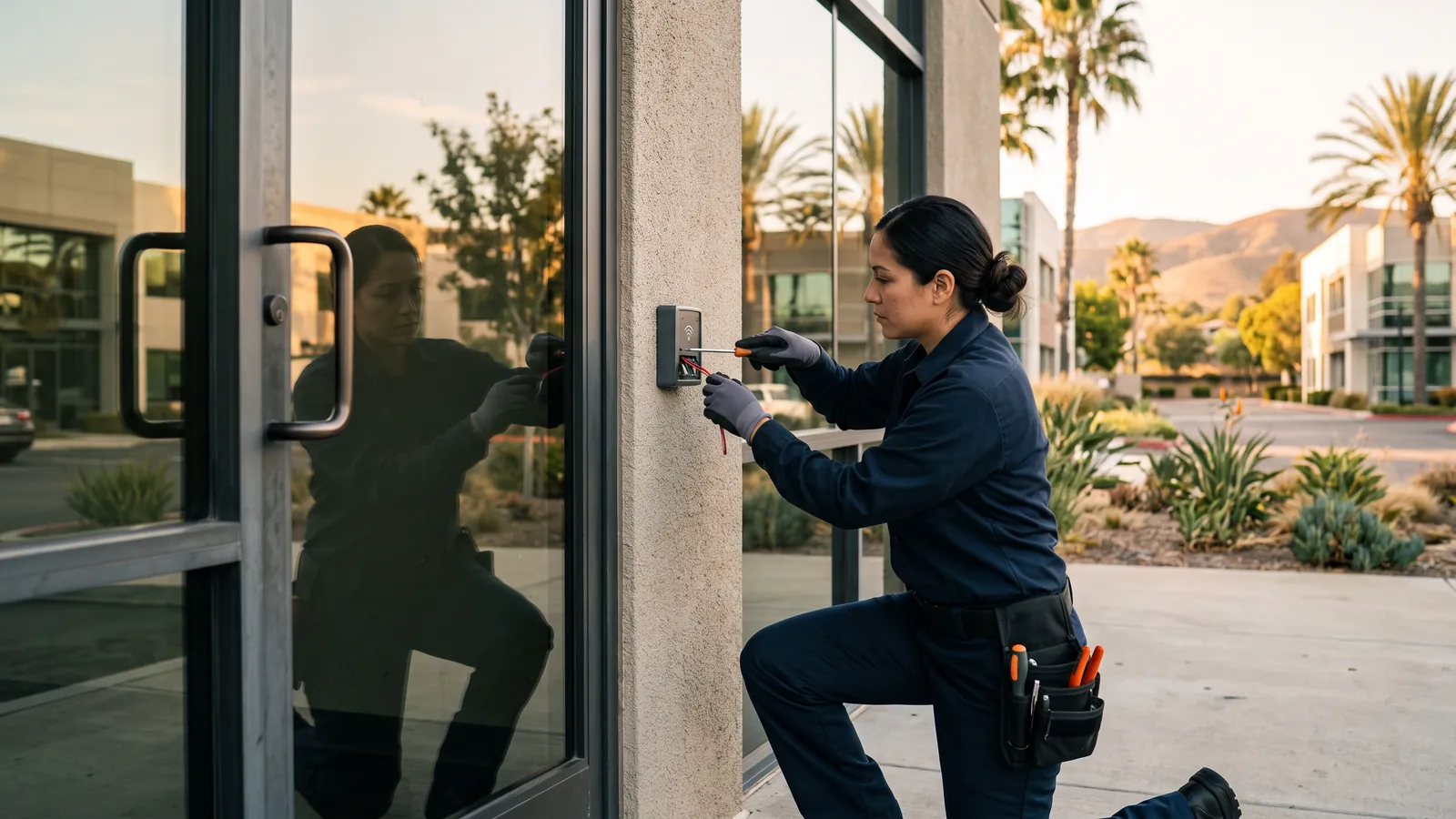
Key fob access control uses a small electronic credential and a reader wired to an electric lock to decide, in real time, who gets through a door. Instead of cutting keys, you assign and remove digital credentials from a central panel or app, which is why offices, gated communities, and warehouses around Chino are moving away from standard key rings. This guide breaks down the hardware piece by piece so you know what you're buying before anyone starts drilling into a door frame.
What a Key Fob System Actually Is
A key fob access control setup has four core parts working together: the fob itself, a reader mounted near the door, a control panel that makes the access decision, and an electric locking device that physically holds or releases the door. The fob doesn't contain a mechanical key pattern. It carries a code, usually stored on a small chip, that gets read wirelessly when you hold it close to the reader.
Most commercial and residential key fob systems in use today fall into one of two camps:
- Proximity (125 kHz) fobs – older, simple, read from a short distance, widely used in offices and apartment buildings
- Smart (13.56 MHz) fobs – newer, support encryption, often doubled up with card formats, used where tighter security matters
Both types do the same basic job. The difference is how resistant the credential is to cloning and how much data it can carry.
How the Reader and Panel Decide to Unlock the Door
When you present a fob, the reader energizes a small antenna loop inside it using radio frequency. The fob responds with its stored code. The reader passes that code to the control panel, which checks it against a list of active credentials and their permissions. If the code matches an active fob with permission for that door at that time, the panel sends a signal to release the lock.
This entire exchange typically takes a fraction of a second. The real value isn't speed, though. It's the record and the control. Every read gets logged with a timestamp, so a business owner can see which fob opened a specific door and when, without relying on anyone's memory. If a fob goes missing, deactivating it in the software takes it out of the approved list immediately, no rekeying required.
Standalone vs. Networked Systems
Smaller installations use a standalone reader with its own small memory, suitable for a single door with a limited number of users. Larger buildings use networked panels connected over wiring or your existing network, which allows one piece of software to manage every door, every schedule, and every credential from one screen. If you're deciding between the two, our Access Control overview covers how scale affects the choice.
The Lock Hardware Behind the Reader
The reader only makes a decision. Something else has to physically hold the door. Three types of locking hardware show up most often in key fob installations:
- Electric strikes – replace the standard strike plate, release the latch when powered
- Magnetic locks (maglocks) – a powerful electromagnet holds a metal plate on the door, no moving parts to wear out
- Electrified panic hardware – combines a push bar with an electric release, common on commercial exit doors
Each has tradeoffs. Maglocks hold strongly but need a backup power plan and must release automatically during a fire alarm per life-safety code. Electric strikes work well with existing mortise or cylindrical locks and are easier to retrofit. Electrified panic hardware is usually required wherever a door serves as a fire exit, since it must allow free egress from inside regardless of the access control state.
Wiring, Power, and Backup Considerations
A key fob system needs continuous low-voltage power to the reader and lock, plus a path back to the control panel. In an existing building, this often means running new wiring through walls or above drop ceilings, which is where most of the installation labor and planning time goes. Panels usually include a battery backup so the system keeps functioning through short outages.
Chino sees its share of fall Santa Ana wind events, and utility companies sometimes cut power preemptively during high fire-risk conditions. If your access control depends entirely on grid power with no backup, a gusty October evening can leave your door either locked out permanently or unlocked and unattended, depending on how the hardware is configured. Ask your installer directly whether your doors are wired fail-safe (unlocks without power) or fail-secure (stays locked without power), and make sure that matches both your security goals and fire code requirements for that specific door.
Key Fob vs. Card Access and Keypad Systems
Key fobs aren't the only electronic credential option, and it's worth knowing how they stack up.
- Card access uses a flat card instead of a fob, often combined with a printed photo ID. Many businesses choose cards when they also want visible employee identification. See our Card Access System in Chino page for how that compares.
- Keypads use a numeric code instead of a physical credential. Codes are easy to share accidentally, which makes auditing who actually used them harder.
- Mobile credentials use a smartphone app instead of a physical item, convenient but dependent on phone battery and app reliability.
Fobs sit in a practical middle ground: harder to clone than most keypad codes, cheaper per credential than full card badges with printing, and small enough to attach to a keyring without anyone needing to carry a phone or remember a number.
Managing Users: Schedules, Groups, and Employee Turnover
The software side of a key fob system is where the real day-to-day value shows up. You can assign fobs to specific doors, specific time windows, or specific days. A cleaning crew might get access only between 6 and 8 p.m. A manager might get access to every door at any hour. A seasonal employee hired for back-to-school retail staffing can be added in minutes and removed just as fast when the season ends.
This matters most during staff turnover. With mechanical keys, an employee who leaves on bad terms means you're stuck guessing whether to rekey the whole building. With fob-based employee access control, you deactivate one credential and everyone else keeps working without interruption. For businesses with regular hiring cycles, this alone often justifies the switch from mechanical locks.
Common Problems and When Repair Makes Sense
Key fob systems are generally reliable, but a few issues come up often enough to mention:
- Reader won't recognize a fob – usually a failing fob chip, reader wear, or a database sync issue between the reader and the panel
- Door unlocks on its own or stays locked – often a power supply problem, a failing lock solenoid, or a wiring fault introduced during other construction work
- System runs fine but logs are missing data – typically a panel or network communication issue, not a hardware failure at the door
Daylight saving time's end in early November occasionally exposes scheduling bugs in older panels where internal clocks don't adjust automatically, causing doors to unlock or lock at the wrong hour. It's worth checking your access schedules each fall to confirm they shifted correctly. If something isn't behaving right, access control repair usually starts with diagnosing whether the fault sits at the reader, the wiring, or the panel, rather than replacing the whole system outright.
Installation Considerations for Chino Properties
Chino's mix of warehouses, office parks, and residential gated communities each present different installation challenges. A warehouse loading dock door needs weather-resistant hardware and often a maglock rated for heavier doors. An office suite might only need a single reader at the front entry with a standard electric strike. Gated residential communities often combine fob readers with vehicle gate controls, which adds another layer of wiring and power planning.
Before any installation begins, a licensed installer should walk the property, note which doors are fire exits, check available power near each door location, and confirm whether you want a standalone setup or a networked system tied into other security measures. For a broader look at how this fits into a full security plan, see Access Control in Chino.
What Affects Installation Cost
Rather than a flat price, several factors shape what a key fob installation costs for a given property:
- Number of doors and whether wiring already exists at each one
- Type of locking hardware required (strike, maglock, or panic hardware)
- Whether the building needs fire-rated door compliance work alongside the access control
- Standalone versus networked panel software
- Number of credentials needed at rollout
A licensed installer should walk through these factors and provide a quote before any work starts, so there are no surprises once the job is underway.
Verifying Who You're Hiring
Access control work involves both low-voltage electrical wiring and security hardware, so it's reasonable to confirm that whoever installs your system is licensed. In California, locksmiths and security system installers fall under Business and Professions Code 6980 et seq., the Locksmith Act, and licenses can be verified directly through search.dca.ca.gov. Confirming a license before work begins protects you if something needs to be redone or serviced later, and it's a quick check worth doing regardless of which company you call.
Getting Key Fob Access Control Set Up in Chino
If you're weighing key fob access control for a Chino office, warehouse, or residential property, start with a walkthrough of your doors, power access, and fire exit requirements. Our Key Fob Access Control in Chino page covers local installation details, and our general Locksmith in Chino page lists the other services available if you need broader lock or door work done at the same time.
Julian's Locksmith is a licensed, insured, and bonded mobile locksmith (California locksmith company license LCO7891) available 24 hours a day, 7 days a week, including overnights, weekends, and holidays. Before any work begins, we verify identification and ownership or management authority for the property, and we provide a quote before starting. To talk through your property's doors and get a plan together, call (951) 903-3193 or reach out through our contact page.
Frequently asked questions
How is key fob access control different from a regular lock?
A regular lock relies on a cut metal key that mechanically moves pins. A key fob system uses a small electronic device that transmits a code to a reader, which checks it against a list of approved credentials before releasing an electric lock. You can disable a lost fob instantly without replacing any hardware.
Can key fob access control work during a power outage?
Most systems include a battery backup in the control panel, and the door hardware is specified as either fail-safe or fail-secure depending on fire and life-safety requirements. Fail-safe doors unlock when power drops; fail-secure doors stay locked. Your installer should match this to your building's exit and code requirements.
How many doors and users can a key fob system handle?
Small single-door setups can manage a handful of users on a standalone keypad or reader. Networked panels scale to many doors and hundreds or thousands of credentials, with software that organizes users by schedule, role, or department. The right size depends on the building and how access needs to be divided.
Do key fobs stop working if they get warm or dirty in summer?
Passive fobs have no battery and are generally stable in heat, though a cracked or heavily worn fob can fail to read reliably. Battery-powered fobs can lose range as the battery ages, which is more noticeable during temperature swings. Keeping fobs away from magnets and out of direct dashboard sun helps them last.
Is key fob access control allowed in a rental property in California?
There's no state law against it, but any lock change affecting tenant access needs to follow standard practices for providing working access and keeping records, and landlords should be mindful of protected-tenant lock change rules under Civil Code 1941.5/1941.6 if applicable. A licensed installer can advise on compliant setup for your property.
More locksmith advice
- Emergency Door Unlocking in Wildomar: 24/7 Local Home Lockout Guide
- Mechanical Safe Lock Repair in Costa Mesa: Full Guide
- Door Closes Too Slowly? Fullerton Fix Guide
- Commercial Latch Repair in Anaheim: Mistakes to Avoid
- Rekey Locks After Tenant Moves Out: North Fontana Guide
- App-Controlled Lock Installation in Nuevo: Fix Guide