
Door Closes Too Slowly? Fullerton Fix Guide
By Julian's Locksmith, , 8 min read
A troubleshooting guide for Fullerton doors that close too slowly, from quick hinge fixes to when a licensed locksmith should adjust or replace the closer.
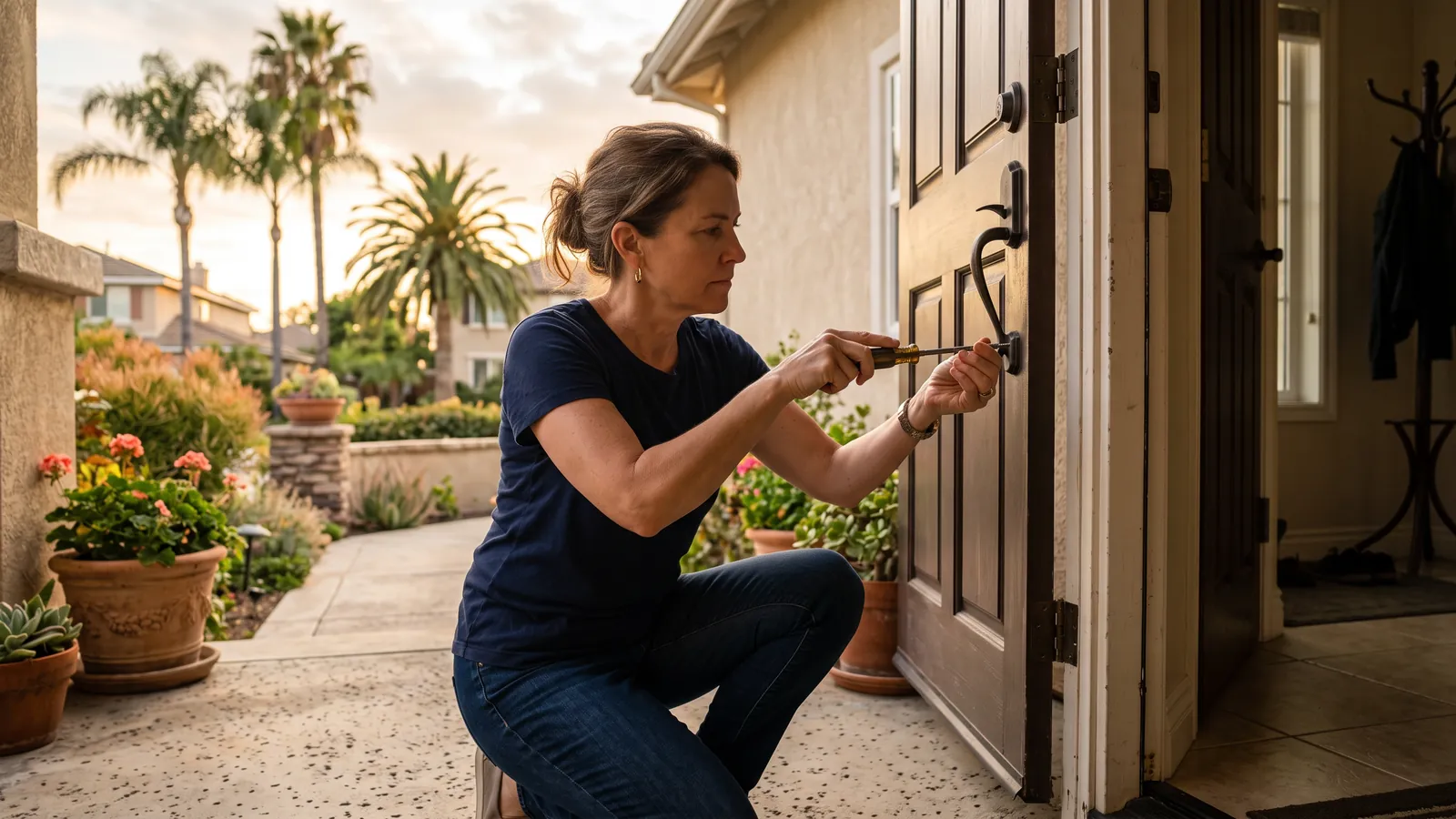
If your door closes too slowly, start with the two small adjustment screws on the closer body before assuming you need new hardware. Most of the time the fix is a simple valve turn, a hinge screw tightened, or an old spring replaced. Only a minority of slow-closing doors in Fullerton homes and businesses actually need a new closer or professional alignment.
Start With the Closer's Adjustment Screws
Nearly every surface-mounted door closer, the kind bolted to the top of the door and frame, has two or three small valve screws on the end of the cylinder. These control:
- Sweep speed — how fast the door moves through most of its swing
- Latch speed — how fast it moves the last few inches to engage the strike
- Backcheck (on some models) — resistance near full open, to protect the wall
Use a flathead screwdriver and turn each screw a quarter turn at a time, testing the door after each adjustment. Turning clockwise generally slows the door further; counterclockwise speeds it up. Go slowly. Overcorrecting a door closes too slowly problem can leave you with a door that slams instead, which brings its own set of issues — see our guide on a door that slams shut in Fullerton if that happens.
If the screws won't turn, feel stripped, or turning them does nothing to the speed, the internal valve mechanism has likely failed internally. That's a sign the closer itself needs attention rather than adjustment.
Check the Hinges Before Blaming the Closer
A surprising number of slow or sticky doors have nothing wrong with the closer at all. Worn, loose, or misaligned hinges change how much resistance the door meets as it swings, which can make even a properly adjusted closer seem too slow or inconsistent.
Things to check:
- Tighten any loose hinge screws. Stripped screw holes can be repaired with longer screws or wood filler and new pilot holes.
- Look for hinge pins that are bent, rusted, or missing their lubrication. A dry pin creates drag that slows the door's natural swing.
- Confirm the door hasn't dropped or sagged in the frame. Even a few millimeters of misalignment changes how the latch meets the strike plate, which can make the door appear to hesitate right before closing.
Fullerton's older housing stock, particularly homes near downtown and in the tree-lined neighborhoods close to Cal State Fullerton, often has original hinges that have simply worn down over decades. Replacing hinges is inexpensive compared to replacing an entire closer, so it's worth ruling out first.
Weather, Santa Ana Winds, and Seasonal Slowdowns
Fall in Southern California brings Santa Ana wind events and drier air, both of which affect doors more than people expect. Wind pressure against an exterior door changes the resistance the closer has to work against, sometimes making a properly adjusted door seem slower or faster depending on which way the wind is blowing that day.
Temperature matters too. Hydraulic fluid inside a door closer thickens slightly as it cools, and overnight lows in Fullerton dip noticeably once daylight saving time ends and the season shifts into late fall. A door that closed fine in August can close more sluggishly in November purely because the fluid inside the closer is reacting to cooler temperatures. This is usually minor and doesn't need a repair, but if the slowdown is dramatic, the closer may already be past its useful life and just showing it sooner in cold weather.
Wind-driven debris and dust from Santa Ana conditions can also work into door tracks and hinge mechanisms, adding friction. A quick wipe-down and light lubrication of hinges (not the closer itself) can resolve a lot of these seasonal complaints.
Check for Fluid Leaks
Open the closer arm and look closely at the body of the unit, especially around the end caps and adjustment screws. A thin film of oil, a dark stain on the door or frame below the closer, or visibly low fluid levels inside a damaged housing are all signs of a leak.
A leaking closer will almost always close too slowly, because it no longer has enough hydraulic fluid to build the pressure that drives the closing cycle. This isn't something you can fix with the adjustment screws — a leak means a worn seal or a cracked housing, and the unit needs to be rebuilt or replaced. We cover the signs and causes in more detail in our guide to a leaking door closer in Fullerton.
Leaks tend to get worse quickly once they start, so if you spot one, don't wait for the door to stop latching altogether before addressing it.
Back-to-School and Holiday Prep: Why Now Is a Good Time to Fix It
Fall in Fullerton means more foot traffic through front doors as school routines restart, and it's also when many households start getting ready for holiday guests. A door that closes too slowly, or doesn't fully latch, is a minor annoyance in August and a real inconvenience once you have kids running in and out after school or extra visitors in and out of the house over the holidays.
Commercial properties see something similar. Retail and office doors that are supposed to self-close for security or fire code reasons but drift shut too slowly can end up propped open by employees out of frustration, defeating the purpose entirely. If that describes a door at your business, take a look at our guide on a commercial door that won't close in Fullerton, since commercial closers often carry different code requirements than residential ones.
Getting a slow closer adjusted or replaced before the season picks up avoids dealing with it later when your schedule is tighter.
When the Latch Isn't Fully Engaging
The most important question to ask isn't just "is my door closing too slowly" but "does it fully latch when it finally closes." A door that eventually swings shut but doesn't seat into the strike plate is a security gap, not just a comfort issue. Test this by:
- Letting the door close on its own without pushing it the last few inches
- Listening and feeling for the latch bolt clicking into the strike plate
- Pushing gently on the closed door from outside to see if it holds or swings open
If the door closes slowly and then stops short of latching, the latch speed setting on the closer is probably too slow, the strike plate may be misaligned, or the door has sagged enough that the latch bolt and strike no longer line up. For rental properties, note that California Civil Code 1941.3 requires operable deadbolts on most rental unit doors — a door that won't fully latch undermines that requirement even if the deadbolt itself works fine.
Troubleshooting Order: A Quick Checklist
When a door closes too slowly, work through these steps in order before calling anyone:
- Test and adjust the closer's sweep and latch speed screws, a quarter turn at a time
- Tighten all hinge screws and check for a sagging door
- Lubricate hinge pins with a light machine oil (avoid WD-40 on the closer itself)
- Inspect the closer body and arm for leaks, cracks, or bent components
- Confirm the latch fully seats into the strike plate when the door closes on its own
- Check whether cold weather or wind conditions coincide with the slowdown
- If none of the above resolves it, the closer likely needs replacement
This order moves from free and fast to more involved, which keeps you from replacing a perfectly good closer when the real problem was a loose hinge screw.
When to Call a Locksmith Instead of Continuing to DIY
Some situations call for a professional rather than more trial and error:
- The adjustment screws won't hold a setting no matter how carefully you turn them
- You see fluid leaking from the closer housing
- The door is a fire-rated commercial door that must meet specific self-closing and latching standards
- The frame or door itself appears warped, making alignment a structural issue rather than a hardware one
- You've already replaced hinges and adjusted the closer and the door still won't latch reliably
A technician can also tell you whether your existing closer is a standard template that accepts a direct replacement, or whether the mounting holes and arm type require a different unit. That's useful information before you buy a replacement online and discover it doesn't fit.
For a deeper look at how closers work and what full replacement involves, our door closer repair service page walks through the process in more detail. And if your situation specifically matches the slow-closing pattern described here, the dedicated page on door closes too slowly in Fullerton covers local pricing factors and common door types found in the area.
What to Expect When a Locksmith Adjusts or Replaces a Closer
A licensed technician will typically start by testing the current closer's adjustment range, checking the door and frame for sag or warping, and inspecting the hinges. If the closer is salvageable, adjustment and hinge work can often resolve the issue in a single visit. If it needs replacement, the technician will match the new unit's size and mounting style to your door, then adjust it on site to the correct sweep and latch speed for your specific door weight and width.
Before any work begins, you should receive a clear quote based on what's actually wrong with your door, not a flat guess. Cost factors generally include the type of closer (standard, heavy-duty, or fire-rated), whether hinges also need replacement, and whether the door or frame needs additional alignment work. Julian's Locksmith holds California locksmith company license LCO7891, verifiable through search.dca.ca.gov, and carries insurance and bonding, so you're covered if anything unexpected comes up during the repair.
Reach Julian's Locksmith in Fullerton
If you've worked through the adjustment steps above and your door still closes too slowly, or you'd rather have someone confirm the diagnosis before buying parts, Julian's Locksmith serves Fullerton as part of our coverage across Orange, Riverside, San Bernardino, and Los Angeles counties. We're available 24 hours a day, every day of the week, including overnights, weekends, and holidays.
Call (951) 903-3193 to describe the problem and get a quote before any work starts, or reach out through our contact page. We verify ID and ownership or residency before starting work on any lock or door hardware, standard practice for a licensed locksmith. You can also browse our full range of locksmith services in Fullerton if you're dealing with more than one issue on the same property.
Frequently asked questions
Can I adjust a door closer myself?
Many surface-mounted closers have two small valve screws labeled for latch speed and sweep speed. Turning them a quarter turn at a time with a flathead screwdriver can speed up a slow door. Work slowly, test after each adjustment, and stop if the door starts slamming or you see oil leaking from the closer body.
Why does my door close slower in cooler weather?
Hydraulic fluid inside a door closer thickens slightly as temperatures drop, which can slow the closing cycle. In Fullerton, overnight lows in fall and winter are enough to notice a difference. If the slowdown is dramatic or the door never fully latches, the closer's internal seals may be wearing out rather than just reacting to temperature.
Is a slow-closing door a security problem?
Yes, if it does not fully latch. A door that drifts shut but stops short of engaging the strike plate can be pushed open without a key. This matters for exterior doors, rental units subject to Civil Code 1941.3, and commercial doors that need to self-close for fire and life-safety compliance.
How much does door closer repair cost?
Cost depends on whether the closer needs adjustment, a part replacement, or a full swap, plus the door type and mounting hardware involved. Julian's Locksmith provides a quote after inspecting the door and closer in person, before any work begins, so there are no surprises.
Should I repair or replace an old door closer?
If the closer is leaking fluid, the arm is bent, or adjustment screws no longer hold a setting, replacement is usually more reliable than repeated repairs. A technician can tell you whether your current closer is a standard size that accepts a direct replacement or needs a different mounting template.
More locksmith advice
- Emergency Door Unlocking in Wildomar: 24/7 Local Home Lockout Guide
- Key Fob Access Control in Chino: How It Works
- Mechanical Safe Lock Repair in Costa Mesa: Full Guide
- Commercial Latch Repair in Anaheim: Mistakes to Avoid
- Rekey Locks After Tenant Moves Out: North Fontana Guide
- App-Controlled Lock Installation in Nuevo: Fix Guide