
Commercial Latch Repair in Anaheim: Mistakes to Avoid
By Julian's Locksmith, , 7 min read
A latch that doesn't catch is more than annoying—it's a liability. Here are the mistakes Anaheim business owners make with commercial latch repair, and why they matter.
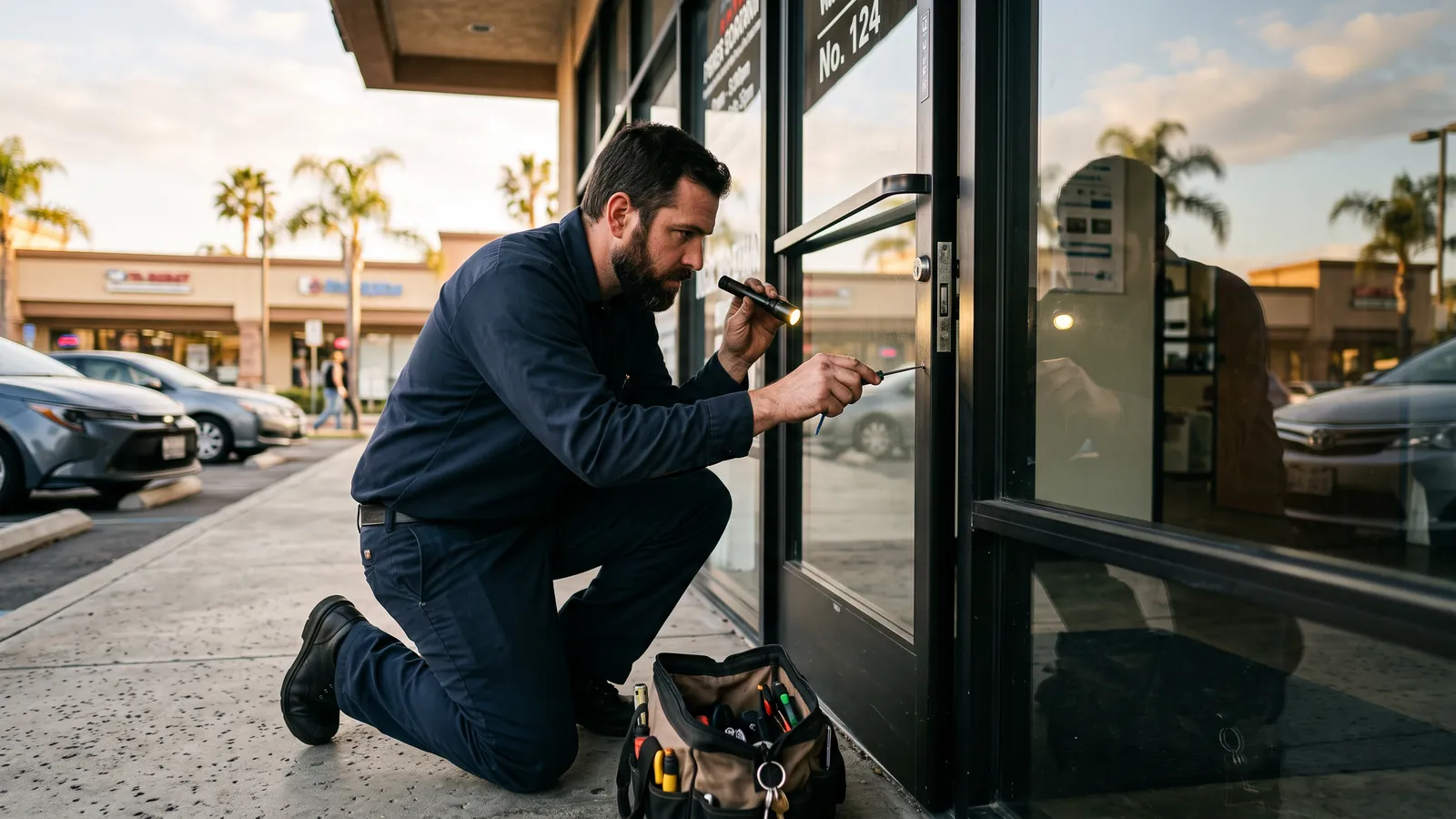
A door that won't latch properly in Anaheim is rarely a one-time glitch—it's usually a sign of misalignment, worn hardware, or a repair done the wrong way the first time. The mistakes below cover what commercial property managers and business owners get wrong when the latch sticks, doesn't catch, or needs force to close, and why each mistake costs more down the line.
Ignoring a Latch That "Sometimes" Catches
The most common mistake is treating an intermittent latch as a minor inconvenience. If the door catches nine times out of ten, it's easy to assume the tenth time was a fluke. It wasn't.
Latches fail gradually. A strike plate that's off by a millimeter today can be off by three millimeters in a month, especially on doors that see heavy foot traffic, like a retail entrance or a back-of-house delivery door. By the time the latch stops catching entirely, the hardware inside has often worn beyond a simple adjustment, and you're looking at commercial door hardware replacement instead of a quick repair.
Why This Matters More in Fall
Santa Ana wind events push air pressure against storefront doors unevenly, and that pressure can expose a weak latch that was already borderline. A door that latched fine in summer humidity can suddenly bounce open in a dry, windy October afternoon. If you noticed anything off before the winds picked up, that's the time to get it looked at, not after a gust blows the door open during business hours.
Assuming the Lock Is the Problem, Not the Latch
Business owners often call about a "broken lock" when the cylinder and deadbolt are fine, and the actual issue is the latch bolt or the strike plate. This distinction matters because repairing the wrong part wastes time and money.
A latch assembly includes the spring-loaded bolt, the strike plate it slides into, and often a separate deadlatch mechanism that prevents the door from being shimmed open with a card. If any one of these is bent, loose, or corroded, the door can still lock and unlock with a key while refusing to latch shut on its own. For a proper diagnosis, a technician checks:
- Whether the latch bolt extends fully and retracts smoothly
- Whether the strike plate is aligned with the latch bolt's travel path
- Whether the door itself has sagged on its hinges, throwing off the alignment
- Whether weatherstripping or a door sweep is interfering with closure
Skipping this diagnostic step and jumping straight to buying new hardware often means replacing a perfectly good lock while the actual culprit, a bent strike plate, goes untouched.
Forcing the Door Shut Instead of Scheduling Repair
Slamming a door that won't latch, or leaning into it with a shoulder, is a short-term fix that accelerates long-term failure. Each forced closure stresses the door frame, the hinges, and the latch mechanism a little more. Over weeks, this habit can warp a hollow metal door frame or crack a wood door at the strike plate cutout.
Employees who deal with a stubborn latch every day tend to develop workarounds: wedging the door, taping over the latch, or leaving it unlocked because locking it properly takes too much effort. Every one of these workarounds defeats the purpose of having a lock at all. If your business is in Anaheim and your staff has started doing any of this, it's a sign the commercial latch repair in Anaheim needed should have happened weeks ago.
Overlooking Narrow Stile Doors and Their Specific Hardware
Storefront glass doors with aluminum frames, common across Anaheim's retail corridors and shopping centers, use narrow stile locks that differ significantly from standard residential or office door hardware. These doors have less room inside the frame for the latch mechanism, which means the components are smaller, more specialized, and more prone to issues if installed or adjusted incorrectly.
A mistake we see often: a generic adjustment or replacement part gets installed on a narrow stile door, and it technically fits but doesn't engage the deadlatch correctly. The door appears to lock but can be defeated more easily than it should be. Narrow stile hardware requires attention to the specific mortise lock body, the matching strike, and the door's limited internal clearance. If your storefront has this type of frame, narrow stile lock repair in Anaheim addresses the hardware correctly rather than forcing a standard fix onto a non-standard door.
Neglecting Exit Devices on Fire-Rated and High-Traffic Doors
Panic bars and exit devices are a different category of hardware entirely, and treating them like a standard latch repair is a mistake with real consequences. These devices exist to let people exit quickly during an emergency while keeping the door secure from the outside. A latch that doesn't fully engage on an exit device defeats both functions at once.
Fire-rated doors with exit devices are often inspected as part of a business's occupancy requirements, and a malfunctioning latch can fail that inspection. Common exit device latch problems include:
- The latch bolt not extending fully due to a worn or misadjusted push bar mechanism
- Rod-and-cable systems inside vertical rod exit devices becoming misaligned
- Strike plates on the header or threshold that have shifted over time
- Corrosion inside the device from exposure to coastal humidity common in Orange County
Because these devices tie directly into life safety, exit device repair in Anaheim is worth doing properly rather than attempting a generic latch fix that doesn't account for the device's internal mechanics.
Delaying Repair Until After a Break-In Attempt
A weak or misaligned latch is an easier target than most business owners realize. A door that doesn't seat fully into its strike can sometimes be manipulated open with a shim or a strong push, even if the lock cylinder itself is in good condition. This is a far more common entry method than most people expect, and it doesn't require sophisticated tools.
Waiting until after an attempted break-in to address a known latch problem means you're repairing damage on top of the original issue, often on short notice and after hours. Since Julian's Locksmith is available 24/7, this timing pressure isn't a barrier to getting it fixed, but it's still more efficient and less disruptive to schedule the repair before an incident, not after one.
Hiring Based on Price Alone Without Checking Licensing
Commercial latch and hardware repair involves door frames, fire ratings, and sometimes access control integration, not just inserting a new part. A technician unfamiliar with commercial-grade hardware can make an adjustment that looks fine on the surface but doesn't hold up under regular use.
California locksmith companies operating commercially fall under Business and Professions Code 6980 et seq., known as the Locksmith Act, and licensing status can be verified directly through search.dca.ca.gov. Julian's Locksmith holds California locksmith company license LCO7891, and we're licensed, insured, and bonded. Before hiring anyone for commercial door hardware work in Anaheim, it's worth confirming their license is active rather than assuming a lower quote means equivalent work.
Not Accounting for Daylight Saving Time and Seasonal Traffic Shifts
As daylight saving time ends in early November, businesses in Anaheim often see shifts in foot traffic patterns around closing time, with more activity happening after dark. A latch that struggles to catch becomes a bigger liability when staff are locking up in low light and in a hurry, especially during the lead-up to the holiday season when retail hours extend and door traffic increases.
This is also the season when many businesses do a broader walkthrough of their property for holiday prep. Adding a hardware check to that walkthrough, rather than waiting for a failure, catches small latch issues while they're still inexpensive and quick to repair.
Treating Latch Repair as Separate From the Rest of the Door System
A latch doesn't operate in isolation. It interacts with the door closer, the hinges, the frame, and in some cases an access control system tied to the latch's position sensor. Repairing the latch without checking these related components is a mistake that leads to repeat service calls.
For example, if a door closer is slamming the door too hard, it can knock a freshly repaired latch out of alignment again within weeks. If the hinges are sagging, the door's weight shifts the latch's position relative to the strike, undoing the repair. A thorough approach looks at the whole system. This is where commercial door hardware in Anaheim services differ from a quick latch-only fix: they account for how all the parts work together, which reduces the chance you'll be calling again in a month.
Getting the Diagnosis and Repair Right the First Time
Before any work begins, we verify the business's details and provide a quote based on what the diagnostic shows, not a guess over the phone. This matters because latch issues range from a five-minute strike plate adjustment to a full hardware replacement, and the cost factors depend on the door type, the hardware brand, whether it's fire-rated, and whether related components like closers or hinges need attention too.
If you manage a storefront, office, or warehouse door anywhere in Anaheim and the latch isn't catching the way it should, it's worth having it looked at properly rather than guessing at a fix. You can look at our broader locksmith services in Anaheim for related commercial work, including rekeying, access control, and panic bar service.
How to Reach Julian's Locksmith in Anaheim
Julian's Locksmith is a mobile, licensed locksmith (California company license LCO7891) available 24 hours a day, 7 days a week, including overnight, weekends, and holidays. We serve Anaheim and 119 cities across San Bernardino, Riverside, Los Angeles, and Orange counties.
Before any work begins, we verify your ID and your ownership or authority over the property, and we provide a quote before starting. To schedule commercial latch repair or ask about a hardware issue, call (951) 903-3193, email info@julians-locksmith.com, or reach out through our contact page.
Frequently asked questions
How do I know if my commercial latch needs repair instead of full lock replacement?
If the key turns, the bolt moves, but the door doesn't catch or seats unevenly, the latch or strike is usually the problem, not the lock cylinder. A technician can test the latch throw, check alignment, and confirm whether hardware repair solves it before recommending replacement, which typically costs more and takes longer.
Can a loose latch really be a fire or life-safety code issue?
Yes. Many commercial doors in Anaheim are rated for fire separation or life safety and must latch positively to perform as designed. A door that doesn't fully latch can fail inspection and may not hold back smoke or flame as intended, which matters for insurance and code compliance, not just security.
Why does my latch act up more in fall and around Santa Ana wind season?
Wind pressure differentials and temperature swings cause storefront doors to shift slightly, and blown debris can jam strike plates. What looks like a sudden hardware failure is often an existing alignment problem that wind exposed. A latch repair now typically addresses the underlying cause, not just the symptom.
Is it safe to keep using a door with a sticky or misaligned latch?
Not for long. A latch that needs force to catch often gets propped open by employees, which defeats the lock entirely and creates a security and liability gap. It's better to schedule a repair before the hardware fails completely or someone leaves the door unsecured out of frustration.
Do I need a licensed locksmith for commercial latch repair, or can a handyman do it?
California commercial locksmith work generally falls under Business and Professions Code 6980 et seq., the Locksmith Act, and licensing can be verified at search.dca.ca.gov. For doors tied to fire ratings, access control, or exit devices, a licensed locksmith is better positioned to repair hardware correctly and keep the door compliant.
More locksmith advice
- Emergency Door Unlocking in Wildomar: 24/7 Local Home Lockout Guide
- Key Fob Access Control in Chino: How It Works
- Mechanical Safe Lock Repair in Costa Mesa: Full Guide
- Door Closes Too Slowly? Fullerton Fix Guide
- Rekey Locks After Tenant Moves Out: North Fontana Guide
- App-Controlled Lock Installation in Nuevo: Fix Guide