
Ontario, San Bernardino County
Broken Lock in Ontario? Same-Visit Replacement
Short answer: A broken lock on a rental is usually the landlord's to fix. California Civil Code 1941.3 requires a working deadbolt on a rental's main entry door, so report the failure in writing. Homeowners and businesses in Ontario can call Julian's Locksmith at (951) 903-3193; we confirm you're authorized, quote the job, then replace the lock on-site.
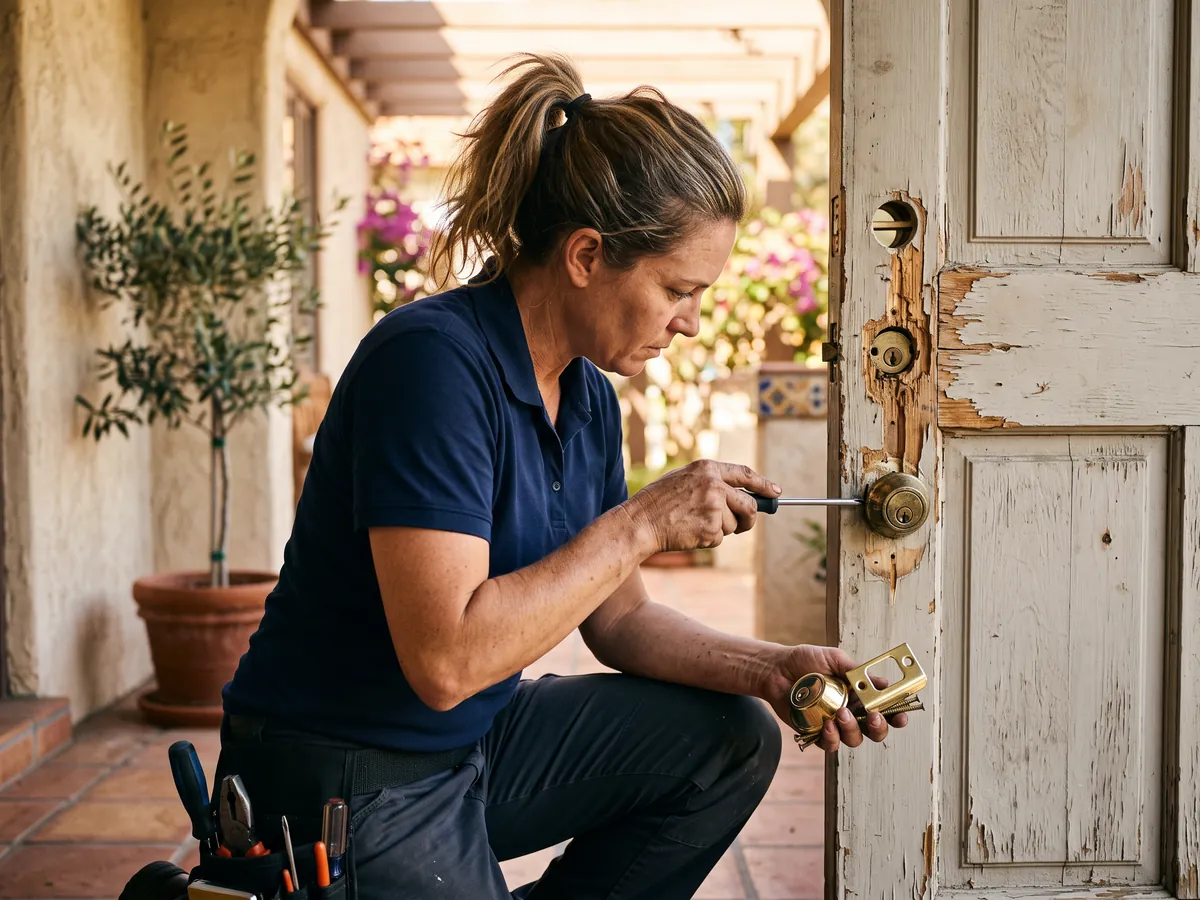
Replacing a broken lock is easy. Replacing it so it doesn't break again takes more attention. Most failed locks break for a reason outside the lock: a door sagging on its hinges, a strike that drifted out of line as the house settled, a closer slamming a storefront door, a west-facing door swelling in Ontario summer heat. When Julian's Locksmith replaces a broken lock, we look for that cause and correct it during the same visit, so the new hardware turns smoothly from day one and keeps doing it. You get a plain explanation of what broke and why, and a price before we start.
How this works in Ontario
Locks rarely break from normal use alone. Doors in Ontario live through heat, dust, settling foundations and wind, and the lock absorbs the strain whenever the door moves. A door sagging on worn hinge screws drags its bolt against the bottom of the strike until the bolt mechanism cracks. A strike that has crept out of line makes you push or pull the door to turn the key, and that extra torque snaps tailpieces and keys. Commercial doors with failing closers slam the latch into the frame over and over all day. Heavy key rings, yanking the door shut by the key, and sprayed oil that collects grit all add wear. So when we replace a broken lock, we also check the hinge screws, the strike alignment, the closer if there is one, and the gap around the door, then correct what we find. Swapping the lock without fixing the cause just means another call next year.
Work included on a typical visit
- Deadbolt replacement when the bolt or tailpiece fails. If you're replacing a broken deadbolt in Ontario, it's the cheapest moment to step up in quality, because the labor is about the same either way. We carry more than one grade on the van, explain the real differences in bolt material, mounting and cylinder, and let you choose. Your existing key can usually be pinned into the new cylinder.
- Knob and lever replacement for spinning or sagging handles. A knob that turns freely without pulling the latch back almost always means a broken spindle, retractor or cam inside the chassis. Rebuilding a residential knob is rarely worth it. We match the latch backset, swap the set, and if the old one took a key, set the new cylinder to your current key so nothing else changes.
- Handleset thumb-latch and grip replacement. A loose handleset grip usually means the lower mounting screw backed out or the post cracked. Left alone, the wobble wears the latch and the interior lever until the whole set quits. We reattach what can be saved and replace what's broken, keeping the existing screw holes in a decorative door instead of drilling new ones.
- Cylinder replacement when only the keyway fails. A cylinder can be ruined by a key snapping inside it and then getting dug at with a pick or a paper clip. Once the plug is scored and the pins are bent, extraction alone won't restore it. We remove the broken piece, inspect the plug, and replace the cylinder if it's damaged, which costs much less than a full lockset.
- Patio door, gate and French door lock replacement. Side gate locks break from sun, rust and Santa Ana gusts slamming the gate. A broken gravity latch or keyed gate lock leaves the pool, side yard and trash area open. We replace it with weather-resistant hardware sized to the gate post and frame, and key it to your house key if you want one key for everything.
Local factors in Ontario
Newer tract homes usually came with builder-grade locks: light Grade 3 knobs, deadbolts with short strike screws, and zinc parts that wear quickly on a busy front door. It's common for one to break within the first several years. When we replace a broken lock in a newer Ontario neighborhood, we suggest stepping up a grade on the entry door and keying it to the existing house key so the rest of the hardware still matches.
Inland summer heat is hard on locks. Doors swell and push bolts against their strikes, keypads fade and crack in direct sun, and smart lock batteries run down quickly on hot afternoons. When a lock breaks during a Ontario heat stretch, the cause is often the door, not the lock. We check for binding, adjust or relocate the strike, and suggest hardware and finishes that hold up better on sun-facing doors.
Apartment locks get heavy use and frequent turnover, so broken levers, worn cylinders and loose deadbolts come up often. In most cases the landlord or management company should authorize the replacement. We work with property managers in Ontario to replace broken locks on occupied units, key the new cylinder to the unit's current key or a new one, and deliver keys to the office with a note about what failed.
Example situations
- Picture a warehouse off Ontario Ranch Road where the rear exit door no longer latches on its own. Forklift traffic and a leaking closer have let the door bang against the frame for months, and the rim device latch is chewed up. We'd replace the latch or the whole device, fit a strike that suits the frame, and adjust the closer so the door shuts firmly without slamming.
- Imagine a two-story tract home in a gated neighborhood where the front handleset's thumb piece has snapped off. The HOA expects front hardware in the original finish. We'd identify the model, check whether the replacement thumb piece is available, and if it isn't, offer a handleset and deadbolt in the same finish, keyed to the garage-entry door so one key still runs the house.
- A typical call: a homeowner off Milliken Avenue gets home to find the deadbolt key spinning in a full circle while the bolt stays thrown. The tailpiece linking the cylinder to the bolt has snapped. We'd check the ID against the address, drill the cylinder to reach the cam and retract the bolt, then install a new deadbolt keyed to the key the family already uses.
- Here's a summer scenario: a side gate in West Ontario that's part of a backyard pool barrier. The gravity latch broke, so the gate swings open in the wind. Pool-barrier rules typically expect that gate to close and latch on its own. We'd replace the latch with a weather-resistant, self-latching model mounted at the right height and test that it catches every time.
How the visit works
- Tell us what the lock is doing. A photo saves a lot of guessing. Snap the outside of the lock, the inside, and the edge of the door where the latch or bolt sits. The brand name, the shape of the latch plate and the finish help us bring a matching replacement on the first trip.
- Verify authorization and open the door if needed. Before we work on any lock, we check ID and proof that you live there, own the property, or have permission from whoever does. A utility bill, lease or property tax record works. This step protects you, because it's exactly what stops someone else from having your locks changed.
- Find out why it broke. Some failures come from habits, like pulling the door shut by the key or using oil spray that turned to gum. Others come from the building: a closer slamming the door, or a frame twisted after a forced entry. We explain what we find in plain language so you know what changed.
- Choose the replacement and approve the quote. We measure the backset, bore, door thickness and latch style, then show you options that fit the existing holes. You'll see the differences in grade, function and finish, along with a total price for parts and labor. Nothing comes off the door until you've agreed to the quote.
- Remove, install and align. We remove the broken lock, clean up the bore, and install the new hardware with the correct latch and strike. If the strike was out of line, we move or deepen it. Short strike screws get replaced with longer ones that reach the framing behind the jamb.
- Key, test and hand over. Before we pack up, we take the old lock with us unless you want it, clean up any shavings, and walk you through the receipt. Smart locks are paired and tested with your phone and codes in place. Any follow-up part on order gets a scheduled return visit.
Pricing factors
- How much of the lock has failed. Sometimes a lock that seems broken just needs a strike adjustment, a tightened screw or a new cam. In that case the bill is mostly labor and small parts. We tell you if that's what we find, rather than replacing hardware that still has years left in it.
- Keying to your existing keys. Commercial locks on a master key system have to fit the system's keying, or the manager's master key won't work. That may mean pinning to the existing bitting chart. If the system is restricted, replacement cylinders may need to come through the authorized source.
- Door, frame and alignment repairs. If the lock broke because the door sagged or the strike drifted, fixing that alignment is part of doing the job right. Longer hinge screws and a strike adjustment add little cost. Larger corrections, such as a twisted frame or a split jamb, are quoted separately.
Every job gets a clear quote before any work starts. Call (951) 903-3193 with the details and we'll tell you what to expect for your situation in Ontario.
Advice before you book
- Keep at least one spare key cut from the original factory key, not from a copy of a copy. Worn copies push pins to the wrong height, and the jiggling they require wears the cylinder faster. A clean original-code key is easier on any lock, old or new.
- If a west-facing door sticks every summer afternoon, the door is swelling and pushing the bolt against the strike. Don't keep forcing the key. A strike adjustment or a slightly enlarged bolt hole stops the binding, and it prevents the strain that cracks deadbolt mechanisms over time.
- Snap a photo of your lock's edge plate and both faces before it fails completely. The brand stamp, backset, latch shape and finish are all visible there. If the lock breaks at a bad moment, that photo lets us bring a matching replacement on the first trip.
- Tighten loose knobs and levers when you first notice the wobble. On most residential sets the mounting screws hide under the interior rose or behind a small detent. A loose set lets the spindle shift out of line, and that is often how the internal parts eventually break.
What not to do
- Replacing a lock that wasn't actually broken. If the bolt drags only when the door is closed, the strike or hinges are the problem. The new lock will bind exactly like the old one, and the real cause keeps wearing down the replacement until it fails too.
- Throwing the old lock away before the new one is installed and tested. If the replacement doesn't fit or the door needs work, the old lock, even partly working, may be all that keeps the door secure overnight. Hold onto it until the job is truly finished.
- Buying a replacement lock before measuring the door. Backsets come in 2-3/8 and 2-3/4 inches, bores vary, and doors range in thickness. Adjustable latches cover some of it, but not all. A lock that doesn't match means returns, extra drilling, or a lock that sits crooked and binds.
Service in Ontario
Ontario is about 25 miles from our San Bernardino base, roughly 33 minutes in light traffic via I-215 North to the I-15 junction at Devore. When you call, you get an arrival estimate based on where the technician is and the traffic at that moment.
We plan the drive the way a delivery route gets planned: freeway first, Holt Boulevard where it makes sense, then the side streets you describe. A landmark or the color of your building helps the technician spot you.
About Ontario: Euclid Avenue, the Chaffeys' divided boulevard with a wide grassy median, was listed on the National Register of Historic Places in 2005 from Philadelphia Street in Ontario north to 24th Street in Upland.
| Neighborhoods | Creekside, North Ontario near Chaffey High School, Grand Park, Ontario Center, Ontario Ranch, Euclid Avenue historic corridor |
|---|---|
| ZIP codes | 91761, 91762, 91764 |
| Main routes | I-10, SR-60, I-15, Euclid Avenue |
| From our San Bernardino base | about 25 miles via I-215 North to the I-15 junction at Devore, then I-15 (Ontario Freeway) South to I-10 West and Holt Boulevard for downtown and the airport; stay on I-15 South to Ontario Ranch Road or SR-60 for Ontario Ranch. SR-210 West to I-15 South is the usual alternate. |
New or replacement locks in Ontario?
Call (951) 903-3193 and tell us which doors and what kind of hardware you have in mind. If you already bought the lock, keep the box handy so we can check it fits the door, and we'll quote the install before any work starts.
Frequently asked questions
Why does my door knob spin without opening the door?
The knob is no longer connected to the latch. Inside the knob, a spindle or retractor turns your twist into a pull on the latch, and when that part strips or breaks, the knob turns freely. On most residential knobs those parts aren't sold separately, so the usual fix is a new knob set. If the door is latched shut, we slip the latch to get it open first.
What hours can you replace a broken lock?
Julian's Locksmith works every day from 6:30 a.m. to 11:30 p.m. We're closed overnight. If a lock breaks while we're closed, use a working deadbolt, a door brace or a dowel in a slider track to stay secure, and call us when we open. We'll give you an honest ETA to Ontario when you call.
Is it worth upgrading when I replace a broken lock?
Often, yes, because you're paying for the labor either way. Moving from a light Grade 3 deadbolt to a Grade 1 or Grade 2 model costs more in hardware, not much more in time. Adding longer strike screws or a reinforced strike plate is a small extra that makes a meaningful difference. We'll explain the options and let you decide what makes sense.
How do I keep my door secure until you arrive?
If the deadbolt still works, use it. If only the deadbolt is broken but the knob latches, wedge a chair under the knob or use a portable door brace on in-swing doors. For a broken sliding door latch, drop a wooden dowel in the bottom track. Don't nail or screw the door shut; it's dangerous if you need to get out quickly.
How do I tell if it's the lock or the door?
Open the door and work the key and thumbturn. If the bolt moves smoothly with the door open but drags or stops when the door is closed, the lock is probably fine and the strike or hinges need adjusting. If it's stiff or broken even with the door open, the lock itself has a problem. That quick test can save you from replacing a perfectly good lock.
Who pays to replace a broken lock in a rental?
In California, the landlord is generally responsible. Civil Code 1941.3 requires landlords to keep a working deadbolt on a rental's main swinging entry door, and tenants are expected to report when it stops working. Send your landlord a written notice with a photo. Many leases prohibit tenants from replacing locks themselves, so get permission before calling a locksmith on your own.
How far is Ontario from your base?
Ontario is about 25 miles from our San Bernardino base, roughly 33 minutes in light traffic. Arrival time depends on traffic and on the job the technician is finishing, so we give you an estimate on the phone before you commit.
Related services in Ontario
Replace Broken Lock in nearby cities
- Replace Broken Lock in MontclairSan Bernardino County
- Replace Broken Lock in ChinoSan Bernardino County
- Replace Broken Lock in UplandSan Bernardino County
- Replace Broken Lock in Rancho CucamongaSan Bernardino County
- Replace Broken Lock in ClaremontLos Angeles County
- Replace Broken Lock in EastvaleRiverside County
- Replace Broken Lock in PomonaLos Angeles County
- Replace Broken Lock in EtiwandaSan Bernardino County
