
Devore, San Bernardino County
Devore Storefront Door Lock Replacement for Aluminum Shop Doors
Short answer: Do you need a new lock or just new keys? If the lock runs smoothly and the problem is a lost key or a former employee, rekeying is the lighter fix. If the bolt is bent, the key snapped inside, the case is worn or the door was forced, replacement is usually right. We tell you which applies before quoting storefront door lock replacement in Devore.
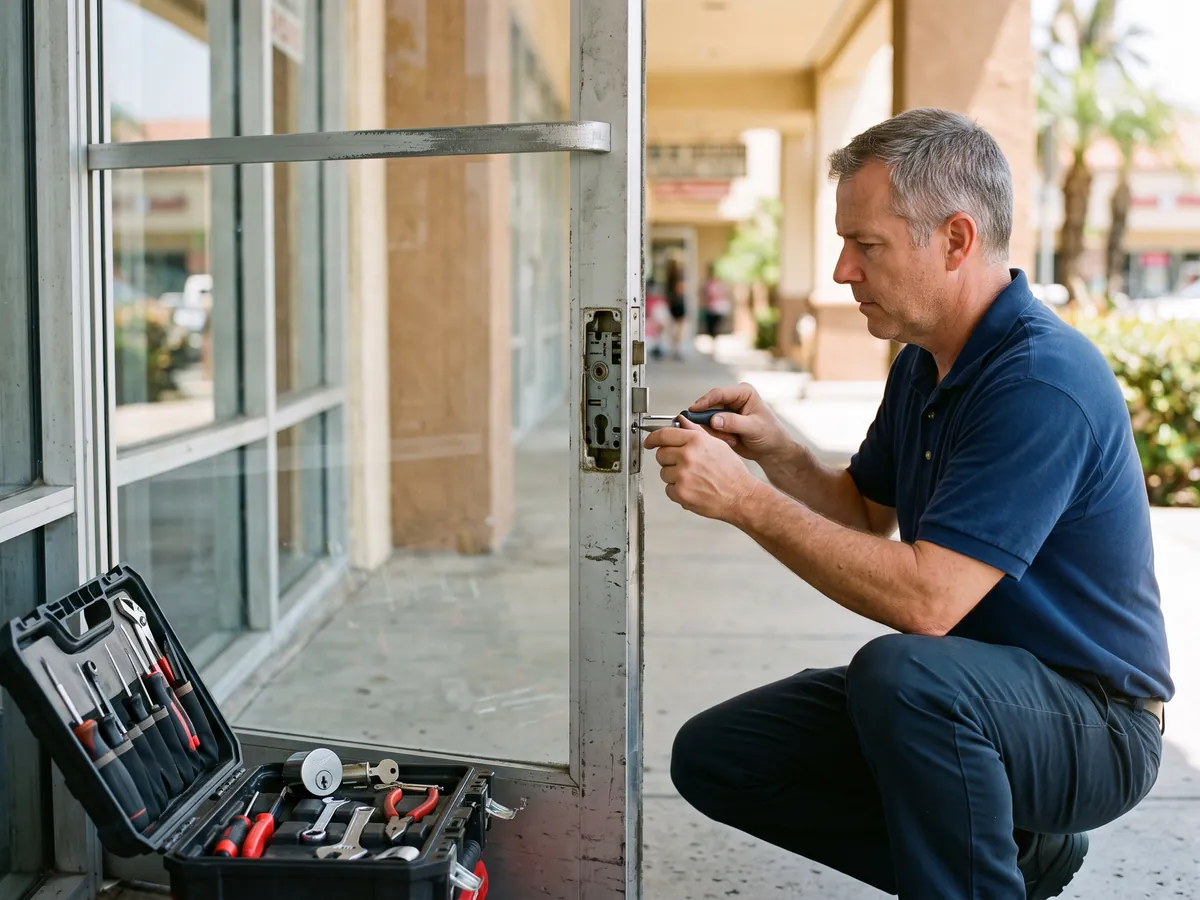
There comes a point when the third repair on the same storefront lock costs more than a new one. A deadlock that needed a shove last month and a jiggle this month is telling you the springs, hookbolt or case are worn out, and no adjustment will bring them back. Storefront door lock replacement in Devore is where you stop chasing the symptom, fit a lock with a matching footprint and start fresh with a mechanism you can trust. Julian's Locksmith first checks whether the door itself is the problem, since a sagging leaf will ruin a new lock too, then installs the replacement and tests it with the door open and closed. Call (951) 903-3193 for a straight recommendation.
How this works in Devore
Matching is where most storefront replacements succeed or fail. The new lock must share the original's backset, the distance from the edge of the stile to the center of the cylinder hole. The faceplate has to suit the stile edge and the mortise opening so the case slides in without cutting aluminum. The cylinder needs the right length for your stile and the right cam for the new case. Handing matters on locks that aren't reversible, and the finish should match the door, usually clear anodized, dark bronze or black. Common catalog finish codes include 628 for clear anodized and 313 for dark bronze. When you ask us about storefront door lock replacement in Devore, we aim for a drop-in match. If the original is obsolete, we look for an adapter faceplate or a modest re-prep of the pocket and explain the trade-off before cutting anything. A good match means the lock goes in the way the door was designed to take it.
Work included on a typical visit
- Replacing mismatched or surface-mounted add-ons. Previous tenants often add whatever was handy: a surface slide bolt, a hasp or a rim deadbolt screwed straight into the door. We remove those, patch what we can, and install a proper mortise lock designed for the stile. The door ends up looking and working like one system.
- High-security cylinder and lock upgrades. If a standard cylinder is your weak point, upgrading it costs far less than replacing the door. We install a high-security mortise cylinder and an anti-pry cylinder guard, then walk you through exactly how the key control works. Staff can still use their keys exactly as before.
- Locks for pairs and inactive leaves. On double doors the lock, flush bolts and meeting-stile hardware work together as one system. We replace the active leaf's lock, check the bolts at head and floor, and confirm the inactive leaf stays firmly held when everything is locked.
- Keying new locks to your system. A keying plan prevents a pocketful of keys. We group doors by who needs them, set up keyed-alike or master-keyed cylinders as appropriate, and give you a simple chart showing which key opens which door. It is easy to follow at hiring time.
- Replacing a lock that has failed shut. A jammed or broken lock can leave the shop standing open or leave you locked out. After checking your authorization, we open the door as gently as we can, remove the failed lock and fit a new one so you can lock up on the same visit.
What's different about Devore
Businesses that open for early commuters need a lock that works every time, in the dark, with cold hands. Replacement plans for these shops should favor smooth cylinders, a finish that is easy to find by feel and sometimes a keypad for the opening shift. Our day starts at 6:30 a.m., so call the evening before a planned swap.
Older commercial buildings, especially in neighborhoods like Kimbark Canyons, may still carry the original storefront hardware, and the manufacturer may be long gone. We identify the lock, find a modern equivalent and adapt the faceplate or strike where required. When earlier repairs have re-cut the pocket, we assess it carefully so the new lock sits properly instead of rattling loose later.
Shops at the edge of the foothills can be quiet after dark and far from a patrol route, which makes a weak storefront lock more tempting to test. Replacement is a good moment to add a hookbolt deadlock, a cylinder guard and a reinforced strike. Dust and wind-blown debris also get into cylinders there, so we use dry lubricant and tight-fitting hardware.
Example situations
- A coffee shop owner wants early-shift staff to use codes instead of keys. The door has a narrow stile, so we talk through electrified options. The job needs low-voltage wiring in the frame and a power supply, so we coordinate with an electrician for that part. We then install a compatible electrified latch that keeps a mechanical key override for the owner.
- A bakery has repaired the same hookbolt deadlock three times in one year, and each time the bolt hangs up a little sooner. After confirming the door hangs square, we recommend replacing the lock case instead of tuning it again. The bakery gets a matching deadlock, a fresh cylinder and a closing routine that no longer involves a shoulder against the door. A typical outcome is fewer calls and a lock that behaves the same every night.
- A new tenant takes over a former dental office in Devore. The landlord approves new exterior locks, but the front deadlock is old and nobody can find a compatible key. We replace the deadlock and cylinder, key the new set to the tenant, and hand over a short list of what changed for the lease file. If the lease calls for it, the landlord receives a copy of the key.
- A departing tenant finds his lease requires returning the original hardware. A previous occupant replaced the storefront lock with a different model, and the landlord wants the building standard restored. We identify the standard lock, source it, install it and key it to the landlord's system. The tenant leaves the door in the condition the lease asks for, with notes showing what was done.
How the visit works
- Identify the lock and the failure. Start by describing the symptom: a key that spins, a bolt that won't throw, a latch that sticks. A short video helps, and so does the lock's age. From that we can narrow the likely replacement before we arrive.
- Verify who can authorize the work. Before we remove a lock, we check that you're allowed to change it. Many leases require landlord consent, a master key or the return of original hardware, and a short conversation up front prevents rework later.
- Choose the replacement and any upgrades. This is the moment to decide on keys: how many, who holds them, whether the back door should match, and whether a restricted keyway makes sense. We note your choices so the new lock is keyed correctly the first time.
- Remove the old lock and prepare the pocket. A tidy pocket makes a lasting repair. After removing the lock, we clear debris, check how the screws bite into the stile and confirm nothing inside the door is bent. We tell you if the stile itself needs a glazier's attention.
- Fit, key and align the new lock. The new case is seated and fastened, the cam set on the cylinder, and the cylinder threaded to the right depth with its set screw locked. We then align the strike so the bolt enters smoothly and holds the door tight.
- Test every function and hand over keys. Before we finish, you watch the lock work from both sides. We confirm old keys no longer operate a replaced cylinder, label the new keys, and leave a note with the model and finish for your records and any future parts orders.
What affects the cost
- Security level and keyway. Standard cylinders cost the least. High-security cylinders with restricted keys cost noticeably more, but they control who can copy keys and resist picking and bumping. We help you judge honestly whether your location and your staff turnover justify the upgrade.
- Number of cylinders and keying plan. Keying several doors alike or to a master system takes more time than keying one. The number of cylinders, the number of keys and any landlord master arrangement all affect the quote. We ask about your plan early to price it correctly.
- Keypad, electric and wiring needs. Mechanical replacements are the least expensive. Electrified hardware adds the lock itself, a power supply and wiring, and sometimes work by an electrician or low-voltage contractor. We tell you in advance which parts are ours and which are not ours.
Every job gets a clear quote before any work starts. Call (951) 903-3193 with the details and we'll tell you what to expect for your situation in Devore.
What not to do
- Keying the inside of the front door without checking the rules. A key-only inside cylinder can trap people in an emergency, and codes allow it only in limited situations with specific conditions. Confirm with your fire authority first, or keep a thumbturn or paddle on the inside.
- Skipping the landlord. Swapping a lock on a leased space without approval can breach the lease, leave the landlord without access and cause disputes at move-out. A short note to the property manager beforehand protects you later and often turns up useful hardware records.
- Replacing the lock when the door is the real problem. If the door sags or the strike has moved, a new hookbolt will bind exactly like the old one. Test the old lock with the door open, check how the door hangs, and fix the alignment before you pay for new hardware.
What to do before we arrive
- Count your keys before the change. Write down who holds each one, including managers, cleaners, contractors and your landlord. That list tells you whether a rekey, a new cylinder or a restricted keyway is the right response, and it makes the next audit easy.
- Read your lease before ordering the work. Many require landlord approval for lock changes, a copy of the key for the owner or restoration of original hardware at move-out. A short email to your property manager beforehand avoids paying to redo the job.
- Be careful with online listings. Storefront locks come in many backsets and faceplates, and a product that looks identical may not fit your stile. Send us a photo before you buy anything, and we can tell you whether it will work or save you a return.
- Keep the old lock, even if it's damaged. The markings on the case help confirm the model, the worn parts show what failed, and some leases require the original hardware back at move-out. Put it in a labeled bag in the back office rather than the trash.
Service in Devore
Devore is about 8 miles from our San Bernardino base, roughly 14 minutes in light traffic via Kendall Drive or Palm Avenue to I-215 North, through the Devore junction onto I-15 North, exit Kenwood Avenue for Devore Heights. When you call, you get an arrival estimate based on where the technician is and the traffic at that moment.
We plan the drive the way a delivery route gets planned: freeway first, Kendall Drive where it makes sense, then the side streets you describe. A landmark or the color of your building helps the technician spot you.
About Devore: Devore is an unincorporated community at the foot of the Cajon Pass, just north of the junction of Interstate 15 and Interstate 215 and about 12 miles northwest of downtown San Bernardino.
| Neighborhoods | Kimbark Avenue area, Glen Helen, Cajon Boulevard corridor, Kenwood Avenue corridor, Cable Canyon, Devore Heights |
|---|---|
| ZIP codes | 92407 |
| Main routes | I-15, I-215, Cajon Boulevard, Kenwood Avenue |
| From our San Bernardino base | about 8 miles via Kendall Drive or Palm Avenue to I-215 North, through the Devore junction onto I-15 North, exit Kenwood Avenue for Devore Heights; Devore Road exit for Glen Helen and lower Cajon Boulevard |
Lock or door hardware trouble in Devore?
Call (951) 903-3193 with the address and what the door or lock is doing. We'll quote the repair before any work starts.
Frequently asked questions
Do I need my landlord's permission to replace a storefront lock?
Check your lease. Many commercial leases require the landlord's approval for exterior lock changes, a copy of the key, or return of the original hardware at move-out. We can't give legal advice, but we can verify your authorization, document exactly what was installed and work with your property manager when needed.
Should I replace the lock or just rekey it?
If the lock operates smoothly and the problem is a lost key, a former employee or a new tenancy, rekeying the cylinder is usually enough and costs less. If the bolt is bent, the case is worn, a key broke inside, or the door was forced, replacement is the better choice. We examine the lock and tell you honestly which one fits.
How do I know which replacement lock fits my storefront door?
A replacement must match the original's backset, faceplate, cam, cylinder length, handing and finish. The stamping on the faceplate at the edge of the door usually shows the maker and model. A photo of that plus the cylinder face lets us confirm the match before we arrive, and we measure everything again on site.
What hours can you replace a storefront lock?
Julian's Locksmith serves Devore every day from 6:30 a.m. to 11:30 p.m. We're closed overnight. If a lock fails outside those hours, secure the door in a way that keeps exits usable, and call us as soon as we open again. When you call, tell us the door type and what the lock is doing, and send a photo if you can, so we can plan the right parts and tools.
What if my storefront lock is discontinued or very old?
That's common in older buildings. We identify the lock, then look for a direct replacement with the same case size, an adapter faceplate, or a small adjustment to the pocket. We explain the trade-offs before cutting anything. In rare cases the best answer is a different hardware set with a matching finish.
How long does storefront door lock replacement take?
If the matching lock is in stock, replacement is typically a single visit, and most of the time goes into fitting, keying and testing rather than removing the old lock. Unusual models or finishes may need a special order and a return trip. We give you an honest estimate when you call and update it after we see the door.
How far is Devore from your base?
Devore is about 8 miles from our San Bernardino base, roughly 14 minutes in light traffic. Arrival time depends on traffic and on the job the technician is finishing, so we give you an estimate on the phone before you commit.
Related services in Devore
- Storefront Lock Repair in Devore
- Storefront Door Repair in Devore
- Aluminum Storefront Door Repair in Devore
- Narrow Stile Lock Repair in Devore
- Glass Door Lock Repair in Devore
- Commercial Lock Replacement in Devore
- Business Lock Replacement in Devore
- Commercial Lock Rekey in Devore
- High Security Lock Replacement in Devore
- Storefront Lockout in Devore
Storefront Door Lock Replacement in nearby cities
- Storefront Door Lock Replacement in Glen HelenSan Bernardino County
- Storefront Door Lock Replacement in MuscoySan Bernardino County
- Storefront Door Lock Replacement in North FontanaSan Bernardino County
- Storefront Door Lock Replacement in RialtoSan Bernardino County
- Storefront Door Lock Replacement in FontanaSan Bernardino County
- Storefront Door Lock Replacement in EtiwandaSan Bernardino County
- Storefront Door Lock Replacement in San BernardinoSan Bernardino County
- Storefront Door Lock Replacement in BloomingtonSan Bernardino County
