
Cypress, Orange County
Residential Lock Repair in Cypress
Short answer: Residential lock repair in Cypress means fixing the lock you already own instead of buying a new one. Much of the time the door is the real culprit: a sagging top hinge or a shifted strike makes a deadbolt drag. Julian's Locksmith repairs deadbolts, knobs, levers, handlesets, patio sliders and security-door locks at your house and quotes before starting. Call (951) 903-3193.
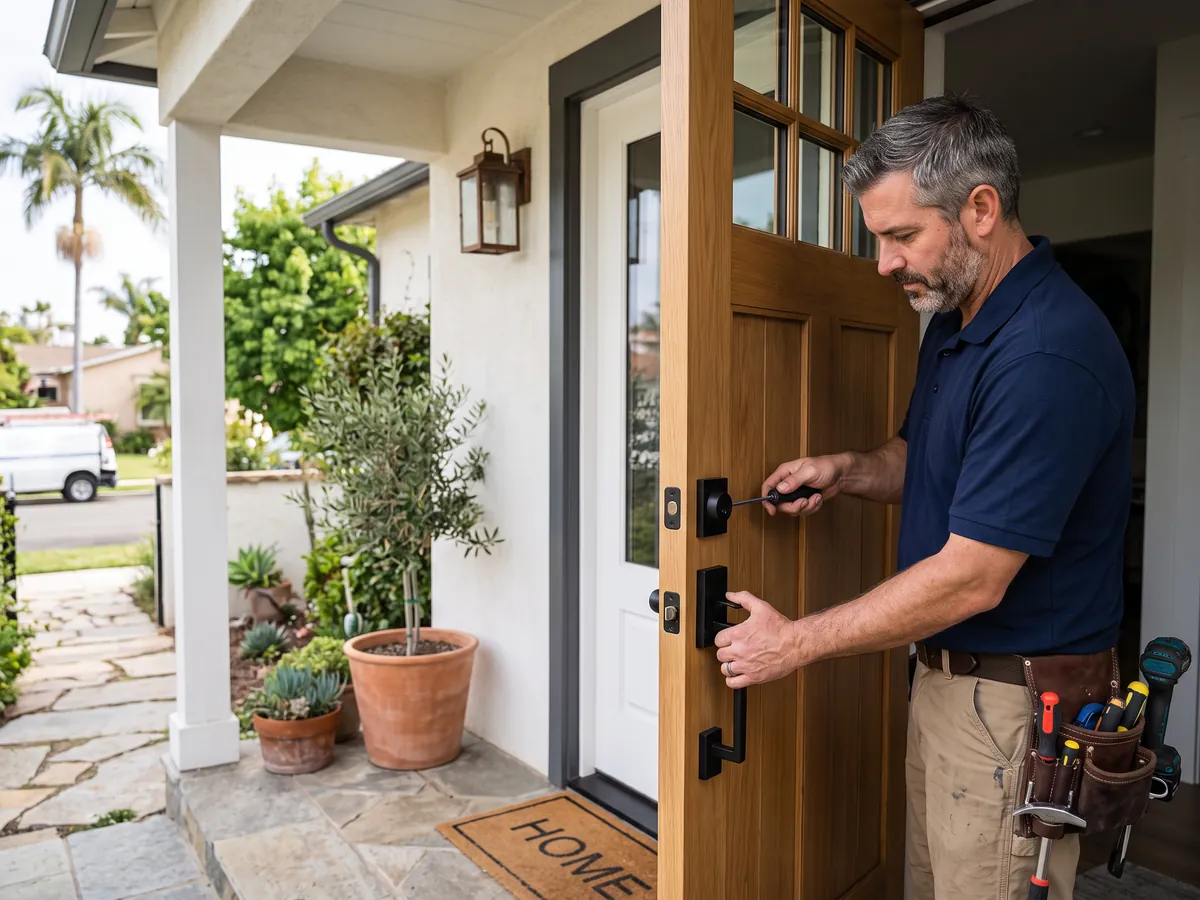
A new lockset off the shelf looks like the simple answer to a cranky lock, until you get it home. It comes keyed differently from every other door, its finish doesn't quite match the hinges, the latch may not suit the old backset, and if the door was the real problem, the new lock sticks too. Repairing what you already have often makes more sense. A cylinder can be cleaned or re-pinned to your current key, a broken latch or spring cassette can be swapped, and a misaligned strike can be moved. Julian's Locksmith does residential lock repair across Cypress and tells you honestly when a repair isn't worth it, such as a discontinued brand with no parts left. Call (951) 903-3193.
How this works in Cypress
Not every lock is worth saving, and an honest repair visit says so. Hardware from the major residential lines, such as Schlage, Kwikset, Baldwin, Emtek and Yale, has replacement latches, strikes, cylinders and spring parts available for years, so repairing it is usually straightforward. Locks from discontinued or off-brand lines are harder: the latch may use an odd faceplate shape, and nobody stocks the internal spring. Construction matters too. Solid brass and forged hardware can be rebuilt many times, while thin die-cast zinc housings tend to crack, and a cracked housing isn't repairable. Older mortise locks from early twentieth-century houses are a pleasant surprise; their insides are simple steel levers and flat springs that a locksmith can often clean, re-spring and put back in service. Electronic locks sit somewhere in between. We can fix the mechanical side, meaning the bolt, strike and backup cylinder, but a failed circuit board or motor usually means a manufacturer replacement. The goal is to keep your keys, your finish and your door intact when that makes sense, and to tell you plainly when it doesn't.
Work included on a typical visit
- Cylinder cleaning, lubrication and re-pinning. Oil and spray lubricants turn into a gummy paste inside a keyway once wind-blown dust and yard grit get in. Cleaning a cylinder properly means taking it out of the lock, not spraying more into it. We disassemble it, clean it, inspect each pin stack, then reassemble with graphite or a PTFE dry lube.
- Deadbolt and strike alignment. A deadbolt that's easy with the door open but stubborn with it shut is out of alignment. We find where the bolt hits, then move or file the strike plate, enlarge the pocket or correct the door itself. Afterward the bolt should slide into the frame without pressure and travel its full throw so it deadlocks.
- Knob and lever latch repair. When turning the handle doesn't pull the latch back, or the latch sticks out and won't retract, something between the spindle and the latch has failed. We replace the latch, spindle or spring cassette with parts matched to your lockset's brand and backset, so the handle returns crisply and the door closes on the first try.
- Hinge and door-sag correction. Fixing the door's hang is the least glamorous part of residential lock repair and often the most important. A correctly hung door closes with light pressure, the latch drops into the strike on its own, and the deadbolt turns with two fingers. We aim for that before calling any lock repaired.
- Vintage mortise lock restoration. If the knob on an old mortise lock spins without moving the latch, the spindle or its set screw has usually slipped. If the key won't turn, the lever tumblers may be gummed up or a spring has snapped. We work on the original lock body rather than forcing a modern lockset into a door that was never cut for one.
Local factors in Cypress
Student rentals see heavy use and quick turnover. Roommates lose keys, doors get kicked shut and levers take a beating. Landlords renting to students call us to repair loose trim, broken latches and worn deadbolt cylinders between leases, often keeping the existing key system intact. Students who notice a lock failing should tell the landlord in writing; a lock that doesn't hold is a safety issue, not a cosmetic one.
If you leave before dawn and get home after dark, a sticking lock is something you fight half-awake with a travel mug in one hand. Commuters around Cypress often want repairs scheduled at the edges of the day. We start at 6:30 a.m. and work until 11:30 p.m. every day, so a repair can often happen before you head for SR-22 or after you get back.
Older houses around Cypress often keep their original hardware: mortise locks with skeleton keys, early Schlage and Kwikset knobs, rim latches, and doors that have shifted through decades of settling. Residential lock repair in older homes leans toward restoration. We service the original mechanism where parts can be found or made, correct the door's hang and avoid boring period doors for modern hardware unless security truly requires it.
Situations this covers
- For example, a toddler pushes the button on a bathroom privacy lock and shuts the door, and the parent finds the outside emergency release won't pop it. We open the door by working the latch back at the edge, then find the privacy mechanism worn and sticking. We replace the latch and privacy chassis and show the family where to keep the release tool, on top of the door casing.
- A common slider call: a dog has learned to nose the patio door open because the latch no longer catches. The hook still swings out when the handle drops, but it passes beneath the keeper. Worn bottom rollers have let the panel sag. We raise the door with new rollers, reset the keeper and add a foot lock, and the slider latches with a light push.
- A landlord with a rental near Cypress sends a list before new tenants arrive: a deadbolt that throws halfway, a loose kitchen-door knob, a window latch missing a screw and a slider that won't lock. One visit covers all four. The deadbolt pocket gets drilled deeper, the knob gets new through-bolts, the window lock is replaced and the slider keeper reset, all on the property's existing key.
- For example, a steel security screen door on a stucco house off Valley View Street has its lock facing the lawn sprinklers. Mineral crust has frozen the latch, and the key won't turn past halfway. We remove the lock body, soak and clean it, replace the corroded cylinder, and suggest redirecting one sprinkler head so the new parts don't end up the same way by next summer.
From your call to the finished job
- Tell us what the lock is doing. The details you give on the phone shape the visit. Is it one lock or several? Does it work with the door open? Is it a keypad, a handleset, a slider or a security door? With those answers we can usually bring the matching springs, latches or cylinders instead of making a second trip.
- Arrival and verification. We arrive with common residential parts on board. If a locked door has to be opened before we can repair it, we ask for photo ID that matches the address or other proof you live there. For repairs on an unlocked door, we still confirm who owns or manages the property before we start.
- Diagnose lock versus door. We also check things you didn't mention. If a deadbolt drags because the house has settled, the other exterior doors may be headed the same way. A quick test of each lock on the property lets us tell you which ones need attention now and which are perfectly fine.
- Quote the repair and the alternative. You get a price before any work starts. When a repair and a replacement are both reasonable, we lay out both with their tradeoffs: keeping your keys and finish versus newer hardware or a higher security grade. You choose. If a part must be ordered, we tell you how long that typically takes.
- Make the repair. When a part isn't on hand, such as a specific multipoint gearbox or a proprietary handleset piece, we leave the door secure for the interim, order the matching part and schedule a return. Everything else is usually finished during the first visit, so you aren't left juggling appointments.
- Test and walk through care. We test the repaired lock several times with the door open and closed, try every key you have, and confirm the deadbolt reaches full throw. Then we show you what we did and how to keep it running: which lubricant to use, what not to spray, and when to snug up the trim screws.
Pricing factors
- Door and frame work. Wood doors and jambs are forgiving; moving a strike or deepening a pocket goes fairly quickly. Steel doors, fiberglass doors and metal frames take longer to drill and cut, and some fixes call for specialty strikes. The door's material is one of the main things that changes the labor portion of a quote.
- Lock type and complexity. Electronic locks add steps: battery and contact checks, app recalibration, mechanical alignment and testing of the backup key. If the fault is in the circuit board or motor, we don't charge you to chase it further; we point you to the manufacturer and quote only the mechanical work we can actually do.
- Timing, travel and combined work. We're a mobile service, so the visit includes travel to your house from our base in San Bernardino, and distance across the service area affects that portion. Our hours run every day from 6:30 a.m. to 11:30 p.m. Non-urgent repairs can be booked whenever suits you.
Every job gets a clear quote before any work starts. Call (951) 903-3193 with the details and we'll tell you what to expect for your situation in Cypress.
Advice before you book
- Before you call, look at the edge of the door where the latch comes out. The faceplate is often stamped with the brand name. Snap a photo of the inside and outside trim too. Knowing the brand, finish and backset lets us bring parts that match instead of guessing.
- Diagnose before you call. Open the door and turn the deadbolt. If it moves easily with the door open and fights you with the door closed, tell us that on the phone. It means the strike or the door's hang needs adjusting, and the lock itself is probably healthy.
- Check your top hinge. Open the door partway and lift up on the handle side; if the hinge moves or you see screws shifting, they've lost their grip. Swapping one screw in each hinge for a three-inch screw that reaches the wall framing often stops a deadbolt from dragging.
- Always copy keys from the original, or from a key cut by code, never from a copy of a copy. Small errors compound with every generation, and a key that's slightly off wears the cylinder pins unevenly. If your best key is already sloppy, ask us to cut a fresh one by code.
Common errors that cost time and money
- Filing the deadbolt or grinding the key to make them fit. Shortening a bolt reduces how far it reaches into the frame, and a filed key wears the pins unevenly. The real issue is almost always strike position or a worn cylinder, and both can be corrected without weakening anything.
- Moving the strike plate yourself and reattaching it with the short screws from the package. Those screws only reach the soft jamb, so the strike holds the bolt with a sliver of pine. Use screws long enough to bite into the framing, or the first shoulder against the door can tear it loose.
- Taking a cylinder apart without the right tools. Pin tumbler cylinders hold tiny springs and pins under tension, and once the plug slides out without a follower, they scatter across the floor in an order nobody can reconstruct. The lock then has to be re-pinned from scratch.
Getting to Cypress
Cypress is about 63 miles from our San Bernardino base, roughly 68 minutes in light traffic via I-215 South through Colton and Grand Terrace to SR-91 West through Riverside, Corona and the Santa Ana Canyon. When you call, you get an arrival estimate based on where the technician is and the traffic at that moment.
Homes and businesses just off Ball Road are routine stops for us. Give the suite or unit number and any gate instructions, and say whether the van can park out front or should pull into a side lot.
About Cypress: Cypress covers about 6.6 square miles and counted 50,151 residents in the 2020 census, with a median age of 41.5 years.
| Neighborhoods | Heroes Park area off San Rolando Circle, Larwin Park area off Ball Road, College Park beside Cypress College, Cypress Village area at Valley View Street and Orange Avenue, Civic Center area on Orange Avenue, Old Cypress |
|---|---|
| ZIP codes | 90630, 90720 |
| Main routes | I-605, SR-91, SR-22, Katella Avenue |
| From our San Bernardino base | about 63 miles via I-215 South through Colton and Grand Terrace to SR-91 West through Riverside, Corona and the Santa Ana Canyon, then the Valley View Street exit and south into Cypress; alternate via SR-57 South to SR-22 West and the Valley View Street exit when the 91 is jammed |
Home lock work in Cypress?
Call (951) 903-3193 with the address and a quick description of the doors and locks involved. We'll quote the job before any work starts.
Frequently asked questions
How do I tell if the problem is the lock or the door?
Work the lock with the door open. If the key, knob or deadbolt operates smoothly, the lock is probably fine and the door or strike has shifted. Look for scrape marks on the strike plate and uneven gaps around the door, especially at the top corner on the latch side. If the lock is stiff even with the door open, the mechanism itself needs service.
Can a home lock be repaired, or does it have to be replaced?
Most can be repaired. Stiff keys, dragging bolts, sagging levers, loose knobs and latches that don't catch are usually fixable with cleaning, re-pinning, a new spring or latch, or adjustment of the strike and hinges. Replacement makes sense when a housing is cracked, the brand has no parts available, or you want a higher security grade. We'll tell you which applies before any work begins.
Can you fix a lever handle that droops?
Yes. A drooping lever means the return spring inside the lockset has weakened or cracked. On most Schlage, Kwikset and other mainstream residential levers, we can replace the spring cassette or chassis without changing the outside trim or your keys. If the lever comes from a discontinued line with no parts, we'll show you replacement options that fit the existing holes.
Can you repair the lock the same day?
Often, yes. The van carries common latches, cylinders, springs, strikes, screws and slider parts, so many residential lock repair jobs in Cypress finish during the first visit. Specialty pieces, such as a particular multipoint gearbox or a smart lock component, may need ordering. In that case we leave the door secure and schedule a return once the part arrives.
Do you repair old mortise locks with skeleton keys?
Yes, in many cases. Original mortise locks in older homes are built from steel levers and flat springs that can be cleaned, re-sprung and adjusted, and we can often fit a key to the existing lever tumblers. Keep in mind that skeleton-key locks offer little security, so on exterior doors we may suggest pairing the original look with a modern deadbolt or mortise cylinder.
Do I need to prove I live there for a lock repair?
If we need to open a locked door, yes: we check photo ID with the address, or other proof of residence such as a lease or utility bill. For repairs on an unlocked door, we confirm you're the owner, the tenant or the person managing the property. Tenants should get the landlord's approval before changes to hardware they don't own.
How far is Cypress from your base?
Cypress is about 63 miles from our San Bernardino base, roughly 68 minutes in light traffic. Arrival time depends on traffic and on the job the technician is finishing, so we give you an estimate on the phone before you commit.
Related services in Cypress
Residential Lock Repair in nearby cities
- Residential Lock Repair in Los AlamitosOrange County
- Residential Lock Repair in Hawaiian GardensLos Angeles County
- Residential Lock Repair in La PalmaOrange County
- Residential Lock Repair in StantonOrange County
- Residential Lock Repair in Buena ParkOrange County
- Residential Lock Repair in CerritosLos Angeles County
- Residential Lock Repair in ArtesiaLos Angeles County
- Residential Lock Repair in Seal BeachOrange County