
Cypress, Orange County
Mortise Lock Repair for Cypress Homes and Buildings
Short answer: Mortise locks are repairable more often than people think, because the parts are separate: case, cylinder, hub, spindle, springs and trim. What matters is identifying the make and model, usually stamped on the faceplate or case. Send a photo from Cypress and we'll tell you honestly whether it can be rebuilt. Call (951) 903-3193.
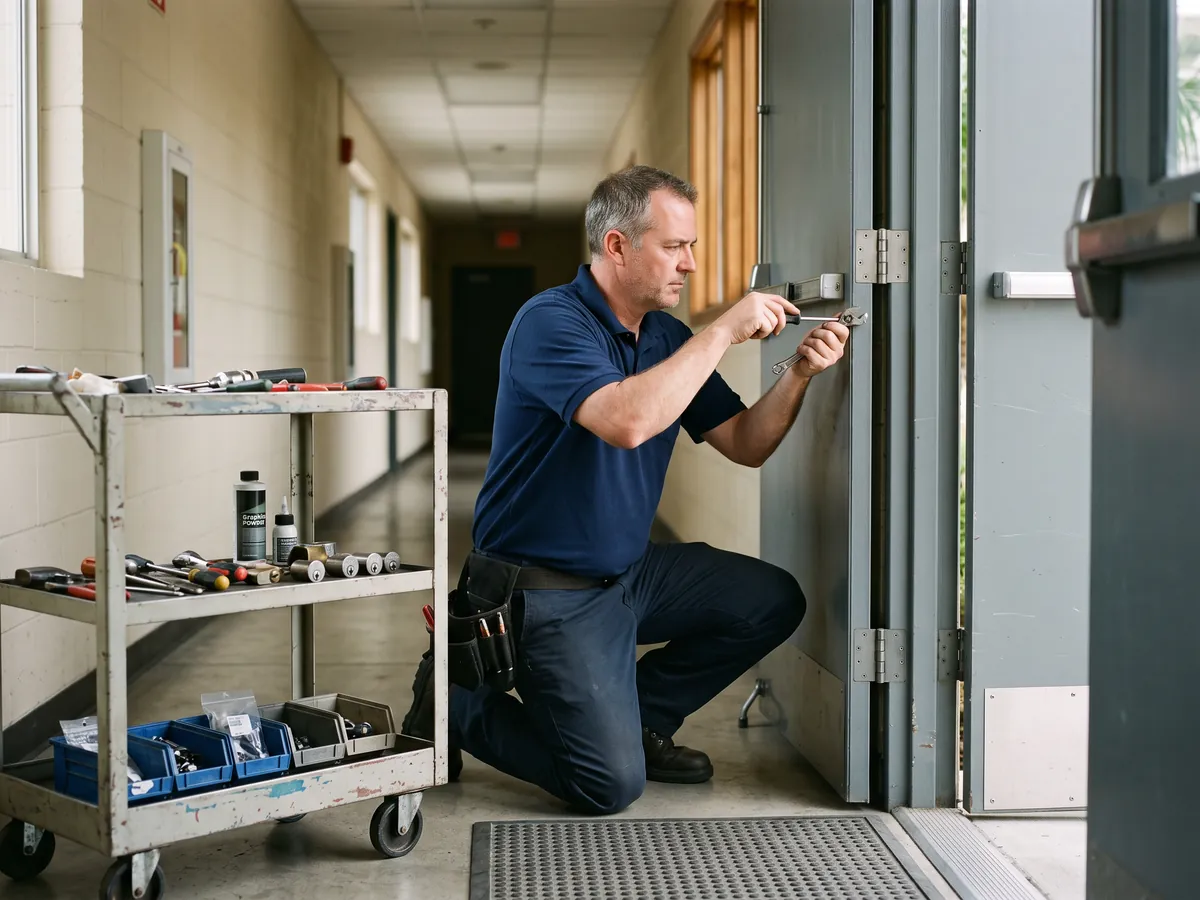
A mortise lock sits in a pocket cut into the door, and that pocket is part of the door's strength and history. Swapping to a bored cylindrical lock means filling or reshaping the pocket, and it rarely looks right on a period door. That's why the best answer is often to repair the mortise lock or replace it with a new mortise case in the same opening. Julian's Locksmith quotes both options in Cypress, including rekeying, and tells you when a repair is a poor investment. Our license is LCO7891, which you can verify at search.dca.ca.gov. Ask for a price at (951) 903-3193.
What to know first in Cypress
Understanding a mortise lock makes every repair conversation easier. The lock body, or case, is a steel or brass box that slides into a rectangular pocket cut into the door edge and is held by two screws through the faceplate, called the forend. Inside are the latchbolt that catches in the strike, a deadbolt thrown by key or thumbturn, a hub that the spindle turns to retract the latchbolt, and a set of springs and levers that return everything to rest. A threaded cylinder screws into the case from outside and is held by a set screw; a cam on its back moves the deadbolt when the key turns. Handles and trim plates, called roses or escutcheons, mount on either side and connect through the spindle. Because each of these is a separate part, mortise locks can be repaired part by part, which is exactly why they are worth saving in so many Cypress homes and buildings.
Work included on a typical visit
- Identifying an unknown mortise lock. A model number, a patent date or a small foundry mark may be hiding under paint on the faceplate. We clean it off, photograph the case and compare its dimensions with current Sargent, Corbin Russwin, Schlage and Yale cases, as well as vintage patterns. Identification is where honest answers about parts availability begin.
- Rebuilding the lock case. The inside of an old mortise lock holds small springs that go weak with age. We take out the case, check the latchbolt, deadbolt, hub and lever return springs, replace what's tired and relubricate with the right grease. A case that has been a nuisance for years often turns smooth again.
- Deadbolt and thumbturn problems. A mortise deadbolt that won't throw all the way, or one that stays out when the key comes back, usually points to a worn bolt lever, a stripped gear or a poorly aligned strike. We examine the bolt travel, adjust or replace parts and align the strike so the bolt slides in without catching.
- Latchbolt, strike and door alignment. Heavy doors sag, and a mortise lock set into a sagging door wears fast. We tighten or replace hinge screws, check for hinge wear and realign the strike so the latchbolt enters smoothly. Fixing the door often prolongs the life of the repair more than any internal fix could.
- Rekeying mortise cylinders and keying systems. Rekeying a mortise cylinder is quick, since cylinders come out of the case. We repin it to a new key, or to match other locks in the building. Tenant changes, lost keys and new managers are common reasons. The rest of the lock stays in the door.
How Cypress shapes the job
Older shopping centers and professional buildings in Cypress may use mortise locks on back-office and storeroom doors, in addition to storefront hardware. Tenants often inherit a lock with unknown keys. We can identify and repair or replace the case, rekey the cylinder so former employees' keys stop working, and confirm what the landlord allows. Aluminum storefront doors use narrow-stile deadlocks, which are a different repair.
Older apartment buildings in Cypress sometimes retain mortise locks on unit entry doors from the original construction or a renovation. Tenants should tell the landlord in writing when a lock fails; California Civil Code section 1941.3 requires working deadbolts on the main swinging entry doors of rentals. Property managers can book us with a work order, and we repair or replace the mortise case while keeping the door intact and the unit secure.
Older buildings around campuses in Cypress, including converted houses now split into student rentals, often keep their mortise locks. A lost key or jammed bolt is a common call before a semester starts. We confirm authorization from the landlord or property manager, then repair, rekey or open the door without damage. Students renting should notify the landlord in writing and ask for repairs rather than drilling or prying anything themselves.
Situations this covers
- A salvage find: a homeowner in Cypress buys a handsome 1930s mortise lock at a flea market for a dining-room door, but it doesn't fit and has no cylinder. We'd measure the case, identify the maker, say whether it can work and what parts are missing, and discuss whether to display it or install a working modern case.
- Say a homeowner with a skeleton-key mortise lock on a bedroom door has lost the key and wants one that works. The lock is warded, so there are no pins to read. We'd open the door by working the latchbolt, inspect the wards, file a new key to fit and clean the lock. We'd also mention that a warded lock offers privacy rather than security.
- Picture a dental office in a converted house near Cottonwood Church with a Corbin Russwin mortise lock that sticks after a long day. The office manager authorizes the work by phone. We'd remove the case, find old grease hardened with dust, rebuild the springs and relubricate, and rekey the cylinder because a former employee still has a key.
- Imagine an older apartment building where a tenant's mortise lock jams with the deadbolt thrown and the key won't turn it back. The manager sends a work order. We'd open the door through the latchbolt if possible, remove the case, find a worn bolt lever and replace it. The tenant is back inside and the unit's entry lock works properly.
How the visit works
- Describe the lock and the symptom. The first call tells us whether we're facing a spring, a cam, a cylinder or a door problem. Tell us what you see, what you hear and how the key feels. If you can read a name on the faceplate or cylinder, share it. Say whether the door is interior or exterior, and whether anyone is locked in or out.
- Verify who authorizes the work. We confirm the home or building belongs to you, or that you're authorized by the owner or manager. For businesses and rentals, a work order or a quick call with the owner is enough. We follow this for every repair, because a mortise lock protects more than a knob set does.
- Examine the door, then remove the case. We check the hinges, strike and door edge, then take off the handles and trim, loosen the cylinder set screw and back out the forend screws. Paint lines get cut so the finish doesn't crack. The case slides out of its pocket, and we photograph the layout before opening it.
- Identify, inspect and quote. This is the honest-answer stage. Some cases are rebuilt in a visit, some need parts we have to source, and some can't be saved. We tell you which, with an estimate of any wait, and give you a price before work continues. You can also decline and keep the lock as it is.
- Rebuild, rekey or replace. Work usually happens at your door. We rebuild, relubricate and test the case on a protected surface, then reinstall it. If a part has to be ordered, we tell you how long the wait is and help you keep the door secure in the meantime.
- Test every function and hand over keys. We test the latchbolt, deadbolt, thumbturn, handles and cylinder from both sides, with the door open and shut. We also confirm the trim is snug and the finish is undamaged. You receive all keys, and we note the model and parts used for any future service.
What affects the cost
- Cylinders, keys and rekeying. How many doors share a key, and whether you have a master key system, will change the price. Master-keyed cylinders need pins and records, and interchangeable cores need a control key. Tell us how many cylinders you have and whether you want keys to match.
- Door and pocket condition. Heavy old doors sag and swell, and a lock in a sagging door wears twice as fast. Fixing the hinges may cost less than the lock work and extend the repair's life. We look at the door before quoting, and tell you what we see.
- Trim, finish and matching. If handles or escutcheons need replacing, matching an aged finish is hard. We discuss options: reuse the original, source a similar style or accept a slightly different finish. The right choice depends on how the door looks and what you value.
Every job gets a clear quote before any work starts. Call (951) 903-3193 with the details and we'll tell you what to expect for your situation in Cypress.
Advice before you book
- Don't unscrew the faceplate just to see what's inside. On many mortise doors the case is snug in its pocket and painted in, so pulling on it can chip the door edge. Leave disassembly to someone who will protect the wood and keep the parts in order.
- Don't paint over a mortise lock's faceplate or latchbolt. Paint seals the bolt in its opening and hides the screws, so the next repair becomes a chiseling job. Remove or mask the hardware when refinishing the door, even if it seems tedious.
- If the key turns without moving the bolt, look at the small set screw in the faceplate that holds the cylinder. It sometimes backs out and lets the cylinder spin. Don't force the key or unscrew anything else; a loose set screw is a quick repair if caught early.
- If the door sticks in hot weather in Cypress, don't assume the lock is failing. A swollen or sagging door presses the bolts against the strike. Tighten the hinges first, and note the time of day it happens. It changes whether we fix the door, the lock or both.
Common errors that cost time and money
- Drilling out a mortise lock because the key won't turn. The fault is usually a loose cylinder or a broken cam, and drilling ruins the cylinder, the case and sometimes the door edge. A locksmith can open most doors without drilling, then repair the actual cause.
- Ordering a replacement online by looks alone. Mortise cases differ in dimensions, handing, function and cam type, and photos hide those details. A wrong case leaves you with a return shipment and a door that still won't lock. Measure first or send us the specs.
- Living for months with a failing lock on an exterior door. A mortise lock that sticks can lock you out, or stay unlocked without you noticing, and an unreliable deadbolt is a security gap. Get it checked before the door fails completely.
Service in Cypress
Cypress is about 63 miles from our San Bernardino base, roughly 68 minutes in light traffic via I-215 South through Colton and Grand Terrace to SR-91 West through Riverside, Corona and the Santa Ana Canyon. When you call, you get an arrival estimate based on where the technician is and the traffic at that moment.
If you're close to Cerritos Avenue, tell us which exit or cross street you're nearest. It trims the last mile and keeps the van from circling a block that looks right on the map but isn't.
About Cypress: Landowner S.O. Walker laid out a Cypress townsite in 1905 beside the Pacific Electric trolley line, whose station stood on Walker Street at Lincoln Avenue.
| Neighborhoods | Larwin Park area off Ball Road, Arnold Cypress Park area off Watson Street, Civic Center area on Orange Avenue, Old Cypress, Veterans Park area, Heroes Park area off San Rolando Circle |
|---|---|
| ZIP codes | 90630, 90720 |
| Main routes | I-605, SR-91, SR-22, Katella Avenue |
| From our San Bernardino base | about 63 miles via I-215 South through Colton and Grand Terrace to SR-91 West through Riverside, Corona and the Santa Ana Canyon, then the Valley View Street exit and south into Cypress; alternate via SR-57 South to SR-22 West and the Valley View Street exit when the 91 is jammed |
Lock or door hardware trouble in Cypress?
Call (951) 903-3193 with the address and what the door or lock is doing. We'll quote the repair before any work starts.
Frequently asked questions
Do I need a new door if I replace a mortise lock?
Usually not. A replacement mortise case designed to match the existing pocket, backset and forend can go in without altering the door. Converting to a cylindrical lock is the choice that requires door work. We measure the pocket and match dimensions so the door stays intact. Rarely, an oversize or damaged pocket needs a filler piece.
Why does my mortise lock work with the door open but not closed?
Almost always an alignment issue. A heavy door sags a little, the strike is painted or worn, or swelling presses the bolts against the jamb. The case may be fine. We chalk the bolt, tighten hinge screws and adjust the strike. Fixing the door often solves the problem and extends the life of the lock.
Can you open a mortise lock that is stuck shut?
Often yes, without damage, though it depends on the lock. We may work the latchbolt through the gap, remove the trim and manipulate the hub, or take the case out through the edge. Drilling is a last resort, and if it's the only route we tell you why and what it will do before starting. After opening, we repair the cause of the jam.
Will my existing handles and trim work with a new mortise case?
Often, yes, if the spindle size and hole spacing match. Many old and new cases use similar spindle dimensions, but not all do. We test-fit your handles on the replacement case before committing. If they don't fit, we can suggest matching trim or adapt with a new spindle. Decorative knobs and plates are usually worth saving.
Is it safe to remove a mortise lock myself?
It's possible, but not always wise. The case is snug in its pocket and often painted in, and force can crack the door edge or bend the case. If you want to try, photograph everything first, bag every screw, cut the paint line and don't pry. For a valuable or historic door, let us do it.
Is it worth keeping a mortise lock instead of upgrading to a modern lock?
Often yes, if the case is sound. A good mortise lock is strong, repairable and fits the door. Upgrades make sense when you want smart-lock features, a higher-security cylinder or a different function. A new mortise cylinder or case can add security without altering the door. We lay out what you gain and give up with each choice.
How far is Cypress from your base?
Cypress is about 63 miles from our San Bernardino base, roughly 68 minutes in light traffic. Arrival time depends on traffic and on the job the technician is finishing, so we give you an estimate on the phone before you commit.
Related services in Cypress
Mortise Lock Repair in nearby cities
- Mortise Lock Repair in Los AlamitosOrange County
- Mortise Lock Repair in Hawaiian GardensLos Angeles County
- Mortise Lock Repair in La PalmaOrange County
- Mortise Lock Repair in StantonOrange County
- Mortise Lock Repair in Buena ParkOrange County
- Mortise Lock Repair in CerritosLos Angeles County
- Mortise Lock Repair in ArtesiaLos Angeles County
- Mortise Lock Repair in Seal BeachOrange County
