
Cypress, Orange County
Fixing a Loose Door Lock in Cypress: Tighten, Repair or Replace
Short answer: Julian's Locksmith repairs loose door locks across Cypress, every day from 6:30 a.m. to 11:30 p.m. We're closed overnight. We come to you with replacement spindles, springs, screws and reinforcing hardware, tell you whether the lock can be saved, and quote before we begin. License LCO7891.
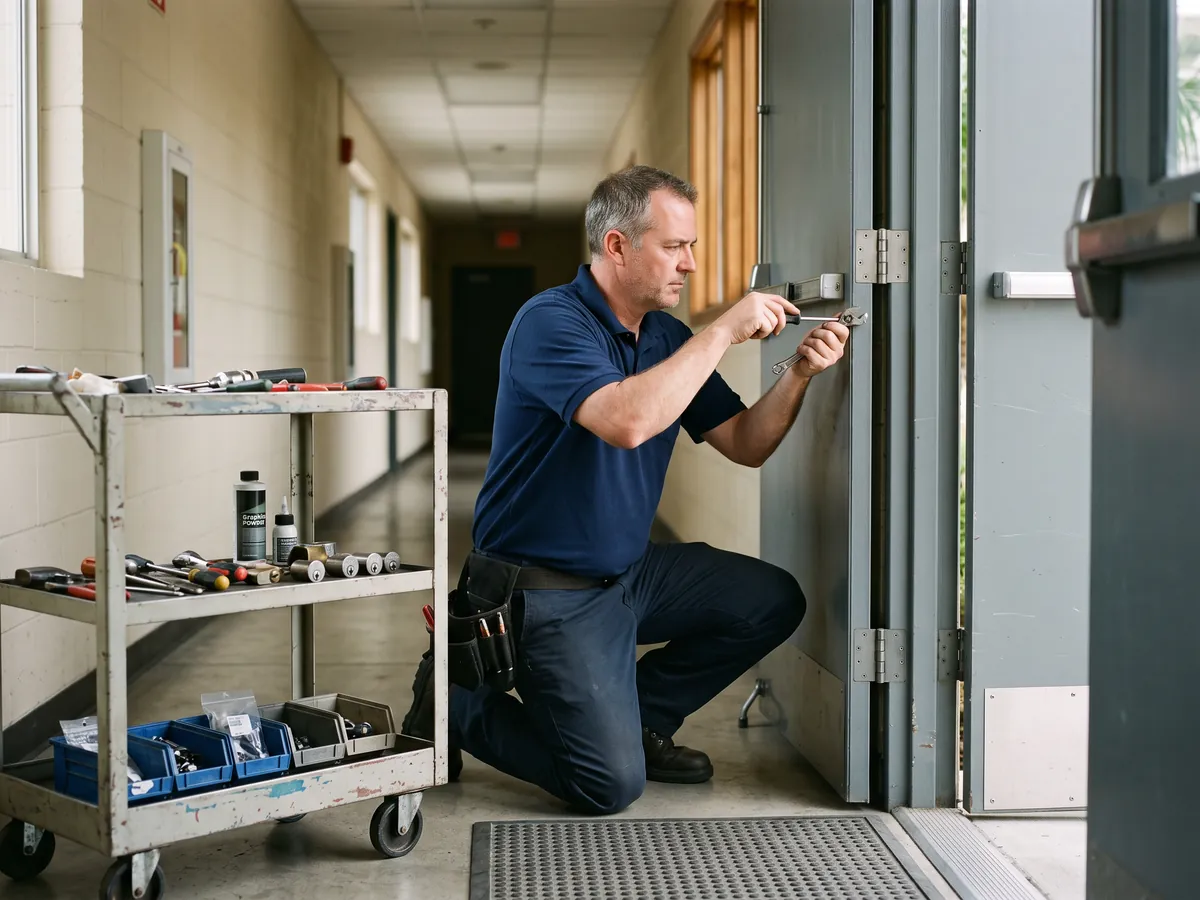
Doors move. In Cypress, a wood door can swell with winter moisture and shrink again during a dry Santa Ana spell, a dark steel door on a west wall bakes through summer afternoons, and a stucco house shifts a little as the ground settles. Each movement twists the lock against the screws that hold it. After enough seasons, that twisting backs out a mounting screw or pulls a latch faceplate loose. It is why a loose door lock so often shows up after a change in weather rather than after any single event. Julian's Locksmith corrects the lock and, where we can, the door movement that loosened it.
How this works in Cypress
Locks loosen for ordinary reasons. Every time you turn a knob, a small twisting force travels into the screws, and doors that get slammed, caught by wind or leaned on by kids add shock on top of it. Heat and cold add more, since metal and wood expand at different rates and each cycle works against the threads. Inexpensive locksets raise the odds, because many builder-grade sets use thin zinc castings and short thread engagement that stop holding after a few years. Painters and previous owners contribute too: a lock pulled off for painting and reinstalled in a hurry often goes back with crossed threads, mismatched screws or an over-tightened plate that distorts the latch. Understanding the cause points to the right fix. If the screws are the only issue and the threads are healthy, a proper re-torque with a dab of removable thread-locker can last for years. If the lock keeps working loose, something underneath is worn or damaged, and repeated tightening only delays the replacement.
Work included on a typical visit
- Tightening knobs and levers the right way. Sometimes the screws are fine and the wobble lives in the handle itself. Many levers and knobs slide onto the spindle and are held by a set screw or a spring catch. We find the one your lock uses, snug it with the correct hex key or release the catch properly, and make sure the handle seats fully against the rose.
- Loose deadbolt cylinders and thumbturns. A rocking thumbturn feels like a lock about to fail, and it is usually fixable. The interior assembly attaches with two screws. If they're stripped, the housing is cracked or the screws are too short for the door thickness, we change the part rather than torque it into a worse state. Then we confirm the bolt throws its full length.
- Stripped screw holes and oversized bores. If the cross bore for the lock itself is too large or out of round, tightening won't cure the wobble. Reinforcing rings, bore repair kits or a solid wood insert can restore the opening so the chassis seats snugly. It's detail work with a hole saw and patience, and it is the right fix when a door has been drilled twice.
- Rattling latches, faceplates and strike plates. Sometimes the rattle isn't the lock at all, but a door that has dropped on its hinges. A sagging door pulls the latch away from the strike. Tightening the hinge screws, or swapping one for a longer screw, often brings the door back into line. We check the hinges before we blame the lock.
- Patio, garage-entry and side doors. Doors other than the front door often get the least attention and end up with the loosest hardware. Steel garage-entry doors and laundry-room exits take hard daily use. We check each lock, tighten or replace what is worn, and confirm that a self-closing door still latches firmly behind you every time.
How Cypress shapes the job
Family homes in Cypress Village put locks through constant abuse: doors pushed open with a shoulder, handles used as hanging bars, backpacks swinging off knobs. A bedroom or bathroom privacy knob is the most common casualty, and a child stuck behind a jammed door is exactly when you want a lock that opens. We repair or replace worn parts, and where it makes sense we suggest sturdier levers and door stops that take the hits instead.
Student rentals in Cypress are hard on hardware: shared houses, many keys and heavy traffic through the front door at every time of day. A loose knob or spinning deadbolt gets reported late and fixed by whoever has a butter knife. If you rent near Cypress Community Center, contact your landlord before hiring anyone, since entry-door repairs are usually theirs to handle. Landlords can schedule us for several rooms at once to bring the whole house up to date.
Houses from the mid-century decades in Cypress often still wear their original knobs, and years of daily turning rounds off spindles and loosens set screws. Mortise locks and early cylindrical sets are common, along with doors painted over many times. We clean paint out of screw heads, dress or replace worn spindles, and rebuild chewed-up holes with dowels, because original brass hardware is usually worth saving when it can be made tight again. Tell us roughly when the house was built and we'll bring matching parts.
Example situations
- Before listing a house in Cypress, a seller and an agent walk through and note six wobbly door locks that a buyer's inspector would flag. We'd go room by room, tighten what only needs tightening, replace the worn ones, and hand back a short written list of what changed, so the hardware stops being a negotiating point.
- Suppose a small office's side door, used daily by the cleaning crew, has a handle held on by two stripped screws and a lot of hope. The manager only noticed when the door stopped latching on its own. We'd stop by during the workday, rebuild the screw bosses, replace the lever if it is too worn, and make sure the door locks behind everyone.
- A homeowner swaps in a keyless deadbolt over a weekend and finds the new lock wobbles and the bolt drags. The cause is a backset mismatch and a slightly oversized bore that nobody noticed during the do-it-yourself install. We'd correct the latch setting, true up the bore, and confirm the bolt travels freely before batteries ever go in.
- A typical call: the front door knob has been rocking for a month, and this morning it turned without catching the latch. The household has a toddler who treats the handle like a swing. We would take the lock apart, find the spindle worn round, replace it or fit a new set, and explain why constant pulling wears knobs out so quickly in a busy family house near Oxford Academy.
From your call to the finished job
- Tell us exactly what moves. Photos help if you can text them. A close-up of the inside trim, a shot of the door edge with the latch showing, and the brand name on the knob let us bring the right spindles and screws. Don't worry if you can't identify the brand; we'll sort it out on site.
- Get a quote and a time. Ownership still matters on a repair. We confirm that you live at the address or are authorized to have the work done, because the lock protects the whole property. Tenants should let the landlord or property manager know first, and we're happy to speak with them if that is easier.
- Test and diagnose on site. We also check what surrounds the lock. Hinge screws, strike plate, door edge and the way the door sits in the frame all affect whether a lock stays tight. A drop in the door or a swollen edge can make a good lock rattle, and repairing only the lock would not cure that.
- Choose repair or replacement. We'll be direct about value. If a repair is likely to hold for years, we'll say so. If the lock is a budget set that will keep loosening, we recommend a replacement rather than sell a fix with a short life. Both choices are ours to explain and yours to make.
- Refit and test under load. Alignment gets a last look: the latch should enter the strike without scraping, the bolt should extend its full length, and nobody should have to lift or pull the door to lock it. A lock that is tight but fighting the frame will loosen again.
- Hand-off and follow-up checks. Before we leave, we show you what was wrong and what we changed, hand over any spare parts or keys, and point out the screws worth rechecking in a few weeks. A quick follow-up check after the first month can catch anything that settles.
What affects the cost
- Lock grade and brand. Finish and style count too. A specialty finish, a decorative rosette or a designer lever may mean a longer parts search, and mismatches between old and new pieces show on a front door. We'll tell you whether matching is worth the cost, or whether a full set is better value.
- Number of locks and doors. Whole-house sweeps make sense after a purchase, a repaint or a long stretch without maintenance. Tell us how many locks you have and what kinds, and we'll give a combined quote that works out lower per lock than visiting several times. Matching keys on all of them is optional.
- Keys, rekeying and matching. Keyed-alike setups make matching more involved. If the front and back doors share one key and we replace one lock, the new cylinder has to be rekeyed to match. We'll ask which doors share keys and handle the pinning as part of the work.
Every job gets a clear quote before any work starts. Call (951) 903-3193 with the details and we'll tell you what to expect for your situation in Cypress.
What not to do
- Using longer screws that weren't made for the lock. Random hardware-store substitutes can bottom out, bind the chassis or strip the soft zinc posts inside. Use the original screws or exact matches, and replace them one at a time instead of mixing sizes.
- Stuffing toothpicks into stripped holes on a high-use door. A glued toothpick may hold a hinge screw on a closet door, but an entry door takes daily torque. Proper dowels, reinforcers or longer screws into the framing hold up far better.
- Ignoring the door and frame. If the strike is off or the door has dropped, the lock gets blamed for a problem it didn't create. Replacing a lock without fixing alignment just moves the same stress onto new parts, and the new lock loosens too.
What to do before we arrive
- Fix the slam. Hard-closing doors are a leading hammer blow on lock screws. A properly adjusted closer, a soft-close bumper or simply a family habit of closing doors gently can make a repaired lock last for years instead of months.
- Tighten in small, alternating steps. Turn each of the two long mounting screws a bit at a time, testing the handle between passes. If the handle starts to bind, back off a quarter turn. A lock squeezed too hard stops latching just as surely as one left too loose.
- Never ignore a knob that spins freely. It's more than an annoyance: the broken piece inside can drop out and jam, and a door that won't open from the inside is a safety issue. Keep a way into the room and call before it fails completely.
- Look closely at the strike plate. If the bolt or latch scrapes it, rattles in it or doesn't reach full depth, the hole may need deepening or the plate may need moving. A latch fighting the frame sends that stress straight back into the lock and loosens it again.
Getting to Cypress
Cypress is about 63 miles from our San Bernardino base, roughly 68 minutes in light traffic via I-215 South through Colton and Grand Terrace to SR-91 West through Riverside, Corona and the Santa Ana Canyon. When you call, you get an arrival estimate based on where the technician is and the traffic at that moment.
Our path into Cypress depends on where the previous job wrapped up. Sometimes that's a straight run via Orange Avenue; other times it's surface streets the whole way. Either way, you get a heads-up call when the technician is close.
About Cypress: The city takes its name from Cypress Elementary School, built in 1895 and named for the cypress trees planted to shelter the schoolhouse from Santa Ana winds.
| Neighborhoods | Veterans Park area, Heroes Park area off San Rolando Circle, Oak Knoll Park neighborhood, Civic Center area on Orange Avenue, Larwin Park area off Ball Road, Cypress Village area at Valley View Street and Orange Avenue |
|---|---|
| ZIP codes | 90630, 90720 |
| Main routes | I-605, SR-91, SR-22, Katella Avenue |
| From our San Bernardino base | about 63 miles via I-215 South through Colton and Grand Terrace to SR-91 West through Riverside, Corona and the Santa Ana Canyon, then the Valley View Street exit and south into Cypress; alternate via SR-57 South to SR-22 West and the Valley View Street exit when the 91 is jammed |
Lock or door hardware trouble in Cypress?
Call (951) 903-3193 with the address and what the door or lock is doing. We'll quote the repair before any work starts.
Frequently asked questions
How can I keep door locks from getting loose again?
Do a quick wiggle test every season, use blue thread-locker on screws, fix slamming doors with a closer or bumper, and keep hinge screws snug. Choose better-grade hardware on busy doors, and replace worn locks before they fail. If one lock has loosened, the rest of the house may be next, so a short check of every door is worth the time.
Can you fix a loose smart lock or keypad deadbolt?
Often. Heavy battery-powered locks put extra weight on the mounting, and many come loose from a mismatched backset, a short bolt or a bore that is a bit large. We tighten and align them before we blame the electronics. Electronic faults, such as a failing motor or an app problem, are a different job, and we'll tell you if the lock needs the manufacturer's support.
How long does a loose door lock repair take?
Simple re-tightening is a short task once we're at the door. Replacing worn parts, repairing stripped holes or fitting a new lock takes longer, and several doors take longer still. We'll give you our best estimate of both the arrival time and the work time when you call, and we'll tell you if something changes after we've looked at the lock.
What do you need from me before you start?
Confirmation that you live at the address, own the property or are authorized to have the work done. Photo ID is usually enough, along with something showing the address, such as a utility bill or lease. For rentals, we may ask for the landlord's okay. It protects you and the property, and it takes only a moment.
My deadbolt cylinder turns when I turn the key. What is wrong?
The cylinder isn't held firmly in the door or isn't connected properly to the bolt. Common causes are loose mounting screws, a missing retaining ring or a damaged tailpiece. Don't force it, because a spinning cylinder can break the connection completely and leave the bolt stuck. We can re-seat or replace the cylinder, often rekeying it to your existing key.
Can a loose lock cause me to get locked out?
Yes. A lock on the verge of failing can drop its spindle, slip a set screw or leave the latch stuck inside the door. When that happens on a closed door, you may be stranded on either side. If a lock feels worse each day, call before it fails completely, and keep a way to open the door in case it does.
How far is Cypress from your base?
Cypress is about 63 miles from our San Bernardino base, roughly 68 minutes in light traffic. Arrival time depends on traffic and on the job the technician is finishing, so we give you an estimate on the phone before you commit.
Related services in Cypress
Loose Door Lock in nearby cities
- Loose Door Lock in Los AlamitosOrange County
- Loose Door Lock in Hawaiian GardensLos Angeles County
- Loose Door Lock in La PalmaOrange County
- Loose Door Lock in StantonOrange County
- Loose Door Lock in Buena ParkOrange County
- Loose Door Lock in CerritosLos Angeles County
- Loose Door Lock in ArtesiaLos Angeles County
- Loose Door Lock in Seal BeachOrange County
