
Arcadia, Los Angeles County
Arcadia Condo Locksmith: Your Unit, Your Locks, the HOA's Rules
Short answer: Condo owners can usually rekey their own locks without HOA approval, because keying is invisible from outside. Visible changes are different: a new handleset finish, a smart lock keypad or a security screen door may need architectural review under your CC&Rs. Check the rules, then call Julian's Locksmith at (951) 903-3193 for a quote in Arcadia.
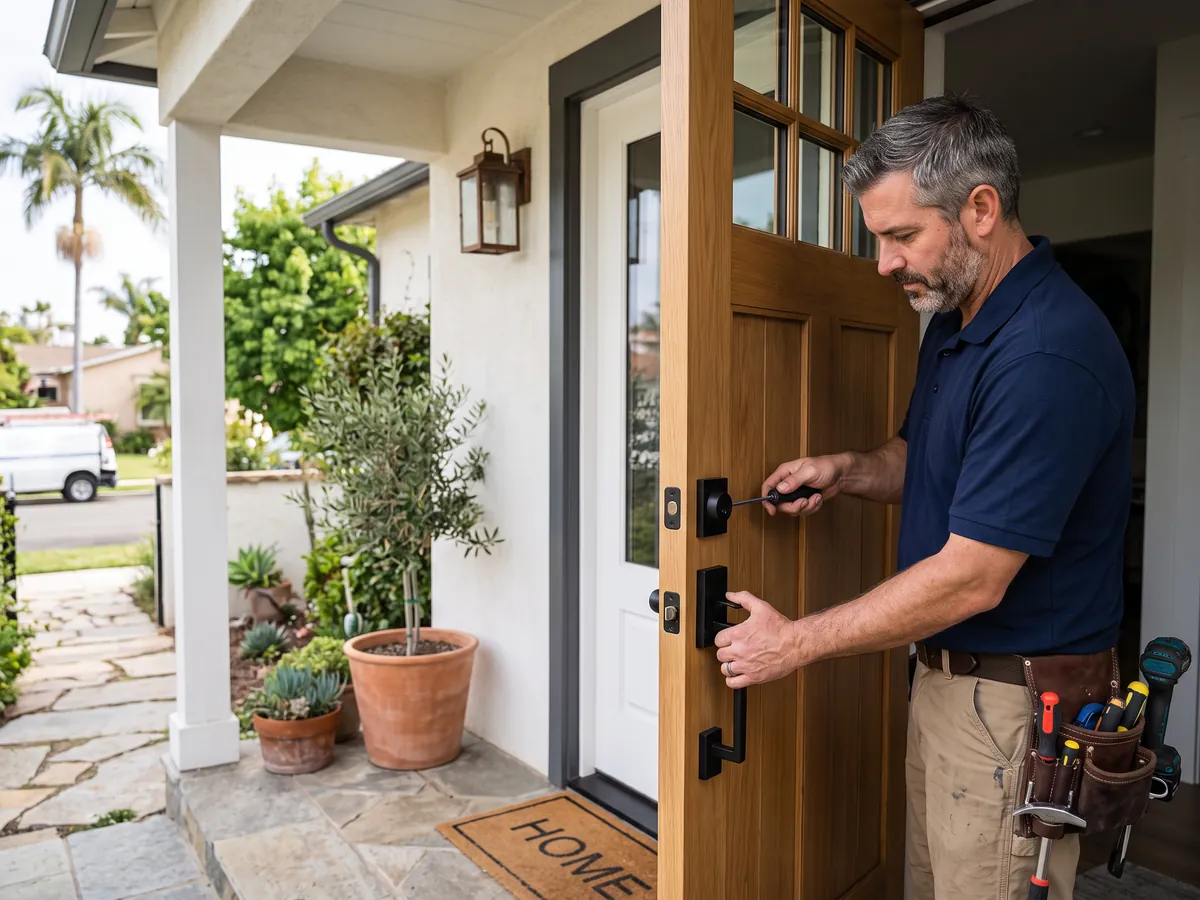
If you rent out your condo, you're a landlord as well as an HOA member, and that changes your lock checklist. California requires landlords to provide a working deadbolt on the main entry door and working locks on windows that open. Between tenants, the locks should be rekeyed, the deadbolt tested, and the new tenant given keys while you keep one for lawful entry. Fobs and gate remotes usually transfer through the association. A condo locksmith in Arcadia can handle the unit side of every turnover, check the slider and window latches while there, and leave you an itemized invoice for your records.
Condo Locksmith in Arcadia: what to expect
Some doors in your community aren't yours to change, no matter how much they bother you. Lobby entrances, garage gates, pool and spa gates, mail rooms, trash enclosures and electrical rooms belong to the association. So do the fob or code systems that control them. If a pool gate won't latch or the garage gate reader keeps failing, the fix goes through your property manager or board, who hire their own vendor or bring in a locksmith or low-voltage contractor. A condo locksmith hired by an owner can't legitimately rekey a common door or add fobs to the HOA's system. What we can do is help you describe the problem accurately so the work order gets done right. If you serve on the board, the association can hire us for common-area hardware like gate locks, door closers and mailbox locks; that work is authorized by the HOA rather than an individual owner.
What we can do on-site
- Rekeying after you buy a condo. Old keys to a resale condo can be almost anywhere: the seller's drawer, a former tenant's key ring, a pet sitter, a contractor, a lockbox that sat on the door for weeks. Rekeying on the day you take possession is the simplest way to start with a known list of key holders, which is just you.
- HOA-approved hardware replacement. Many associations specify an exterior hardware finish or style so every door in a building matches. When your front door lock wears out, we source a replacement in the required finish and style, keyed to your existing key, so the result passes inspection and looks like it was always there.
- Fire-rated corridor door hardware. Rated corridor doors are frequently maintained by the association rather than the owner, depending on the CC&Rs. If the closer, hinges or frame are failing, the HOA usually handles those. A broken lever or a worn cylinder may still be the owner's job. We help you sort out which part is whose before work starts.
- Garage entry and side doors. Many newer homes have self-closing hinges on the garage-to-house door as part of fire separation between garage and living space. When we add a deadbolt or replace the lock, those hinges stay. If the door no longer closes and latches by itself, we adjust it rather than disconnecting a safety feature.
- Lockout help for owners and residents. Lockouts in mid-rise buildings add a layer: you may be locked out of the lobby too. Let us know when you call, and we'll meet you at the entrance your HOA allows contractors to use. Fire-rated doors with heavier hardware can take a little longer to open, but the method stays non-destructive.
What's different about Arcadia
With so many condos and townhomes in Arcadia, a condo locksmith here spends most days sorting out the line between owner and association. Unit locks, garage entry doors and slider latches are usually yours. Lobby doors, pool gates and fob systems usually aren't. Rekeying after a purchase is the most common request, followed by hardware upgrades that must match the HOA's finish rules. Knowing that split before calling saves time and avoids paying for work the association handles.
Condos near the foothills around Arcadia face Santa Ana winds that drive grit into keyways and slam doors hard enough to loosen strikes. Wildfire evacuations can come quickly, so keep keys and fobs where you can grab them, and make sure a neighbor or the HOA has a way to reach you. A dry lubricant in the cylinders twice a year keeps grit from causing sticking.
Townhome condos in family neighborhoods of Arcadia have attached garages, patio sliders opening onto small yards and plenty of comings and goings. A deadbolt on the garage-to-house door, a slider bar for nights and keypad codes for older kids who forget keys cover most of what families need. Keep the release tool for interior privacy locks handy for the inevitable locked bathroom door. Teach older children to throw the deadbolt behind them, not just the knob lock.
Situations this covers
- Early on a weekday, an owner in a gated condo complex steps out to walk the dog and the door locks behind her. Patrol security can't open units, and her phone is in her pocket. We meet her at the pedestrian gate, pick the deadbolt, and check her ID against the unit address once she's inside.
- A second-floor owner shares a balcony divider with the neighboring unit. The slider latch is worn, and the divider is easy to step around. We replace the hook latch, add a secondary lock at the top of the slider and leave a track bar for nights. None of it changes the exterior, so no HOA form is needed.
- An owner wants to replace a worn front handleset with a matte black design, but the association's guidelines call for a bronze finish across the building. We source a Grade 1 handleset in the approved finish, send the owner model and spec details for the architectural form, and install it once approval arrives, keyed to the existing key.
- Picture a mid-rise condo where the lever on a fire-rated corridor door has cracked and no longer retracts the latch. We confirm the label on the hinge edge, replace the lever and latch with listed hardware in the same finish, and check that the door still closes and latches on its own. The hallway closer stays on the HOA's maintenance list.
How the visit works
- Tell us about the property. We ask whether you own the unit, rent it, or manage it for someone else, and whether the HOA has rules about contractors or hardware. Those answers shape the paperwork and the parts we bring. You get an honest ETA and a price range before we leave.
- Confirm who can authorize the work. If you're unsure whether a door is yours or the association's, ask your manager before the visit. We'll help you phrase the question. Getting the answer first avoids paying for work on hardware the HOA was going to maintain anyway.
- Check the rules and the door. Some associations limit contractor hours or require noisy work to stay within set times. Tell us the rules and we'll schedule inside them, which matters since our day starts at 6:30 a.m. Rekeying is quiet; drilling and strike work are not.
- Quote before any work. We explain your choices plainly: rekey or replace, Grade 2 or Grade 1, mechanical or smart, and what each means for cost and security. If a cheaper option meets your needs, we say so. The decision is yours, and there's no pressure to add extras.
- Do the work cleanly. Every lock gets tested with each new key, from both sides, with the door closed in its normal position. On fire-rated doors and garage-to-house doors, we confirm the door still closes and latches by itself before we consider the job finished.
- Keys, records and HOA follow-up. If you rent the unit out, record which keys went to the tenant and which stayed with you. That log, plus our invoice, answers most questions at the next turnover. When that turnover comes, call us back and we'll pick up from our notes.
Pricing factors
- How many doors and cylinders. A single-level condo may have two keyed cylinders. A townhome can have five or six once you count the garage-to-house door, a garage side door, a courtyard gate and storage closets. Pricing follows the number of cylinders rekeyed or replaced, so a quick count before you call makes the quote accurate.
- Hardware grade and required finish. Matching an existing look matters in condos where every door in the building should appear the same. Sometimes the exact model is discontinued and the nearest match sits in a higher price tier. We'll show you the options and the differences honestly before you commit.
- Master pins and older parts. Consumer-rekeyable cylinders found in many newer condos rekey differently from traditional pin tumblers, and some owners prefer to swap them for conventional cylinders. Whether that's worth it depends on your priorities, and we'll explain the trade-off along with the cost difference.
Every job gets a clear quote before any work starts. Call (951) 903-3193 with the details and we'll tell you what to expect for your situation in Arcadia.
Common errors that cost time and money
- Assuming the seller handed over every key to the condo. Sellers rarely know how many copies exist, and former tenants, contractors and agents may have had their own. Until the locks are rekeyed, treat the unit as accessible to people you've never met.
- Hiring a locksmith from an ad that won't name the business or give a license number. Ask for the legal company name, a California locksmith license number and a full price before work starts, and check the license at search.dca.ca.gov. Julian's Locksmith holds license LCO7891.
- Disconnecting the self-closing hinges on a garage-to-house door, or propping open a fire-rated corridor door because it's heavy. Those features slow the spread of fire and smoke between spaces. If a door is hard to use, have the closer or hinges adjusted instead of defeating them.
What to do before we arrive
- At closing, ask the manager to deactivate every fob and remote registered to the seller and issue new ones to you. Fobs often control the garage, lobby, pool and gym, and a seller who forgot one in a jacket pocket shouldn't still be able to walk into your building next month.
- If your condo is a second home or sits empty for long stretches, use a keypad lock with an access log and give the HOA an emergency contact who lives nearby. Ask a neighbor to collect packages, and set lights on timers. An unoccupied unit looks occupied when nothing piles up at the door.
- Photograph the hinge edge of your corridor-facing entry door before shopping for a new lock. A fire label there means the hardware must be listed for fire doors. Sending that photo when you call helps us quote compatible hardware right away and keeps you from buying a lock that can't legally go on.
- Schedule the rekey for the day you take possession of a condo, ideally before movers arrive. Once boxes are inside, an unknown set of old keys is guarding everything you own. A rekey takes a fraction of moving day and resets the list of people with access to just your household.
Getting to Arcadia
Arcadia is about 46 miles from our San Bernardino base, roughly 50 minutes in light traffic via Palm Avenue to I-215 North, I-15 South to the SR-210/I-210 Foothill Freeway. When you call, you get an arrival estimate based on where the technician is and the traffic at that moment.
Traffic matters more than mileage. We check conditions on Colorado Boulevard and Colorado Place and its connecting routes before quoting you a time, and we don't pretend a long drive through heavy congestion is a short one.
About Arcadia: From spring to October 1942 the racetrack served as the Santa Anita Assembly Center, where Japanese Americans were held before transfer to inland camps.
| Neighborhoods | Downtown Arcadia, Santa Anita Oaks, Baldwin Stocker, Upper Rancho, Arcadia Highlands, Live Oak Avenue area |
|---|---|
| ZIP codes | 91006, 91007 |
| Main routes | I-210, Foothill Boulevard, Huntington Drive, Colorado Boulevard and Colorado Place |
| From our San Bernardino base | about 46 miles via Palm Avenue to I-215 North, I-15 South to the SR-210/I-210 Foothill Freeway, then west through Rancho Cucamonga, Glendora, Azusa and Monrovia to the Santa Anita Avenue, Baldwin Avenue or Michillinda Avenue exits |
Home lock work in Arcadia?
Call (951) 903-3193 with the address and a quick description of the doors and locks involved. We'll quote the job before any work starts.
Frequently asked questions
Can I put a smart lock on my condo door?
Often yes, but check the association's rules first. Some HOAs limit what appears on the outside of unit doors, and corridor doors may be fire-rated, which restricts hardware choices. Once you know what's allowed, we can recommend a compatible model, install it, set up codes and keep a mechanical key override. In concrete mid-rise buildings, we also check signal strength at the door before you commit to a Wi-Fi model.
How do I know if my condo entry door is fire-rated?
Look at the hinge edge of the door with it open. Fire-rated doors carry a metal or embossed label showing the rating. Doors opening onto interior hallways in mid-rise buildings commonly have one. If yours does, replacement latching hardware must be listed for fire doors, and the door must continue to close and latch on its own. Doors between an attached garage and the living space are a separate case, so ask us about those when you call.
Can you rekey the lobby door, pool gate or garage gate for me?
Not at an individual owner's request. Those doors and gates belong to the association, so the board or property manager has to authorize the work. If the HOA hires us, we can rekey or repair common-area locks and gate hardware. As an owner, your best step is reporting the problem to the manager in writing. Include dates, times and what happened, such as a gate that fails to latch, so the vendor knows what to look for.
What proof do you need to work on my condo?
Owners show photo ID with the unit address. If the ID is outdated, a grant deed, property tax bill or HOA statement works. Tenants need the owner's approval for anything beyond a lockout. Executors, trustees and property managers show documents establishing their role. We check every time, as California's Locksmith Act expects. If you are locked out, we verify right after opening the door, once your documents are within reach.
Should I rekey my condo after buying it?
Yes. Sellers, former tenants, contractors, agents and sometimes the association may hold keys, and you have no way to know how many copies exist. A condo locksmith rekeys your unit's cylinders so old keys stop working, usually without replacing hardware. Do it on the day you take possession, and ask the HOA to deactivate the seller's fobs at the same time. If the unit has an attached garage, include the garage-to-house door and any garage side door in the same rekey.
What hours do you work, and can you fit HOA contractor rules?
We work every day from 6:30 a.m. to 11:30 p.m. If your association restricts contractor hours or noisy work, tell us when you call and we'll schedule inside those limits. Rekeying is quiet; drilling and strike work are best kept to permitted times. Outside our hours, your HOA emergency line can handle common-area problems such as a gate that will not close.
How far is Arcadia from your base?
Arcadia is about 46 miles from our San Bernardino base, roughly 50 minutes in light traffic. Arrival time depends on traffic and on the job the technician is finishing, so we give you an estimate on the phone before you commit.
Related services in Arcadia
- Condo Lockout in Arcadia
- Residential Locksmith in Arcadia
- Rekey Locks after Buying a House in Arcadia
- Locksmith for New Homeowners in Arcadia
- Apartment Locksmith in Arcadia
- Smart Lock Installation in Arcadia
- Deadbolt Installation in Arcadia
- Cluster Mailbox Lock in Arcadia
- Keyed Alike Locks in Arcadia
- Locksmith for Rental Property in Arcadia
Condo Locksmith in nearby cities
- Condo Locksmith in North El MonteLos Angeles County
- Condo Locksmith in MonroviaLos Angeles County
- Condo Locksmith in Sierra MadreLos Angeles County
- Condo Locksmith in Temple CityLos Angeles County
- Condo Locksmith in East San GabrielLos Angeles County
- Condo Locksmith in BradburyLos Angeles County
- Condo Locksmith in El MonteLos Angeles County
- Condo Locksmith in DuarteLos Angeles County