
Duarte, Los Angeles County
Duarte Condo Locksmith: Your Unit, Your Locks, the HOA's Rules
Short answer: Condo owners can usually rekey their own locks without HOA approval, because keying is invisible from outside. Visible changes are different: a new handleset finish, a smart lock keypad or a security screen door may need architectural review under your CC&Rs. Check the rules, then call Julian's Locksmith at (951) 903-3193 for a quote in Duarte.
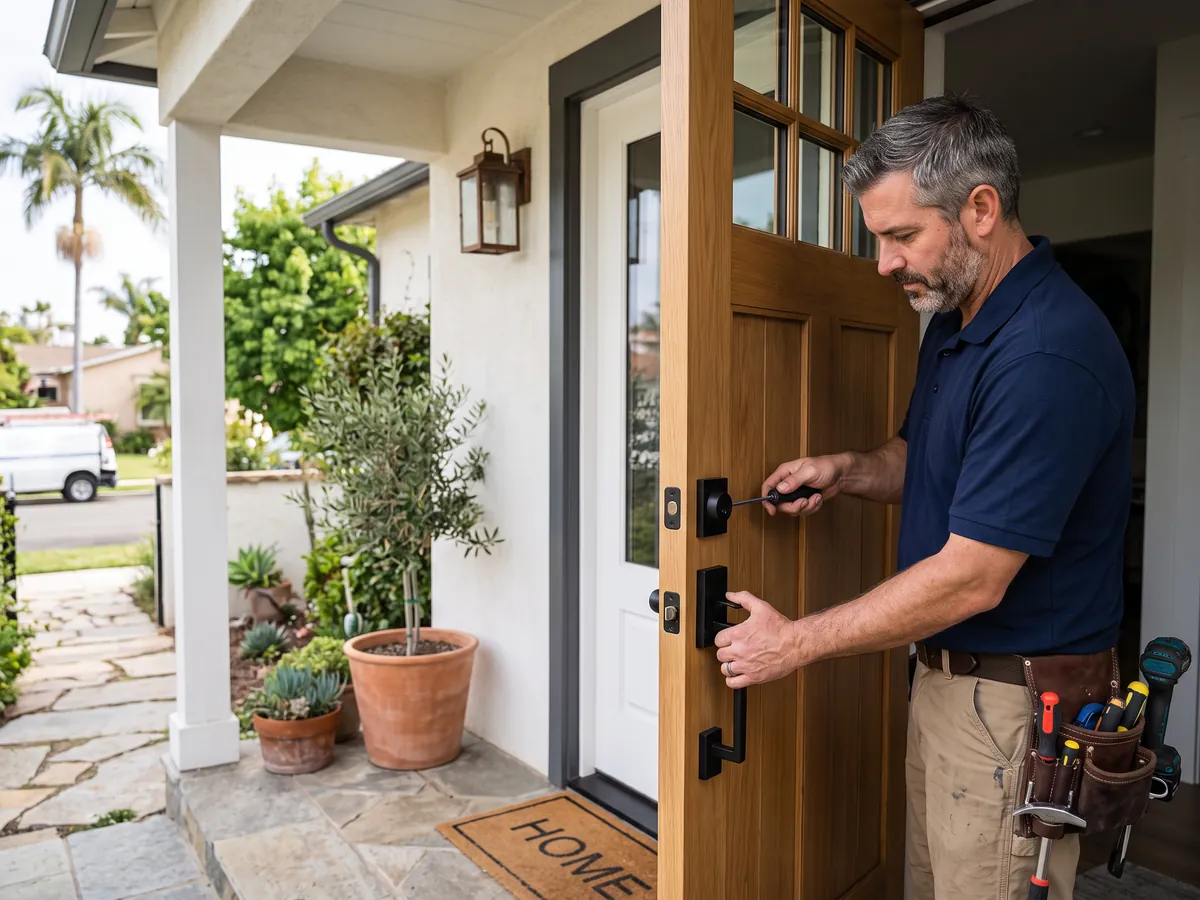
If you rent out your condo, you're a landlord as well as an HOA member, and that changes your lock checklist. California requires landlords to provide a working deadbolt on the main entry door and working locks on windows that open. Between tenants, the locks should be rekeyed, the deadbolt tested, and the new tenant given keys while you keep one for lawful entry. Fobs and gate remotes usually transfer through the association. A condo locksmith in Duarte can handle the unit side of every turnover, check the slider and window latches while there, and leave you an itemized invoice for your records.
What to know first in Duarte
Condo hardware across Southern California spans several decades of building. Units from the 1970s and 1980s often have Schlage or Kwikset knobsets with separate deadbolts, sometimes older Weiser hardware that's harder to find parts for. Mid-rise buildings may use heavier cylindrical or mortise locks on fire-rated corridor doors. Newer tracts commonly arrive with consumer-rekeyable cylinders such as Kwikset SmartKey, which anyone holding a working key can reset, convenient for owners and worth knowing as a weakness. Patio sliders use hook latches that wear, and many owners have added steel security screen doors with keyed locks of their own. A condo locksmith works with all of it: rekeying pin tumbler cylinders to one key, adjusting or replacing latches, and upgrading to Grade 1 deadbolts with reinforced strikes where it makes sense. We bring common parts on the van, and for less common hardware we identify the exact model before quoting, so you aren't paying for a second trip.
What we can do on-site
- Rekeying after you buy a condo. A rekey handles the locks; the association handles the rest. While we work, request new fobs and the deactivation of the seller's, ask for a mailbox lock change, and reprogram any garage door remotes. We'll leave you a short checklist of the HOA-side items so nothing from the old owner keeps working.
- HOA-approved hardware replacement. If a visible hardware change needs architectural review, we give you the brand, model number, finish and a photo or spec sheet to attach to the form. The install waits until approval comes back. That small delay is better than paying twice when a violation letter asks you to restore the original.
- Garage entry and side doors. The side door from a condo garage to a walkway or patio gets forgotten, and its lock is often a mismatched builder knob. Rekeying it to your main key or fitting a deadbolt closes a gap that most owners only notice after a garage break-in. We check its hinges and strike while we're there.
- Mailbox, storage and closet locks. If you've lost every key at once, the mailbox is the one people forget to fix. Anyone who finds a key ring with your mailbox key can read bank statements and steal checks. After rekeying your unit, ask the association to authorize a mailbox lock change and we'll handle it in the same visit if possible.
- Turnovers for owner-landlords. Track every key and credential you hand a tenant: unit keys, mailbox key, garage remote, pool key and HOA fob. Get them back at move-out, or have the association deactivate the fob and change the mailbox lock. A simple key log turns turnover from guesswork into a checklist.
Local factors in Duarte
Condos near the foothills around Duarte face Santa Ana winds that drive grit into keyways and slam doors hard enough to loosen strikes. Wildfire evacuations can come quickly, so keep keys and fobs where you can grab them, and make sure a neighbor or the HOA has a way to reach you. A dry lubricant in the cylinders twice a year keeps grit from causing sticking.
Condo owners in 55+ communities around Duarte often need hardware that's easier to use: lever handles instead of knobs, deadbolts with large thumbturns, and keypads so family members and caregivers can get in without copies of keys. Many of these upgrades change the exterior look, so check with the association first. Once approved, a condo locksmith can install them and set separate codes for each visitor. Choose keypads with large, lit buttons that are easy to read in low light.
Summer heat in Duarte affects condo doors more than people expect. Metal entry doors facing open walkways expand, deadbolts start dragging on the strike, and smart lock batteries drain faster. If a lock gets stiffer every afternoon, a strike adjustment is usually the fix. For smart locks, change batteries before summer rather than waiting for the low-battery warning on the hottest day of the year. Sun-faded keypad buttons are another sign that a lock in direct sun needs attention.
Common situations
- Picture a mid-rise condo where the lever on a fire-rated corridor door has cracked and no longer retracts the latch. We confirm the label on the hinge edge, replace the lever and latch with listed hardware in the same finish, and check that the door still closes and latches on its own. The hallway closer stays on the HOA's maintenance list.
- An owner wants to replace a worn front handleset with a matte black design, but the association's guidelines call for a bronze finish across the building. We source a Grade 1 handleset in the approved finish, send the owner model and spec details for the architectural form, and install it once approval arrives, keyed to the existing key.
- Sometimes the caller isn't the owner. For example, an executor settling a parent's condo needs control of the unit during probate while relatives hold old keys. After reviewing the executor's ID and court documents, we rekey the unit, cut two keys, and note that the HOA should be told who now manages the property and its fobs.
- For example, a couple closes on a two-story townhome condo near Fish Canyon Falls with four keyed doors and three different keys. We rekey the front entry, deadbolt, garage-to-house door and garage side door to one key, cut five copies, and leave them a checklist: new fobs from the HOA, a mailbox lock request and a reset of the garage remotes.
From your call to the finished job
- Tell us about the property. Call (951) 903-3193 and describe the building: townhome, garden-style or mid-rise, gated or open, and how a van gets close. Mention what you need done and which doors are involved. Photos of the locks and the hinge edge of your entry door help us plan the visit to Duarte.
- Confirm who can authorize the work. Estates, trusts and absentee owners add a step. An executor, trustee or property manager can authorize work with documents showing that role. We review those before starting, keep notes as California's Locksmith Act expects, and make sure the right person gets the new keys.
- Check the rules and the door. Some associations limit contractor hours or require noisy work to stay within set times. Tell us the rules and we'll schedule inside them, which matters since our day starts at 6:30 a.m. Rekeying is quiet; drilling and strike work are not.
- Quote before any work. We explain your choices plainly: rekey or replace, Grade 2 or Grade 1, mechanical or smart, and what each means for cost and security. If a cheaper option meets your needs, we say so. The decision is yours, and there's no pressure to add extras.
- Do the work cleanly. Rekeying happens at a portable bench, with cylinders removed and reinstalled without touching the door. Replacements use the existing holes whenever possible. In shared hallways, we keep tools and debris contained and leave the space the way the association expects to find it.
- Keys, records and HOA follow-up. We count the new keys with you and leave an itemized invoice listing each lock, the work and the date. Keep it with your closing documents or rental records. If your association requires an emergency key or access code on file, now is the time to update it.
How we quote the job
- Hardware grade and required finish. Fire-rated corridor doors need latching hardware listed for fire doors, which narrows the choices and can cost more than a standard residential lockset. We price only listed options for those doors. Cutting that corner can leave you with a failed inspection or a door that no longer protects the hallway.
- Master pins and older parts. Consumer-rekeyable cylinders found in many newer condos rekey differently from traditional pin tumblers, and some owners prefer to swap them for conventional cylinders. Whether that's worth it depends on your priorities, and we'll explain the trade-off along with the cost difference.
- Smart locks and security add-ons. Security screen door locks, keypad deadbolts for caregivers and access-logging locks for vacant units each solve specific problems. We price them individually so you can choose what fits. If a simpler, cheaper fix does the same job, we'll tell you.
Every job gets a clear quote before any work starts. Call (951) 903-3193 with the details and we'll tell you what to expect for your situation in Duarte.
What to do before we arrive
- Photograph the hinge edge of your corridor-facing entry door before shopping for a new lock. A fire label there means the hardware must be listed for fire doors. Sending that photo when you call helps us quote compatible hardware right away and keeps you from buying a lock that can't legally go on.
- When selling a condo, gather every key, fob, remote, mailbox key and storage key, label them, and hand them over at closing in one bag. Tell the buyer which ones exist. A clean handoff protects you from questions later and gives the new owner a clear starting point for their rekey.
- At closing, ask the manager to deactivate every fob and remote registered to the seller and issue new ones to you. Fobs often control the garage, lobby, pool and gym, and a seller who forgot one in a jacket pocket shouldn't still be able to walk into your building next month.
- Check your patio slider latch at least once a year: close the door, lock it, and pull hard on the handle. If the panel moves or the latch pops free, the rollers or keeper need adjusting. Add a track bar for nights and trips, which costs little and needs no HOA approval.
What not to do
- Installing a new handleset, keypad or security screen door without checking the association's rules. The HOA can require you to remove it, and you pay twice: once for the new hardware and again to restore the old look. A quick check of the guidelines or a call to the manager prevents it.
- Fitting a security screen door with a lock keyed on both sides and keeping the key somewhere other than right beside it. In a fire, nobody should have to hunt for a key to get out. Choose a screen lock with an inside thumbturn, or keep the key within immediate reach of the door.
- Living for years in a converted condo without checking for old master pins. If your community was built as apartments, a management master key from that era could still open some unit doors. Rekeying removes master wafers, and it's one of the least expensive security fixes available to an owner.
Service in Duarte
Duarte is about 42 miles from our San Bernardino base, roughly 47 minutes in light traffic via Palm Avenue to I-215 North and I-15 South. When you call, you get an arrival estimate based on where the technician is and the traffic at that moment.
Stuck on the shoulder or in a parking lot along I-210? Get somewhere safe, turn on your hazards, and give us the nearest exit or business so we can find the car without guessing.
About Duarte: The first recorded avocado tree grown in California was planted in Duarte by William Chappelow Sr. in 1893, from seeds sent by the U.S. Department of Agriculture.
| Neighborhoods | West Duarte between Mountain Avenue and Buena Vista Street, Duarte Station area at Highland Avenue, Fish Canyon foothill streets, Huntington Drive corridor, Encanto Parkway and Valley View Park on the east side, Royal Oaks Drive near the Bradbury line |
|---|---|
| ZIP codes | 91010, 91008 |
| Main routes | I-210, I-605, Huntington Drive, Duarte Road |
| From our San Bernardino base | about 42 miles via Palm Avenue to I-215 North and I-15 South, then SR-210 West (Foothill Freeway), continuing as I-210 West through Glendora, Azusa and Irwindale; exit Mount Olive Drive for Las Lomas, Royal Oaks Drive and the east side, or Buena Vista Street for Huntington Drive, City of Hope and Duarte Station |
Home lock work in Duarte?
Call (951) 903-3193 with the address and a quick description of the doors and locks involved. We'll quote the job before any work starts.
Frequently asked questions
Can I add a security screen door to my condo?
Many associations allow them but specify style, color or placement, so check the guidelines and submit any required form. Once approved, choose a lock with an inside thumbturn rather than one keyed on both sides, so anyone inside can get out quickly. We can key the screen door's cylinder to match your front door. Remember that a screen door lock adds to your main deadbolt; it does not replace it.
What hours do you work, and can you fit HOA contractor rules?
We work every day from 6:30 a.m. to 11:30 p.m. If your association restricts contractor hours or noisy work, tell us when you call and we'll schedule inside those limits. Rekeying is quiet; drilling and strike work are best kept to permitted times. Outside our hours, your HOA emergency line can handle common-area problems such as a gate that will not close.
Does my HOA keep a key to my condo?
Some do, especially in buildings where water leaks or other emergencies may require entry. Your CC&Rs or the association's rules explain whether owners must provide a key or access method. Ask the manager in writing. After a rekey, give them a new key only if the rules require it, and keep a record of what you provided. A sealed envelope or a code shared only with the manager keeps that emergency access controlled.
Should I rekey my condo after buying it?
Yes. Sellers, former tenants, contractors, agents and sometimes the association may hold keys, and you have no way to know how many copies exist. A condo locksmith rekeys your unit's cylinders so old keys stop working, usually without replacing hardware. Do it on the day you take possession, and ask the HOA to deactivate the seller's fobs at the same time. If the unit has an attached garage, include the garage-to-house door and any garage side door in the same rekey.
I'm selling my condo. What should I do about keys?
Collect every key, fob, remote, mailbox key and storage key, label them, and hand them over at closing. Let the buyer know which items exist. Give the listing agent only what the lockbox needs, and get it back. You don't need to rekey before selling, but the buyer should rekey after taking possession. If the unit will sit vacant before closing, consider rekeying so only you and your agent have access during the sale.
My condo used to be an apartment complex. Could an old master key still open it?
It's possible if the original cylinders were never rekeyed after the conversion. A condo locksmith can remove the cylinder, check for master wafers in the pin chambers, and repin it so only your key works. If your complex has identical doors, numbered carports and a former leasing office, it's worth checking. The repin takes only a little longer than a standard rekey, and the hardware stays on the door.
How far is Duarte from your base?
Duarte is about 42 miles from our San Bernardino base, roughly 47 minutes in light traffic. Arrival time depends on traffic and on the job the technician is finishing, so we give you an estimate on the phone before you commit.
Related services in Duarte
- Condo Lockout in Duarte
- Residential Locksmith in Duarte
- Rekey Locks after Buying a House in Duarte
- Locksmith for New Homeowners in Duarte
- Apartment Locksmith in Duarte
- Smart Lock Installation in Duarte
- Deadbolt Installation in Duarte
- Cluster Mailbox Lock in Duarte
- Keyed Alike Locks in Duarte
- Locksmith for Rental Property in Duarte
Condo Locksmith in nearby cities
- Condo Locksmith in BradburyLos Angeles County
- Condo Locksmith in MonroviaLos Angeles County
- Condo Locksmith in IrwindaleLos Angeles County
- Condo Locksmith in AzusaLos Angeles County
- Condo Locksmith in Baldwin ParkLos Angeles County
- Condo Locksmith in ArcadiaLos Angeles County
- Condo Locksmith in North El MonteLos Angeles County
- Condo Locksmith in CitrusLos Angeles County