
Perris, Riverside County
Changing Your Locks in Perris, Explained by a Locksmith
Short answer: Renters in Perris usually need landlord permission before they change locks, and the landlord should receive a working key. The big exception is safety: under California Civil Code 1941.5 and 1941.6, a landlord must change the locks within 24 hours of a tenant's written request in certain situations involving a protective order or similar documentation. We can do that work for either party.
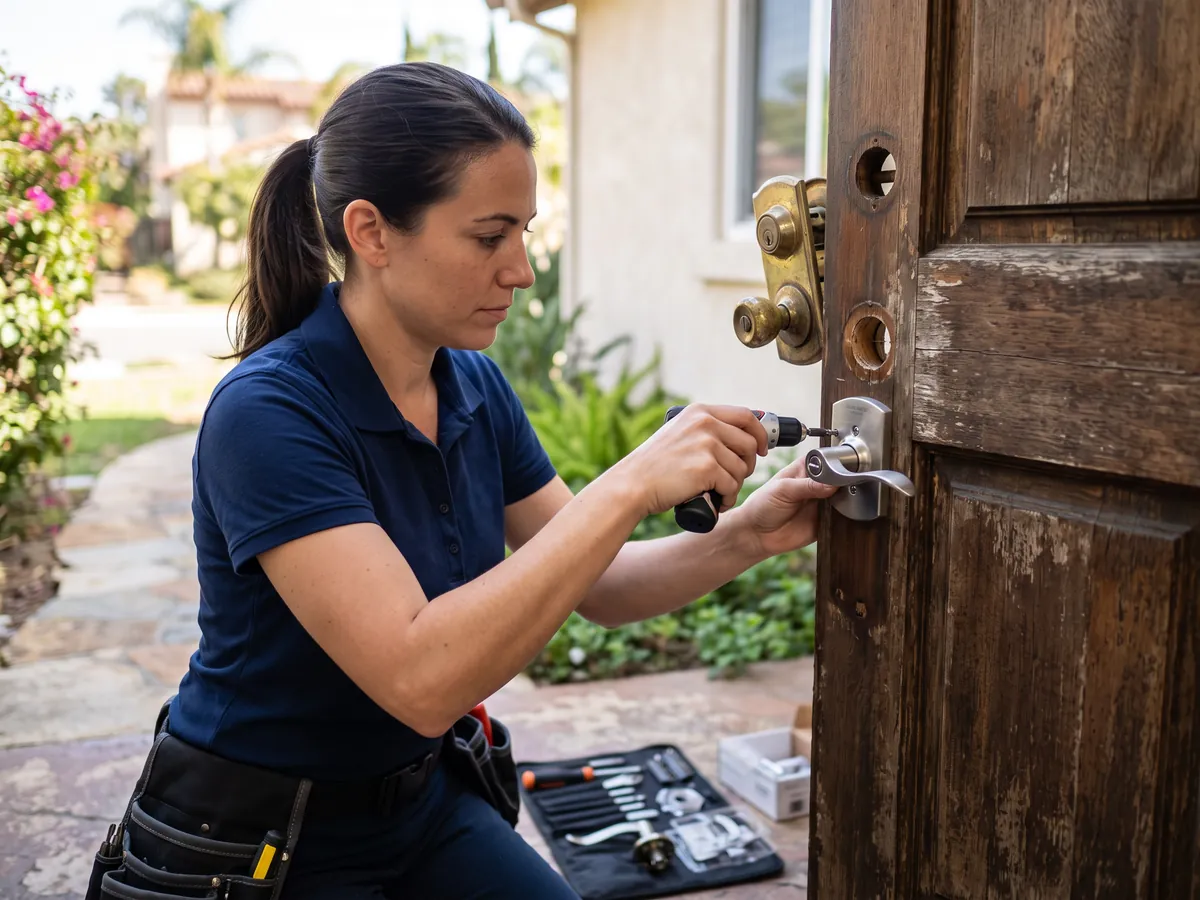
Renting in Perris doesn't mean you're stuck with keys that a dozen past tenants may have copied. California law puts the basic lock duties on the landlord: an operable deadbolt on each main swinging entry door and working locks on windows that open. If you want a lock change beyond that, the cleanest path is a short written request to your landlord or manager. Many agree, especially when you offer to cover the work and hand over a copy of the new key. Julian's Locksmith can talk with both of you, confirm the tenancy, and change locks so the old keys stop working the day the work is done.
Changing locks means replacing the hardware instead of only changing the key. People do it when old locks are worn or outdated, when they want a new look or feature, or when a break-in has damaged them. When the old locks are in good condition, rekeying gives the same security for less, and we help you decide at the door. Renters should know the rules. California Civil Code §1941.3 requires landlords to provide working deadbolts on main swinging entry doors and window security for rentals. Civil Code sections 1941.5 and 1941.6 require a landlord to change the locks within 24 hours of a tenant's written request in certain situations involving a protective order or similar documentation. Outside those cases, a tenant who swaps locks without permission can break the lease. Ask the landlord first, and keep the old hardware to hand back. Home buyers in Perris are the other big group. We usually recommend changing or rekeying every exterior door the day you get the keys. A resale home may have seen agent lockboxes, contractors, pet sitters and previous occupants, and a new owner cannot know who still holds a copy. What is involved: we remove the old latch sets, check the bore and strike, fit the new locks, test them and hand over the keys. Installation is the same whatever you choose; only the keying and finish change.
How this works in Perris
There are three ways to change locks, and choosing among them depends mostly on the condition of what's already on your doors. Rekeying keeps the hardware and swaps the pin stack inside each cylinder, so the old key no longer reaches the shear line. It's the right call for sound locks you like. Replacing only the cylinder works on mortise locks, rim locks and Euro-profile multipoint doors, where the cylinder is a separate part. Replacing the whole lockset makes sense when the latch sticks, the knob wobbles, the finish has peeled in the sun, or the lock is an ungraded bargain model. In Perris, many homes end up with a mix: re-pinned deadbolts on the front and garage entry, new levers on a back door that has worn out, and a matching cylinder added to the security screen door. We explain each recommendation door by door and price the options so you can choose. Nothing gets replaced just because we happen to have stock on the truck.
Work included on a typical visit
- New lockset installation on existing door prep. Replacement makes sense for loose knobs that spin, latches that stick in summer heat, peeling finishes and ungraded bargain locks. We suggest ANSI/BHMA Grade 1 or 2 hardware for exterior doors, explain the difference in plain terms, and will install locks you bought yourself as long as they suit the door.
- Handlesets and front-door entry sets. Front doors often carry a handleset: a deadbolt above and a thumb-latch or lever grip below, bolted through the door at two points. Brands drill those through-holes at different spacings, so a straight swap may leave an old hole exposed. We check the spacing first and recommend a matching set or a cover plate before anything comes off.
- Restricted keyways and high-security cylinders. A 'Do Not Duplicate' stamp on an ordinary key is a polite request, not a barrier, and plenty of kiosks ignore it. Real key control comes from controlled blanks and a registered owner. When we change locks to a patented keyway, you decide who may order copies, and new keys require proof that you approved them.
- Strike and frame reinforcement. A lock change is the right moment to upgrade the strike side. Builder strikes are often held by 3/4-inch screws that only bite the jamb. We install heavy-gauge strikes and drive 3-inch screws into the framing behind it, which turns a kick from a jamb-splitting event into a much harder and noisier job.
- Rental turnover lock changes. Landlords and property managers change locks between tenants so a former occupant's copies can't open the unit. We rekey the entry deadbolt and handle, the mailbox lock if it's yours to change, and any storage or garage locks, then hand you a labeled key set. Quick turnover work keeps vacancy short.
Local factors in Perris
Rural properties often have as many padlocks as door locks: barns, well houses, tack rooms, pump enclosures and driveway gates. When you change locks on acreage near Perris, list every one. Rekeyable padlocks that accept standard house keyways can join your house key system, which beats a drawer of unlabeled keys. Outbuilding locks see little use, so we check that they still turn freely before keying them alike.
Older homes often hide more keyed locks than people expect: original mortise locks, service porch doors, and decades of add-on deadbolts. Before you change locks in an older Perris house, we check whether original hardware can be rekeyed and serviced instead of replaced, which preserves period trim and avoids filling oversized door pockets. Where doors were bored at odd sizes or old jambs won't hold a modern strike, we explain the fix honestly, including when a carpenter should go first.
Inland heat is hard on locks. Doors expand, strikes misalign, and dark finishes on sun-facing doors fade or peel. When you change locks in Perris, choose finishes that tolerate direct sun and keypad locks rated for outdoor heat, and expect batteries to need replacing more often in summer. We set strikes with enough tolerance that the deadbolt still throws easily on the hottest afternoons.
Common situations
You close on a resale in Monument Ranch and collect keys from the agent. The seller used a lockbox for weeks, a pet sitter held a key and two contractors worked in the house. The hardware is Kwikset and in good shape, so we recommend rekeying the side and garage-entry doors. You want a heavier deadbolt and a darker finish on the front door, so that one gets changed. The result is one key for the whole house, a new look at the front door and no leftover copies in circulation.
- Imagine a couple separating, with one partner moving out of a Perris home they both own. The one who stays wants new keys. Because both names are on title, we'd explain that a lock change doesn't alter ownership rights and that those decisions belong with attorneys or the court. With the other owner's written agreement or a court order, we'd rekey the house and record who received keys.
- Imagine a kitchen remodel that wraps up after three months, during which a general contractor, a tile crew and an electrician all used a lockbox key. Nothing has gone wrong, but nobody can say who copied it. We'd rekey the house to a new key, remove the lockbox, and suggest a keypad deadbolt for the next project so access can be ended with a code change.
- For instance, a newer Perris home sells with a Wi-Fi deadbolt that the sellers still control from their phones. They're cooperative but slow to remove themselves from the app. We'd factory-reset the lock, delete stored codes, enroll the new owner as administrator, connect it to the new owner's network, and rekey the override cylinder, because the key the sellers kept would otherwise still open the door.
Step by step with Julian's Locksmith
- Tell us the reason and count the doors. Call (951) 903-3193 and tell us why you want to change locks: move-in, lost keys, break-in, safety or turnover. Then count keyed doors, including the garage entry, security screen door and gates. That list, plus the brands printed on the locks, lets us load the right pins and hardware.
- Verify residence or ownership. Before we change locks, we confirm you have the right to authorize it. Owners show photo ID plus something linking them to the address, such as a closing statement, deed or utility bill. Tenants show ID and a lease, and we may ask about landlord consent. It's how a licensed locksmith should work.
- Inspect each lock and choose rekey or replace. We measure backset, bore and door thickness wherever new hardware is on the table, because a lock that doesn't fit the existing prep means drilling, filler plates or an extra trip. Measuring first means the new lock goes into holes it was designed for, and your door edge stays clean.
- Re-pin or install the hardware. Strike work happens at this stage too. We chisel or file the strike pocket so the bolt enters cleanly, drive longer screws into the framing, and adjust the latch strike so the door closes without a shoulder push. A lock that latches easily is a lock that actually gets used.
- Test every key on every door. For smart locks, testing means locking and unlocking from the keypad, the app and the backup key, checking auto-lock timing, and confirming that deleted codes no longer work. We also check the battery level and explain the low-battery warning so the lock doesn't surprise you later.
- Hand over keys and records. You get the new keys, a count of how many were cut, and an itemized invoice. We suggest writing down who receives each copy. If you rent, the landlord or manager typically gets one under your lease. Old keys can go in the trash; they no longer fit anything on the property.
How we quote the job
- Number of doors and cylinders. Larger jobs usually cost less per lock because there's one trip and one setup. If you're thinking about changing the main house now and the casita or detached garage later, it often makes sense to do them together while we're already set up at your Perris property.
- Door condition and prep work. Damage from a break-in changes the scope more than anything. A split jamb may need a reinforcement kit or a carpenter, and a crushed door edge may not hold a lock securely. We assess first, quote the lock work, and tell you honestly if part of the repair belongs to another trade.
- Timing, travel and urgency. Urgency costs less than people expect when the job is a straightforward rekey, since the hardware is already on the door. It adds cost when a special lock has to be sourced quickly. In that case we secure the doors with what we carry and finish with the ordered hardware on a second visit.
Every job gets a clear quote before any work starts. Call (951) 903-3193 with the details and we'll tell you what to expect for your situation in Perris.
Practical tips before you call
- Reset the garage door opener when you change locks. Most openers have a learn button on the motor unit; holding it until the indicator light goes out erases every stored remote. Then reprogram your own remotes, your car's built-in buttons and the outdoor keypad code. An old remote opens the garage, and the garage often leads into the house.
- Planning a lock change for a rental or vacation home in Perris? Consider a keypad deadbolt with a keyed backup on the main entry. Guests and cleaners each get their own code, and removing one takes seconds. Keep the mechanical keys few and accounted for, because the keypad is only as secure as its override cylinder.
- Keep one spare key somewhere smarter than a planter, a fake rock or the ledge above the door. A trusted neighbor, a relative who lives nearby, or a code-protected key box whose code you change now and then all beat the obvious spots. Anyone walking a May Ranch street looking for an easy target knows where people hide keys.
- Buying a house in Perris that has a smart lock? Ask your agent to put the admin handover on the sellers' move-out list. Even so, factory-reset the lock after closing, check the app for shared users and any connected hub, and change the Wi-Fi password the sellers may have left on the router.
Common errors that cost time and money
- Assuming a smart lock means no rekey is needed. Retrofit models replace only the inside half and keep the old exterior cylinder, and full smart deadbolts still have a keyed override. If an old key turns that cylinder, the door opens no matter how many codes you delete from the app.
- Hiring from an ad with a suspiciously low lock-change price. Some unlicensed operators quote one figure, drill locks that could have been rekeyed, then charge far more. In California, a locksmith company must hold a BSIS license, so ask for the number and check it at search.dca.ca.gov before any work starts.
- Over-tightening the through-bolts. Cranking the screws that hold a knob, lever or deadbolt together squeezes the mechanism and makes the latch or bolt drag. The lock feels solid at first and then starts sticking, especially when heat swells the door. Snug and even is correct; the door should close with one easy push.
Getting to Perris
Perris is about 32 miles from our San Bernardino base, roughly 37 minutes in light traffic via University Parkway to I-215 South through San Bernardino, Colton and Grand Terrace, along the SR-60 overlap in Riverside and past March Air Reserve Base. When you call, you get an arrival estimate based on where the technician is and the traffic at that moment.
Once the evening commute thins out on Case Road, drive times usually shrink. That makes an evening call before closing a practical option for non-urgent jobs that you couldn't fit into the workday.
About Perris: Perris Auto Speedway, a half-mile clay oval, opened in 1996 on the Lake Perris Fairgrounds, which have hosted the Southern California Fair since 1987.
| Neighborhoods | South Perris near Case Road and Ethanac Road, Rider Street tracts near Avalon Elementary, Goetz Road and Perris Valley Airport area, West Perris toward Mead Valley and Good Hope, Pinacate area along South A Street, Downtown Perris |
|---|---|
| ZIP codes | 92570, 92571 |
| Main routes | I-215, SR-74, Ramona Expressway, Perris Boulevard |
| From our San Bernardino base | about 32 miles via University Parkway to I-215 South through San Bernardino, Colton and Grand Terrace, along the SR-60 overlap in Riverside and past March Air Reserve Base; exit Harley Knox Boulevard or Ramona Expressway for north Perris, Nuevo Road or D Street for downtown, Ethanac Road for the south side |
New or replacement locks in Perris?
Call (951) 903-3193 and tell us which doors and what kind of hardware you have in mind. If you already bought the lock, keep the box handy so we can check it fits the door, and we'll quote the install before any work starts.
Frequently asked questions
What happens to my old locks and keys?
Rekeyed locks stay on your door; only the internal pins change, and the old keys become scrap metal. When we replace hardware, you can keep the old locks for a shed or tool cabinet, or we can take them away. If an old key turns up later, try it in a new lock once for your own confidence, then throw it out.
Can a renter change the locks in California?
Usually not without the landlord's consent. Most leases require it, and the landlord has a right to enter with proper notice. Ask in writing, offer to pay, and give the landlord a key. The exception is a tenant protected by a qualifying court order or police report: if the landlord doesn't change the locks within 24 hours of a written request, the tenant may have them changed.
What do I need to show before you change locks?
A photo ID plus something that ties you to the address. Owners can show a deed, closing statement, property tax bill or utility bill. Tenants can show a lease and ID, and we may ask about landlord consent. Property managers and executors need authorization paperwork. We verify before every lock change so we never help someone lock out a person with a legal right to the home.
Do I need to change locks after buying a house?
You should, and it's one of the first things we recommend after closing. The sellers, their relatives, past contractors, cleaners and showing agents may all have had keys, and nobody can account for every copy. A rekey of sound hardware is usually enough. Add a factory reset for any smart lock and clear the garage opener's memory while you're at it.
Can you change my mailbox or gate lock at the same time?
Gate locks and padlocks, yes, and many can be keyed to your house key. Mailboxes depend on ownership. A wall-mounted or post box you own can usually take a new cam lock. A cluster box unit may belong to the Postal Service or to your HOA or property manager, and the owner decides who changes it. We'll help you sort out which applies in Perris.
Does changing my locks stop old garage door remotes?
No. Garage openers are a separate system. After you change locks, clear the opener's memory using the learn button on the motor unit, reprogram your own remotes and car buttons, and change the exterior keypad code. If your garage connects to the house, key the door between them with the rest, because anyone with a working old remote can reach it.
How far is Perris from your base?
Perris is about 32 miles from our San Bernardino base, roughly 37 minutes in light traffic. Arrival time depends on traffic and on the job the technician is finishing, so we give you an estimate on the phone before you commit.
Related services in Perris
Change Locks in nearby cities
- Change Locks in Good HopeRiverside County
- Change Locks in Mead ValleyRiverside County
- Change Locks in RomolandRiverside County
- Change Locks in NuevoRiverside County
- Change Locks in Quail ValleyRiverside County
- Change Locks in March Air Reserve BaseRiverside County
- Change Locks in HomelandRiverside County
- Change Locks in MenifeeRiverside County