Monrovia, Los Angeles County
Access Control Systems in Monrovia
Short answer: Many access control systems still running in Monrovia use 125 kHz proximity cards that can be copied with an inexpensive device. Upgrading usually means encrypted 13.56 MHz smart credentials or phone credentials, multi-technology readers for a gradual switch, and current software. Often the existing locks, wiring and power supplies can stay, which keeps the project smaller than most owners expect.
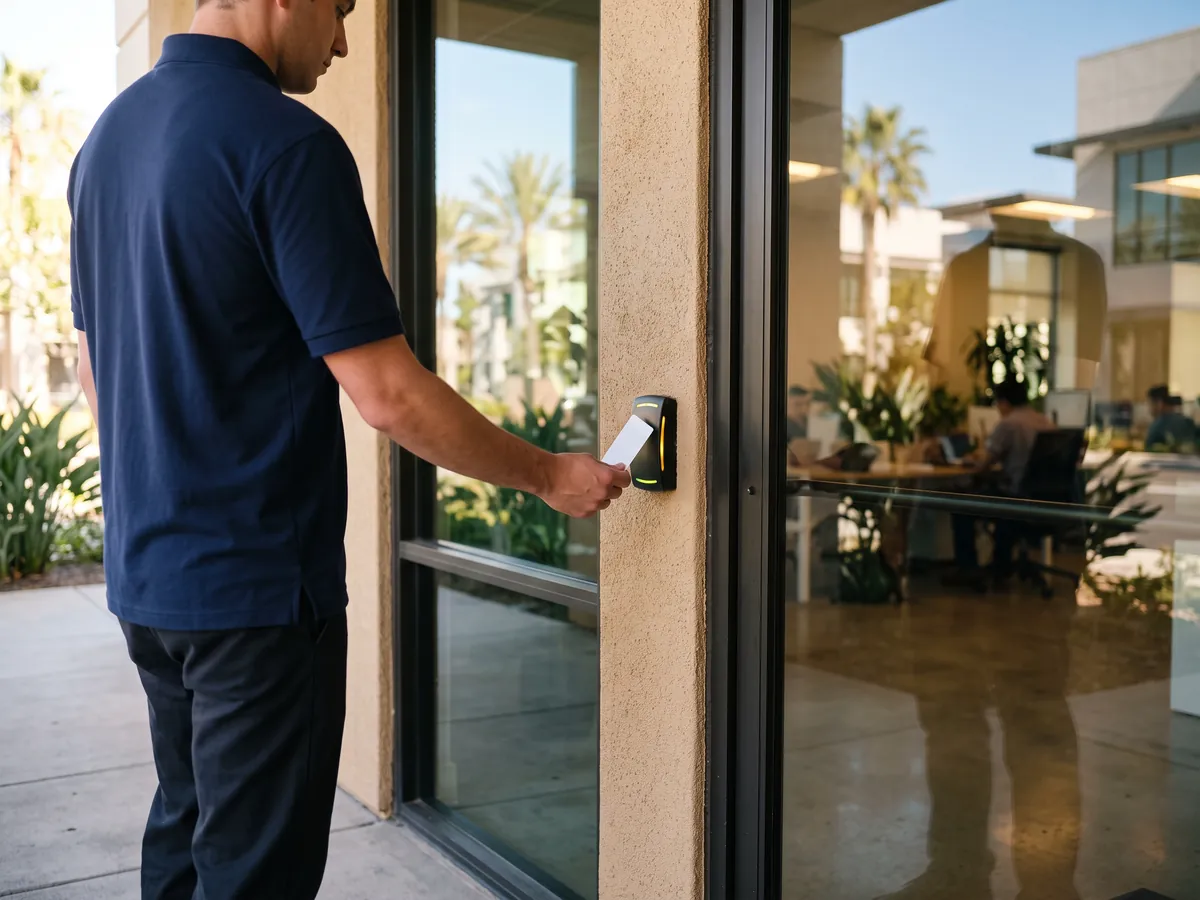
Some of the access control running in Monrovia today was installed when the building was new and hasn't been touched since: a controller in a closet, software on an aging desktop, and proximity cards that anyone with a cheap cloner can duplicate. It still opens doors, so it's easy to ignore until the computer dies or a former tenant's fob still works. Julian's Locksmith reviews, repairs and upgrades systems like these. Call (951) 903-3193 any day 24 hours a day, 7 days a week.
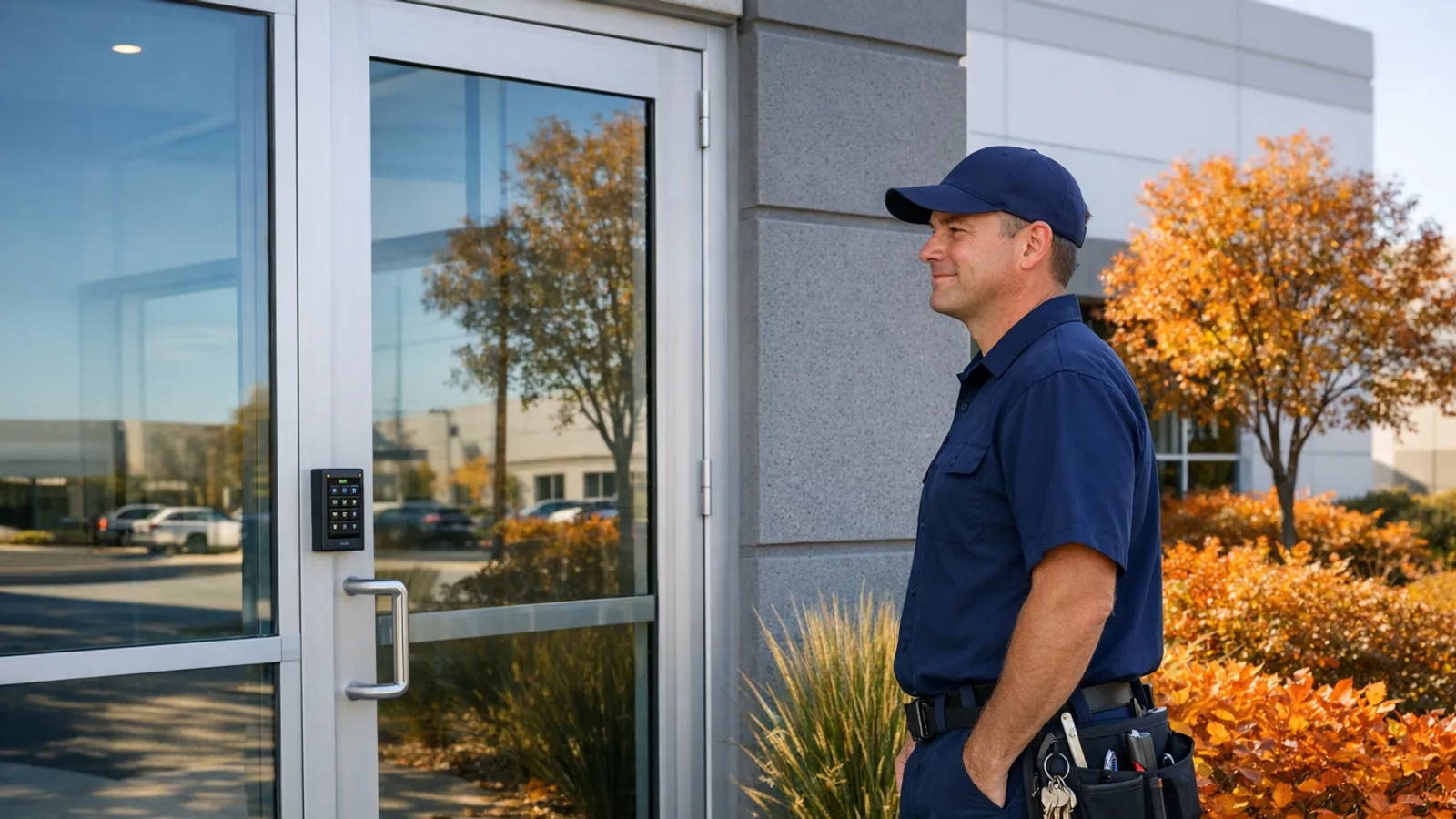
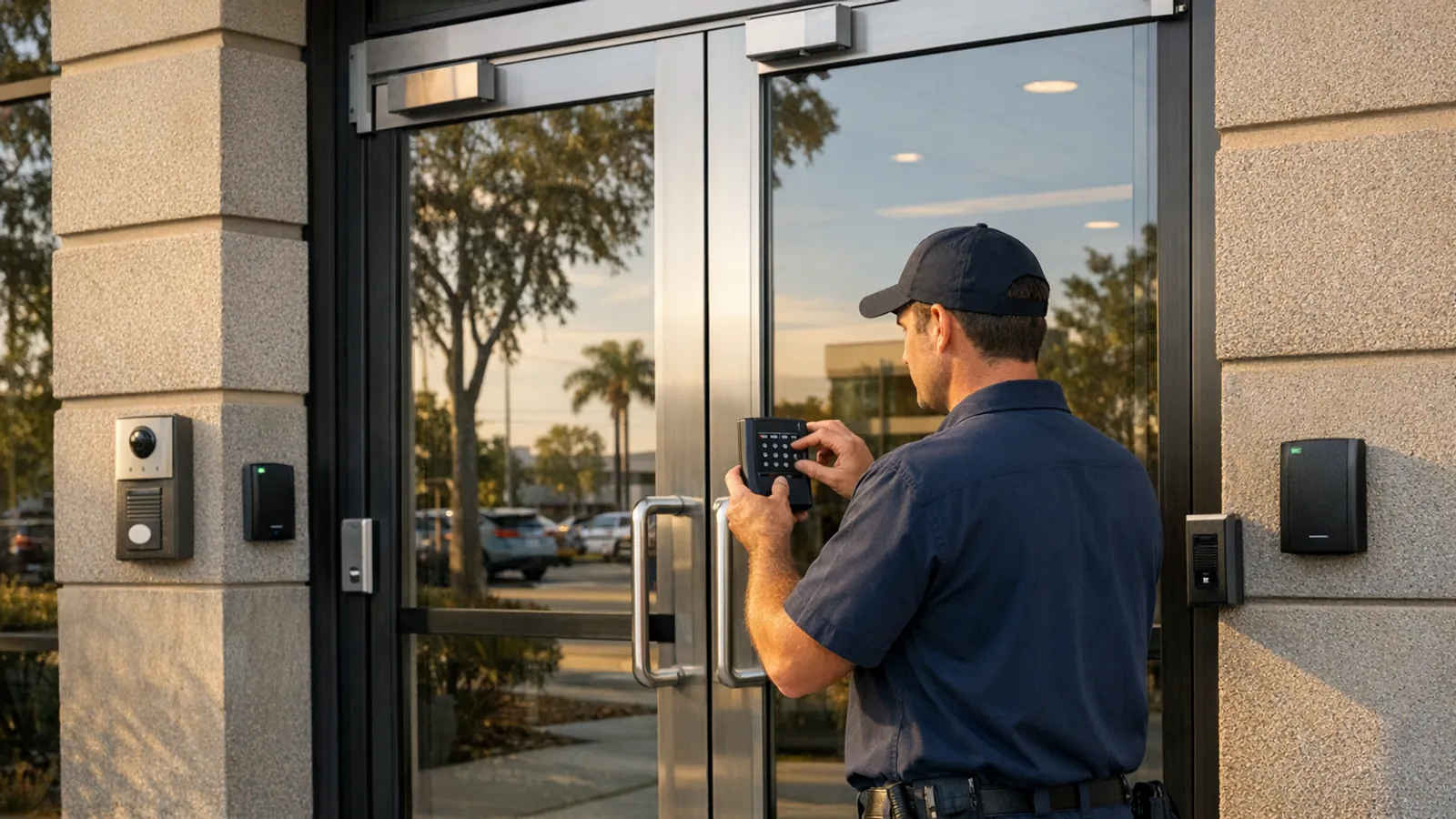
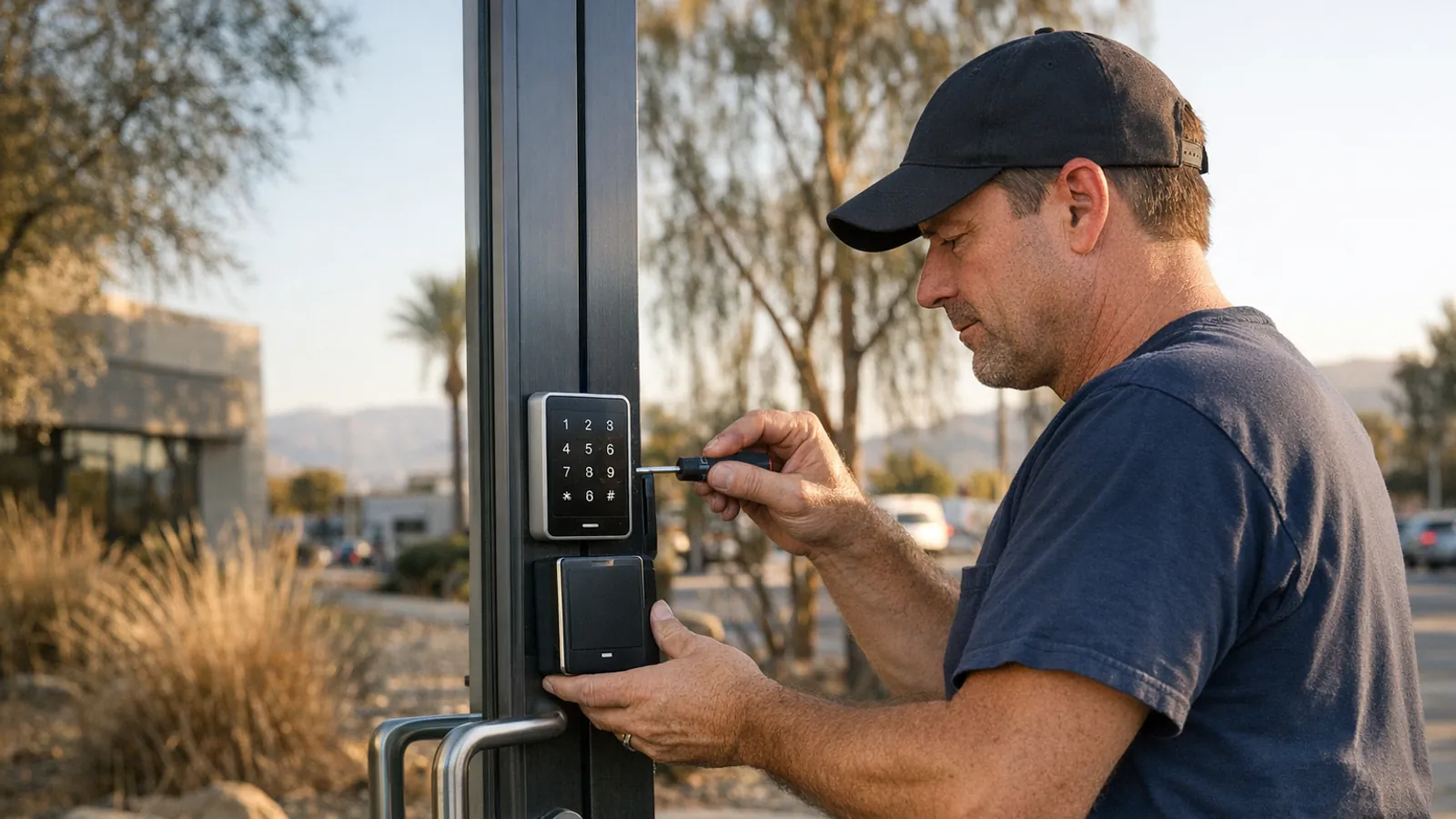
Access control means electronic systems that decide who may open which door and when: card readers, fob readers, keypads, electric strikes and magnetic locks, plus the software that records them. In Monrovia it turns up in multi-tenant office buildings in the Technology Corridor, in apartment and mixed-use buildings around Station Square, and at small businesses tired of lost keys. Why switch? A key cannot be revoked, but a credential can. When an employee leaves or a tenant moves out, you disable the card and the door stops recognizing it. A log shows who entered and when, which helps settle disputes. Different tenants can have different schedules, and doors can release automatically during business hours. We handle the common failures: readers that stopped responding, power supplies that gave out, strikes that no longer release, and fobs that need reprogramming. We can also upgrade older proximity systems and add doors to an existing platform when it allows. Scope matters. Standalone and small multi-door systems are within our range. Larger networked systems, or anything tied into a fire alarm panel, may call for a licensed low-voltage or fire alarm contractor, and we say so before the project begins.
Access Control in Monrovia: what to expect
Access control comes in three practical tiers, and picking the wrong one is among the costliest mistakes an owner can make. Standalone locks keep their users, codes and audit log inside the lock itself. They suit a single back door, a server closet or a supply room, and they're managed at the door or through a handheld programmer or app. Wired networked systems connect readers and electrified locks to a controller, usually in a telecom room, and manage everything from one software console; they handle many doors, complex schedules and integration with cameras or alarms. Cloud-managed systems use the same kind of door hardware but put the software online, so an owner can add a user or open a door from a phone and receive alerts, in exchange for a subscription per door or user. For a Monrovia business, the deciding questions are how many doors you have, how often staff turns over, whether more than one person administers it, and whether you need reports for insurance, compliance or disputes. We walk through those questions before recommending any hardware.
What we can do on-site
- Networked card and fob systems. Once you're past a few doors, a networked system wins: one controller, a reader at each opening and a single user list. Deleting a lost fob removes it from every door at once. We set up controllers, readers and electrified locks, label everything at the panel, and leave you documented wiring rather than a mystery closet.
- Apartment, HOA and gate entry systems. Communities in Monrovia rely on telephone entry panels, fob readers at pedestrian gates and keypads at pools and gyms. We repair and replace those components, rebuild worn gate locks, and move panels off retired copper phone lines. We can also clean up the resident database so moved-out tenants no longer carry working fobs.
- Upgrades and credential migration. If your access control software runs on an old desktop under someone's desk, or the manufacturer stopped issuing updates, it's time to plan an upgrade. Often the door hardware, wiring and power supplies are fine to keep. We replace the controller and software, migrate the user list where possible, and keep the doors working throughout.
- User management, remote access and audit trails. Cloud-managed access control lets an owner in Monrovia open a door for a vendor from a phone, receive an alert when a door is forced or held open, and review entries from anywhere. We help configure notifications so they're useful rather than constant, and turn on multi-factor login for administrators so remote access doesn't become the weakest link.
- Key override and mechanical backup. When a controller dies on a Thursday night, the mechanical layer decides whether you can still lock up and open the next morning. We check that override cylinders turn freely, that fail-secure doors can be locked by hand, and that exit devices can be dogged or undogged with a key, so an outage becomes an inconvenience instead of a shutdown.
Local factors in Monrovia
Older downtown buildings often house several tenants behind one street entrance. Access control there has to serve a shared lobby, individual suites and after-hours visitors while respecting historic doors and plaster walls that are hard to cable. Wireless electrified locks and cloud management work well in Monrovia's older commercial blocks, letting each tenant control its own suite while the building owner manages the common entrance and its schedule.
Older apartment buildings and commercial properties from the 1960s and 1970s in Monrovia bring their own challenges: plaster or block walls, doors that have sagged for decades, and frames never prepped for electrified hardware. Wireless locks, surface raceway and careful door repair make access control practical without tearing the building apart. We often fix hinges, closers and frames first, because new electronics won't work on a door that doesn't close properly.
Summer heat in Monrovia is hard on access control. Backup batteries in hot electrical rooms age faster, keypads in direct sun fade and crack, standalone lock batteries drain sooner, and metal doors on west-facing walls can expand enough to bind a strike. We look at heat exposure during every survey and maintenance visit, specifying sun hoods, ventilated enclosures and outdoor-rated hardware, and replacing batteries before the hottest months arrive.
Example situations
The manager of a small mixed-use building near Station Square reports that two fob readers are working only some of the time, and residents are holding doors open for each other. We trace the trouble to a power supply that browns out on hot days and a reader with corroded wire connections. We replace the supply and the reader, test the strike, and re-enroll the fobs. Three lost fobs are removed from the system so they cannot be used. The manager gets a printout of every active credential.
- Suppose a company moves into a suite in Monrovia where the previous tenant left readers, strikes and a locked controller cabinet, but no admin password and no cabinet key. After confirming the new lease with the property manager, we'd open the cabinet, identify the controller, and either reset it to factory defaults for the new tenant or recommend replacing it if the manufacturer no longer supports it.
- Think of a restaurant whose back door keeps getting propped open with a bucket on hot afternoons, and the owner learns about it only when a case of product goes missing. Adding a door position switch and a held-open alert to the existing access control, plus a closer strong enough to pull the door shut against the kitchen's exhaust draft, gives the manager a phone notification instead of a surprise.
- Picture a warehouse side door with a maglock that keeps letting go overnight. The alarm company reports a door-forced event in the small hours, but nobody was there. On inspection, the armature plate has loosened and tilted, the door sags enough that only part of the plate meets the magnet, and wind gusts pull it free. Remounting the armature, adjusting the hinges and adding a bond sensor would end the false alarms.
From your call to the finished job
- Start with a call. Call (951) 903-3193 and describe what you need: a new system, a repair, an upgrade or maintenance. Tell us how many doors or gates are involved, the brand on the reader or keypad if there is one, and what the door does now when someone presents a credential.
- Site walk and assessment. For upgrades we inventory what's already installed: reader models and card formats, controller brand and firmware, wiring type, electrified hardware and battery age. That inventory shows which pieces still have years left in them and which ones are holding the whole system back.
- Written quote and options. You get a written quote before work begins, with each door listed and the hardware named. Where there's a real choice, such as standalone versus networked or prox versus encrypted credentials, we price both and explain the trade-offs so the decision is yours.
- Hardware work at the door. When repairing, we replace only what failed and correct whatever caused it. A burned-out strike is often the symptom of a missing suppression diode, a misaligned keeper or the wrong voltage. Fixing the cause keeps the replacement from failing the same way next season.
- Programming and handoff. We document the system in plain terms: where the controller and power supplies sit, which breaker feeds them, where override keys are kept and how each door behaves when power fails. That sheet belongs with your building records, not in our van.
- Ongoing service and support. As your property changes, the system can change with it. Adding a door, a new tenant suite or phone credentials is far simpler when the original installation is documented. We keep notes on what we install, so each visit starts with information rather than guesswork.
Pricing factors
- Door and frame construction. Fire-rated doors limit the choices: the hardware must be listed for fire doors, and the opening still has to latch positively when power fails. That often means an electrified lock or a fire-rated fail-secure strike, both of which cost more than basic hardware. We check the label on the frame or door edge before quoting.
- Credential technology. Keypads avoid credential costs entirely, but shared codes spread quickly and leave no reliable record of who entered. Individual PINs fix the record problem. Requiring card plus PIN at sensitive doors adds security for the price of a combination reader. We help you put stronger credentials only where they're justified.
- Repair scope and parts availability. Timing affects cost too. A scheduled visit during normal business hours is the most economical way to service access control. Urgent evening calls may cost more, so planning upgrades and maintenance before small faults turn into lockouts saves both money and downtime.
Every job gets a clear quote before any work starts. Call (951) 903-3193 with the details and we'll tell you what to expect for your situation in Monrovia.
Mistakes to avoid
- Buying a kit online and mounting it on whatever door is there. Consumer-grade maglocks and strikes are often undersized, ship without proper egress devices and aren't listed for commercial use. They tend to fail inspection or fail open, and the business pays to remove them before a proper access control installation.
- Ignoring the mechanical side. Readers and software get the attention, but most failures happen at the door: sagging hinges, worn closers, misaligned strikes. If the door doesn't close and latch on its own, even the most expensive access control in Monrovia only records who left it open.
- Letting one person hold the only admin login. When that office manager leaves or forgets the password, nobody can add users, delete lost fobs or change schedules. Some systems can be recovered; others need a factory reset that wipes every user. Always keep at least two administrators.
What to do before we arrive
- Set door schedules carefully. An entrance that unlocks automatically at 7 a.m. should also lock automatically at closing, and holidays should be programmed in advance. A first-person-in rule keeps scheduled unlocks from happening until a staff member badges in, so an unexpected closure doesn't leave the lobby open.
- Keep the override keys accounted for. Know exactly how many exist, who holds them and where they're stored. If one has gone missing, rekey the override cylinders now. An unaccounted-for override key bypasses every card reader, schedule and audit log your system has.
- Test your backup batteries once a year, ideally before summer. Cut AC power to the access control power supply and watch the doors: fail-secure locks should still release for valid credentials, and the controller should stay online. If it dies quickly, replace the batteries before the next outage tests them for you.
- Shade or relocate readers and keypads that face the afternoon sun. Inland heat fades keypad legends, cracks plastic housings and drains standalone lock batteries faster. A small hood, a north-facing mount or a pedestal under an overhang can add years to the hardware at very little cost.
Getting to Monrovia
Monrovia is about 44 miles from our San Bernardino base, roughly 48 minutes in light traffic via University Parkway to SR-210 West. When you call, you get an arrival estimate based on where the technician is and the traffic at that moment.
Once the evening commute thins out on Shamrock Avenue, drive times usually shrink. That makes an evening call before closing a practical option for non-urgent jobs that you couldn't fit into the workday.
About Monrovia: Monrovia Canyon Park, known for its year-round waterfall, closed after the 2020 Bobcat Fire and later storm damage, then reopened on June 26, 2025.
| Neighborhoods | South Monrovia Island, Cloverleaf Canyon, Norumbega Drive foothills, Monroe Place and the original townsite grid, Old Town, South Monrovia |
|---|---|
| ZIP codes | 91016, 91017 |
| Main routes | I-210, Foothill Boulevard, Huntington Drive, Myrtle Avenue |
| From our San Bernardino base | about 44 miles via University Parkway to SR-210 West (Foothill Freeway), continuing onto I-210 West through Glendora, Azusa and Duarte; exit Myrtle Avenue for Old Town, Station Square and the foothill streets, or Huntington Drive for the west side |
Business lock or door work in Monrovia?
Call (951) 903-3193 with the address, the doors or hardware involved and when the site is open. We'll quote the job before any work starts and book a time within our hours that suits your schedule.
Frequently asked questions
Is cloud-based access control better than on-site software?
Neither is better for everyone. Cloud systems offer remote management, automatic updates and no server to maintain, in exchange for a recurring subscription. On-site systems can avoid subscription fees and keep data in-house, but someone has to maintain the computer and apply updates. For most small and mid-size businesses in Monrovia, cloud management is simpler to run day to day.
Do you do the wiring, or do I need an electrician?
We handle the door-side wiring and low-voltage connections that are part of typical locksmith access control work. Projects that need new 120-volt circuits, extensive cable through finished construction, fire alarm interfaces or network infrastructure may require a licensed electrical, low-voltage or fire alarm contractor. We tell you upfront and coordinate, so you aren't managing several trades alone.
What happens to access-controlled doors when the power goes out?
That depends on the hardware. Fail-safe locks, including all maglocks, release when power is lost; fail-secure locks stay locked from the outside but still let people exit from inside. Backup batteries in the power supply keep things running for a while. When they run out, staff use the mechanical key override. We plan each door's behavior during design.
Keypad, card or phone: which credential should we use?
Keypads are inexpensive to run, but codes get shared. Cards and fobs identify each person and are quick at busy doors. Phone credentials avoid lost plastic and are easy to issue remotely, but depend on charged phones. Many Monrovia businesses use cards or fobs for staff, a keypad for limited vendor access and card plus PIN at sensitive rooms.
How much does an access control system cost?
It depends on the number of doors, door construction, the type of lock hardware, credential technology, software model and how hard it is to run wire. A single standalone lock and a twenty-door networked system are very different projects. We don't quote prices without seeing the site, but you get a written, itemized quote before any work begins.
What does an access control audit trail actually record?
A typical audit trail logs each event with a time, door and credential: access granted, access denied, door forced open, door held open, and administrative changes such as adding a user. Standalone locks store a smaller log internally. The usefulness of the record depends on naming each credential properly, which we set up during programming.
How far is Monrovia from your base?
Monrovia is about 44 miles from our San Bernardino base, roughly 48 minutes in light traffic. Arrival time depends on traffic and on the job the technician is finishing, so we give you an estimate on the phone before you commit.
Related services in Monrovia
- Access Control Installation in Monrovia
- Access Control Repair in Monrovia
- Access Control Upgrade in Monrovia
- Access Control Maintenance in Monrovia
- Electric Strike Installation in Monrovia
- Magnetic Lock Installation in Monrovia
- Master Key System in Monrovia
- Commercial Locksmith in Monrovia
- Panic Bar Installation in Monrovia
Access Control in nearby cities
- Access Control in BradburyLos Angeles County
- Access Control in ArcadiaLos Angeles County
- Access Control in DuarteLos Angeles County
- Access Control in Sierra MadreLos Angeles County
- Access Control in North El MonteLos Angeles County
- Access Control in Temple CityLos Angeles County
- Access Control in IrwindaleLos Angeles County
- Access Control in Baldwin ParkLos Angeles County