
Downey, Los Angeles County
Locksmith for Retail Store Owners in Downey
Short answer: When you call about locksmith for retail store work, tell us what you sell, how many doors and cabinets are involved, who holds keys now and whether you lease the space. That lets us plan the right hardware, parts and time. Julian's Locksmith will quote before starting and give you an honest ETA for Downey: (951) 903-3193.
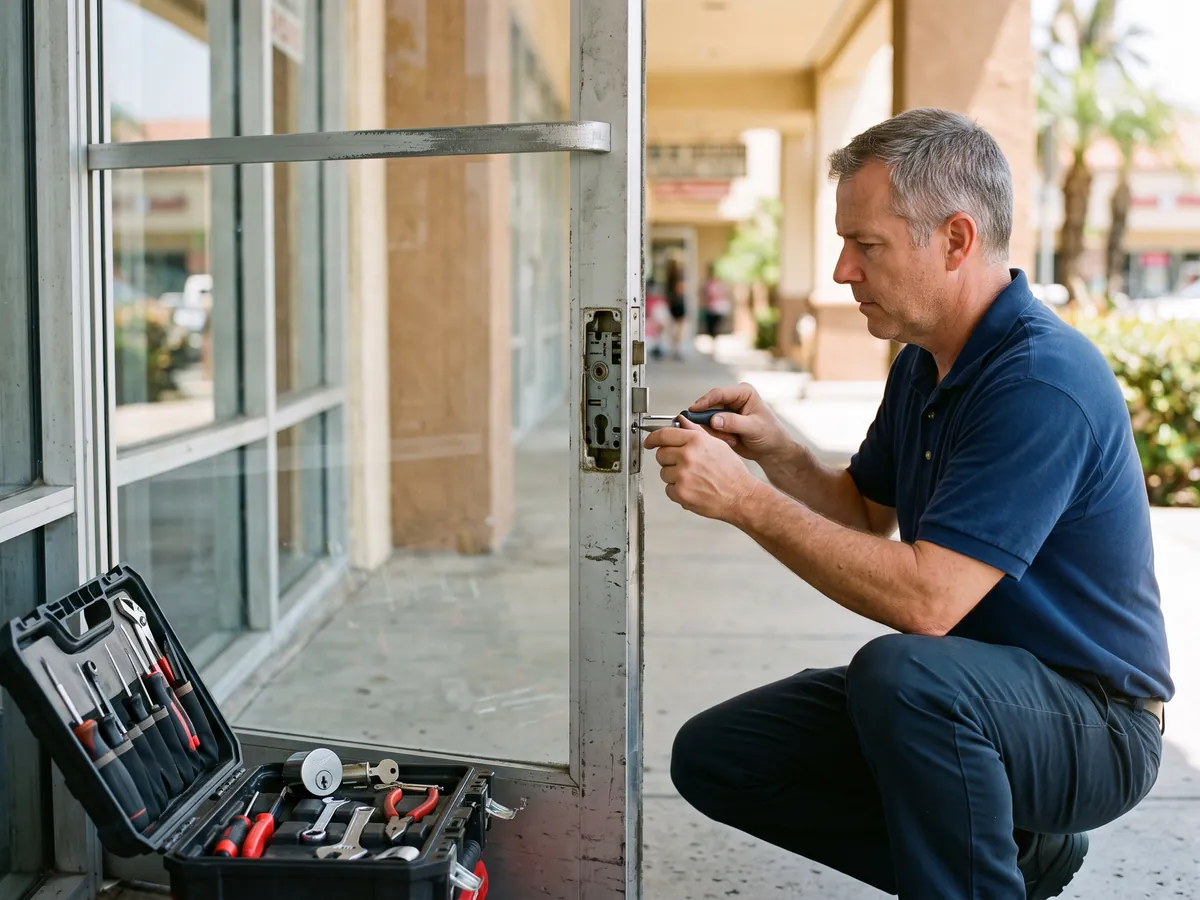
For a retail store, the calendar shapes the locks. Seasonal hires arrive in October, hours stretch, deliveries double and everyone wants a key. A locksmith for retail store owners in Downey should help before the rush, not during it. We can count your keys, rekey any door too many people have touched, set up codes for temporary staff where that suits the store and check the front and back doors while there is still time to order parts. Weekends are your peak, so the work is best finished earlier in the week.
How this works in Downey
A useful way to plan retail locks is by who should get through which door. The public gets the sales floor during hours. Staff get the stockroom, break area and back door. Key holders and managers get the cash office, safe and alarm. The owner gets everything. Each tier needs its own key level, and nobody should hold a key they never use. A locksmith for retail store clients can build that structure with a restricted keyway, a small master system or a mix of keys and keypad codes. It keeps part-timers out of the cash room without turning every opening into a ceremony. We sketch the tiers with you, map them to your doors and set the keys up in Downey so the owner can see at a glance who holds what. Most stores have three or four tiers on paper and a single key doing all the work in practice. Separating them is one of the more effective changes a small retailer can make.
How we can help in Downey
- Boutiques, apparel and gift shops. Visual merchandising means doors get decorated, propped or covered with posters. We work around that, choosing finishes that match the shop and trim that doesn't clash with the window display. A well-chosen lock can be nearly invisible while still doing its job every night.
- Electronics and phone stores. Back-of-house inventory in a phone shop sits on shelves behind a single door. A strong door, a restricted keyway and a short key list matter more than gadgets. We rekey fixtures and cases so one key family opens the displays, and a separate one protects the stockroom.
- Thrift, consignment and resale shops. Resale shops accept goods all day and rely on many helpers. We can fit a drop box that locks securely, key the stockroom separately from the sales floor and add a keypad to the rear door so each volunteer's access can change without cutting a single key.
- Pop-up, seasonal and holiday shops. Landlords often accept lock changes in pop-ups only if the space is returned as found. We discuss that with you before touching anything, document the original hardware and plan the handback, so you aren't charged for something you could have avoided.
- Build-outs, remodels and expansions. If you expand into the neighboring unit, the connecting door matters. We fit hardware that matches your existing keys, so one key family covers both spaces, and we keep the shared wall secure until the opening is built. You won't end up with two sets of keys to track.
What's different about Downey
Neighborhood shops in family suburbs open around school schedules and weekend errands. Parents arrive with strollers, so the front door needs a smooth closer and a latch that doesn't catch. Owners are often alone behind the counter. A locksmith for retail store owners in the residential parts of Downey keeps hardware friendly to customers, easy for one person to lock up and strong enough to deter after-hours trouble.
Shopping centers and strip malls along I-5 put many stores behind one rear service lane, so the back door of your shop shares a space with everyone else's trash, deliveries and cut-throughs. A locksmith for retail store tenants in those centers should start with the rear door, frame and latch, and then handle the front. Know which doors the landlord controls, such as common corridors and roof access, and which are yours, because leases in Downey divide that line differently.
Shops near freeway on-ramps and park-and-rides open early for commuters and close late, so the first and last hours matter most. A locksmith for retail store owners serving commuters in Downey should plan for staff who open alone in the dark and close alone at night. Good exterior lighting, a front door that locks quickly behind you and a reliable deadlatch make that routine safer. Our 6:30 a.m. start suits early openers.
Example situations
- Picture a store manager on a Thursday evening who realizes a former assistant manager, let go last month, never returned the back-door key or the cash office key. The owner wants nothing dramatic, just a clean fix. We'd confirm authority and, within our evening hours, rekey the cash office and back door, leaving the sales-floor locks as they are.
- Imagine a thrift shop whose volunteer roster changes monthly. Over the years, twenty people have held a back-door key, and nobody remembers who. We'd rekey the back door, set up a keypad with codes the manager can change, give the manager a key to the stockroom and cash office and keep volunteers out of areas they don't need.
- For example, a family-run corner market near Wilderness Park finds that the walk-in cooler latch has started sticking and the hasp is rusting. The owner worries about getting locked in as much as stock walking out. We'd replace the latch, test the inside release until it opens easily every time, fit a corrosion-resistant hasp and rekey the back door the delivery drivers use.
- Say a phone accessories shop in a mall near Columbia Memorial Space Center loses a key to its display cases. The cases all use different cam locks, and the manager has been borrowing keys from other cases. We'd replace the cam locks with keyed-alike cylinders, give the manager one key family and the owner a master, and show how to label spares so none ends up in a pocket.
Step by step with Julian's Locksmith
- Tell us what you sell and when you trade. Call (951) 903-3193 and describe the store: what you sell, how many doors and cabinets are involved, your opening hours and who holds keys now. Mention whether you lease the space. Those details let us bring the right cylinders, closers and tools on the first visit.
- Show us the lease and confirm who decides. Employees can call us, but the person who can approve the work must be reachable. We verify ID and authority for stores, including managers acting for an owner. If the owner is away, a phone call from them usually settles it.
- Walk the store from front to back. Bring the person who opens and closes the store. They know which door sticks, which key is hard to turn and where staff prop doors open. That daily knowledge often points to the problem faster than any test we can run.
- Agree a plan, a quote and a schedule. A clear plan splits the work into do-now and can-wait items: the failing back door first, display case locks next, keypad upgrades later. You decide how far to go. We also note anything that affects the lease or needs the landlord's approval.
- Do the work and test it like an opening day. Testing means more than turning a key once. We check alignment, latch engagement, how the door behaves with a closer and whether the inside release works. We also try the key the way a rushed employee would, not just the way a locksmith would.
- Set up keys by role and leave a record. You get a one-page key record: how many keys of each type, who holds them and which doors they open. Keep it with the lease paperwork. If you later need more keys or a rekey, the record saves time.
Pricing factors
- Store type and what is inside. A boutique with modest stock needs a different level of security than a shop full of small, valuable items. The more valuable and portable the inventory, the more it makes sense to invest in restricted keys, stronger doors and tighter key control. We help you match spending to real risk.
- Doors, fixtures and cabinets. Large stores with several entrances, a warehouse area and multiple cash points need more time than a small shop. Phased work is often possible, starting with the entrance and back door. We show you the options and what each one does to the total.
- Timing around trading hours and holidays. Urgent jobs and planned jobs are quoted differently because the trip itself differs. A planned job lets us batch tasks and bring everything on one visit. An urgent call means a dedicated trip. Either way, you hear the figure before we start.
Every job gets a clear quote before any work starts. Call (951) 903-3193 with the details and we'll tell you what to expect for your situation in Downey.
Common errors that cost time and money
- Trusting a 'Do Not Duplicate' stamp. It's a request, not a lock, and many kiosks will copy the key anyway. If copying is a real risk for your store, use a restricted keyway with controlled blanks, which cannot be duplicated without authorization.
- Assuming the landlord handles the interior doors. In most retail leases, the tenant is responsible for everything inside the space. Find out what your lease says before a door fails, not after, so you know whom to call and who pays.
- Putting a key-operated deadbolt on an exit door and leaving it locked during business hours. Doors on the path out of the store must open from inside without a key, and a locked exit is dangerous in a fire or a crowd. Ask us about thumbturn or exit hardware instead.
What to do before we arrive
- On inventory day, limit who holds keys to the stockroom, and write the key holders on your count sheet. Shortages are far easier to trace when the key list is short and written down. Collect the stockroom keys again at the end of the count and sign them back in.
- Read the alterations and locks section of your lease before ordering anything. Some landlords require approval, a copy of every key or a particular keyway. A short email asking permission, kept on file, prevents arguments at move-out and shows you acted in good faith.
- Always duplicate from an original key, not from a copy. Copies of copies drift out of tolerance and eventually stick in the lock. If you've been cutting keys at a kiosk, bring your original to Downey for a check before another copy goes out.
- For seasonal staff, consider keypad codes instead of keys. Codes can be changed in a moment when the season ends, while keys must be collected and counted. We can fit a keypad on the staff door if your lease allows.
Reaching Downey
Downey is about 59 miles from our San Bernardino base, roughly 66 minutes in light traffic via I-215 South to I-10 West through Rialto, Fontana, Ontario, Pomona and West Covina. When you call, you get an arrival estimate based on where the technician is and the traffic at that moment.
Our path into Downey depends on where the previous job wrapped up. Sometimes that's a straight run via Bellflower Boulevard; other times it's surface streets the whole way. Either way, you get a heads-up call when the technician is close.
About Downey: During World War II, Vultee Aircraft was Downey's largest employer, and the company was the first in the industry to build airplanes on a powered assembly line.
| Neighborhoods | Columbia Way and the former Rockwell plant site, Old River School Road and Rio Hondo, Stonewood Center area, North Downey, Apollo Park and Independence Park, Civic Center on Brookshire Avenue |
|---|---|
| ZIP codes | 90240, 90241, 90242 |
| Main routes | I-5, I-105, I-605, I-710 |
| From our San Bernardino base | about 59 miles via I-215 South to I-10 West through Rialto, Fontana, Ontario, Pomona and West Covina (or SR-210 West) to I-605 South, then the Florence Avenue, Firestone Boulevard or Imperial Highway exit depending on the address; Firestone Boulevard reaches Stonewood Center and Downtown Downey, Imperial Highway reaches Kaiser Permanente, Rancho Los Amigos and the south end, and Florence Avenue reaches the Lakewood Boulevard corner |
We start at half past six every morning, seven days a week. Every day the phones stay on until 11:30 at night, so an after-dinner lockout is usually still within reach. Saturday is no exception, with service ending at 11:30 at night. Call early that day if the problem can't wait until Sunday morning.
For businesses, the person who calls isn't always the person who can approve the work. Expect us to ask for an employee ID, a business card or a quick call to the owner or manager before we open, rekey or change locks on a storefront, office or warehouse. Property managers can set up an authorized-contact list with us ahead of time.
Locked out in Downey?
Call (951) 903-3193 with the address and what's locked. You'll get an arrival estimate and a quote before anyone heads out, and when we arrive we'll ask for ID that ties you to the property. If a child or pet is shut inside a hot car or building, call 911 first.
Frequently asked questions
Do you install cameras or alarms?
No. We don't install camera or alarm systems; our work is locks, keys, safes and door hardware, including keypad and electric-strike entry. Alarm and camera work belongs to security system installers. We can coordinate with them where a door needs a contact or a strike, and we'll tell you what we need from them so the door works mechanically and electronically.
Why do you suggest doing lock work before the weekend?
Julian's Locksmith is open every day, but Saturday is a busy day for retail. A repair booked earlier in the week gives you time to test it. A problem found late at night has to be secured by your own staff until we reopen at 6:30 a.m. Early-week work keeps your best sales day free of surprises.
How do I prepare my space for handback at the end of a lease?
Read the lease's surrender clause, collect all keys, then walk the space with us. We can restore the landlord's standard hardware, repair holes from removed hardware and rekey if required. Take photos before and after. A list of keys returned, signed by the landlord, saves arguments about missing keys later.
Does the type of store change which locks I need?
Yes. A boutique, a corner market, a phone shop and a furniture showroom face different risks. Cash, portable valuable stock, deliveries, walk-in coolers, staff turnover and visible glass all push the plan in different directions. We ask what you sell and how you trade before recommending hardware, so you aren't sold a generic package.
Can you help with a pop-up shop that is only open a few weeks?
Yes. Short leases call for simple, reversible solutions: a keypad lock for staff, a rekeyed front door and a record of the original hardware. We plan the end of the lease at the start, including a rekey or return of the original setup, so you aren't stuck with stray keys or a landlord dispute after you've left.
Can seasonal workers get temporary access?
Yes. Keypad locks work well because you can change or delete a code when the season ends, with no keys to collect. Where the lease allows, we fit a keypad on the staff door and leave the front on a keyed deadbolt. For stores that prefer keys, we label them by role and keep a record to count at season end.
How far is Downey from your base?
Downey is about 59 miles from our San Bernardino base, roughly 66 minutes in light traffic. Arrival time depends on traffic and on the job the technician is finishing, so we give you an estimate on the phone before you commit.
Related services in Downey
Locksmith for Retail Store in nearby cities
- Locksmith for Retail Store in BellflowerLos Angeles County
- Locksmith for Retail Store in NorwalkLos Angeles County
- Locksmith for Retail Store in Santa Fe SpringsLos Angeles County
- Locksmith for Retail Store in Pico RiveraLos Angeles County
- Locksmith for Retail Store in ArtesiaLos Angeles County
- Locksmith for Retail Store in CerritosLos Angeles County
- Locksmith for Retail Store in LakewoodLos Angeles County
- Locksmith for Retail Store in WhittierLos Angeles County


