
Devore, San Bernardino County
Devore Vehicle Lockouts for Cars, Trucks, Vans and RVs
Short answer: A vehicle lockout isn't limited to sedans. Julian's Locksmith opens pickups with tall, heavy doors, cargo vans with separately locking rear sections, box trucks, motorhome entry doors and compartments, and older cars with plain mechanical locks. When you call (951) 903-3193 from Devore, give the year, make and model so we bring the right tools and quote accurately.
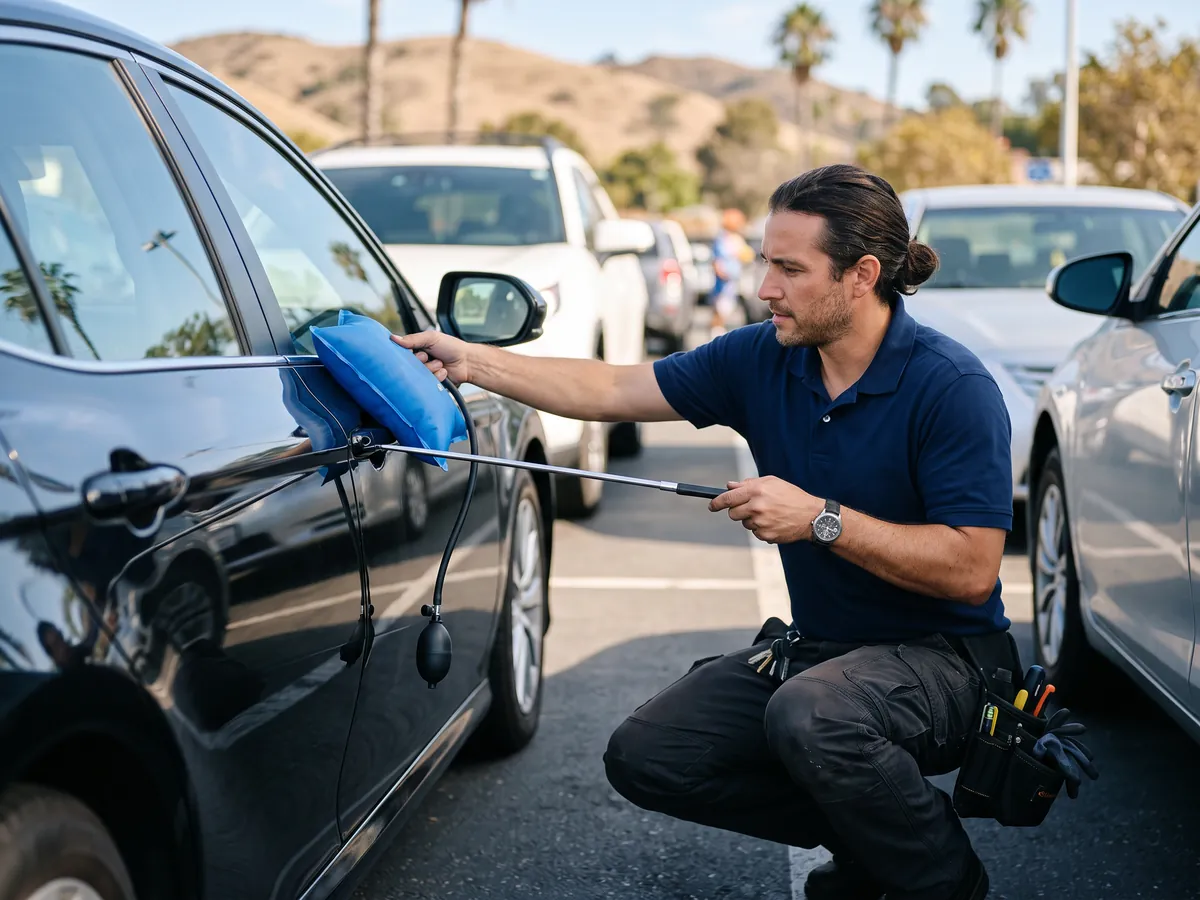
A vehicle lockout call goes fastest when three things are ready: your photo ID, something that ties you to the vehicle, and an accurate location. That something can be a registration card, an insurance card, a rental contract, lease paperwork or a call from the registered owner. If those papers are locked in the glovebox, that's normal; we open the vehicle, you retrieve them while we wait, and we compare names before we leave. California's Locksmith Act expects that kind of care, and it protects you as much as anyone. Julian's Locksmith, license LCO7891, handles vehicle lockouts throughout Devore. Call (951) 903-3193 with the year, make and model and we'll take it from there.
Vehicle Lockout in Devore: what to expect
Every class of vehicle locks a little differently, and a good vehicle lockout service plans for that before arriving. Pickups and full-size SUVs have tall, heavy doors with plenty of space between the glass and the lock switch, so we use a longer reach rod and set the wedge higher on the frame. Cargo vans often split their locking into cab and cargo zones; a sliding door or rear barn doors may stay locked after the front opens, and some have a solid bulkhead behind the seats. Box trucks usually pair ordinary cab doors with a padlock or disc lock on the roll-up door. Motorhomes have the chassis builder's cab locks up front and RV-industry hardware on the entry door and baggage compartments, often on different keys. EVs and some newer cars use flush handles, frameless windows and electronic latches with no visible keyhole, which narrows the safe options. Classic cars are often easier: a plain wafer lock and a pull knob. Telling us exactly what you drive lets us bring the right tools to Devore and quote the opening accurately.
How we can help in Devore
- Entry-only vehicle lockout service. The core job: you've got a locked vehicle and the keys are inside it. We open one door with an air wedge and long-reach rod or a Lishi pick, hand you the keys, and check that the locks and power windows still behave. Nothing gets added to the bill without your okay, and the quote you got on the phone holds.
- Rental car and rental truck lockouts. Rental companies can charge steep fees for lost keys and damage, so the method matters. A broken window on a rental is the costliest way through a vehicle lockout. Our wedge-and-reach approach leaves no trace on paint, glass or seals. If the key is truly gone, call the rental company before anyone cuts a new one; most want to handle that themselves.
- Company, fleet and leased vehicles. For businesses with several vans or trucks, a little prep pays off. Send us a short list of vehicles and the people allowed to approve work, and keep a manager's number in every driver's phone. When a lockout happens in Devore, the call becomes a quick confirmation instead of a search for whoever's in charge that day.
- EVs, hybrids and keyless-only vehicles. Phone-as-key systems fail in boring ways: the phone dies, Bluetooth is off, or the app logged out after an update. Charge the phone if you can, or sign into the app on another device. If you're still stuck, we can often open the vehicle mechanically, and we'll be honest when a model is better handled through the dealer.
- Garages, gated lots and parking structures. Tight spaces change the approach. A truck nosed against a garage wall, a van wedged between pillars, or a car parked inches from the next one may limit which door we can reach. Describe the setting when you call. Sometimes the passenger door or the rear hatch is the better route, and knowing that ahead saves time.
What's different about Devore
Inland heat bakes dashboards, drains fob batteries and makes any wait uncomfortable. If a child, pet or vulnerable person is inside, call 911 first. Otherwise, get to shade and drink water while we travel to Devore. Heat also stiffens neglected locks and softens weatherstrip, which is one more reason to rely on a padded air wedge instead of prying. A fading fob battery is a common root cause.
Truck-and-trailer rigs at show grounds, arenas and trail staging areas pack in a lot of locks: the truck cab, a living-quarters door, tack room compartments and trailer latches. Tell us which lock holds the keys and whether horses are aboard. If they are, make their shade and comfort your first priority, and unload them to a safe spot before anyone works on the rig.
Commuters often meet a vehicle lockout at the edge of the workday: a park-and-ride lot before dawn, a transit-station lot, a gas pump along Shelter Way. A planned backup helps, such as a spare key at home or in a coworker's desk. Our line opens at 6:30 a.m. every day, early enough to rescue many commutes. Ask your employer or roadside plan whether lockout help is a listed benefit.
Common situations
- Picture a Class C motorhome in a gated storage yard off Kendall Drive. The owner has loaded the coach, pulled the entry door shut and realized the keys are on the dinette table. The cab doors use one key and the coach door another, so we'd start with the entry lock, which tends to pick more easily than a cab door. The yard manager opens the gate, and the owner shows registration and a license.
- Consider a maintenance van at an apartment community near Glen Helen. The technician's ring holds the van key plus a bundle of unit keys, and the whole bunch sits on the seat of a locked van. That raises the stakes, so we'd call the property manager to confirm, open the van promptly, and suggest splitting the vehicle key from the unit keys before this happens again. The receipt shows the manager's approval.
- It's Saturday at 11:45 p.m., a hiker has locked the keys in a hybrid at a trailhead lot outside Devore, and we're closed. We'd say so plainly. The roadside benefit on the driver's policy, a spare key from home or an app-based remote unlock are the fastest paths today. If a key job is still unresolved afterward, call at 6:30 a.m. Sunday and we'll quote it then.
- A small moving company's box truck is parked at a curb in Devore, cab locked, with the cargo door's padlock key on the same ring as the ignition key. We open the cab first, hand over the ring and check that the padlock turns. If the padlock key were missing entirely, we'd pick it or cut it with the owner's permission, since a customer's belongings are inside, and note that on the invoice.
From your call to the finished job
- Tell us the vehicle and who is authorizing the opening. Start with the basics: what the vehicle is, exactly where it's parked in Devore, and where the keys are. Then tell us how you're connected to it. Owner, lessee, renter, employee and family helper each have a slightly different verification path, and knowing yours up front keeps the visit short.
- Get a quote, an honest ETA and a reimbursement plan. You hear the price on the phone, not at the curb. If your plan has a hard spending limit, tell us, and we'll keep the opening itemized apart from anything optional. Nothing is booked until you say yes, and if the plan's own provider turns up first, you can cancel with us.
- Size up the vehicle and plan the entry. Before opening, we confirm which part of the vehicle holds the keys and whether the cab and cargo zones are separate. We look for alarm stickers, aftermarket remote starters and dash cameras. Then we choose the least invasive route and explain it to you or your manager before starting.
- Open the vehicle and recover the keys. We keep the work slow and tidy. The door opens, the keys come out, and we confirm nothing snagged on the weatherstrip. On vans and trucks, we also check that the cargo door, bed cover or toolbox lock still works if it was part of the job.
- Match your paperwork to the vehicle. Photo ID goes with a registration, insurance card, rental agreement, lease or fleet record that names the same driver or business. If the paperwork was locked inside, you retrieve it while we watch, and we compare names before we leave. If something doesn't match, we pause and sort it out.
- Receipt, claim paperwork and next steps. Before leaving, we hand over an itemized receipt: date, time, address, year, make, model, VIN or plate, work performed and our license number, LCO7891. The lockout and any extra work sit on separate lines, so your plan sees exactly what it is being asked to pay.
How we quote the job
- Vehicle class and lock layout. Tell us the vehicle type and any modifications. Lift kits, running boards, ladder racks, bed covers, aftermarket tint and added alarms all change how we reach the lock. We would rather hear about them on the phone and quote accurately than discover them at the door and adjust.
- One door, or several locks to deal with. A cargo van with a bulkhead, a box truck with a padlocked roll-up door or an RV with separate entry and compartment keys can mean several openings in one visit. Each gets a line on the quote, and you can tell us to stop after the first one.
- Location, access and time of your call. Our base is in San Bernardino's University Heights area, so drive distance to Devore is part of the price. Parking structures with height limits, gated yards and sites far from a main road add time, too. Give us cross streets, a level number or gate details to keep the quote accurate.
Every job gets a clear quote before any work starts. Call (951) 903-3193 with the details and we'll tell you what to expect for your situation in Devore.
Common errors that cost time and money
- Assuming 'vehicle lockout' on your plan includes everything. Most definitions stop at entry. Lost keys, a trunk with a failed release, a seized door cylinder or a padlocked cargo box often fall outside the benefit. Read the wording first, so a surprise at the curb doesn't become a bigger bill.
- Breaking glass on a rental or company vehicle to save time. Repair bills, incident reports and downtime usually exceed any lockout charge, and rental agreements may pass the damage to you. Leftover shards in seat tracks stay a hazard for the next driver. A professional opening leaves the glass in the frame.
- Letting a coworker or friend authorize an opening for a vehicle they don't control. A person standing at the truck may not be permitted to approve work on it. The registered owner, lessee, renter or a named fleet manager has to confirm, and any honest locksmith will ask for that confirmation.
What to do before we arrive
- Ask any provider for an itemized receipt with the date, address, vehicle details and license number. Combined totals that mix entry with key work can stall reimbursement. If you plan to claim, say so before work begins, and ask them to show the entry charge on its own line.
- Before you hire anyone for a vehicle lockout, ask for the company's legal name and California locksmith license number, and check it at search.dca.ca.gov. Ours is LCO7891. A reputable provider gives the number without hesitating and is glad to quote the whole job before leaving.
- Store a labeled spare for each company vehicle at the office or yard, in a locked box with a sign-out sheet. Drivers rarely lock keys in a truck twice in one week, but a drawer of spares turns a stalled crew into a short trip back to the shop.
- On a hot afternoon, a locked vehicle turns into an oven. If a child, pet or vulnerable adult is inside, call 911 before anything else. For keys-only lockouts, wait in shade or an air-conditioned building, and keep your phone charged so we can reach you as we get close.
Getting to Devore
Devore is about 8 miles from our San Bernardino base, roughly 14 minutes in light traffic via Kendall Drive or Palm Avenue to I-215 North, through the Devore junction onto I-15 North, exit Kenwood Avenue for Devore Heights. When you call, you get an arrival estimate based on where the technician is and the traffic at that moment.
Stuck on the shoulder or in a parking lot along Glen Helen Parkway? Get somewhere safe, turn on your hazards, and give us the nearest exit or business so we can find the car without guessing.
About Devore: The Devore Animal Shelter on Shelter Way is the San Bernardino County shelter for unincorporated areas of the county as well as Highland and Yucaipa.
| Neighborhoods | Keenbrook, Cable Canyon, Devore Heights, Kenwood Avenue corridor, Lytle Creek, Cajon Boulevard corridor |
|---|---|
| ZIP codes | 92407 |
| Main routes | I-15, I-215, Cajon Boulevard, Kenwood Avenue |
| From our San Bernardino base | about 8 miles via Kendall Drive or Palm Avenue to I-215 North, through the Devore junction onto I-15 North, exit Kenwood Avenue for Devore Heights; Devore Road exit for Glen Helen and lower Cajon Boulevard |
Here are our real hours: 6:30 a.m. to 11:30 p.m., every day of the week, weekends included. We aren't a 24/7 locksmith and won't pretend to be. If you're locked out while we're closed, your auto club or your property manager's emergency line may get you in sooner, and we're glad to book you for the moment we reopen.
Before we open a home or business, we ask for photo ID and something tying you to the address: a lease, a utility bill, mail with your name on it, or written authorization from the property manager. It adds a minute or two, and it's the same check you'd want if a stranger tried to get into your place.
Locked out of your car in Devore?
Call (951) 903-3193 with the year, make and model and where the car is parked. You'll get an arrival estimate and a quote before anyone heads out. If a child or pet is shut inside a hot car or building, call 911 first.
Frequently asked questions
My vehicle is leased. Does that change anything?
Not much. The lessee's name usually appears on the registration and insurance, and that plus your photo ID normally satisfies our check. Lease-end inspections look closely at door edges, paint and glass, so a damage-free opening matters. Our wedge-and-reach method leaves no marks, and the receipt notes the vehicle's condition. If you want a new key for a leased vehicle, review the lease terms first.
Can you get into an electric vehicle?
Frequently, but EVs call for extra care. Flush handles, frameless glass and electronic latches narrow the safe options, and a weak 12-volt battery can stop the car from responding even with a full traction battery. Try your automaker's app, backup key card or hidden blade first. If you're still stuck, call with the exact model, and we'll tell you honestly whether we can do it or the dealer is the better path.
How can I check that your license is real?
Search our license number, LCO7891, on the California Department of Consumer Affairs license lookup at search.dca.ca.gov. The Bureau of Security and Investigative Services administers California's Locksmith Act (Business and Professions Code §6980 and following). You can also ask any locksmith for the company's legal name and license number before they come. A legitimate provider gives both without hesitation.
What if the keys are lost rather than locked inside?
Then it's a key job as well as a lockout. We open the vehicle, decode the lock, cut a blade and, for many makes, program a transponder key or fob on site. Some models require dealer-only programming, and we'll say so before you spend anything. We verify ownership before making any key, and the key work appears separately from the opening on your receipt.
Can opening my vehicle damage it or affect a lease or warranty?
Done correctly, the opening doesn't harm paint, glass, weatherstrip or electronics. We use padded air wedges, coated reach tools and Lishi picks made for the lock. Damage tends to come from hangers, slim jims and prying. We can't speak for a specific warranty, but a clean, documented opening should leave nothing for anyone to dispute. Mention any aftermarket alarm before we begin.
Do you open pickups, vans, box trucks and semi-trucks?
We open pickups, SUVs, cargo vans, step vans and most box-truck cabs. Large tractor cabs, specialized fleet systems and some heavy-truck locks may be outside what we handle, and we'd rather say so on the phone than after a drive. Give us the year, make, model and body type when you call (951) 903-3193, and we'll tell you honestly whether we can help.
How far is Devore from your base?
Devore is about 8 miles from our San Bernardino base, roughly 14 minutes in light traffic. Arrival time depends on traffic and on the job the technician is finishing, so we give you an estimate on the phone before you commit.
Related services in Devore
Vehicle Lockout in nearby cities
- Vehicle Lockout in Glen HelenSan Bernardino County
- Vehicle Lockout in MuscoySan Bernardino County
- Vehicle Lockout in North FontanaSan Bernardino County
- Vehicle Lockout in RialtoSan Bernardino County
- Vehicle Lockout in FontanaSan Bernardino County
- Vehicle Lockout in EtiwandaSan Bernardino County
- Vehicle Lockout in San BernardinoSan Bernardino County
- Vehicle Lockout in BloomingtonSan Bernardino County