Devore, San Bernardino County
Devore Commercial Rekey: Mortise, Rim, Storefront and IC Cores
Short answer: Before you book a commercial rekey, have three things ready: an approximate count of doors and padlocks, any keying chart or bitting list a previous locksmith left, and proof that you own or manage the property, or a signed authorization from the owner. With those in hand, Julian's Locksmith can quote a Devore job accurately and arrive with the right keyways and parts.
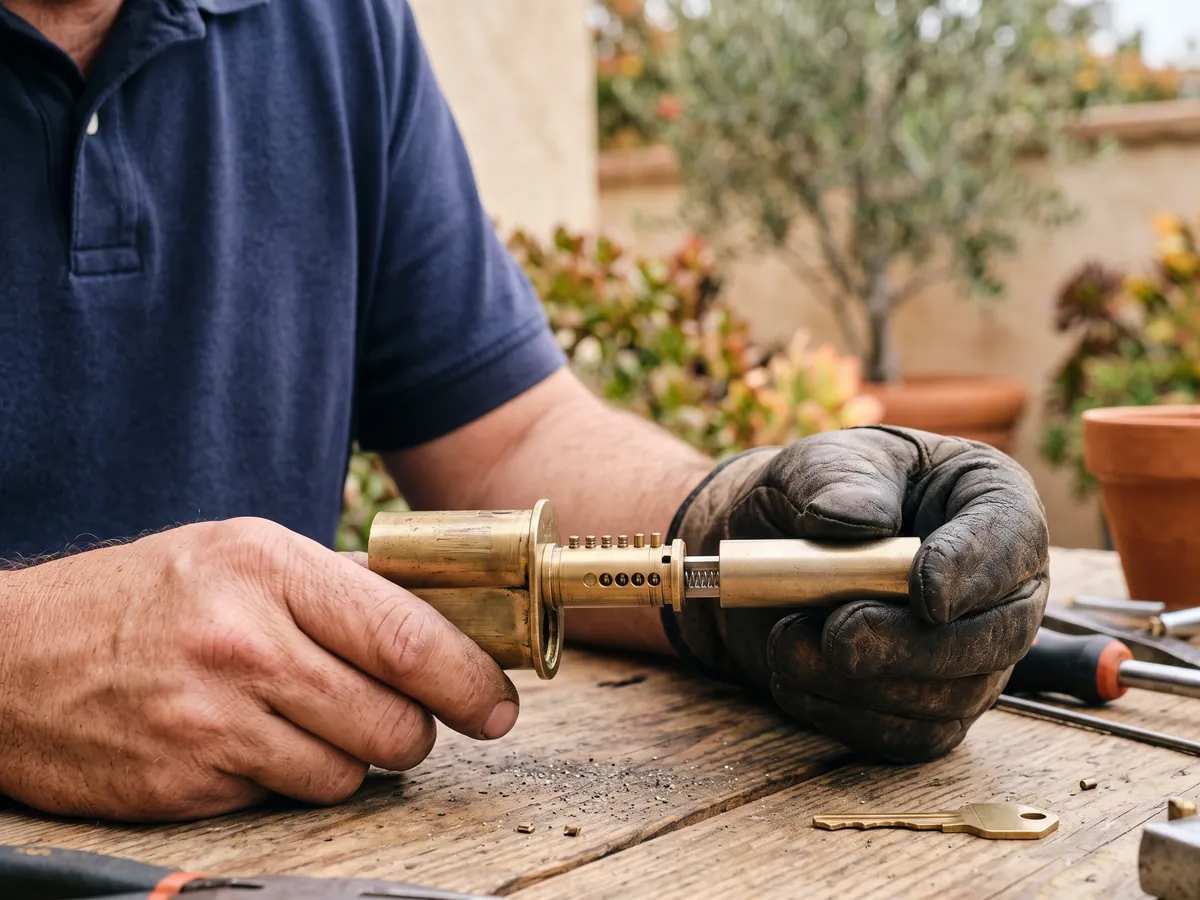
Commercial locksets are built to outlast several sets of tenants. A Grade 1 mortise lock or a Von Duprin exit device can stay in service for decades, so replacing that hardware just to change who holds keys rarely makes sense. A commercial rekey in Devore keeps the expensive parts on the door and changes only what matters for key control: the pin stacks or cores inside. Julian's Locksmith will tell you honestly when a cylinder is too worn to re-pin, when a mismatched lockset should be replaced, or when a restricted keyway would serve the property better. For everything else, rekeying is the efficient, lower-cost route. Call (951) 903-3193 for a quote.
What to know first in Devore
A good commercial rekey starts with a door inventory, not a pinning tray. For each opening we note the hardware type, brand, keyway, cylinder style and current function. Is the door on the master? Does it need its own change key? Is it a common area that several tenants share? That list becomes the keying schedule, which decides how many distinct keys the building ends up with and who holds each one. Getting this right on paper matters more than it seems. If a suite rekey cuts the tenant off from the shared restroom or the trash enclosure, someone will be calling the next morning. If a mechanical room ends up on a tenant's change key, you've handed out access to equipment you meant to protect. Julian's Locksmith walks the property with you or your maintenance lead, flags doors whose hardware is failing or doesn't fit the plan, and quotes from the finished list. On a small office, the inventory takes a few minutes. On a multi-building center, it may be the longest step of the whole commercial rekey.
What we can do on-site
- Storefront and Adams Rite cylinders. Some storefront openings carry more than one keyed part: an outside deadbolt cylinder, an inside cylinder on a double-cylinder setup, or a dogging cylinder on a narrow-stile panic device. Every one belongs on the new key. We check the ring, collar and cam on each, because a wrong-length cylinder in a narrow stile can bind the bolt halfway.
- Construction keying conversion. If the hardware schedule called for a master key system, the conversion is the moment to set it up properly. We work from the project's door list, assign each opening its place in the hierarchy, and pin to that plan, leaving a keying chart instead of a bag of unlabeled keys.
- Tenant suite turnover rekeys. Leasing teams want a vacant suite ready to show. We can rekey it, cut a small set of keys for management and showings, and come back to cut the incoming tenant's keys once the lease is signed. That way no extra keys drift around while the space is on the market.
- Office furniture, cabinet and mailbox locks. File cabinet keys are usually stamped with a code that many key suppliers can cut from, which makes them weak key control. When we rekey furniture locks, we can move them off those common codes onto keys you control and record. Cabinets holding personnel files or patient records are the right place to start.
- Phased rekeys and keying records. At the end of a commercial rekey you should have more than keys. We provide a door-by-door list showing which key operates each opening, how many of each key were cut, and any stamped key numbers. Store it somewhere secure, because that list is effectively a map of your building's access.
What's different about Devore
Inland summers bake metal doors and the cylinders inside them. In Devore, south- and west-facing commercial doors often show dried-out cylinders, gummy lubricant and storefront locks that stick in the afternoon. During a commercial rekey we clean each plug, use a dry lubricant that won't collect dust, and check that heat-swollen doors still let deadbolts and hook bolts throw fully into their strikes.
Parts of Devore with older housing usually have older commercial buildings close by, often with original mortise hardware, brass rim cylinders and keys stamped with numbers nobody can trace. Those locks are frequently still sound and worth rekeying rather than replacing. We clean and re-pin them, replace the few cylinders that are too worn, and document the result, since older properties tend to have the thinnest key records of all.
Plenty of building managers and owners drive in from elsewhere in San Bernardino County, so timing a commercial rekey around when a key holder can be on site matters. We start at 6:30 a.m. every day, which lets us finish a suite before tenants arrive, and we can work into the evening for buildings that clear out late. Tell us when your contact will be there, and we'll plan the visit around that window.
Situations this covers
- A typical portfolio call: a management firm handles several small commercial buildings in San Bernardino County, each rekeyed at different times by different vendors. No two use the same keyway, and the records disagree with the doors. We'd suggest moving each building onto a standard keyway at its next turnover and documenting every property the same way, so a maintenance tech isn't carrying a pound of keys.
- For example, a hotel's chief engineer needs back-of-house doors rekeyed after a staffing change in maintenance: the boiler room, linen storage, roof access and the engineering shop. Guest rooms run on electronic card locks and aren't part of the job. We'd rekey the mechanical cylinders to a new engineering key and leave the housekeeping and front-office keys exactly as they are.
- For example, a general contractor finishing a tenant improvement in a newer business park calls to schedule the keying turnover. The cylinders shipped with construction cores, and a dozen trades have held keys. After the final inspection, we'd swap in permanent cores pinned to the owner's keying schedule, cut the owner's keys, and leave the contractor's crew holding keys that open nothing.
- For example, a property manager oversees a two-story office building off Glen Helen Parkway where a law firm just vacated a second-floor suite. The firm returned four keys, but the lease ran seven years. We'd rekey the suite entry and its three interior doors to a new change key, keep them on the building master, and confirm the old keys still fail at the shared restroom corridor, which stays on its own common key.
Step by step with Julian's Locksmith
- Scope call. Call (951) 903-3193 and describe the property: building type, rough door count, whether it's master keyed, and why you're rekeying. Mention any padlocks, roll-up doors or cabinets you want included. Those details tell us whether to schedule a site walk first or quote from your description.
- Authorization and site walk. Larger properties get a written door list during the walk: location, hardware type, cylinder type, keyway and the key each opening should take afterward. That list becomes the keying schedule. Smaller jobs, such as a single suite, can usually be scoped and rekeyed in the same visit.
- Keying plan and quote. For buildings with existing master keying, the plan respects what already works. If your management master opens every suite today, it should still open them afterward. We'll show which keys change and which stay, so tenants and maintenance staff know what to expect before anyone's key stops working.
- Scheduling around occupants. We schedule commercial rekeys inside our hours: 6:30 a.m. to 11:30 p.m., seven days a week. Early starts suit retail and medical tenants; evening work suits offices. Each phase ends with every affected door locked, tested and keyed, never left half done.
- Rekeying and testing each opening. Testing goes beyond turning the key. We check that latches retract fully, deadbolts throw completely, exit device trim responds, and storefront hook bolts engage their keepers. A rekey that works on the bench but binds once the door is pressed closed isn't finished.
- Keys, records and handoff. We cut the agreed number of keys, stamp or label them, and hand them to the person you designate, not to whoever happens to be standing nearby. The handoff includes a door-by-door list of which key operates what, so your records match the building from day one.
Pricing factors
- Master keying and keying charts. A building on a master key system costs more to rekey than one where every door is keyed alike, since master pins add parts and each cylinder must fit the chart. If a keying chart exists, the job is simpler. If it doesn't, we may need to decode cylinders to rebuild it first.
- Timing, phasing and access. Work scheduled comfortably inside our normal hours costs less than a rush job squeezed into one evening. Phasing a big property across several visits adds trip time, while doing everything at once may need more hands. We'll lay out both options so you can weigh disruption against cost.
- Cylinder condition and extra parts. Parts beyond the pins can show up on a commercial rekey: new cams to fit a different lock body, cylinder collars or rings for a proper fit, padlock replacements, or new furniture lock cores. They're small items individually, but on a large property they add up, so we list them line by line.
Every job gets a clear quote before any work starts. Call (951) 903-3193 with the details and we'll tell you what to expect for your situation in Devore.
Common errors that cost time and money
- Swapping a commercial lever for a cheaper residential knob because it takes the same key. Commercial doors often need Grade 1 hardware, accessible lever trim and, on rated openings, labeled hardware. A rekey preserves all of that; mixing in residential parts can break compliance and wear out fast under commercial traffic.
- Cutting too many keys. Ordering a dozen spares just in case puts unlabeled keys in drawers, glove boxes and truck consoles. Cut what current key holders need plus a small, logged spare set, and cut more later when someone actually needs one.
- Rekeying the suite but forgetting the shared doors. The outgoing tenant's key no longer opens their old space, but it still opens the back corridor, the roof hatch or the trash enclosure because those were on the same key. Always check what else the old key operates before settling the scope.
What to do before we arrive
- If several tenants share a corridor, restroom or trash enclosure, give those doors their own common key instead of putting them on each suite's change key. That way a single suite rekey doesn't force you to recut keys for every tenant on the floor.
- If your property uses interchangeable cores, keep a few spare cores pinned to the current keying and store them with the control key. When a tenant leaves or a key disappears in Devore, a pre-pinned core turns an urgent rekey into a short swap at the door.
- Where afternoon sun hits metal doors in Devore, ask for a dry lubricant during the rekey. Heat bakes oily lubricants into a sticky paste that pulls in dust, which is a common reason commercial cylinders start to drag a year or two after the work is done.
- Check the exit side of every door after a rekey. Panic bars, levers and thumb turns should let people out without a key, exactly as before. If anything changed, call us back right away, because egress hardware that doesn't release is a safety and code problem, not a key problem.
Reaching Devore
Devore is about 8 miles from our San Bernardino base, roughly 14 minutes in light traffic via Kendall Drive or Palm Avenue to I-215 North, through the Devore junction onto I-15 North, exit Kenwood Avenue for Devore Heights. When you call, you get an arrival estimate based on where the technician is and the traffic at that moment.
If you're close to Kendall Drive, tell us which exit or cross street you're nearest. It trims the last mile and keeps the van from circling a block that looks right on the map but isn't.
About Devore: Cajon Boulevard through Devore is an original stretch of U.S. Route 66, which crossed the Cajon Pass from 1926 until 1979, when Interstate 15 replaced it.
| Neighborhoods | Kimbark Avenue area, Glen Helen, Cable Canyon, Keenbrook, Kimbark Canyons, Lytle Creek |
|---|---|
| ZIP codes | 92407 |
| Main routes | I-15, I-215, Cajon Boulevard, Kenwood Avenue |
| From our San Bernardino base | about 8 miles via Kendall Drive or Palm Avenue to I-215 North, through the Devore junction onto I-15 North, exit Kenwood Avenue for Devore Heights; Devore Road exit for Glen Helen and lower Cajon Boulevard |
Planning a rekey in Devore?
Call (951) 903-3193 and tell us how many doors you want on the new key and the brand of the locks if you know it. We'll quote the rekey before any work starts.
Frequently asked questions
Are you licensed for commercial locksmith work?
Yes. Julian's Locksmith holds California locksmith company license LCO7891, issued by the Bureau of Security and Investigative Services, and you can verify it at search.dca.ca.gov before booking. Because we're a mobile service, the rekey happens at your property, with cylinders pinned in the van or at the door, across the Inland Empire and the surrounding valleys.
How long does a commercial rekey take?
It depends on cylinder count and hardware type. A single suite with a few locks is often handled in one short visit. A building with dozens of mortise cylinders, exit devices and padlocks may take a full day or several phased visits. Interchangeable core buildings move fastest because cores are pinned ahead. After the walk-through, we'll give you a realistic time estimate along with the quote.
When can you schedule a commercial rekey in Devore?
We work every day from 6:30 a.m. to 11:30 p.m., and we're closed overnight. For occupied buildings, early mornings and evenings usually work best, and large properties are scheduled in phases. Call (951) 903-3193 with your door count and preferred window, and we'll give you an honest estimate of when we can start.
Do you need proof I'm allowed to rekey the building?
Yes. Before any commercial rekey we verify ID and your connection to the property: a deed, a property management agreement, a lease that grants lock rights, or a signed authorization from the owner. California's Locksmith Act and BSIS oversight make verification part of doing the job properly, and it protects you from someone else ordering work on your building.
Will rekeying affect fire exits or panic bars?
No. Rekeying changes only the cylinder's pin combination. Exit devices, fire-rated hardware and accessible levers keep their function, so people can still get out without a key. We test the egress side of each rekeyed door before leaving. If we notice a device that already isn't releasing properly, we'll point it out so it can be repaired separately.
Is rekeying enough after a dispute with a tenant or employee?
Rekeying stops old keys from working, which handles the mechanical side. Also think about alarm codes, keypad and access control credentials, gate remotes and shared passwords, because a rekey doesn't touch any of those. If the situation involves threats or damage, contact law enforcement first. For the locks themselves, we can usually schedule promptly once your authorization is confirmed.
How far is Devore from your base?
Devore is about 8 miles from our San Bernardino base, roughly 14 minutes in light traffic. Arrival time depends on traffic and on the job the technician is finishing, so we give you an estimate on the phone before you commit.
Related services in Devore
Commercial Rekey in nearby cities
- Commercial Rekey in Glen HelenSan Bernardino County
- Commercial Rekey in MuscoySan Bernardino County
- Commercial Rekey in North FontanaSan Bernardino County
- Commercial Rekey in RialtoSan Bernardino County
- Commercial Rekey in FontanaSan Bernardino County
- Commercial Rekey in EtiwandaSan Bernardino County
- Commercial Rekey in San BernardinoSan Bernardino County
- Commercial Rekey in BloomingtonSan Bernardino County