
Brea, Orange County
Lock Replacement in Brea
Short answer: Lock replacement means removing a lock that has failed, been damaged or can no longer get parts, and installing new hardware that fits the holes already in your door. In Brea, Julian's Locksmith measures the bore, backset and door thickness, quotes the job before starting, installs on-site and can key the new lock to the key you already carry.
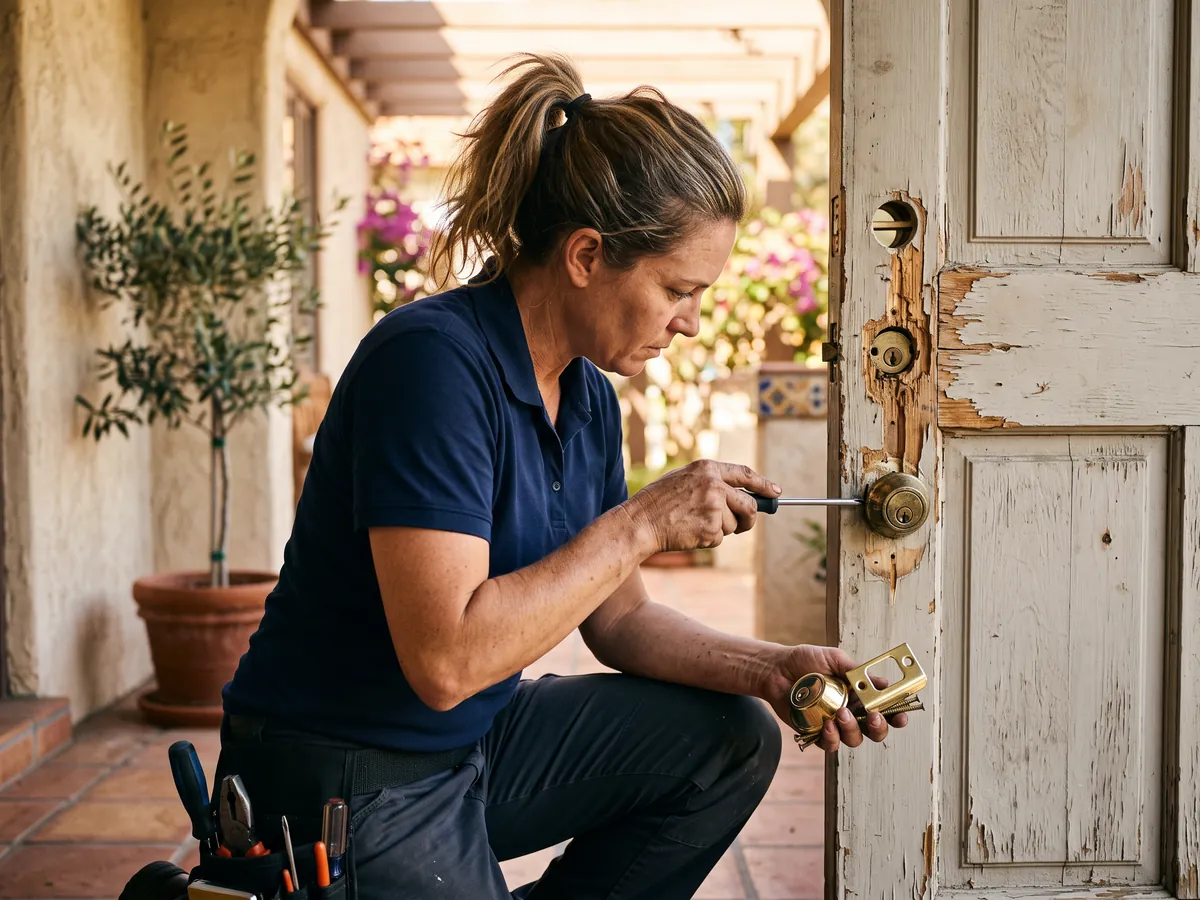
Not every sticky lock needs replacing, and a good locksmith should say so. Before recommending lock replacement at a Brea home, we check whether the real culprit is a sagging door, a strike plate that shifted, or a cylinder that just needs cleaning. When the lock itself is finished, we replace it properly: correct backset, the right latch for the door edge, a strike aligned to the bolt, screws biting into solid wood, and keys that match the rest of the house if you want. One visit in most cases, one quote up front, and a lock you can stop thinking about.
Lock replacement is for hardware that can no longer be trusted. Reasons include a break-in that bent the latch or cracked the door, a lever that sags, a deadbolt that sticks after twenty years or a lock whose finish is flaking off. A rekey will not cure a worn mechanism; the parts inside need to be replaced. Sun and dust do plenty of damage in Brea. Entry sets on south- and west-facing doors lose their lacquer and brass plating, and dust blown by Santa Ana winds wears pins and makes keys stick. The late-century neighborhoods of Country Hills and Olinda Ranch have many original sets, and a matched replacement often fixes the feel of every door at once. After a break-in, replacing is quicker than repairing. We check the frame, jamb and strike, because a kicked-in door usually needs more than a new lock. We match the existing door prep so the new set fits the same holes without new drilling when possible. If the old hole pattern is odd, adapter plates or a new bore handle the difference. You pick the grade and finish; we fit it, align it and check that the door shuts smoothly.
Lock Replacement in Brea: what to expect
Most of the skill in lock replacement is invisible: making new hardware fit holes that were drilled for something else. Residential doors in Brea are usually prepared with a 2-1/8 inch cross bore and a 1 inch edge bore, set at a backset of either 2-3/8 or 2-3/4 inches, which is the distance from the door edge to the center of the big hole. Most current latches adjust between those two backsets, but older doors throw curveballs: smaller bores from earlier tubular locks, square-corner latch recesses where the new faceplate has rounded corners, a handleset whose lower mounting hole sits at a different spacing than the replacement brand, or a door that's 2-1/4 inches thick instead of the usual 1-3/4. We measure all of it before choosing hardware. When the fit isn't exact, we use the cleanest available fix: a brand that shares the old spacing, a retrofit or filler plate, an extended tailpiece, or careful chisel work on the faceplate recess. The goal is a lock that looks like it was always there and a door that isn't left weaker than before.
Work included on a typical visit
- Break-in repair and strike reinforcement. Kicked doors usually fail at the jamb, not the lock. We replace bent bolts and broken latches, then rebuild the strike area so it can actually hold: a heavier plate, 3-inch screws through the jamb into framing, and a door-edge wrap where the lock bore cracked. You get an itemized invoice for the insurance claim.
- Commercial lever lock replacement. Office, clinic and retail doors take a beating, and Grade 2 levers often sag long before the building is due for remodeling. We replace failed cylindrical locks with Grade 1 equivalents in the same function, whether that's storeroom, classroom, office or passage, keyed into your existing system.
- Storefront and narrow-stile lock replacement. When a storefront lock is damaged, the challenge is matching the existing cutout in a thin aluminum stile. We identify the deadlock model and backset, replace it without enlarging the pocket, and pair it with the correct cylinder cam. A wrong cam is the most common reason a new storefront lock won't throw all the way.
- Sliding patio door lock replacement. Many patio door locks seem broken only because the door has dropped on worn rollers, so the hook no longer meets the keeper. Before replacing anything, we check roller height. When the latch itself has failed, we fit a matching replacement and set the keeper so it engages with the door fully closed.
- Matching keys and finishes on replacement hardware. We match finishes using the standard codes manufacturers share, such as satin nickel, oil-rubbed bronze, satin chrome and matte black, so the new lock doesn't stand out next to the hinges and other doors. For older brass hardware, we look for close equivalents and tell you when an exact match isn't made anymore.
Local factors in Brea
Family homes wear locks out through sheer repetition: kids slamming doors, a garage-entry door used constantly, and side doors hit by the sprinklers. Lock replacement in Brea neighborhoods usually covers a front entry set, the garage-entry knob and a deadbolt or two. We key everything alike, pick hardware that survives daily abuse, and can add a keypad deadbolt so the kids don't need to carry keys at all.
Older downtown buildings mix historic doors, mortise hardware and later additions like electric strikes. Lock replacement in these spaces often means fitting new mortise bodies into old pockets, or converting worn hardware while respecting the building's look. We match backsets and functions, keep keying compatible with each tenant's system, and flag fire-rated stair and corridor doors that need listed hardware before anything is ordered.
Newer tract homes usually come with builder-grade locks chosen for price, and in high-use spots like the garage-entry door they can wear out surprisingly early. The upside is that their door prep is standard and predictable, so replacement goes quickly. We swap tired hardware for sturdier sets in the same bore, key everything to one key, and add the longer strike screws that production builders often skip during construction.
Common situations
A Country Hills homeowner finds that the front deadbolt now needs three tries and a lift on the door. We would test the latch, find the bolt dragging on the strike and the cylinder worn, and replace the whole set with a matching Grade 2 deadbolt and lever. A new strike goes in at the right height, and we check that the door closes on its own weight before we leave.
- A typical call: a homeowner in Olinda Village comes back from a weekend away to find the front door kicked in. The deadbolt is bent, the strike hangs by one screw and the jamb has split along the grain. We'd document it, replace the deadbolt and entry knob in the existing bore, install a box strike with long screws, wrap the cracked door edge, and leave the door locking solidly again.
- Another typical example: the thumb piece on a ten-year-old handleset snaps off in someone's hand. The homeowner likes the brand and finish, so we'd replace the handleset with the same manufacturer's current model, which shares the old mounting spacing and needs no new holes. The deadbolt stays keyed alike with the garage-entry door, and the inside lever gets a fresh latch to match.
- A shop owner along Central Avenue arrives to find pry marks on the aluminum storefront door and a deadlock that no longer throws. The cylinder is loose in the stile and the lock body is bent. We'd replace the narrow-stile deadlock at the correct backset, fit a new mortise cylinder with the proper cam, and add a guard plate over the bolt area to discourage the next pry attempt.
Step by step with Julian's Locksmith
- Tell us what failed. Call and describe the problem: what the key, knob or bolt is doing, the brand if you can see it, and whether there was forced entry. A photo of both sides of the door helps us load the right hardware for Brea on the first trip.
- Verify authorization and diagnose. Before any hardware comes off, we confirm you're authorized to have it changed: a deed, lease, utility bill or management work order works. Then we run the lock with the door open and closed to separate lock failure from door sag or frame movement.
- Measure the existing door prep. Every door gets measured, even when it looks standard. Older doors in Brea may have small bores, square latch recesses or unusual thicknesses, and commercial doors may be mortise-prepped or fire-rated. Measuring now prevents a second trip and a door full of extra holes.
- Choose hardware and approve the quote. We show you options that fit: a direct match, a sturdier equivalent, or an upgrade such as a Grade 1 deadbolt or a smart lock. Each comes with a price for hardware and labor, and nothing starts until you approve it.
- Install, align and reinforce. Installation includes the details that make a lock last: the latch set at the correct backset, through-bolts snug without binding, the strike pocket deepened when the bolt needs room, and filler or wrap plates over old holes so the door looks finished.
- Key, test and hand over. We key the new lock to your existing key or a new one, then test every key from both sides with the door closed against the weatherstripping. You keep the old hardware if you need it for insurance, along with an itemized invoice.
How we quote the job
- How well the existing prep fits. Older doors with small bores, mortise pockets or unusual thicknesses take extra time to adapt. We measure first so the quote reflects the actual work rather than a guess, and we'll show you the simplest clean fit before any custom option.
- Damage beyond the lock. After a break-in, the lock may be the smallest part of the repair. Replacing a torn strike, installing a reinforcement plate, wrapping a split door edge or patching a cracked jamb adds parts and time. We itemize each of these separately for your insurer.
- Keying requirements. Keying the new lock to your existing house key is usually quick when the keyway matches. Converting a different brand to your keyway, keying several new locks alike, or adding cylinders to a master key system takes more pinning work and nudges the price up.
Every job gets a clear quote before any work starts. Call (951) 903-3193 with the details and we'll tell you what to expect for your situation in Brea.
What not to do
- Throwing out the broken lock before police or the insurance adjuster has seen it. Damaged hardware is evidence of forced entry and can support a claim. Bag it, label it, and keep it until the claim closes, along with your photos and the locksmith's itemized invoice.
- Replacing a perfectly good lock when the real problem is the door. Sagging hinges, a swollen door edge or a shifted strike can make any lock bind. A new lock installed on a misaligned door will drag just like the old one and wear out early for the same reason.
- Reinstalling the original short strike screws after a forced entry. The door failed because those screws only held the thin jamb trim. Putting them back, even behind a brand-new lock, leaves the door exactly as weak as it was the moment before the break-in.
Advice before you book
- Measure your backset before shopping for a replacement: the distance from the door's edge to the center of the round hole. On residential doors it's almost always 2-3/8 or 2-3/4 inches. Most new latches adjust to both, but knowing the number saves a return trip to the store.
- Landlords should check bolt length when replacing a rental entry deadbolt. California Civil Code 1941.3 calls for a bolt extending at least 13/16 of an inch beyond the door edge on main swinging entry doors. Most current deadbolts meet that, but some older or bargain locks don't.
- If you're replacing one exterior lock, consider the others at the same time. Matching keyways and finishes across the front, side, back and garage-entry doors gives you one key for everything and a consistent look, and handling them in one visit means no second visit.
- For doors facing south or west, pick a durable finish. PVD and other premium coatings resist fading and peeling much better than standard plating. Ordinary oil-rubbed bronze and painted black finishes on sun-baked doors often look tired after only a few summers.
Getting to Brea
Brea is about 51 miles from our San Bernardino base, roughly 55 minutes in light traffic via I-215 South briefly to SR-210 West. When you call, you get an arrival estimate based on where the technician is and the traffic at that moment.
Traffic matters more than mileage. We check conditions on SR-142 and its connecting routes before quoting you a time, and we don't pretend a long drive through heavy congestion is a short one.
About Brea: Edward L. Doheny brought in Olinda's first well in 1897, and the original Olinda townsite is registered as California Historical Landmark No. 918.
| Neighborhoods | Blackstone, Carbon Canyon, Arovista, Olinda Ranch, Country Hills, Olinda Village |
|---|---|
| ZIP codes | 92821, 92823 |
| Main routes | SR-57, SR-90, SR-142, Brea Boulevard |
| From our San Bernardino base | about 51 miles via I-215 South briefly to SR-210 West (Foothill Freeway) through Rialto, Fontana, Rancho Cucamonga and La Verne, then SR-57 South (Orange Freeway) through Pomona and Diamond Bar and over the Puente Hills to the Lambert Road or Imperial Highway (SR-90) exits; alternate via I-15 South and SR-60 West to SR-57 South, or SR-60 West to SR-71 South and Carbon Canyon Road (SR-142) through Chino Hills for Olinda Village and Olinda Ranch |
New or replacement locks in Brea?
Call (951) 903-3193 and tell us which doors and what kind of hardware you have in mind. If you already bought the lock, keep the box handy so we can check it fits the door, and we'll quote the install before any work starts.
Frequently asked questions
Will you verify ownership before replacing my lock?
Yes. Before changing any lock on a home, rental or business, we check photo ID and something linking you to the property, such as a deed, lease, utility bill or management authorization. It protects you and your neighbors. Julian's Locksmith is licensed by California's Bureau of Security and Investigative Services under license LCO7891.
Can you match my existing hardware finish?
Usually. Most manufacturers offer standard finishes like satin nickel, oil-rubbed bronze, satin chrome, polished brass and matte black, and we match finish codes so the new lock blends in. Some older or discontinued finishes have no exact equivalent. In those cases we'll show you the closest options or suggest replacing neighboring hardware together.
Can I buy my own lock and have you install it?
Yes. We'll quote labor only and check that the lock fits your door prep before starting. If we see a quality issue, such as a light-duty lock headed for a door that's already been forced, we'll mention it. Keep the box and instructions handy, since some brands include specific templates, spacers or strike parts.
Do you replace commercial locks?
Yes. We replace cylindrical levers, mortise locks, narrow-stile storefront deadlocks and exit device trim on business doors in Brea. Replacements match existing functions and backsets, meet accessibility expectations for lever hardware, and stay compatible with your master key system or interchangeable cores. We confirm you're authorized to make changes to the property before work begins.
Do California landlords have to replace broken deadbolts?
Yes. Civil Code 1941.3 requires landlords to install and maintain operable deadbolts on main swinging entry doors of rental units, along with working window security devices. A broken deadbolt should be repaired or replaced promptly. Replacement deadbolts should have a bolt reaching at least 13/16 of an inch beyond the door edge into the frame.
Is it worth repairing an old mortise lock instead of replacing it?
Sometimes. Many older mortise locks can be cleaned, given new springs and kept going, especially quality vintage pieces. When internal parts are broken and unavailable, or the lock has no deadbolt function, replacement or conversion makes more sense. We open it up, assess it honestly, and recommend the option that fits your door and your budget.
How far is Brea from your base?
Brea is about 51 miles from our San Bernardino base, roughly 55 minutes in light traffic. Arrival time depends on traffic and on the job the technician is finishing, so we give you an estimate on the phone before you commit.
Related services in Brea
Lock Replacement in nearby cities
- Lock Replacement in La HabraOrange County
- Lock Replacement in PlacentiaOrange County
- Lock Replacement in Rowland HeightsLos Angeles County
- Lock Replacement in FullertonOrange County
- Lock Replacement in La Habra HeightsLos Angeles County
- Lock Replacement in Yorba LindaOrange County
- Lock Replacement in AnaheimOrange County
- Lock Replacement in City of IndustryLos Angeles County