
Brea, Orange County
Brea Lock Changes for Homeowners, Renters and Landlords
Short answer: Changing locks usually takes one visit. We count every keyed door, including the garage entry, side gate and security screen door, decide door by door whether a rekey or new hardware makes sense, and quote it. Then we do the work and test each key with the door shut. You leave with fresh keys and a clear list of who holds them. Call (951) 903-3193.
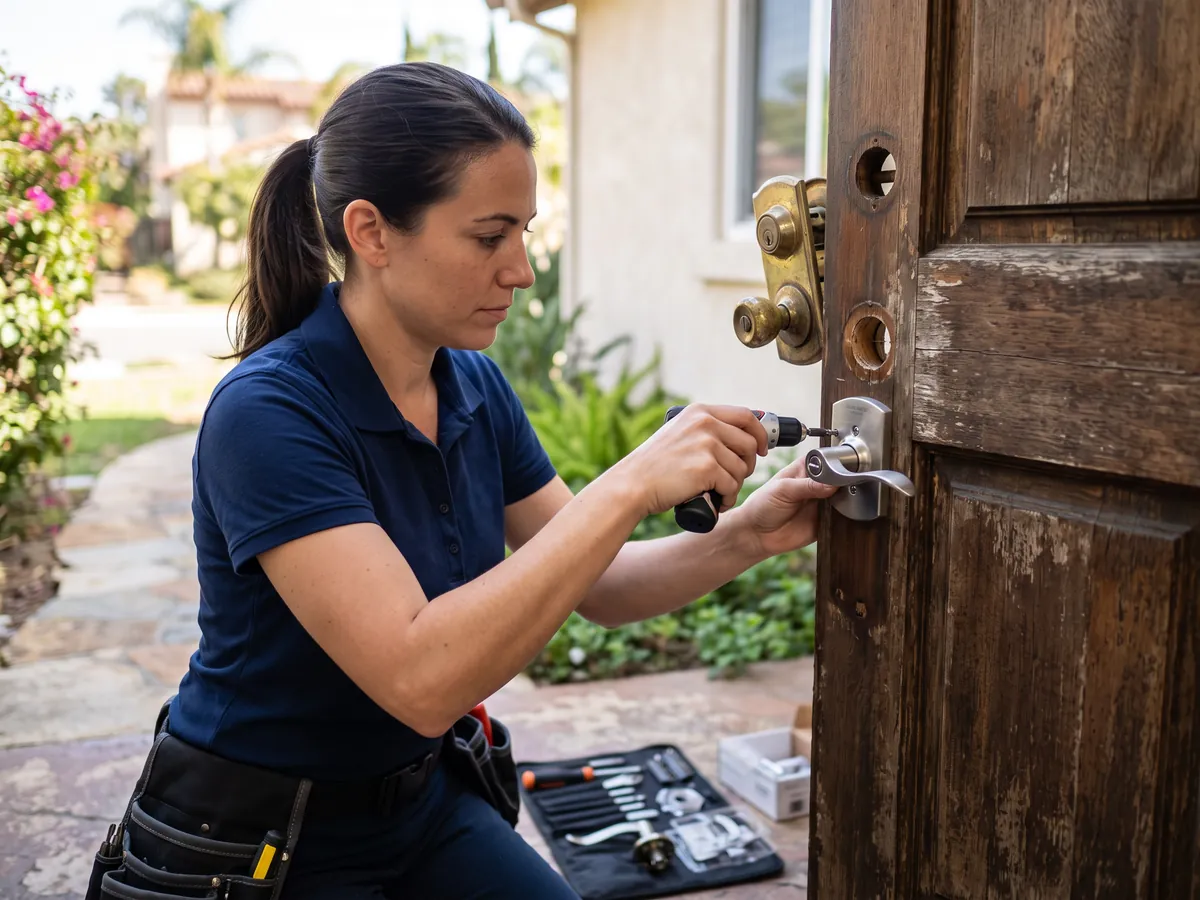
New keys at closing aren't new locks. When escrow closes on a Brea home, you receive whatever keys the seller could find, and you inherit every copy the seller couldn't. Builders' crews, showing agents, dog walkers and relatives may all have handled them over the years. That's why we suggest you change locks, or at least rekey them, during your first week in the house. If the home came with a keypad or smart deadbolt, the job also includes clearing old user codes, removing the previous owner's app access and resetting any hub, because a keypad remembers codes long after the people who set them have moved away.
Changing locks means swapping the hardware itself, not just the key. It makes sense when the lock is old, damaged or low grade, when you want a different style or a smart lock, or when a rekey is not possible. If the hardware is sound and you only want a new key, rekeying is the lighter touch. Tenants and landlords both ask about the law. California Civil Code section 1941.3 requires landlords to provide working deadbolts on main swinging entry doors of rental units, and it covers window security as well. Sections 1941.5 and 1941.6 require a landlord to change the locks within 24 hours of a tenant's written request in certain situations involving a protective order or similar documentation. Beyond that, a tenant who wants a different lock usually needs the landlord's permission and a copy of the new key to hand over, so check the lease first. For owners, a change after a move, a break-in or a lost key is straightforward. We confirm that you live at or own the property, remove the old hardware, check the door prep and fit the new locks. Many Brea homeowners also use the visit to match finishes, so the front handleset, back door and garage entry look consistent.
How this works in Brea
What actually happens when we change locks at a Brea home? First comes measurement: backset (usually 2-3/8 or 2-3/4 inches), cross bore, door thickness, and the shape of the latch faceplate. Those numbers decide whether new hardware drops into the existing holes or needs prep work. Next is the keyway. Kwikset and Schlage cylinders can't share a key, so a house with mixed brands either gets some cylinders replaced or keeps two keys. Then we look at the strike side, because a lock is only as strong as the jamb it bolts into. Inland heat and seasonal settling shift doors on their frames, and a deadbolt that has to be forced closed eventually gets left open. We realign strikes, set long screws into the framing, lubricate with a dry product that won't collect dust, and test every key in every lock with the door shut before we call the job finished.
Work included on a typical visit
- New lockset installation on existing door prep. Replacement makes sense for loose knobs that spin, latches that stick in summer heat, peeling finishes and ungraded bargain locks. We suggest ANSI/BHMA Grade 1 or 2 hardware for exterior doors, explain the difference in plain terms, and will install locks you bought yourself as long as they suit the door.
- Restricted keyways and high-security cylinders. High-security cylinders add pick, bump and drill resistance through hardened inserts, sidebars and complex pin designs. They suit homes with valuables, rentals with frequent turnover, and anyone who has had a key copied without permission. We explain where they add real value and where a quality Grade 1 deadbolt and reinforced strike already do the job.
- Strike and frame reinforcement. If your deadbolt has to be pushed, lifted or slammed to lock, the strike is out of line. Inland heat and settling foundations move doors over time. We enlarge or relocate the strike pocket, shim hinges when needed, and make sure the bolt reaches full throw, which is where a deadbolt gets its strength.
- Keying every door alike. People forget the secondary locks: the door from the garage into the house, a detached workshop, a security screen door, a pool gate. If those stay on old keys, the job is only half done. We walk the Brea property with you, list every keyed cylinder, and bring them under one new key unless you want separate access.
- Urgent safety lock changes. When someone you fear still has a key, the lock change is about safety. We prioritize these calls during our open hours, keep the visit low-key, and secure the main entry first. Rekeying keeps the work quick because nothing new has to be fitted to the door, and we can return later for upgrades if you want them.
Local factors in Brea
Families collect key holders: babysitters, grandparents, carpool neighbors, a teenager's best friend. Every few years it's worth asking who still has one. When we change locks in Brea family neighborhoods, many parents add a keypad deadbolt so kids come home with a code instead of a key on a shoelace, and a forgotten code costs nothing to replace. The keyed backup still gets rekeyed with the rest of the house.
Condos and townhomes split responsibility. Your unit's entry lock is typically yours to change, but garage doors, mailbox clusters and building entries may belong to the association. In Brea condos, we confirm what you own before starting, rekey your unit's locks to one key, and match a patio gate padlock if it's yours. If the building runs a master key system, ask management before replacing its cylinder.
Older homes often hide more keyed locks than people expect: original mortise locks, service porch doors, and decades of add-on deadbolts. Before you change locks in an older Brea house, we check whether original hardware can be rekeyed and serviced instead of replaced, which preserves period trim and avoids filling oversized door pockets. Where doors were bored at odd sizes or old jambs won't hold a modern strike, we explain the fix honestly, including when a carpenter should go first.
Situations this covers
Imagine a tenant in an apartment near Imperial Highway who moved in last week and finds the deadbolt loose and the strike plate cracked. The tenant sends the landlord a photo and asks for a working deadbolt, as the Civil Code requires. The landlord's maintenance staff books us. We would swap the deadbolt, fit a proper strike and hand keys to the person the landlord names.
- Picture a tenant who has just been granted a restraining order and gives a copy, with a written request, to the apartment manager near Wildcatters Park. The manager calls us that afternoon to meet the 24-hour deadline. We'd rekey the entry deadbolt and knob, check the sliding patio door latch, add a secondary bar, and hand the new keys only to the tenant and the manager's office.
- Imagine a couple separating, with one partner moving out of a Brea home they both own. The one who stays wants new keys. Because both names are on title, we'd explain that a lock change doesn't alter ownership rights and that those decisions belong with attorneys or the court. With the other owner's written agreement or a court order, we'd rekey the house and record who received keys.
- For example, a 1930s Spanish revival home near Birch Hills Golf Course still has its original mortise lock behind a handsome but worn brass escutcheon. The owner assumed that the only way to change locks was a new door. We'd remove the mortise cylinder, rekey or replace it, clean and service the lock body, and keep the original trim so the door keeps its character.
How the visit works
- Tell us the reason and count the doors. On the phone, we ask a few practical questions: how many doors, which brands, whether anything is damaged or sticking, and whether you rent or own. Photos of each lock help. The answers shape the quote and tell us whether to bring extra hardware or a high-security cylinder to your Brea address.
- Verify residence or ownership. Executors, trustees and property managers can authorize a lock change too, with the right paperwork: letters testamentary, a trust document, or a management agreement or work order. If the papers are somewhere you can't reach, we'll talk through what else might work before anyone touches a lock.
- Inspect each lock and choose rekey or replace. This is also when we talk about upgrades without pressure: a reinforced strike on the front door, a matching cylinder for the security screen door, or a keypad deadbolt for a rental. Each is optional and priced separately, so you can change locks on a tight budget and add the rest later.
- Re-pin or install the hardware. Most of the work happens at the door and in the van. New keys are cut to code on our machine, cylinders are pinned at a bench, and hardware comes from stock. If a special finish or high-security cylinder isn't on hand, we secure the door with a rekey and come back to finish.
- Test every key on every door. For smart locks, testing means locking and unlocking from the keypad, the app and the backup key, checking auto-lock timing, and confirming that deleted codes no longer work. We also check the battery level and explain the low-battery warning so the lock doesn't surprise you later.
- Hand over keys and records. You get the new keys, a count of how many were cut, and an itemized invoice. We suggest writing down who receives each copy. If you rent, the landlord or manager typically gets one under your lease. Old keys can go in the trash; they no longer fit anything on the property.
What affects the cost
- Hardware grade, brand and finish. If you replace locks, the hardware you choose matters as much as the labor. Grade 3 builder locks are inexpensive; Grade 1 deadbolts and quality handlesets cost more but stand up better to heat, daily use and force. Finish matters too, especially on a sun-facing door. We'll show you choices at several price points.
- Keys, key control and smart features. If you manage several doors or units, a simple master arrangement adds design time and extra pins but saves money each turnover. We explain the tradeoffs honestly: master pins slightly reduce pick resistance, and a lost master key means a larger rekey, so it isn't right for every property.
- Timing, travel and urgency. Our hours are 6:30 a.m. to 11:30 p.m., seven days a week. A late-evening lock change within those hours is possible, and we'll tell you on the phone whether timing affects the quote. Planned move-in rekeys are the easiest to schedule.
Every job gets a clear quote before any work starts. Call (951) 903-3193 with the details and we'll tell you what to expect for your situation in Brea.
What to do before we arrive
- When you get new keys, decide right away who receives them and write it down: names, how many, and the date. It sounds fussy, but that record tells you when it's time to change locks again. If a key holder leaves your life later, you'll know whether their key came back or not.
- Test your deadbolt with the door closed. Turn the thumbturn slowly; if you feel it drag, or you have to push or lift the door, the strike is out of line and the bolt may not be fully extended. A partly thrown bolt is far weaker. Mention it when you call so we can realign it during the lock change.
- Planning a lock change for a rental or vacation home in Brea? Consider a keypad deadbolt with a keyed backup on the main entry. Guests and cleaners each get their own code, and removing one takes seconds. Keep the mechanical keys few and accounted for, because the keypad is only as secure as its override cylinder.
- Reset the garage door opener when you change locks. Most openers have a learn button on the motor unit; holding it until the indicator light goes out erases every stored remote. Then reprogram your own remotes, your car's built-in buttons and the outdoor keypad code. An old remote opens the garage, and the garage often leads into the house.
What not to do
- Assuming a smart lock means no rekey is needed. Retrofit models replace only the inside half and keep the old exterior cylinder, and full smart deadbolts still have a keyed override. If an old key turns that cylinder, the door opens no matter how many codes you delete from the app.
- Buying hardware before measuring. A lock with the wrong backset, a latch with the wrong faceplate shape, or a deadbolt that's too short for a thick door leads to returns, extra drilling or a lock that never closes properly. Measure first, or have a locksmith measure while assessing the door.
- Changing locks on a rental without telling the landlord. Even with a good reason, it can breach the lease and block emergency access or repairs. Ask in writing, provide a key, and keep a copy of the exchange. Safety situations under Civil Code 1941.5 and 1941.6 have their own rules and deadlines.
Getting to Brea
Brea is about 51 miles from our San Bernardino base, roughly 55 minutes in light traffic via I-215 South briefly to SR-210 West. When you call, you get an arrival estimate based on where the technician is and the traffic at that moment.
Commercial jobs on busy stretches like SR-90 sometimes need a parking plan, especially for storefront doors or roll-up gates. Let us know about loading zones, red curbs or parking structures before we arrive.
About Brea: Edward L. Doheny brought in Olinda's first well in 1897, and the original Olinda townsite is registered as California Historical Landmark No. 918.
| Neighborhoods | City Hall Park area, Country Hills, Olinda Village, La Floresta, Arovista, Blackstone |
|---|---|
| ZIP codes | 92821, 92823 |
| Main routes | SR-57, SR-90, SR-142, Brea Boulevard |
| From our San Bernardino base | about 51 miles via I-215 South briefly to SR-210 West (Foothill Freeway) through Rialto, Fontana, Rancho Cucamonga and La Verne, then SR-57 South (Orange Freeway) through Pomona and Diamond Bar and over the Puente Hills to the Lambert Road or Imperial Highway (SR-90) exits; alternate via I-15 South and SR-60 West to SR-57 South, or SR-60 West to SR-71 South and Carbon Canyon Road (SR-142) through Chino Hills for Olinda Village and Olinda Ranch |
New or replacement locks in Brea?
Call (951) 903-3193 and tell us which doors and what kind of hardware you have in mind. If you already bought the lock, keep the box handy so we can check it fits the door, and we'll quote the install before any work starts.
Frequently asked questions
How long does a lock change take?
A straightforward rekey moves quickly, and a typical house is usually finished in one short visit. Replacing hardware takes longer per door, especially when a strike needs relocating or a bore needs enlarging. Smart lock installs add time for pairing and code setup. We'll give you a realistic estimate once we know the door count and what you've chosen.
Do smart locks replace the need to change locks?
They reduce it. With a keypad or app-controlled deadbolt, removing someone's access is a code deletion. But nearly every smart lock has a keyed backup cylinder, and retrofit models keep your old one, so mechanical keys still matter. When we install a smart lock in Brea, we key its cylinder to a key you control and confirm old keys no longer turn it.
Can you change my mailbox or gate lock at the same time?
Gate locks and padlocks, yes, and many can be keyed to your house key. Mailboxes depend on ownership. A wall-mounted or post box you own can usually take a new cam lock. A cluster box unit may belong to the Postal Service or to your HOA or property manager, and the owner decides who changes it. We'll help you sort out which applies in Brea.
Does changing my locks stop old garage door remotes?
No. Garage openers are a separate system. After you change locks, clear the opener's memory using the learn button on the motor unit, reprogram your own remotes and car buttons, and change the exterior keypad code. If your garage connects to the house, key the door between them with the rest, because anyone with a working old remote can reach it.
Will you install locks I bought myself?
Yes. We install customer-supplied hardware and rekey it to your house key so you don't end up with a separate key for one door. Before buying, check that it's rated for exterior use, fits your door thickness and backset, and matches your existing bore. Have the box and every part at the door; strikes and screws go missing surprisingly often.
Is a locksmith required to be licensed in California?
Yes. Locksmith companies in California must be licensed by the Bureau of Security and Investigative Services under the Locksmith Act, Business and Professions Code section 6980 and following. Julian's Locksmith holds license LCO7891, and you can verify it at search.dca.ca.gov. Ask any company for its number before work starts; a refusal to share it is a warning sign.
How far is Brea from your base?
Brea is about 51 miles from our San Bernardino base, roughly 55 minutes in light traffic. Arrival time depends on traffic and on the job the technician is finishing, so we give you an estimate on the phone before you commit.
Related services in Brea
Change Locks in nearby cities
- Change Locks in La HabraOrange County
- Change Locks in PlacentiaOrange County
- Change Locks in Rowland HeightsLos Angeles County
- Change Locks in FullertonOrange County
- Change Locks in La Habra HeightsLos Angeles County
- Change Locks in Yorba LindaOrange County
- Change Locks in AnaheimOrange County
- Change Locks in City of IndustryLos Angeles County