Emergency Locksmith
24 Hour Locksmith Help: Early Mornings, Late Evenings and an Honest Plan for the Gaps
Short answer: Julian's Locksmith is not a 24/7 service. We're a licensed, insured and bonded mobile locksmith (California license LCO7891) working every day from 6:30 a.m. to 11:30 p.m., and we're closed overnight. Inside those hours, call (951) 903-3193 for a realistic arrival estimate and a price before work begins. Outside them, the sections below explain who to call and how to stay secure until we reopen.
Why this page starts with what we don't do
Most people who type 24 hour locksmith into a search bar want one thing: a person with tools who will show up soon, whatever the clock says. We understand that, and we also know that the phrase gets stretched. Plenty of listings that promise round-the-clock coverage are really answering services. The phone is picked up at any time, but the job is passed to whichever subcontractor happens to be free, and the price is set once that person is standing at your door.
We don't operate an overnight shift, so we won't claim one. Julian's Locksmith is a licensed mobile locksmith based in San Bernardino, and we publish the hours we actually work. Those hours are long. We start early enough to catch the before-work lockouts and stay out late enough on most nights to catch the after-dinner ones. That covers a large share of what people mean when they go looking for a late night locksmith or an early morning locksmith.
What's left over is a set of gaps, and this page is built around them. You'll find our exact schedule, what kind of work fits into the edges of the day, what we can and can't finish after dark, and a practical plan for the hours when nobody from our company is on the road. If you're reading this while standing outside a locked door, jump to the section on what to do while we're closed, or call if the time falls inside our window.
Our working hours, laid out plainly
Here is the full week, in Pacific time:
- Sunday. 6:30 a.m. to 11:30 p.m.
- Monday through Thursday. 6:30 a.m. to 11:30 p.m.
- Friday. 6:30 a.m. to 11:30 p.m.
- Saturday. 6:30 a.m. to 11:30 p.m.
Two things about that schedule surprise people. The first is Sunday. Many trades treat it as a day off, but for us it's a full working day, the same seventeen hours as a Tuesday. If you need a Sunday locksmith for a lockout, a car key or a lock change, you can call at 6:30 in the morning and still reach us at 11 at night.
The second is Saturday, a full working day with the same hours as every other day. Like every other night, we close at 11:30 p.m. and open again at 6:30 a.m. That creates the longest stretch of the week without service, a little over a day and a half. Anyone who manages a storefront, a rental or a busy household should keep that window in mind when a lock starts acting up midweek.
The other gap is the overnight one. Between 11:30 p.m. and 6:30 a.m. every night of the week, our phones aren't staffed and no van is rolling. Seven hours sounds short until a door closes behind you at 1 a.m., which is why later sections cover exactly what to do during that stretch.
The schedule is the same across our service area, and the start and finish times refer to when we take calls and run jobs. A request that comes in near the end of the day is a judgment call based on distance, which we explain below.
The early-morning window
A 6:30 a.m. start is earlier than many people expect from a locksmith, and it's there for a reason. Morning is when doors and keys fail in front of a deadline. A parent steps onto the porch for the newspaper with the kids still inside and the knob set to lock. A delivery driver finds the van key snapped at the bow. A restaurant's prep crew arrives to a back door whose cylinder won't turn because someone forced it the night before.
For part of the winter, our first calls happen before the sun is fully up. In December, sunrise across inland Southern California comes close to 7 a.m., so an early job may begin under a porch light. That affects small things: we ask you to switch on outdoor lights, describe the house or building clearly, and keep the dog inside while we work.
Early calls also include the problems that started overnight. If your car key disappeared after a late shift, or a door was damaged after we closed, the most useful thing you can do is call right at 6:30. The first slots of the day go quickly, because problems that began while we were closed are waiting at opening. Calling at opening rather than mid-morning can be the difference between a finished job before lunch and one that lands in the afternoon.
If you're a business owner with a crew that starts before 7, write our number and hours on the inside of the supply closet door or wherever your opening checklist lives. The person standing at the locked door at dawn may not be the one who knows who to call.
Late evenings, seven days a week
From late afternoon until 11:30 p.m., five nights a week, our work changes character. Fewer jobs are planned installations and more are things that broke at the worst moment. Common evening calls include house and apartment lockouts after people come home, car lockouts outside gyms, restaurants and theaters, storefront doors that won't lock at closing, smart locks whose batteries finally gave out, and keys that snapped in a deadbolt on the way in.
Night work carries a few habits that daytime work doesn't need:
- We confirm exactly where you'll be waiting, not just where the locked door or car is, so we can find you quickly in poor light.
- Identity checks matter even more after dark. We match your ID to the address or the vehicle registration before opening anything, and we'll ask you to have that proof ready.
- We choose the quietest method that works. Picking a deadbolt in an apartment corridor takes a little longer than drilling, but it doesn't wake the building or ruin the lock.
- We work from van stock. Supply houses and dealer parts counters are closed, so whatever we install that night has to be on board already.
That last point shapes a lot of evening outcomes. Our vans carry the hardware most homes and small businesses need, including common deadbolts and knob or lever sets, rekeying pins, strikes, mortise and rim cylinders, key blanks and a range of remotes and proximity fobs. When a door needs something specific, like an unusual finish, a discontinued lock body or a part from a high-security manufacturer, we'll get the door secure for the night and come back with the right part.
Fridays and weekends run on the same hours
Friday is a full day for us. We start at the usual 6:30 a.m. and wrap up at 11:30 p.m., and Saturday and Sunday run the same way. Put plainly, if a lock fails on a Friday or Saturday evening, call before 11:30 p.m., just as you would on any other night.
The practical response is to move small problems forward. A deadbolt that has needed a shoulder push for a week rarely fixes itself. Neither does a key that only works when you jiggle it, a door that has started dragging on the strike plate, or a keypad that keeps flashing a low-battery warning. Any of those is worth a call as soon as you notice it. A repair done on a calm Thursday night costs less, and causes less stress, than a door that won't lock at 8 p.m. on a busy Friday.
Landlords and property managers can apply the same thinking to turnovers. If a tenant moves out on Friday and the new one arrives over the weekend, schedule the rekey for the day the old tenant leaves. Retailers whose weekend is their busiest stretch should have storefront hardware checked before the weekend, since an aluminum door that's out of adjustment tends to get worse as traffic increases.
If something does fail while we're closed overnight, the guidance in the next sections applies: use your backups, secure what you can, and call at 6:30 a.m. with as much detail as possible so the first visit can be the only visit.
Calling near closing time
A call at 11 p.m. on a Wednesday puts two clocks in play: the time left in our day and the drive to your address. Our service area is large, and a call from a neighborhood a few miles from our San Bernardino base is very different from one at the far edge of the San Gabriel Valley or north Orange County.
When a request comes in late, we ask the usual questions and then tell you honestly whether it can be done. Sometimes the answer is yes. Sometimes it's no, because arriving and finishing before closing isn't realistic, and we would rather say that in the first minute than promise a time we can't meet. A missed promise at midnight is worse than a clear answer at 11.
If the answer is no, you still get something useful from the call. We'll help you decide whether the situation can safely wait, suggest who else might be able to help tonight, and offer an early slot the next morning. For a car, that may mean your roadside coverage. For a rental, it may mean your landlord's after-hours line. For a house you own, it may mean a spare key holder or a night at a relative's.
One honest piece of advice: don't wait until the last minute to call while you try everything else. A lockout reported at 9 p.m. has options. The same lockout reported at 11:25 p.m. usually doesn't.
What after-hours locksmith work can include, and where it stops
Inside our hours, including the early and late edges, most urgent lock and key work is possible. That includes:
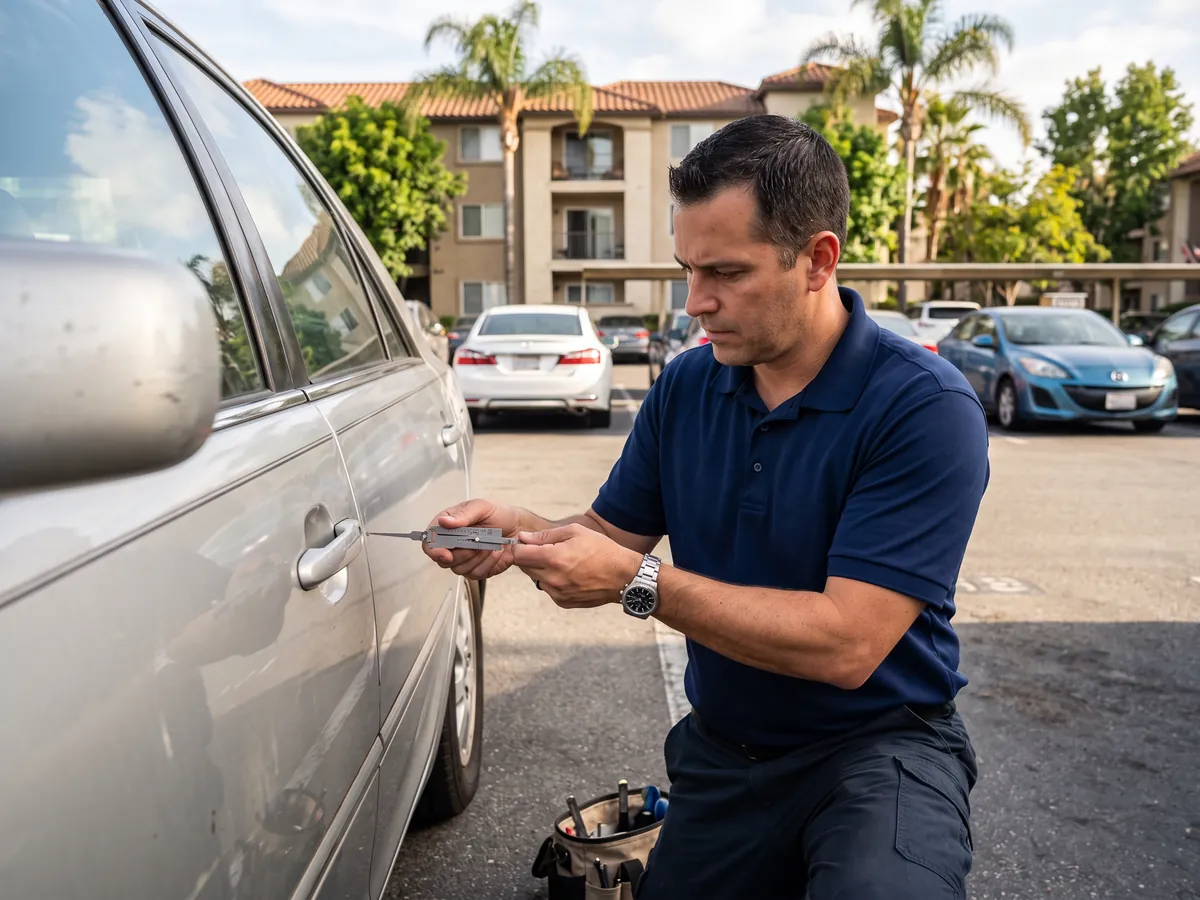
- Opening locked houses, apartments, offices and vehicles, using non-destructive methods first
- Rekeying residential and many commercial cylinders after a lost or stolen key
- Replacing a damaged or kicked-in deadbolt and reinforcing the strike
- Extracting broken keys and cutting replacements
- Adjusting or replacing storefront deadlocks, hookbolts and keepers
- Cutting and programming car keys for many makes, including transponder keys and proximity fobs
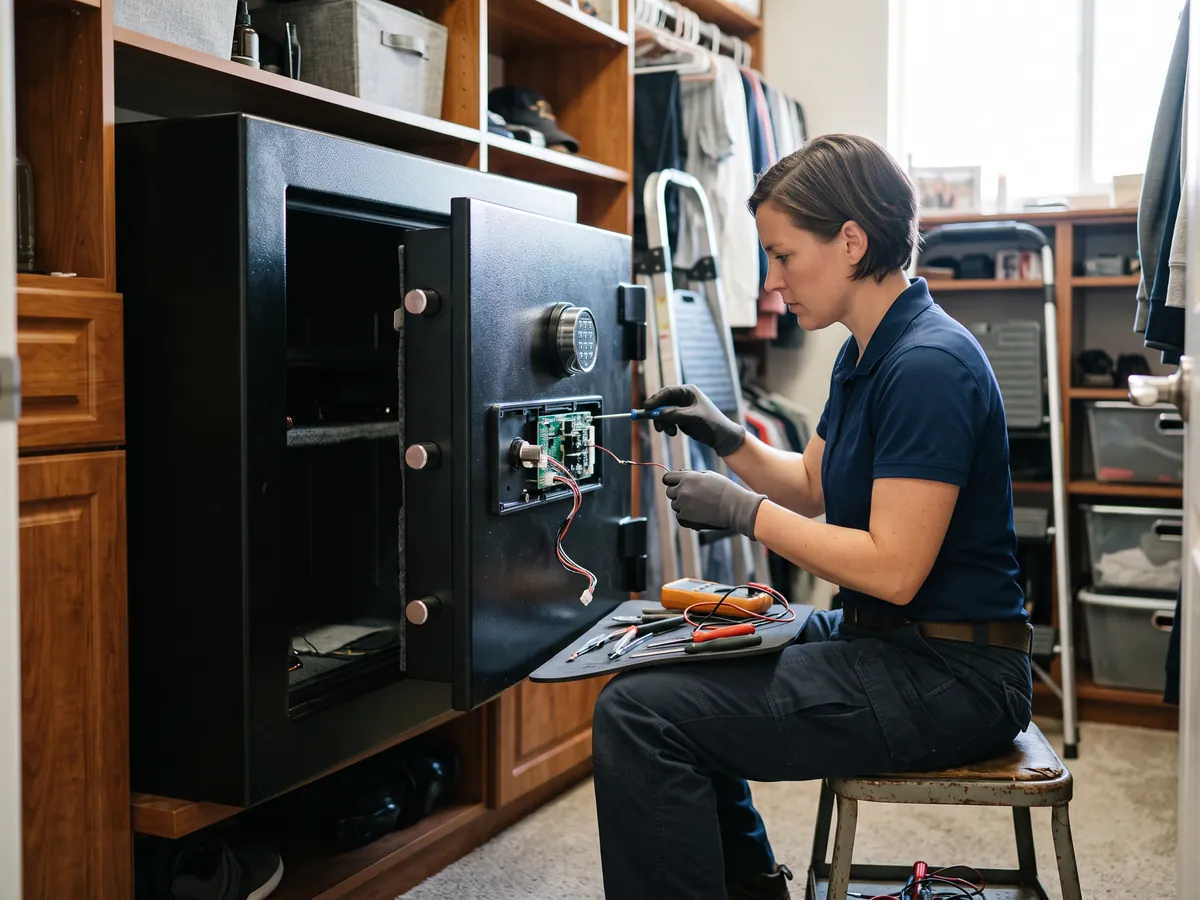
Some limits are firm, and they matter more late in the day. Certain newer European vehicles can't be programmed outside the dealer network, and some makes require a security PIN that has to be requested and can't always be obtained instantly. Restricted-keyway systems from manufacturers such as Medeco, Mul-T-Lock or ASSA Abloy often require factory-authorized key blanks or cylinders, so a rekey may need ordering. Electronic access systems tied to a building controller can involve a low-voltage contractor or the system's administrator. And safes, especially higher-security ones, sometimes need drilling, which is a planned job rather than something to rush at 10 p.m.
When your problem falls into one of those categories, we'll say so on the first call. That way you don't pay for a trip that ends with come back tomorrow, and you can decide whether to secure things tonight and finish the permanent repair later.
Every opening also depends on verification. We check identification and proof of residence, ownership or authority before opening any home, business, safe or car, or before making a key. California's Locksmith Act, Business and Professions Code section 6980 and following, governs locksmith companies and is administered by the Bureau of Security and Investigative Services. Checking who you are is part of doing the job responsibly, early morning or late evening.
Locked out while we're closed: who to call instead
If you're locked out after 11:30 p.m. or before 6:30 a.m., work through this list in order. The right call depends on what's locked and who might be at risk.
- Someone in danger. A child, a pet, or a person who may be unwell or confused locked inside a car or home is a 911 call, full stop. Fire and police crews will force entry if they need to, and they'll get there faster than any private company.
- You rent. Check your lease or the community's website for an after-hours maintenance number. Some property managers handle lockouts at night, sometimes for a fee; others don't. California Civil Code section 1941.3 requires landlords to provide working deadbolts on main swinging entry doors, so a broken deadbolt is a repair you can report right away, even if the work happens the next day.
- It's your car. Roadside assistance through an auto club, your insurer, a credit card or a new-car warranty often covers lockouts. Many recent vehicles can also be opened from the manufacturer's app or a connected-services subscription. Those programs open doors; they rarely make keys, so a lost key still needs a locksmith or a dealer.
- You own the home. Think through every spare: relatives, neighbors, a key safe, a garage keypad with an unlocked door to the house, a back door that was left unlocked. Many late lockouts end here.
- It's a business. The owner, a manager or the alarm monitoring company's keyholder list may reach someone with keys. Your alarm company can also note that the building is unsecured.
- You have a protective order. If you need locks changed because someone with a key is a threat, stay somewhere safe tonight and involve police if needed. California Civil Code sections 1941.5 and 1941.6 require a landlord to change the locks within 24 hours of a written request in certain protective order situations, and we can do that work first thing when we open.
If none of those applies and nobody is at risk, waiting for morning is a legitimate choice. It often costs far less than the damage done by forcing a way in.
Keeping a home, car or shop secure until morning
Sometimes the problem isn't getting in. It's that a door can't be locked, a window is broken, or keys were stolen, and it's late. Here are reasonable steps to hold things until we can make a proper repair.
For a damaged entry door, start with the strike side. Short screws in a strike plate are the reason many kicked doors fail, and if you have a drill and a few 3-inch screws, driving them through the strike into the framing behind it adds real strength for the night. A portable door brace or security bar wedged under the knob is another option. If the door won't latch at all, a chair under the knob is weak but better than nothing, and you can also close and lock interior bedroom doors.
For broken glass, call a board-up or emergency glass service. Many operate late, and they're the right trade for covering a shattered storefront or sliding door overnight. Take photos for the insurance claim and the police report before anything is covered.
For a vehicle with a broken window or a damaged lock, take valuables and the garage door opener out, cover the opening with heavy plastic and tape if weather is a concern, and park in a lit spot or inside a garage if you can.
For stolen keys, assume the thief has your address if the keys were with anything that shows it, like a purse with ID or a key tag. Lock every deadbolt, set any alarm, and call us at opening to rekey. Rekeying changes the internal pins so the stolen keys stop working, without replacing the hardware you already have.
How to judge any company advertising 24 hour service
If you decide to try someone else while we're closed, a few questions will protect you. Ask them before anyone drives out:
- What is your company's legal name, and where are you based?
- What is your California locksmith company license number?
- What is the total price for the job I've described, not just the service call?
- Will the person who arrives be your employee or a subcontractor?
- Will you open the lock without drilling if possible?
Licensed locksmith companies in California hold a license from the Bureau of Security and Investigative Services, and those numbers begin with LCO. You can confirm one in about a minute at search.dca.ca.gov. Ours is LCO7891. If the person on the phone won't give a number, or the name on the license doesn't match the name they answer with, keep looking.
Watch for the familiar pattern of a low phone quote followed by a much bigger number at the door, often paired with a claim that the lock is too secure to pick and must be drilled. Most residential locks can be opened without damage by a skilled technician, so a rush to the drill on an ordinary Kwikset or Schlage deadbolt is a reason to stop and ask questions. You're allowed to decline work before it begins.
None of this means every company advertising 24 hour locksmith service is dishonest. Some run real overnight crews. The point is that the label alone tells you very little, and a few minutes of checking is worth it when you're tired and stressed.
Preparing now so the next late lockout is short
The best night lockout help is the kind you set up in advance. A few small steps cover most of the hours when no locksmith is easy to reach:
- Put our number in your phone with our hours in the notes, so you know at a glance whether to call or move to plan B.
- Install a combination key safe in a spot that can't be seen from the street. It's cheap, and it solves the 1 a.m. lockout on its own.
- Give a spare to someone nearby who's awake late and answers the phone.
- Get a spare car key or fob made before you lose the only one. Originating a key when none exist is slower and costs more than copying one that works.
- Replace smart lock and key fob batteries on a schedule, and learn your lock's backup method, whether that's a keyed cylinder, 9-volt contacts or a USB port.
- Save a photo of your vehicle registration and a document showing your home address, so verification is fast when the originals are behind a locked door.
- For a business, keep a short written list of who can authorize locksmith work and how to reach them early and late.
- Know your roadside coverage and your landlord's after-hours policy before you need either.
Pair those with one habit: call about a struggling lock during the week instead of waiting for it to fail. Locks rarely quit without warning. Keys get harder to turn, bolts start catching, doors begin to drag, and keypads warn about batteries for weeks. A weekday repair keeps those warnings from turning into a call that lands after hours.
Where we drive, and how distance affects a late call
Julian's Locksmith is based at 2544 Rosemary Ln in San Bernardino's University Heights area, near Cal State San Bernardino. From there we serve the Inland Empire, the San Gabriel Valley, the Pomona Valley, north Orange County and southeast Los Angeles County. All of our work is mobile, so we come to the house, business or car rather than asking you to bring anything in.
The freeways that connect that area, including the 210, 10, 215, 15, 60, 57 and 91, carry most of our routes. During the day, distance mostly affects price and arrival time. Late in the evening it also affects whether a job is possible before we close. A lockout near our base at 11 p.m. may still be reachable; the same call from forty or fifty miles away usually isn't, and we'll say so.
We don't promise arrival times in minutes, because traffic, accidents and the job ahead of yours all change the picture. What we do is give you an honest estimate when you call and update you if it changes. If you're in one of the farther parts of our area, the early-morning start is often your best friend. Calling at 6:30 a.m. puts your job at the front of the day, with time to bring the right parts and finish the work properly.
Frequently asked questions
Do you ever take calls after 11:30 p.m.?
No. Our working day ends at 11:30 p.m. every day of the week, and we don't run an overnight on-call shift. Instead of letting you wait on a phone that won't lead anywhere, we've laid out the alternatives on this page: emergency services for anyone at risk, landlord and roadside programs, spare keys, and temporary ways to secure a door until we reopen at 6:30 a.m.
What's the earliest I can get a locksmith on a Sunday?
We start at 6:30 a.m. on Sunday, the same time as every other day we work. Because we're closed overnight, Sunday mornings often carry problems that began after we closed, so the earliest slots fill quickly. If something happened overnight, call right at opening with your address, the type of lock or vehicle and what went wrong. That detail lets us bring the right parts the first time.
I'm locked out at 1 a.m. on a Saturday night. What are my options?
We close at 11:30 p.m., so we can't come out at that hour. Start with spare keys held by family, neighbors or a key safe. Renters should try the property manager's after-hours line, and drivers should check roadside coverage or the vehicle's app. Call 911 if anyone inside is at risk. If the home or car can stay locked safely, plan on calling us when we open at 6:30 a.m.
Does roadside assistance replace a locksmith?
For a simple car lockout with the keys inside, it often can, and it's a good option when we're closed. Roadside programs generally open doors but don't cut or program keys. If your only key is lost, broken or won't start the car, you'll still need a locksmith or a dealer. Many makes can be handled by a mobile locksmith right where the car is parked, without a tow.
Is my landlord required to fix a broken deadbolt at night?
California Civil Code section 1941.3 requires landlords to provide working deadbolts on main swinging entry doors, so a broken one is a legitimate repair request. How fast it happens depends on the lease and the property's emergency procedures, so report it through the after-hours line right away and keep a record. In certain protective order situations, Civil Code 1941.5 and 1941.6 set a 24-hour lock change deadline for landlords. This is general information, not legal advice.
How can I check that a late-night locksmith is licensed?
Go to search.dca.ca.gov, choose the Bureau of Security and Investigative Services, and search by company name or license number. California locksmith company licenses start with LCO, and the status should show as current. Julian's Locksmith holds license LCO7891. It's worth doing even at 11 p.m., since the check takes about a minute and a legitimate company will give you the number without hesitating.
Can you program a key fob at night if the car isn't with me?
No. Programming a transponder key or proximity fob happens at the vehicle, usually through the OBD-II port, so we come to where the car is parked. That works in our favor for late calls, because you don't need a tow or a ride to a shop. Tell us the year, make and model when you call, and where the car is, and we'll confirm whether we can finish it that evening.
What if the part I need won't be available until after the weekend?
Then we secure things now and finish later. For a door, that might mean a stock deadbolt or cylinder in a different finish until the matching part arrives. For a car, it could mean opening it and making sure it can be parked safely while a specific fob or key is ordered. You'll know exactly what's temporary, what the permanent fix will be, and when we plan to return.
24 Hour Locksmith by city
Local details, routes and answers for 24 hour locksmith in each city we cover across four counties.
San Bernardino County
Riverside County
Los Angeles County
- Rosemead
- San Gabriel
- Temple City
- Arcadia
- Sierra Madre
- Monrovia
- Duarte
- Bradbury
- El Monte
- South El Monte
- Baldwin Park
- West Covina
- Covina
- Azusa
- Irwindale
- Glendora
- San Dimas
- La Verne
- Pomona
- Claremont
- Diamond Bar
- Walnut
- La Puente
- City of Industry
- Hacienda Heights
- Rowland Heights
- Avocado Heights
- Charter Oak
- Valinda
- West Puente Valley
- South San Gabriel
- East San Gabriel
- North El Monte
- Citrus
- La Habra Heights
- La Mirada
- Cerritos
- Artesia
- Hawaiian Gardens
- Lakewood
- Bellflower
- Norwalk
- Downey
- Pico Rivera
- Whittier
- Santa Fe Springs