Winchester, Riverside County
Card, Fob and Keypad Access Control for Winchester Properties
Short answer: Julian's Locksmith designs, repairs, maintains and upgrades access control for businesses, apartment communities and HOAs in Winchester. That covers standalone keypad locks, card and fob readers, electric strikes, maglocks, gate entry panels and cloud-managed systems. We start with a door-by-door walk, explain the options in plain terms, quote before any work, and tell you when a low-voltage contractor should handle part of the job.
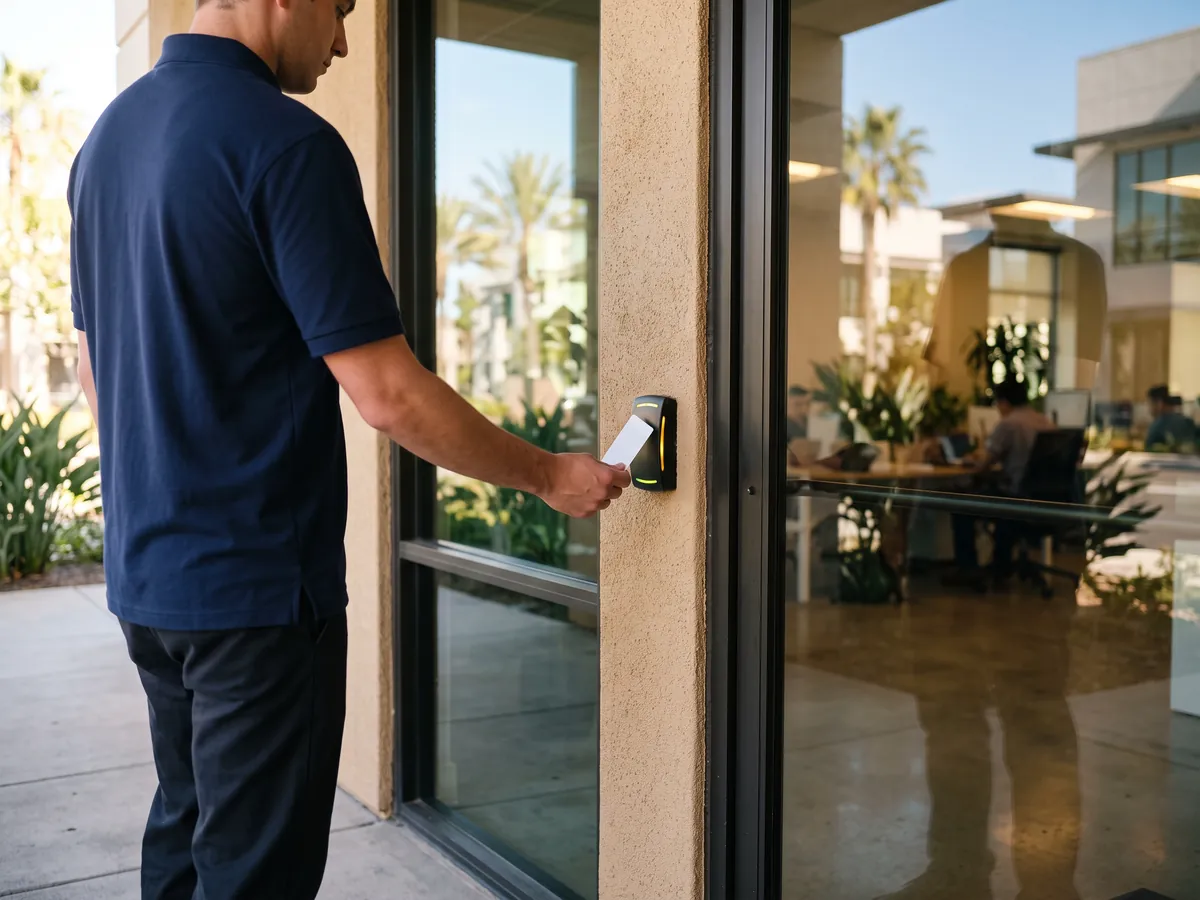
Apartment and HOA properties in Winchester live and die by their entry points: the pedestrian gate by the mailboxes, the vehicle gate, the pool, the gym, the package room and the leasing office. When one of those stops working, residents notice within hours and the office phone starts ringing. Our access control work for multifamily covers telephone entry panels, fob readers, keypad gates, amenity door schedules and the mechanical locks that back them up. We can audit who still holds active fobs after years of turnover, replace failed hardware, and plan an upgrade that doesn't require reissuing every credential on the same day.
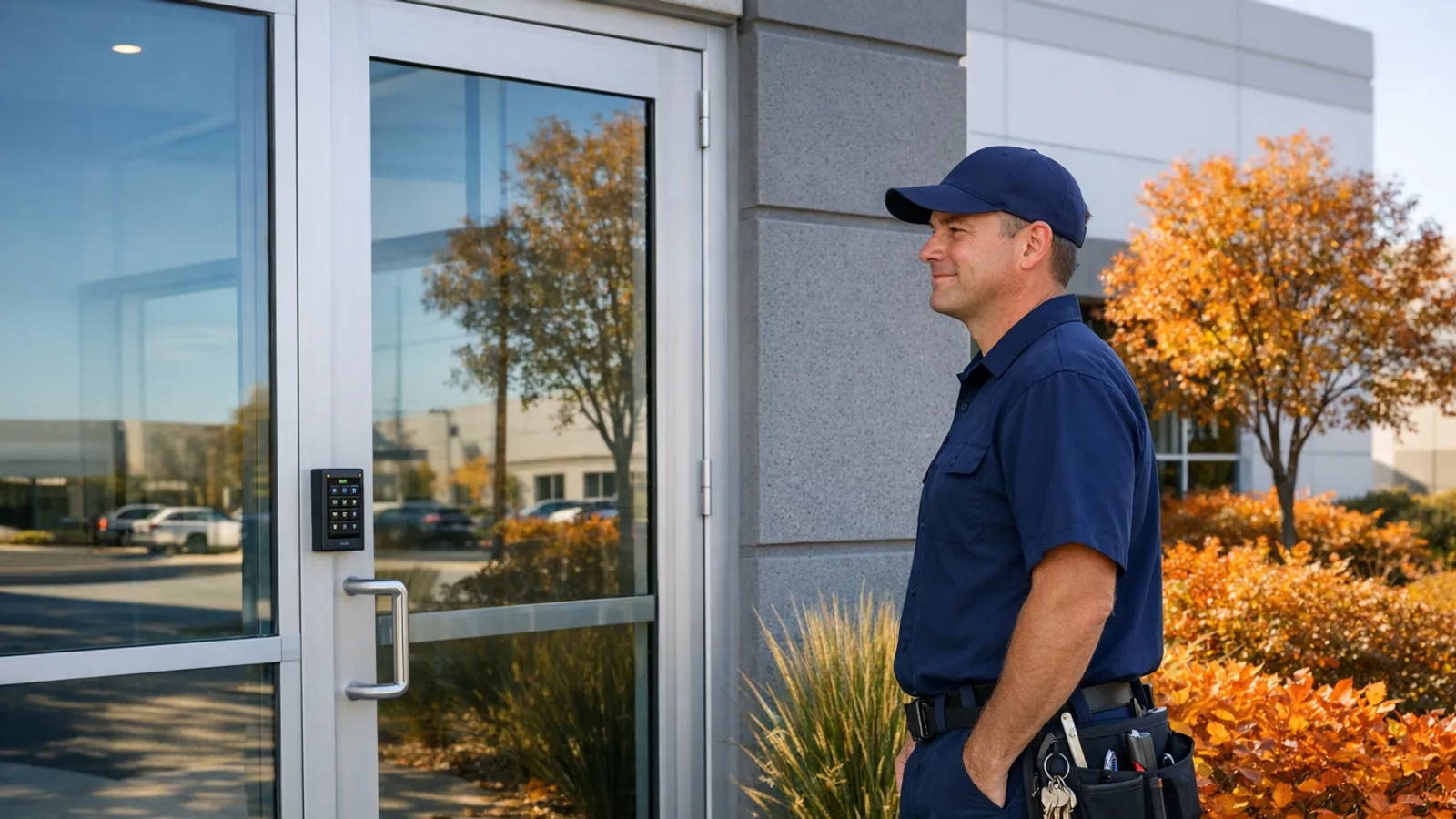
Access control replaces a ring of keys with credentials: cards, fobs, PIN codes or phones that open the doors you choose and leave a record of who used them. In Winchester it is a growing need. New retail pads along Winchester Road, office suites, storage yards and the clubhouses and pool areas in newer neighborhoods all see foot traffic and a rotating cast of staff, and rekeying whenever someone leaves does not scale. A system has parts that fail in different ways. Readers wear out, power supplies drift, strike coils burn out and a cable gets nicked during a remodel. Software settings let a former employee's card keep working. We service all of it: troubleshooting the door that will not release, adding or removing credentials, replacing readers and updating hardware that has become obsolete. Some parts of a system belong to other trades. Gate operators, network cabling and new low-voltage runs may call for a licensed low-voltage contractor, and we coordinate with them rather than guess. Before any change we confirm who is authorized to manage the system, since administrator access is the most sensitive key of all. Tell us how many doors, how many users and whether you need a log.
What to know first in Winchester
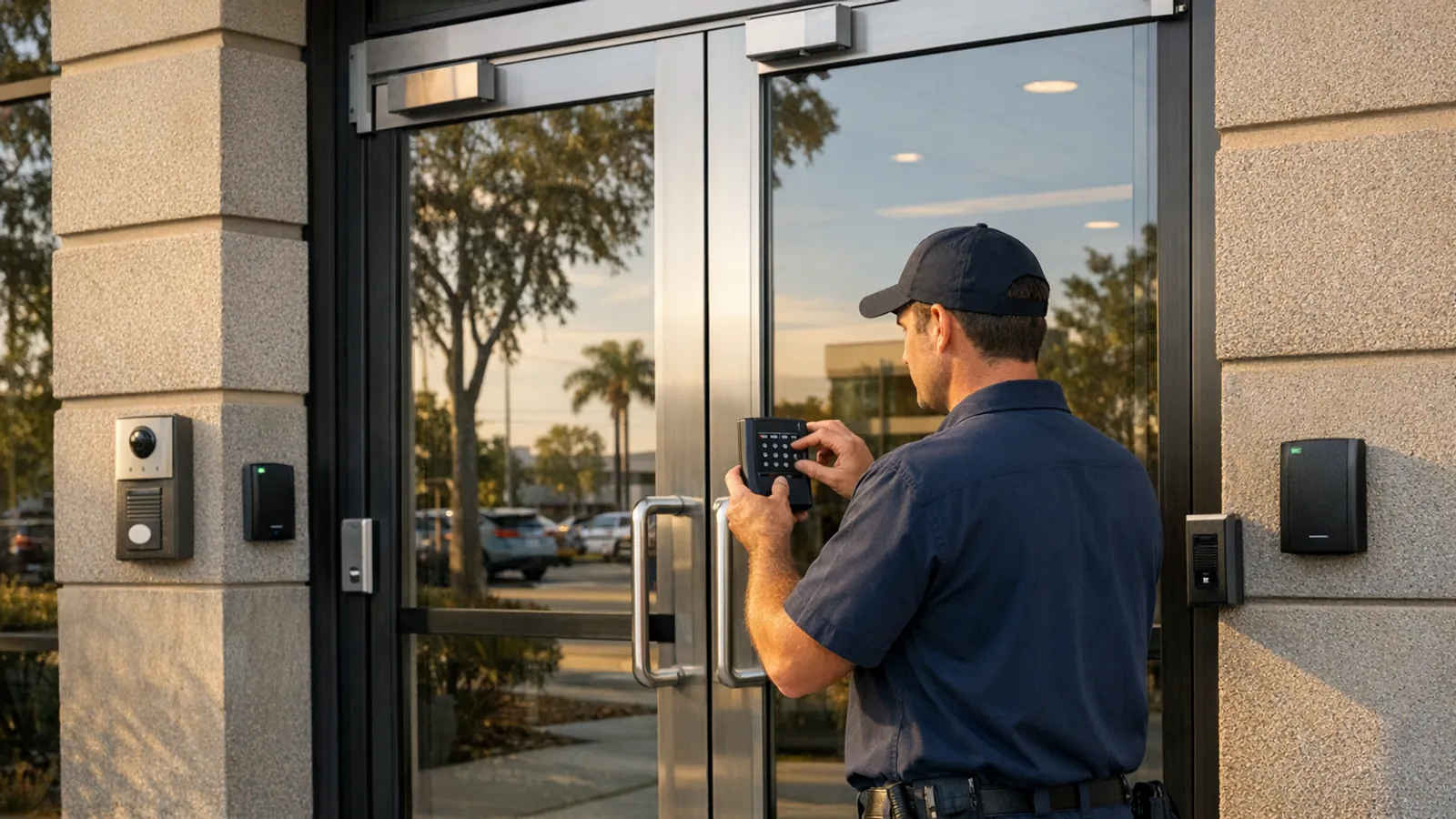
An access control system is a short chain of parts, and a failure anywhere along it looks the same from the sidewalk: the door doesn't open. The credential (a card, fob, PIN or phone) is presented to a reader. The reader passes a number to a controller, which checks it against the user list and schedule. If the answer is yes, the controller switches power to the locking hardware: an electric strike in the frame, a magnetic lock on the header, an electrified lever, or a motor in an exit device that retracts the latch. A door position switch reports whether the door actually opened and closed again, and a request-to-exit device tells the system someone is leaving, so it doesn't log a forced door. A power supply with backup batteries keeps it all running. Across Winchester businesses and apartment communities, this chain comes in every brand and age, and diagnosing it means checking each link in order rather than guessing. That's also why we design new systems around parts that can be serviced individually instead of sealed, proprietary boxes.
What we can do on-site
- Networked card and fob systems. Once you're past a few doors, a networked system wins: one controller, a reader at each opening and a single user list. Deleting a lost fob removes it from every door at once. We set up controllers, readers and electrified locks, label everything at the panel, and leave you documented wiring rather than a mystery closet.
- Apartment, HOA and gate entry systems. For HOA boards and property managers, we set amenity schedules so the pool gate only accepts fobs during posted hours, add separate groups for vendors and landscapers, and pull audit reports when there's a dispute about who was inside. Each change is documented, so the next board or manager isn't starting from zero.
- Upgrades and credential migration. Upgrading the reader protocol is another common step. Older systems use Wiegand, an unencrypted one-way signal; newer readers support OSDP with Secure Channel, which encrypts traffic and alerts the controller if a reader is disconnected. When the existing cable has enough conductors in good condition, that change can happen without pulling new wire.
- User management, remote access and audit trails. An audit trail is only useful if you can read it. We name doors and users clearly, enable the event types that matter (granted, denied, forced, held open), and show you how to filter a report by person, door or time range. That's the record you'll want when something goes missing.
- Key override and mechanical backup. Every electrified door should still open with a key when power, batteries or the network fail. We make sure each opening has a working override cylinder, keyed into your master key system or a restricted keyway, and that someone on staff knows where the override keys live. For a locksmith, that part is routine.
How Winchester shapes the job
Summer heat in Winchester is hard on access control. Backup batteries in hot electrical rooms age faster, keypads in direct sun fade and crack, standalone lock batteries drain sooner, and metal doors on west-facing walls can expand enough to bind a strike. We look at heat exposure during every survey and maintenance visit, specifying sun hoods, ventilated enclosures and outdoor-rated hardware, and replacing batteries before the hottest months arrive.
New commercial and mixed-use buildings around Winchester are often turned over with access control rough-in already done: conduit, back boxes and pull strings at key doors. That's the least expensive moment to add readers and electrified hardware. If you're leasing a new space, ask what's prewired before buying anything. We can complete the door side, match existing hardware and add controlled openings the original plans left out.
Common situations
A small equipment yard on Winchester Road runs on a shared keypad code that everyone, including two former drivers, still knows. The owner calls after a gate was left open overnight. We reset the system, give each driver a separate credential, set schedules so the gate and shop door open only during working hours, and show the owner how to remove a person from the log. The pedestrian door gets a new reader and a request-to-exit button inside.
- For example, a property manager notices far more active fobs than residents. It turns out residents have been copying their 125 kHz fobs at a mall kiosk for roommates, dog walkers and house cleaners. Because those fobs carry no encryption, the copies look identical to the originals. A phased upgrade to encrypted fobs read by multi-technology readers would let the property reissue credentials building by building, then disable the old format.
- Imagine an HOA pool near Riverside County Fire Station 34 with a keypad gate whose code was set years ago and is now known to half the neighborhood. A board in that position might switch to fobs assigned to each household, set the reader to accept them only during posted pool hours, and confirm the gate still self-closes and self-latches after each release. A lost fob then costs one deletion, not a code change for everyone.
- Picture a warehouse side door with a maglock that keeps letting go overnight. The alarm company reports a door-forced event in the small hours, but nobody was there. On inspection, the armature plate has loosened and tilted, the door sags enough that only part of the plate meets the magnet, and wind gusts pull it free. Remounting the armature, adjusting the hinges and adding a bond sensor would end the false alarms.
Step by step with Julian's Locksmith
- Start with a call. Call (951) 903-3193 and describe what you need: a new system, a repair, an upgrade or maintenance. Tell us how many doors or gates are involved, the brand on the reader or keypad if there is one, and what the door does now when someone presents a credential.
- Site walk and assessment. On a repair visit, assessment means testing in order: output at the power supply, voltage at the lock, the reader's response, the door position switch, the request-to-exit device and the event log. Working from the door outward keeps us from missing a simple mechanical cause.
- Written quote and options. Our quote spells out who does what. If the job needs new cable through finished walls, a fire alarm tie-in or a permit, we say so plainly and show where a licensed low-voltage, electrical or fire alarm contractor fits, rather than discovering it halfway through the project.
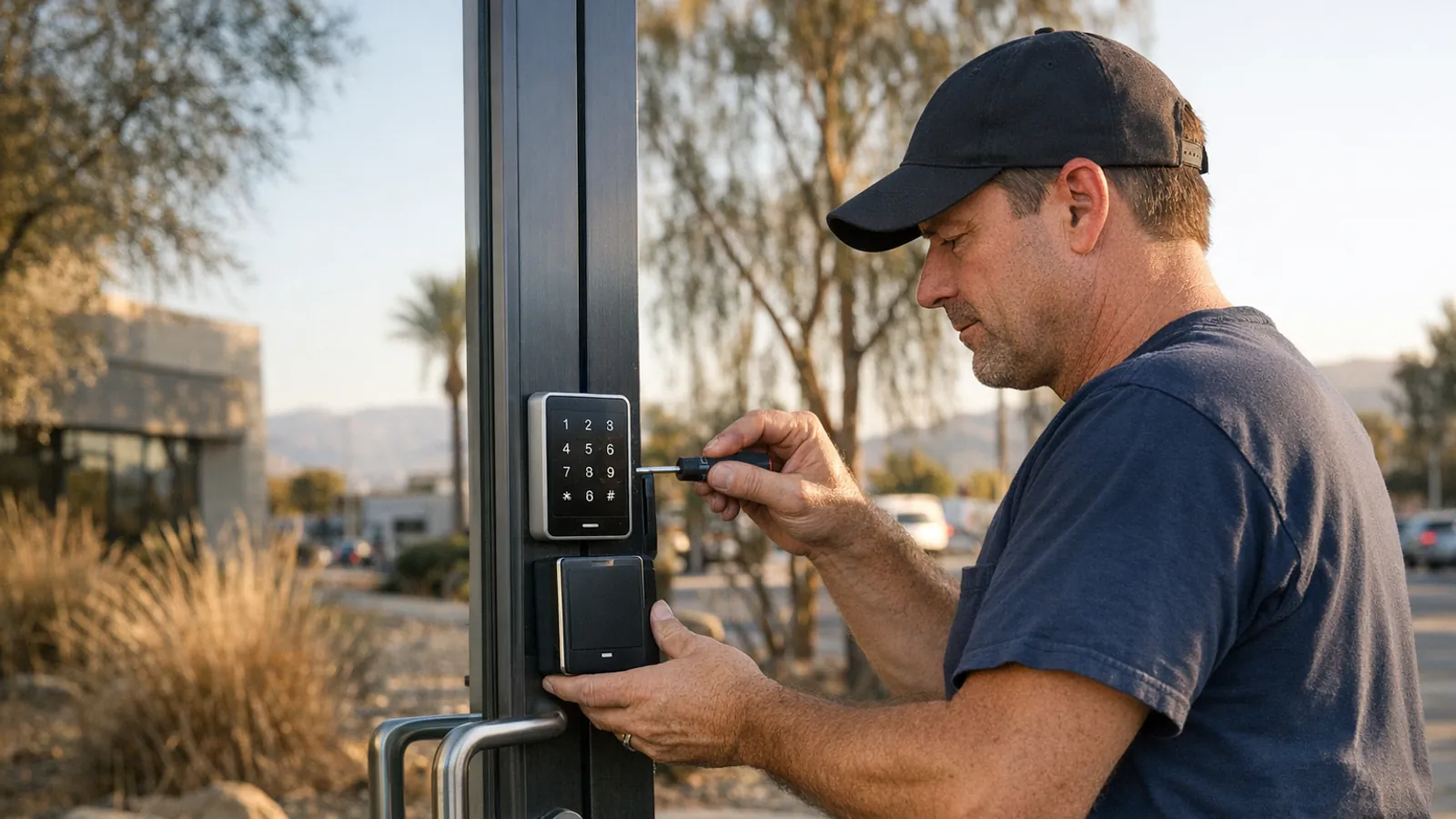
- Hardware work at the door. We install or repair the electrified lock, reader, door position switch and request-to-exit device, mount everything plumb and secure, and terminate wiring neatly with labels at both ends. Every door is tested for release, relock, egress and key override before we move to the next one.
- Programming and handoff. We document the system in plain terms: where the controller and power supplies sit, which breaker feeds them, where override keys are kept and how each door behaves when power fails. That sheet belongs with your building records, not in our van.
- Ongoing service and support. After the job, call us for repairs, adds and changes. Many Winchester customers book a yearly maintenance visit to test batteries, egress, release and closers, and to review the user list. We're open 24 hours a day, every day.
Pricing factors
- Number of doors and gates. Gates usually cost more to control than doors. They need weatherproof readers, heavier locks or coordination with the gate operator, and wiring that crosses open ground or runs to a pedestal. We break gates out separately in the quote so the board or owner can see what each entry point adds.
- Door and frame construction. Fire-rated doors limit the choices: the hardware must be listed for fire doors, and the opening still has to latch positively when power fails. That often means an electrified lock or a fire-rated fail-secure strike, both of which cost more than basic hardware. We check the label on the frame or door edge before quoting.
- Repair scope and parts availability. Timing affects cost too. A scheduled visit during normal business hours is the most economical way to service access control. Urgent evening calls may cost more, so planning upgrades and maintenance before small faults turn into lockouts saves both money and downtime.
Every job gets a clear quote before any work starts. Call (951) 903-3193 with the details and we'll tell you what to expect for your situation in Winchester.
What not to do
- Treating 125 kHz prox as secure. These cards broadcast a fixed number with no encryption, and inexpensive devices can copy one from a short distance. If your property still relies on them for perimeter doors, assume copies exist and plan an upgrade rather than ordering more of the same cards.
- Signing a cloud contract without asking about the exit. Some platforms tie controllers to their own service, so canceling leaves readers that can't be reprogrammed. Ask whether the hardware works with other software, who owns the user data, and how you would export it if you ever switched.
- Buying a kit online and mounting it on whatever door is there. Consumer-grade maglocks and strikes are often undersized, ship without proper egress devices and aren't listed for commercial use. They tend to fail inspection or fail open, and the business pays to remove them before a proper access control installation.
What to do before we arrive
- Review the user list every quarter. Export it, sort by last access date, and question anyone who hasn't used a door in months. Dormant credentials usually belong to former employees, contractors or residents whose deletion was missed. It takes a few minutes and closes the most common gap.
- Shade or relocate readers and keypads that face the afternoon sun. Inland heat fades keypad legends, cracks plastic housings and drains standalone lock batteries faster. A small hood, a north-facing mount or a pedestal under an overhang can add years to the hardware at very little cost.
- Give every person their own credential. Shared codes and pass-around fobs make the audit trail meaningless and turn every departure into a code change for everyone. Individual PINs or fobs mean one deletion when someone leaves your Winchester business, and a clear record of who used which door and when.
- Protect the administrator login. Use a unique password, turn on multi-factor authentication if the platform supports it, and create separate accounts for each person who manages the system. When an admin leaves, disable their account just like a door credential. Shared admin logins are a quiet but common weak point.
Service in Winchester
Winchester is about 46 miles from our San Bernardino base, roughly 52 minutes in light traffic via Palm Ave to I-215 South through Riverside and Moreno Valley, SR-74 East near Romoland. When you call, you get an arrival estimate based on where the technician is and the traffic at that moment.
Rush hour on Newport Road can stretch a drive considerably. We'd rather give you a realistic arrival window than an optimistic one, and we'll call you if a closure or a crash changes the plan.
About Winchester: When the branch railroad between Perris and San Jacinto began running in 1888, its first train arrived at Winchester.
| Neighborhoods | Domenigoni Valley, Haddock Street, Winchester Ridge, Conestoga, Winchester Ranch, Canterwood |
|---|---|
| ZIP codes | 92596 |
| Main routes | SR-79, Domenigoni Parkway, Simpson Road, Newport Road |
| From our San Bernardino base | about 46 miles via Palm Ave to I-215 South through Riverside and Moreno Valley, SR-74 East near Romoland, then Menifee Road and Simpson Road east into downtown Winchester; for Winchester Ranch and Canterwood, I-215 South to Newport Road and east on Domenigoni Parkway |
Business lock or door work in Winchester?
Call (951) 903-3193 with the address, the doors or hardware involved and when the site is open. We'll quote the job before any work starts and book a time within our hours that suits your schedule.
Frequently asked questions
Do you service apartment and HOA gate entry systems?
Yes. We repair and upgrade telephone entry panels, fob and card readers, keypads, gate locks and maglocks at pedestrian and vehicle gates, and we can help manage resident credentials. Gate operator motors, arms and loop detectors are usually a gate technician's work, and we're glad to coordinate with yours when a problem involves both sides.
Can I release doors or add users from my phone?
With a cloud-managed or app-enabled system, yes. Administrators can add and delete users, change schedules, open a door for a visitor and receive alerts from a smartphone. Some systems also let employees use their phones as credentials. We set administrator permissions so remote control is available to the right people and protected with strong logins.
Will you work on a system another company installed?
Yes. We regularly troubleshoot and repair access control that someone else installed, whether the original company is gone, unresponsive or simply too far away. It helps to have the admin login and any documentation, but it isn't always required. If a component is no longer supported, we'll tell you and lay out repair and replacement options.
What happens to access-controlled doors when the power goes out?
That depends on the hardware. Fail-safe locks, including all maglocks, release when power is lost; fail-secure locks stay locked from the outside but still let people exit from inside. Backup batteries in the power supply keep things running for a while. When they run out, staff use the mechanical key override. We plan each door's behavior during design.
How much does an access control system cost?
It depends on the number of doors, door construction, the type of lock hardware, credential technology, software model and how hard it is to run wire. A single standalone lock and a twenty-door networked system are very different projects. We don't quote prices without seeing the site, but you get a written, itemized quote before any work begins.
What does an access control audit trail actually record?
A typical audit trail logs each event with a time, door and credential: access granted, access denied, door forced open, door held open, and administrative changes such as adding a user. Standalone locks store a smaller log internally. The usefulness of the record depends on naming each credential properly, which we set up during programming.
How far is Winchester from your base?
Winchester is about 46 miles from our San Bernardino base, roughly 52 minutes in light traffic. Arrival time depends on traffic and on the job the technician is finishing, so we give you an estimate on the phone before you commit.
Related services in Winchester
- Access Control Installation in Winchester
- Access Control Repair in Winchester
- Access Control Upgrade in Winchester
- Access Control Maintenance in Winchester
- Electric Strike Installation in Winchester
- Magnetic Lock Installation in Winchester
- Master Key System in Winchester
- Commercial Locksmith in Winchester
- Panic Bar Installation in Winchester
Access Control in nearby cities
- Access Control in HomelandRiverside County
- Access Control in RomolandRiverside County
- Access Control in MenifeeRiverside County
- Access Control in NuevoRiverside County
- Access Control in Quail ValleyRiverside County
- Access Control in Canyon LakeRiverside County
- Access Control in PerrisRiverside County
- Access Control in MurrietaRiverside County