
Pomona, Los Angeles County
Door Latch Repair in Pomona: Find the Real Problem
Short answer: A latch that won't catch, won't retract or sticks halfway is usually a worn or dirty latch bolt, a misaligned strike plate, or a door that has dropped on its hinges. Julian's Locksmith repairs latches in Pomona: we clean, adjust or swap the latch assembly, then test the door repeatedly. Call (951) 903-3193 and describe what the knob feels like.
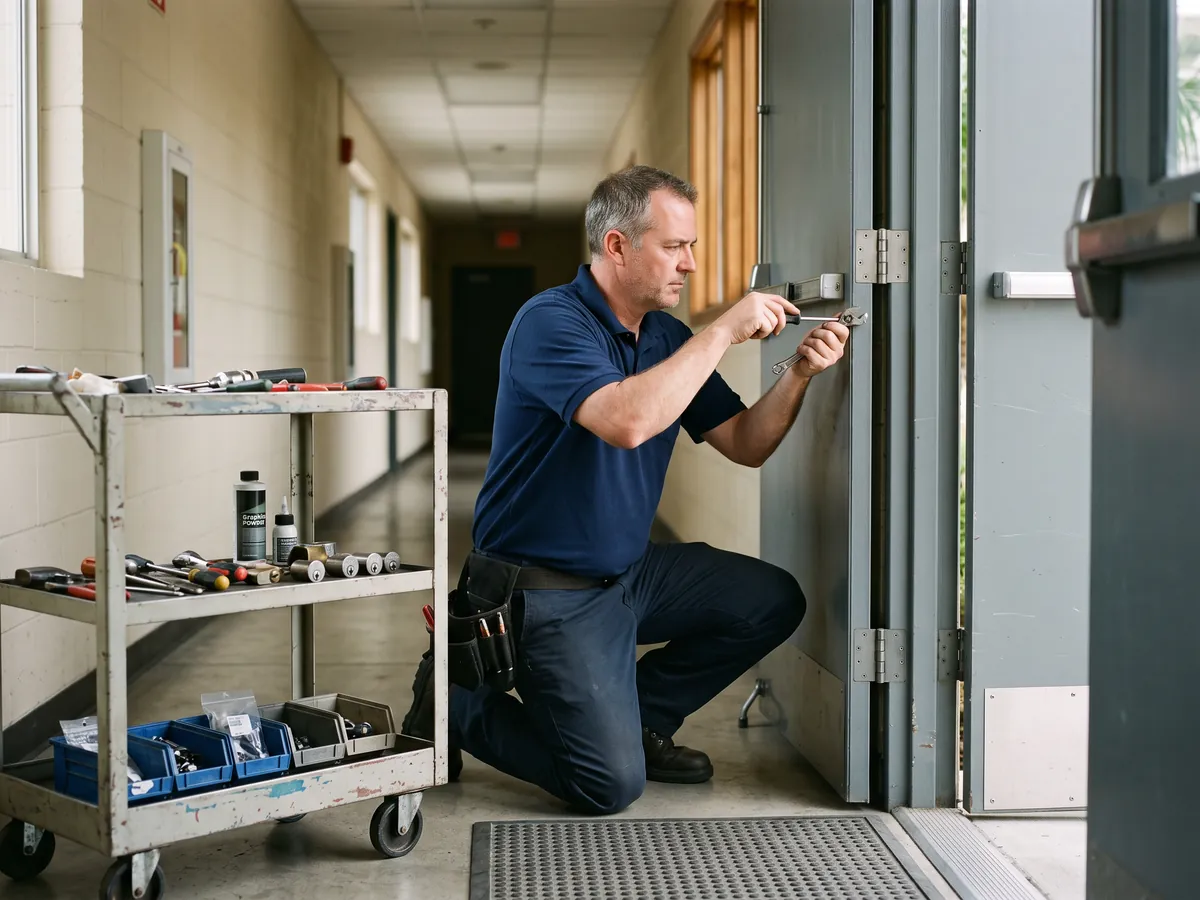
Four things can stop a door from catching: the latch, the strike, the handle that drives the latch, and the door itself. Replacing the wrong one is the most expensive mistake people make with a latch repair. A new latch won't fix a door that has sagged a quarter inch, and a perfect strike won't help a latch with a dead spring. In Pomona, Julian's Locksmith starts every visit by working out which of the four is actually at fault, using chalk, a tape measure and a few minutes with the door open and closed. Then we quote the real repair. Describe the symptom when you call (951) 903-3193, and we can often narrow it down before we arrive.
Latch Repair in Pomona: what to expect
A door latch looks simple, which is why people are surprised when it fails. The visible part is the beveled tongue in the door's edge, but behind it sit a spring, a retractor linked to your knob or lever, and a faceplate that screws to the door. In a typical residential lock the latch slides into a one-inch hole bored from the edge and meets a cross bore drilled through the face of the door. The backset, the distance from the door's edge to the center of that cross bore, is usually 2-3/8 or 2-3/4 inches, and those numbers decide which replacement fits. Latches fail in a few predictable ways: dirt or paint locking the tongue, a spring that gives up, a retractor tab that snaps so the handle spins freely, or a faceplate that has worked loose and lets the whole assembly rock. Each has a different cure, and none of them needs the whole lockset replaced. Our job on a latch repair in Pomona is to work out which part has failed, repair it where that makes sense and replace it where it doesn't.
Work included on a typical visit
- Sticking and gummed-up latch bolts. Paint is the usual culprit on interior doors in Pomona: someone rolled the edge of the door with the latch closed, and the tongue is now glued to its faceplate. We score the paint, free the tongue and clean the barrel. If the spring has been pinched too long, we swap the latch rather than nurse it along.
- Weak springs and latches that won't extend. Fatigued springs show up as a latch that moves sluggishly or stops partway when you release the handle. Rock the knob and watch the tongue: if it hesitates, the spring is tired. A fresh latch restores a crisp snap, and the knob or lever usually stops feeling heavy or floppy as well.
- Replacing the latch assembly. Schlage, Kwikset, Baldwin and Yale latches differ in tail shape and spindle length, so a universal latch from a hardware aisle sometimes fits poorly and leaves the handle loose. If you've already pulled the old latch, keep it. If not, describe the knob or send a photo, and we'll match the part.
- Bedroom, bathroom and closet privacy latches. A privacy set that won't release from inside usually has a broken push-button spring or a bent lock bar. We open the door without damage, then replace the mechanism so the button pops out when the door opens. In a house with toddlers, we'll show you where to keep the release tool within reach.
- Freeing a door that a failed latch has jammed shut. If someone is inside a room and can't get out, treat it as urgent: if there's any danger, call 911. Otherwise call us and keep talking to the person. We open interior doors by working the latch from the hall side or removing the handle, which leaves the door and frame as they were.
What's different about Pomona
Older houses in Pomona have doors that have been painted a dozen times and hung on hinges that have moved with the house. Latches there fail from paint layers in the strike, tongues filed to fit, and original knobs whose parts are no longer made. We try cleaning and realigning first, since original hardware is part of the home's character, and we replace latches inside old knobs where we can. Old mortise latches get their own care, and we'll tell you honestly when a part is simply gone.
Inns, guest houses and small hotels near attractions in Pomona have doors that cycle thousands of times a season. Guestroom latches fail quietly until a guest reports a door that won't close at night. Managers can send us a room list and a work order; we replace latches in batches when the hardware matches, and verify authorization from the property. We're open every day, 6:30 a.m. to 11:30 p.m., so plan maintenance around those hours.
Apartment doors open and close more than most, and units pass through many hands. Latches wear, strikes get painted over between tenants, and slammed doors knock hinges loose. If you rent in Pomona, report a failing latch to your landlord in writing; for the main entry door, California Civil Code section 1941.3 covers working deadbolts. Property managers can send us with a work order, and we repair latches across several units in one visit when that saves everyone time.
Situations this covers
- Picture a pocket door in a 1990s condo near Pomona Valley Hospital Medical Center. The hook latch has pulled out of the door edge, and now the bedroom door slides open whenever someone walks past. We'd cut a clean new mortise, fit a replacement hook latch and check the hanger and track. If the pull has torn the edge badly, we'd say so and suggest a carpenter.
- Here's an everyday one: the door from the attached garage into a kitchen in Pomona has a closer, but the latch rides up on the weatherstrip and the door sits cracked open. That's a security and safety problem. We'd adjust the closer's latching speed, realign the strike so the tongue enters cleanly, and check that the door pulls itself shut from several starting angles.
- For example, a parent in Pomona hears a toddler crying behind a bathroom door whose privacy button has jammed. If the child seems hurt or panicked, 911 comes first. Otherwise, keep the child talking, try the emergency hole with a small screwdriver, and call us at (951) 903-3193 if it fails. We'd open the door from the hall side and replace the broken mechanism.
- An example of the free-spinning knob: an older Kwikset on a hall closet in Pomona. The knob turns, nothing moves, and the door has stayed shut for a week because nobody could get in. We'd open it by working the tongue from the edge, take the knob apart and find the retractor tab snapped. A matching latch goes in, and the same knob goes back on.
Step by step with Julian's Locksmith
- Tell us what the door is doing. Call (951) 903-3193 and tell us what you see and hear. Does the door stay shut? Does the knob feel springy or loose? Is the tongue stuck out? Which side fails? Two or three details narrow the field, and a phone photo of the door edge and the knob helps us bring the right latch.
- Confirm who we're working for. We ask whoever is at the door to show ID matching the property, or we confirm authorization from the owner or manager. For rentals, the manager's approval or a work order covers it. It's quick, and it protects the occupant as much as the owner.
- Test the door open and closed. We work the handle with the door open to see whether the tongue extends fully and retracts crisply. Then we close the door slowly, checking tongue and strike alignment, hinge play and gaps. Chalk on the tongue shows where it lands. After a few minutes we usually know which part is at fault.
- Quote the repair and the alternative. You'll hear what we found and usually two options: clean and adjust, or replace the latch. We give you the price for each before starting. A twenty-year-old knob that is rough in other ways may deserve a new lockset, and we'll say so, but you decide.
- Repair, adjust or replace the latch. While the hardware is off, we check for cracks in the edge, worn bores, loose faceplate screws and missing strike screws. Fixing those now prevents a repeat. We keep the old parts to show you if you'd like to see what failed.
- Test everything and hand off. A repaired latch should close with the door barely pushed, hold against a light tug and release without effort. We run the door through its full range, including a firm close, and confirm the deadlatch plunger engages on entry doors. You pay the price we quoted.
How we quote the job
- What the door and frame are doing. A dropped or swollen door can make a perfect latch look broken. Hinge screws, shims, planing or a deeper strike pocket all add labor. Rotten jambs or split door edges need carpentry, which we flag so you can plan for a carpenter if the repair falls outside our scope.
- Entry-door security work. If the deadlatch plunger or the strike has to be rebuilt to protect the door properly, that means additional hardware and time. A reinforced strike or a thin steel wrap around the door edge goes beyond a simple repair, and we add it only when you want it.
- How many doors need attention. Property managers with several units, or homeowners doing a pre-sale tune-up, can save money by grouping the work. Latches of the same brand speed things up. Give us a list of doors and symptoms when you call, and we will quote the whole batch together.
Every job gets a clear quote before any work starts. Call (951) 903-3193 with the details and we'll tell you what to expect for your situation in Pomona.
What not to do
- Spraying a penetrating oil or general-purpose lubricant into the latch. It frees the tongue for a short while, then collects dust and lint and hardens into a sticky film. A dry PTFE or graphite lubricant lasts longer and doesn't turn the barrel into paste.
- Ignoring a latch that rattles or hesitates. Wear speeds up once the tongue starts to wobble, and the next stage is a door that opens on its own or locks someone in. Early attention is quick and inexpensive compared with an emergency opening later.
- Forcing a stuck door with a screwdriver, a pry bar or a shoulder. You can split the jamb, crack the strike plate and bend the latch, and the door still won't open. Working the tongue gently, or calling a locksmith, costs less than carpentry.
Advice before you book
- Rub chalk, lipstick or a soft pencil on the latch tongue, close the door and open it again. The mark on the strike shows where the latch lands. If it's high or low by more than a sixteenth of an inch, you're looking at alignment, not a broken latch.
- If the knob turns freely, resist the urge to lean on the door or kick it. Forcing a stuck door cracks jambs and strikes and turns a small latch problem into a carpentry job. Stop, note which side fails, and call for help or work the tongue gently from the edge.
- Remove the knob and latch before painting a door edge, or at least tape the faceplate. Paint on the tongue and in the strike pocket is the top reason a latch sticks after a DIY repaint or a quick turnover. Fifteen minutes of masking saves a service call in Pomona.
- On every entry door, swap the two short strike screws for 3-inch screws that bite into the framing. A door that gets kicked or shouldered meets the strike first, and short screws only hold the thin jamb. It's a quick upgrade that makes the latch matter.
Reaching Pomona
Pomona is about 32 miles from our San Bernardino base, roughly 38 minutes in light traffic via University Parkway to SR-210 West. When you call, you get an arrival estimate based on where the technician is and the traffic at that moment.
Once the evening commute thins out on Foothill Boulevard, drive times usually shrink. That makes an evening call before closing a practical option for non-urgent jobs that you couldn't fit into the workday.
About Pomona: Ygnacio Palomares built the Adobe de Palomares on Rancho San Jose in the 1850s, and the house on East Arrow Highway has operated as a museum since 1940.
| Neighborhoods | North Pomona, South Pomona, Phillips Ranch, Downtown Pomona and the Arts Colony, Spadra, Hacienda Park |
|---|---|
| ZIP codes | 91766, 91767, 91768 |
| Main routes | I-10, SR-60, SR-57, SR-71 |
| From our San Bernardino base | about 32 miles via University Parkway to SR-210 West (Foothill Freeway) through Rialto, Fontana, Rancho Cucamonga and Upland to the Towne Avenue exit in Claremont, then south on Towne Avenue into North Pomona, Lincoln Park and downtown; stay on the 210 to SR-57 South through the Kellogg Interchange for Cal Poly Pomona (Temple Avenue) and SR-71 South for Phillips Ranch |
Lock or door hardware trouble in Pomona?
Call (951) 903-3193 with the address and what the door or lock is doing. We'll quote the repair before any work starts.
Frequently asked questions
The knob turns but the latch doesn't move. What broke?
Usually one of three small parts: the retractor tab on the latch, the spindle that connects the two handles, or a loose set screw holding a lever to the spindle. Test both sides. If only one side fails, suspect the spindle or set screw. We take the handle off, find the failed part and replace it, often without replacing the whole set.
Do you repair pocket door and sliding door latches?
Yes. Pocket doors use hook latches or edge pulls that we replace and re-mortise. Patio sliders use hook latches and keepers that we replace or adjust, and we check rollers and tracks. French doors with flush or surface bolts get straightened or replaced. Tell us the door type when you call and send a photo of the latch, since parts vary widely.
Do I need a new lockset, or just a new latch?
Often just the latch. It's a replaceable part inside most knob and lever sets, so we can swap it and keep your handles, keys and finish. A new lockset makes sense when handles are loose or worn, the finish is failing, the brand has been discontinued, or you want a different function or key system. We explain both options and let you choose.
Could a thief slip my latch open with a card?
A plain spring latch can often be pushed back from the gap, which is why locked doors rely on deadbolts. Entry-door latches include a deadlatching plunger meant to stop this once the door is closed and properly aligned. We check that on every entry door, but the deadbolt is the lock you should rely on. A reinforced strike with long screws helps too.
Can you repair a latch on a fire-rated or garage-entry door?
Yes, with care. The door from an attached garage, or a fire-rated unit door in a condo, carries requirements, usually that it close and latch on its own. We repair latches, strikes and hinges but don't drill extra holes or remove closers without checking. If a part would change the rating, we'll say so and look at compliant options.
Can you fix a latch that's stuck out and won't retract?
Yes. A tongue stuck out of the door edge is usually jammed with paint or grime, or its retractor is broken. If the door is closed, we release it by working the tongue through the gap or removing the hardware, without cutting the door. Then we clean or replace the latch. If someone is trapped and in distress, call 911 first.
How far is Pomona from your base?
Pomona is about 32 miles from our San Bernardino base, roughly 38 minutes in light traffic. Arrival time depends on traffic and on the job the technician is finishing, so we give you an estimate on the phone before you commit.
Related services in Pomona
Latch Repair in nearby cities
- Latch Repair in MontclairSan Bernardino County
- Latch Repair in La VerneLos Angeles County
- Latch Repair in ClaremontLos Angeles County
- Latch Repair in San DimasLos Angeles County
- Latch Repair in Chino HillsSan Bernardino County
- Latch Repair in ChinoSan Bernardino County
- Latch Repair in Diamond BarLos Angeles County
- Latch Repair in Charter OakLos Angeles County

