
Eastvale, Riverside County
Estate Locksmith in Eastvale for Executors and Trustees
Short answer: A home going through probate usually needs three things from an estate locksmith: a clean entry, a rekey of every exterior lock, and openings for whatever is locked inside, such as a safe, rolltop desk or gun cabinet. In Eastvale, Julian's Locksmith can handle all three on one visit once the paperwork is in order, quoting before work starts.
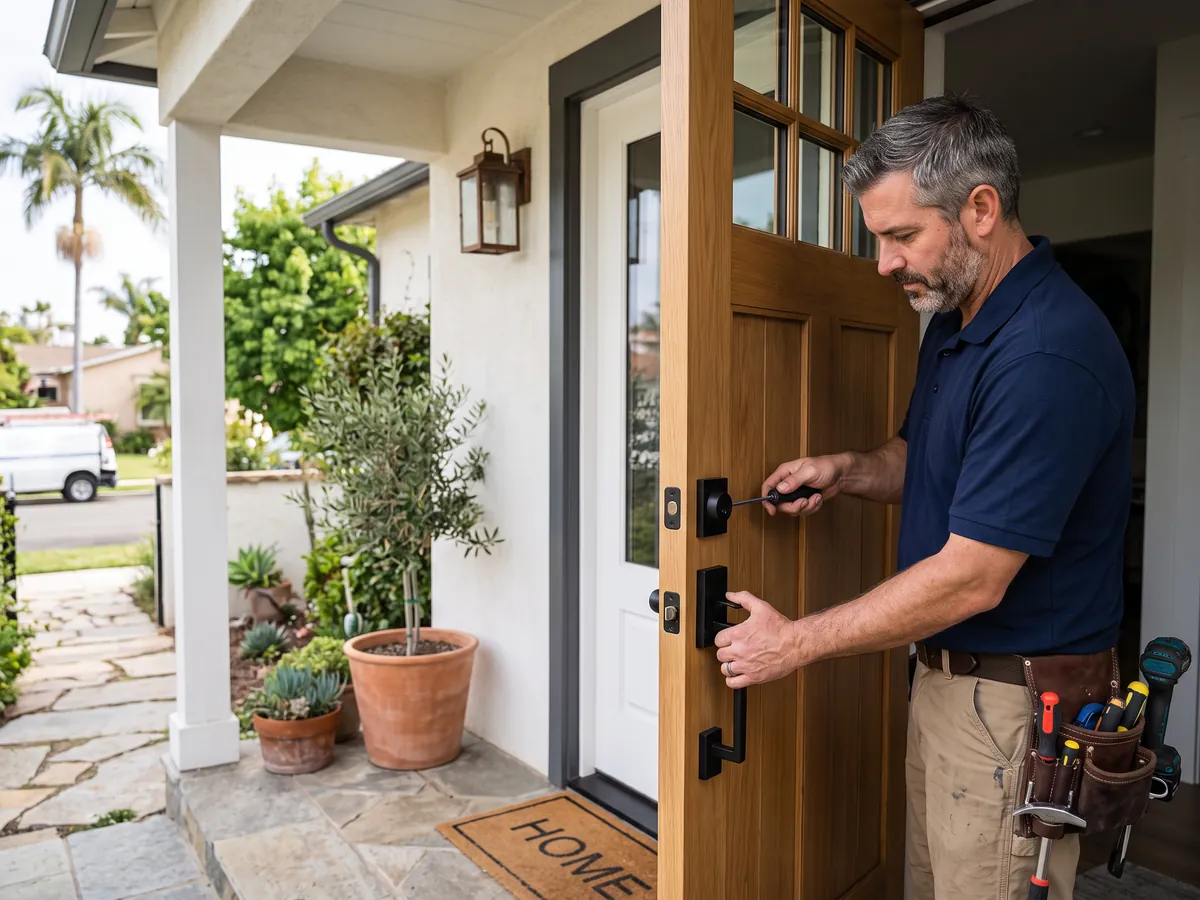
Homes held in a living trust usually skip probate court, but somebody still has to secure them. If you're the successor trustee for a Eastvale property, you typically step in as soon as the original trustee dies, and the first practical task is control of the keys. Working as your estate locksmith, Julian's Locksmith reviews your certification of trust and photo ID, rekeys the locks, opens the safe if nobody has the combination, and helps you decide which beneficiaries should hold a key while the trust is administered. Clear access rules set in the first week tend to prevent awkward conversations between siblings months later, especially when valuables remain in the house.
What to know first in Eastvale
Most estate homes hold at least one thing nobody can open. Sometimes it's a modern gun safe with a keypad whose battery died months ago, a quick fix. Sometimes it's a cast-iron safe from the 1950s with a dial and no written combination, a fire-resistant document box with a missing key, a locked rolltop desk or a steel filing cabinet with the bank records inside. An estate locksmith picks the gentlest method that will work: fresh power and an override key for electronic locks, manipulation for many mechanical dials, picking or decoding for desk and cabinet locks, and drilling only when nothing else succeeds. When drilling is needed, a precise opening leaves a small hole that can be repaired, so the safe keeps its use and resale value. Because the contents belong to the estate, we suggest having a second person present, such as a co-executor, a beneficiary or someone from the attorney's office, and photographing everything before it moves. One limit worth knowing: a safe deposit box at a bank goes through the bank's own process, not a locksmith's.
What we can do on-site
- Getting in when the keys are missing. Keys often vanish along with the person who died: in a hospital belongings bag, a purse at a relative's house, or a car that was towed after an accident. We open the front or side door of the Eastvale home by picking or bypassing the lock, avoiding drilling whenever the hardware allows, after checking the executor's or trustee's documents and photo ID.
- Rekeying every exterior lock. Rekeying swaps the pins inside each cylinder so old keys stop turning it, while the doors keep their existing deadbolts, handles and finish. For an inherited house we rekey the front, back, side, garage-entry and slider locks to one new key, so the executor carries a single key rather than a ring of mismatched ones.
- Opening the decedent's safe. Before opening a safe for an estate, we confirm that the person asking has authority over its contents, not merely access to the house. We recommend a second person in the room and photos as the door swings open. Our job is opening the safe; we don't inventory, remove or handle what's inside it.
- Desks, file cabinets, gun cabinets and lockboxes. File cabinet and desk locks are usually wafer or cam locks with simple keyways, and most open without damage. Where a key code is stamped on the lock face, we can cut a key directly from that code. Antique furniture gets gentle handling, because a split veneer costs the estate far more than the little lock is worth.
- Restricted keys when several heirs need access. When three siblings each need to get into the house over several months, ordinary keys can be copied at any hardware counter and the executor quickly loses track. A restricted or patented keyway, such as those from Medeco or Mul-T-Lock, limits duplication to authorized channels, so the keys in circulation stay exactly what the executor approved.
What's different about Eastvale
Newer Eastvale homes often rely on smart locks, keypads and video doorbells tied to the owner's phone and email. When the owner dies, those accounts can lock the family out of the hardware itself. We get inside through the mechanical backup, factory-reset the locks from the interior, and help the executor set new codes, while pointing them to the doorbell and alarm providers for the account side.
Most estate calls in Eastvale's family neighborhoods involve a three- or four-bedroom tract house where a parent lived for decades. Grandkids, neighbors and a long line of babysitters may all have had keys at one point. The fix is usually simple: rekey all exterior doors to one key, clear the garage keypad and remotes, and give each sibling who needs access a numbered copy.
Inland heat is hard on a vacant estate home. Smart lock and keypad batteries drain faster in summer, and a dead battery on an empty house can strand the executor outside. Sun-baked deadbolts on west-facing doors stiffen, and gate latches warp out of line. During an estate visit we swap batteries, lubricate sticky cylinders, and add a keyed backup wherever a keypad is the only way in.
Situations this covers
- For example, two sisters serve as co-trustees and don't fully trust each other with access to their parents' house. Instead of passing one key back and forth, we'd install restricted-keyway cylinders on the doors, cut two numbered keys, and have each sister sign for hers. If either key goes missing, extra copies can't be made at a hardware counter, which keeps their agreement easy to enforce.
- A daughter needs to sell her late father's pickup to cover estate bills, but its only key disappeared during his hospital stay. With the title, her Letters of Administration and photo ID, we'd decode the door lock, cut a new key, program the transponder through the OBD-II port, and start the truck in the driveway so the buyer can drive it away rather than pay for a tow.
- For example, a man's aunt passes away in a manufactured home inside a 55-plus park. The park office wants proof he's the administrator before anyone works on the unit, and the door has a worn latch with a tiny cylinder. We'd take his letters to the office first, replace the latch lock with a sturdier keyed deadbolt, and rekey the shed so the old spare in the office no longer fits.
- A typical call: the family can't get past the Kwikset Halo on their mother's front door because the app lives on her passcode-locked phone, and nobody has found the backup key. We'd decode or bypass the backup cylinder, then factory-reset the lock from inside, so the executor can pair it to his own phone, delete the old codes and set new ones for the siblings.
Step by step with Julian's Locksmith
- Call with the property details and your role. Call (951) 903-3193 and tell us your role: executor, administrator, trustee, conservator or agent under a power of attorney. Describe the property: how many exterior doors, any outbuildings, safes or vehicles, and whether anyone still lives there. That lets us bring the right pins, blanks and safe tools on the first visit.
- Have your authority documents ready. Gather the deed or a property tax bill if it's handy, since it ties the address to the decedent or the trust. Vehicle work also needs the title or registration. Keeping everything in one folder or phone album keeps the visit short and avoids a second trip to fetch a missing page.
- Walk the property and list every lock. The walk-through often uncovers things families miss: a back door that was never locked, a spare under a planter, a combination lockbox on the hose bib, a forgotten keypad. We point them out in plain language and mark which matter now and which can wait until the property sells.
- Open what's locked. Doors, cabinets and safes get opened by the least destructive method that works: picking, decoding, override keys, temporary power for dead keypads, or manipulation for many dial safes. Drilling is a last resort, explained and priced before we begin. Where contents matter, we suggest a second witness and photos.
- Rekey and set up key control. With everything open, we rekey the exterior locks to a single new key, adjust or replace any lock that's failing, and reset keypad and smart lock codes. The executor decides how many keys to cut and who gets them, and we can stamp keys with numbers for a simple sign-out record.
- Paperwork for the estate file. You leave with an itemized invoice listing each lock rekeyed, each item opened and how, and the number of keys cut. Executors and trustees usually keep this with the estate's expense records, and it shows the property was protected carefully if anyone questions it later.
Pricing factors
- How many locks the property has. Each cylinder rekeyed carries its own labor and pins, so the total depends on how many doors you want on the new key. Not every lock needs attention on day one; an interior office lock or a garden shed can wait if the budget is tight while the estate is still being valued.
- Vehicles and their key types. A vehicle that has sat for months may have a dead battery or a sticky door lock, which adds steps. If the estate includes several vehicles, say a sedan, a pickup and a motorcycle, each key is priced on its own. Ownership paperwork for every one should be in hand when we arrive.
- Key control choices. If the estate expects a family dispute, paying for controlled keys now can cost less than repeated emergency rekeys later. If everyone agrees and the house will sell within weeks, it probably isn't worth it. We describe both paths honestly and let the person in charge decide what fits.
Every job gets a clear quote before any work starts. Call (951) 903-3193 with the details and we'll tell you what to expect for your situation in Eastvale.
What to do before we arrive
- Keep every estate locksmith invoice with the probate or trust records. Securing estate property is typically treated as an administration expense, and your attorney or accountant will want itemized receipts showing what was done, when it happened and who requested it.
- Book the final rekey before the buyer gets keys. A house sold through probate shouldn't arrive with a single key once held by the estate-sale crew, the cleanout team or a contractor. A short visit near closing settles it, and the buyer starts with keys only they hold.
- Photograph every room before the cleanout begins and again right after the rekey. If an heir later claims an item disappeared, dated photos and a record of when the locks changed show that the property was protected from the day you took responsibility for it.
- If the house will sit vacant, call the homeowner's insurance carrier and ask about vacancy provisions. Many policies change coverage once a home has been unoccupied for a set period. The insurer may also ask what you've done to secure the property, and an itemized rekey invoice answers that question.
Mistakes to avoid
- Hiring whichever listing shows up first online without checking a license. In California, locksmith companies must hold a BSIS license; you can verify ours, LCO7891, at search.dca.ca.gov. An unlicensed operator with access to an empty house full of valuables is a risk no estate needs.
- Discarding a locked box without opening it, or letting a locked file cabinet go out with the estate sale. Locked containers are exactly where people keep wills, deeds, vehicle titles and savings bonds. Open everything before anything leaves the property.
- Leaving the old garage keypad code and remotes active. Families often rekey every door and forget the garage, which usually opens straight into the house. Clear the opener's remote memory and set a new keypad code on the same day the locks change.
Getting to Eastvale
Eastvale is about 27 miles from our San Bernardino base, roughly 34 minutes in light traffic via Little Mountain Drive and Highland Avenue to SR-210 West. When you call, you get an arrival estimate based on where the technician is and the traffic at that moment.
Most trips into Eastvale use Cantu-Galleano Ranch Road for at least part of the drive, and the technician keeps an eye on live traffic along the way so the arrival estimate you heard on the phone stays honest.
About Eastvale: Eastvale covers roughly the westernmost quarter of Rancho Jurupa, a grant of about 48 square miles that Mexican Governor Juan Alvarado gave to Juan Bandini in 1838.
| Neighborhoods | Chandler Ranch, Citrus Ranch, Providence Ranch, Carrington, Rivermist, Avonlea |
|---|---|
| ZIP codes | 91752, 92880 |
| Main routes | I-15, SR-60, Limonite Avenue, Hamner Avenue |
| From our San Bernardino base | about 27 miles via Little Mountain Drive and Highland Avenue to SR-210 West (Foothill Freeway), then I-15 South to the Limonite Avenue exit (Exit 103) for central and south Eastvale, or Cantu-Galleano Ranch Road (Exit 105) for Hamner Avenue and Goodman Way; I-215 North to I-15 South at Devore, or I-10 West to I-15 South, are the alternates |
Home lock work in Eastvale?
Call (951) 903-3193 with the address and a quick description of the doors and locks involved. We'll quote the job before any work starts.
Frequently asked questions
Probate hasn't started yet. Can I still have the locks changed?
Possibly, depending on the circumstances. If you're a close family member trying to secure an empty house and nobody disputes your role, we can discuss limited steps that protect the property. Opening safes and handling contents should wait for formal authority. Call (951) 903-3193 and describe the situation; your estate attorney can also advise on what's appropriate before letters are issued.
Can you open a bank safe deposit box?
No. Safe deposit boxes sit inside the bank's vault, and banks follow their own procedures for opening boxes when the key is lost or the renter has died. Take the key, if you find one, plus your letters or trust paperwork to the bank. We can help you work out whether a key you found is likely to be a safe deposit key in the first place.
What happens with smart locks tied to the decedent's phone?
You don't need the phone to regain control of most smart locks. After we get in through the key backup or a bypass, the lock can be factory-reset from the inside and paired to the executor's own account. Video doorbells, alarm systems and hubs are a separate matter handled with each provider. Note the model names before you call so we bring the right tools.
Can my sister and I each hold a key without either of us making more copies?
Yes. A restricted or patented keyway limits who can cut duplicates, so each of you holds a numbered key and nobody can make extras at a hardware store. If trust breaks down further, rekeying just those cylinders is quick. Whether the added cost makes sense depends on how long the house will sit and what's still inside.
Can you tell what a bag of old keys opens?
We can usually tell you what kind of lock each key belongs to: house, padlock, cabinet, mailbox, vehicle, safe or safe deposit box. Some keys carry stamped codes or brand names that narrow it further, and we test keys against every lock on the property during the visit. That won't always solve the mystery, but it often points to a storage unit or account worth checking.
A relative is living in the house. Can I change the locks?
Not as a first step. Someone living in the home may have legal rights as an occupant or tenant, and locking them out without a court process can expose the estate to liability. Talk with the estate attorney about the correct approach. Once that's settled, we can still help with locks on rooms, safes or containers the executor clearly controls.
How far is Eastvale from your base?
Eastvale is about 27 miles from our San Bernardino base, roughly 34 minutes in light traffic. Arrival time depends on traffic and on the job the technician is finishing, so we give you an estimate on the phone before you commit.
Related services in Eastvale
Estate Locksmith in nearby cities
- Estate Locksmith in NorcoRiverside County
- Estate Locksmith in Mira LomaRiverside County
- Estate Locksmith in PedleyRiverside County
- Estate Locksmith in Glen AvonRiverside County
- Estate Locksmith in CoronaRiverside County
- Estate Locksmith in Jurupa ValleyRiverside County
- Estate Locksmith in Home GardensRiverside County
- Estate Locksmith in OntarioSan Bernardino County