Devore, San Bernardino County
Push to Start Key Replacement in Devore: Back to Pressing the Button
Short answer: Push to start key replacement means programming a new smart fob that your car's start button will accept, then cutting the hidden emergency blade for the door. Julian's Locksmith does it at your car in Devore, so a push-button vehicle with no key usually doesn't need a tow. We verify ID and registration first. Call (951) 903-3193 for a quote.
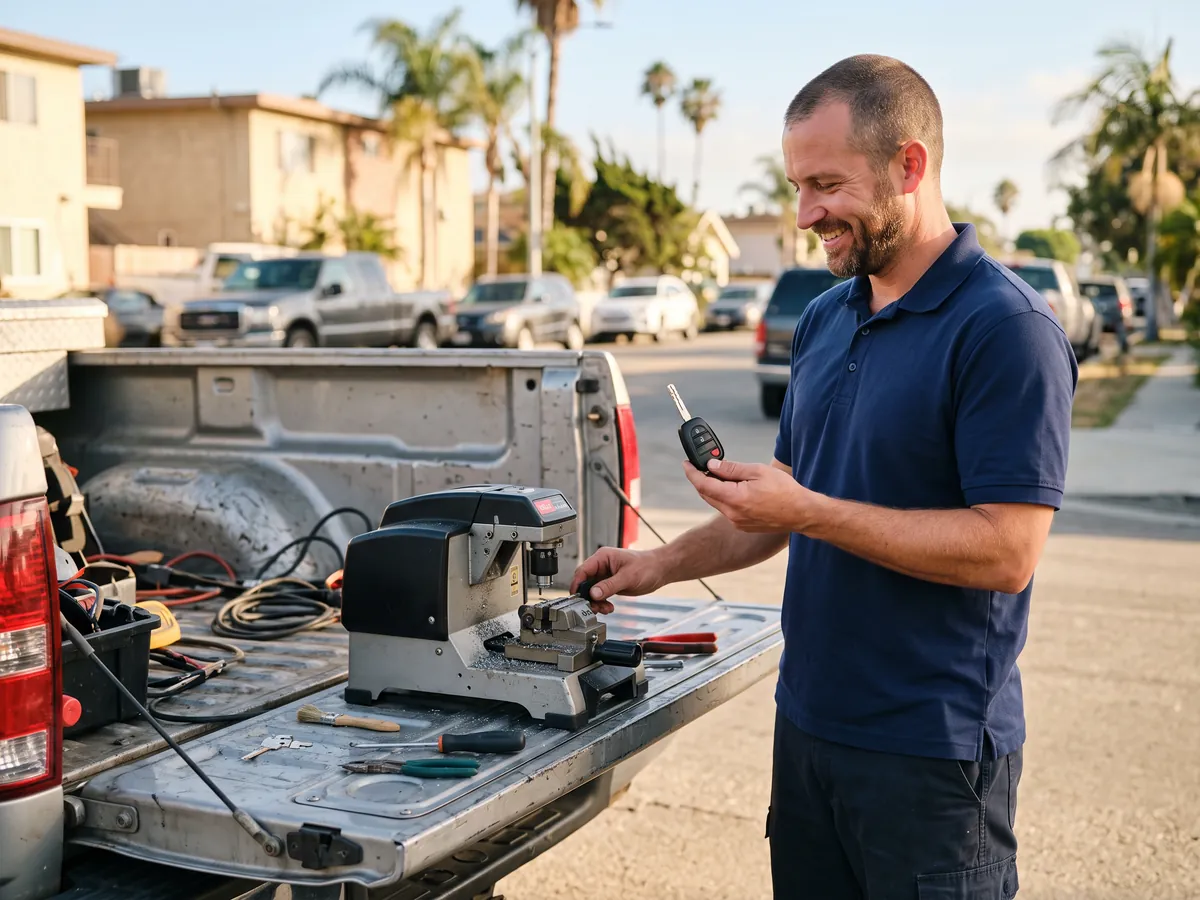
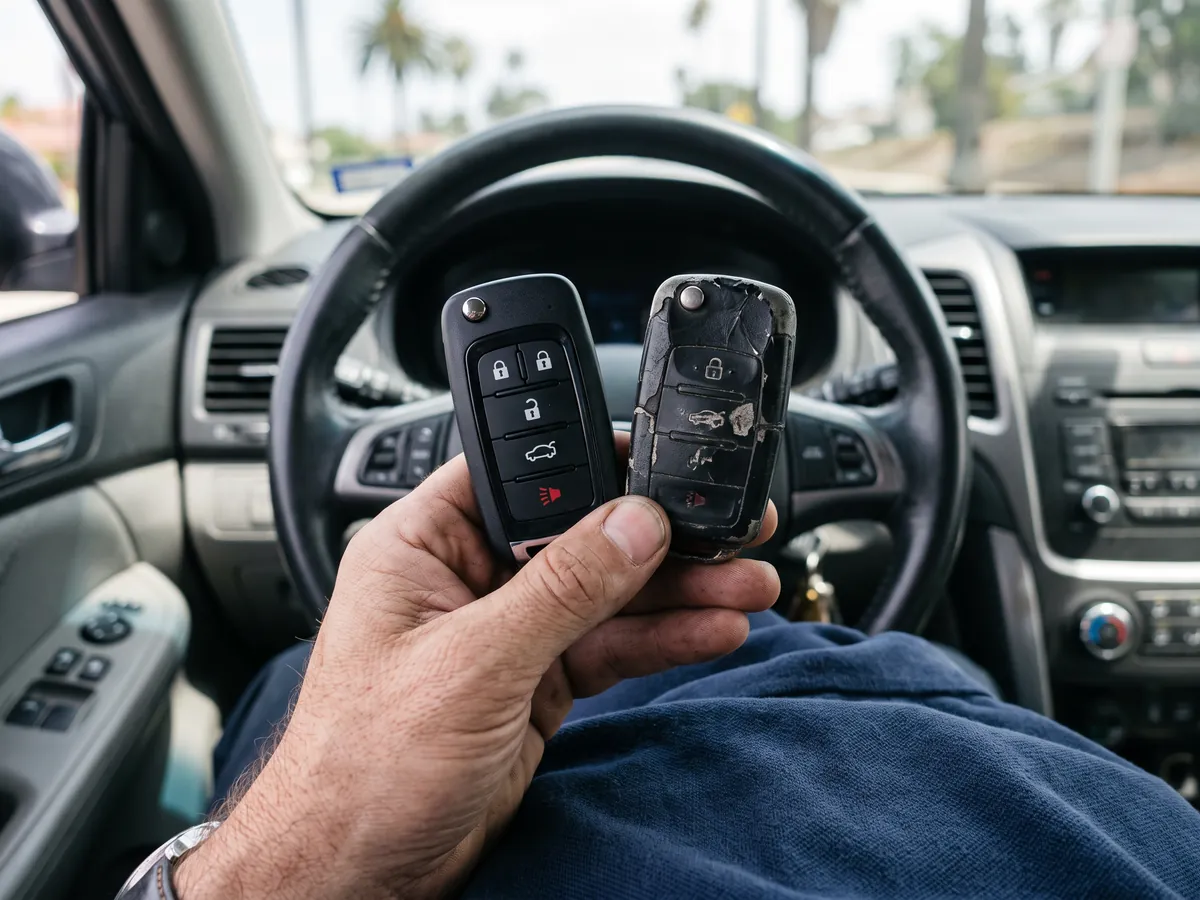
When your car starts with a button, losing the key is more than an inconvenience. There's no ignition cylinder to fall back on, so without a fob the car recognizes, the engine won't run, the shifter may stay locked in Park, and towing gets awkward. Push to start key replacement solves that at the curb. Julian's Locksmith comes to your car in Devore, confirms you own it, programs a new smart key and cuts its emergency blade. Then we hand you the fob and watch you press the button. Call (951) 903-3193 with your year, make and model for a quote.
What to know first in Devore
Pressing a start button kicks off a quick check before anything turns over. The car sends a signal through antennas inside the cabin, often near the center console and under the rear seat or cargo area, to find a key that belongs to it. The key answers, the immobilizer verifies the encrypted reply, and only then does the car release its electronic steering lock, on models that have one, and let the starter crank or the hybrid system power up. Your foot on the brake, or on the clutch in a manual, is part of the same check; without it, the button simply steps through accessory and ignition-on modes. Push to start key replacement has to satisfy that whole sequence. The new fob must be registered as a valid key in the immobilizer, and the interior antennas must recognize it, not just the door locks. That's why we finish every job by starting the car several ways: fob in a pocket, fob in a cupholder, fob in a bag on the back seat, and fob held in the backup start position.
How we can help in Devore
- Key-not-detected diagnosis before we replace anything. A no-start with a key warning isn't always a dead fob. We test the fob's battery and signal at the start button, check the brake switch and shifter position, and measure the car's 12-volt battery. If a spare starts the car normally, the original key is the culprit. If neither does, we tell you so, and you haven't paid for a fob you didn't need.
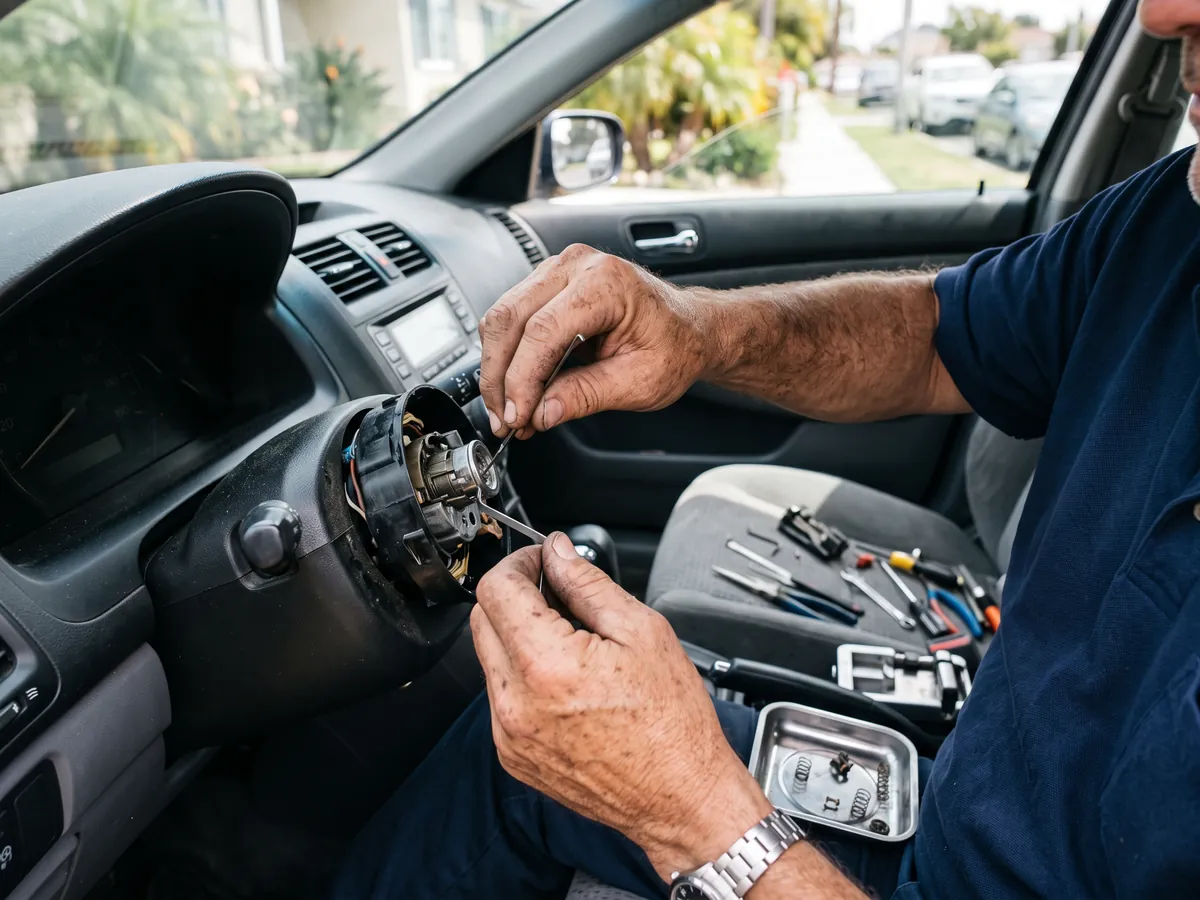
- Replacing the only push-button key you have. One lost fob and no spare is the call we hear most. We ask for the VIN, registration and photo ID, decode the door lock to cut a blade and register a fob through the diagnostic port. On many mainstream makes the car runs again during the same visit, with no tow in between.
- Aftermarket push-button start conversions. Some owners add a push-button kit to a car that came with a turn key. The factory key then hides behind the dash or in a bypass module, and its transponder still matters. We can usually program or replace that hidden key, but the kit's own remotes are a job for the shop that installed it.
- Slot-type keys and key cards. Not every start button works with a fob in a pocket. Some cars ask you to slide a key card or fob into a slot before the button responds, a design seen on older Mercedes-Benz and a few other makes. We identify which system you have, because the key, the programming and the parts differ.
- Spare fobs for family members and house sitters. Caregivers, nannies and long-term guests may need the car for errands while you're away. A dedicated spare that you can ask them to return, and that we can erase afterward, is cleaner than a fob that wanders between households and eventually goes missing.
How Devore shapes the job
Trailheads and canyon turnouts around Devore are classic places to drop a fob, and cell coverage can be thin. Call from wherever you get a signal and describe the turnout, the nearest mile marker or the trail sign. In cold, high-elevation lots, warm the fob in your hand before judging it dead. During red-flag fire weather, don't wait in dry brush; walk to pavement.
Heat is quietly hard on push-button systems. Triple-digit afternoons in Devore cook coin cells and wear down 12-volt batteries, so a car that struggles to wake after a hot week may need a battery before it needs a key. A fob left on a sunlit dash can fail early. Park in shade when you can and keep the fob in your pocket or a shaded console.
Push-button failures love early mornings at a park-and-ride, when the dash says no key and the carpool is idling at the curb. Learn the backup start spot, keep a spare coin cell in the glovebox and carry the fob in a pocket instead of a cupholder. Our day starts at 6:30 a.m. every day, so an early call from the lot still has a chance to save the commute along I-15.
Common situations
- Say the only fob slips out of a pocket and drops through a storm drain grate on a rainy afternoon in Devore. The car is locked, there's no spare, and the blade went with the fob. We'd open the car without damage, decode the door lock, program a new key and erase the lost one, after checking ID and registration.
- A parent drops a teenager at a practice field near Glen Helen Raceway, and the fob rides off in the teen's gym bag. The parent drives on for a few miles, shuts the engine off at a gas station and then can't restart it. A phone call and a hand-back usually fixes this. If the bag has vanished, we'd program a replacement and erase the missing fob.
- After a day in the mountains, a driver walks back to a snowy parking lot where the fob's coin cell has sagged in the cold. Nothing happens at the door handle or the start button. We'd suggest warming the fob in a hand, using the blade to enter and holding the fob to the start button. The car starts, and a new battery follows.
- A hybrid sits in a long-term lot for three weeks while the owner travels, and returns to a dead dash. The fob is fine; the 12-volt battery quietly drained. We'd jump the car, check that the battery holds a charge and test the key in the pocket and at the button. If the battery fails the test, that's the purchase, not a new fob.
Step by step with Julian's Locksmith
- Tell us what the dash says. If the car is in a structure, a gated lot or a tight carport, say so, along with the level and the space number. Access decides whether we can set up beside the driver's door, and it shapes the tools and power equipment that ride in the van.
- Try the backup start together. Backup positions differ by brand, so we ask what you drive and point you to the right spot. If the car doesn't respond, we note whether the dash wakes, whether the key warning stays and whether the doors react to the fob, since each clue narrows the cause.
- Verify ownership at the car. Fresh purchase, family hand-me-down or a car still on a loan? A bill of sale, a lease agreement or a probate document can stand in while the registration catches up. Tell us what you hold when you call and we'll say whether it will do.
- Cut the blade and prepare the fob. Ordered a fob online before calling? Put it in our hands early. We read its frequency and chip type, look at its condition and say whether it will serve, or whether it belongs to another vehicle or only resembles the real thing.
- Power up, connect and register the key. If a fob is lost, we erase it in the same session. On cars that relearn the entire set of keys, we ask you for every key you want to keep, since the programmer writes them back together. Bring everything, even keys you rarely use.
- Start it, drive it, then test the backups. We start the car with the new fob in a pocket, in a cupholder and on the back seat, then with the fob held in the backup position. We also check lock, unlock and trunk functions and ask you to press the button yourself.
What affects the cost
- Why the car won't start. A key warning, a click and a silent dash lead to three different jobs. We separate them on the phone when we can, and at the car when we can't, and we quote the work that your car needs, not the work you guessed at before calling.
- Battery and power needs during programming. Programming needs stable power, and a weak 12-volt battery can derail a session. If your battery needs a boost or a replacement before we begin, that is a separate, honest line item, and it makes the key work reliable. We show you the voltage reading so the line makes sense.
- Whether the car can be reached or must be moved. Programming doesn't need the car to move, which is why a mobile visit often saves a tow. When a model is dealer-only, a tow is the honest answer, and we explain how to release the shifter lock so the tow driver can load it correctly.
Every job gets a clear quote before any work starts. Call (951) 903-3193 with the details and we'll tell you what to expect for your situation in Devore.
Advice before you book
- After any battery disconnect, jump start or replacement, test every fob. A few cars act up when power returns, and your manual may describe a short re-sync routine. Run through a start with each key before you leave the shop or the driveway, not on the way to work the next morning.
- Don't ignore a steering lock fault or start system warning that appears alongside a key message. Those point at the car's own hardware, and a new fob won't clear them. Photograph the message and mention it when you call, since it helps us decide what to bring to the car.
- Buying used? Ask for every fob, test each one from the driver's seat and in the backup spot, and watch for a flashing security light. A seller who can't produce a second key may have lost it, and a spare added at purchase is easier than an all-keys-lost visit down the road.
- On cold or snowy trips, carry the fob in a warm jacket pocket instead of the car's chilly cupholder. Low temperatures sap coin-cell voltage, and a fob that worked at home can sulk in a mountain parking lot. Warm it in your hand, then try the backup start spot before calling anyone.
Mistakes to avoid
- Handing the fob to a valet or a mechanic on a ring with your house keys, gate remote and garage opener. Give them the car key alone, ideally a spare, and ask whether the car has a valet mode. Your home is only as safe as the key ring you hand over.
- Buying a new fob before ruling out the car. A weak 12-volt battery, a worn brake switch or a shifter that isn't fully in Park can mimic a key failure. If your spare key shows the same symptoms, the fob isn't the problem, and a replacement will not change the outcome.
- Disconnecting the battery to reset the security system. It rarely clears a key fault and can bring new warnings, along with radio or window settings that need re-initializing. Leave the battery connected unless a technician asks you to disconnect it for a specific reason.
Reaching Devore
Devore is about 8 miles from our San Bernardino base, roughly 14 minutes in light traffic via Kendall Drive or Palm Avenue to I-215 North, through the Devore junction onto I-15 North, exit Kenwood Avenue for Devore Heights. When you call, you get an arrival estimate based on where the technician is and the traffic at that moment.
Most trips into Devore use Cajon Boulevard for at least part of the drive, and the technician keeps an eye on live traffic along the way so the arrival estimate you heard on the phone stays honest.
About Devore: Kimbark Elementary, a K-6 technology and environmental science magnet school in the San Bernardino City Unified School District, opened on Kenwood Avenue in 1968.
| Neighborhoods | Kimbark Canyons, Kenwood Avenue corridor, Kimbark Avenue area, Glen Helen, Lytle Creek, Cable Canyon |
|---|---|
| ZIP codes | 92407 |
| Main routes | I-15, I-215, Cajon Boulevard, Kenwood Avenue |
| From our San Bernardino base | about 8 miles via Kendall Drive or Palm Avenue to I-215 North, through the Devore junction onto I-15 North, exit Kenwood Avenue for Devore Heights; Devore Road exit for Glen Helen and lower Cajon Boulevard |
Need a car key in Devore?
Call (951) 903-3193 with the year, make and model, and tell us whether you still have a working key. We'll tell you whether the key can be made at the car or has to come from the dealer, and quote the job before any work starts.
Frequently asked questions
Will my car keep running if the fob leaves it?
Most push-button cars will, usually with a chime and a message about the key, because cutting the engine on a moving car would be dangerous. The catch is that once you turn it off, it won't restart without the fob. Don't shut the engine off until you know where the key is. Behavior varies by model, so check your manual, and arrange to get the fob back before the next stop.
Will my old fob still start the car after you program a new one?
It depends on what we're doing. On most cars, adding a key leaves existing keys working. If an old fob is lost or stolen, we erase it so it can't start the car. Some cars require every key to be re-registered together when one is added, so bring all of them. Tell us which fobs you want to keep and which are missing, and we set up the car's list the way you want it.
Can you make a push-to-start key if I've lost every one?
For most mainstream makes, yes. We verify ownership, open the car if it's locked, decode the door lock to cut a blade, register a new fob to the immobilizer and erase the lost one. Some newer European models and a few others need dealer equipment or online authorization, and we say so once you describe your car. Have your ID, registration and the VIN ready when you call (951) 903-3193.
I bought a used push-to-start car with one fob. What should I do?
Add a spare soon, while the first fob still works. We check how many keys the car has registered, where it reports that, program your spare and remove any fob you don't recognize. Ask the seller whether other keys exist, test each from the driver's seat and in the backup start spot, and keep the bill of sale for ownership checks. A spare is simpler now than after the lone fob is lost.
My car has an aftermarket push-start kit. Can you replace its key?
Often, with limits. Retrofit kits usually keep the car's original transponder key hidden under the dash or imitated by a bypass module, and we can often program or replace that factory-style key. The kit's remotes, relays and wiring belong to the shop that installed it. Tell us the vehicle and, if you know it, the kit brand, and we'll say which part of the problem is ours.
Is it safe to leave my fob in the car or by the front door overnight?
Neither is ideal. A fob in the car is a gift to anyone who gets in, since the car will start with it. A fob near the front door may sit within range of a relay device that stretches its signal to the car in the driveway. Keep fobs inside the house, away from exterior walls, in a drawer or a signal-blocking pouch. Test the pouch by putting the fob inside and walking to the car.
How far is Devore from your base?
Devore is about 8 miles from our San Bernardino base, roughly 14 minutes in light traffic. Arrival time depends on traffic and on the job the technician is finishing, so we give you an estimate on the phone before you commit.
Related services in Devore
Push to Start Key Replacement in nearby cities
- Push to Start Key Replacement in Glen HelenSan Bernardino County
- Push to Start Key Replacement in MuscoySan Bernardino County
- Push to Start Key Replacement in North FontanaSan Bernardino County
- Push to Start Key Replacement in RialtoSan Bernardino County
- Push to Start Key Replacement in FontanaSan Bernardino County
- Push to Start Key Replacement in EtiwandaSan Bernardino County
- Push to Start Key Replacement in San BernardinoSan Bernardino County
- Push to Start Key Replacement in BloomingtonSan Bernardino County