
Claremont, Los Angeles County
Claremont House Lockouts: Deadbolts, Keypads and Garage Doors
Short answer: For a house lockout in Claremont, Julian's Locksmith drives to your door, checks a photo ID or other proof that you live there, and opens the house without breaking anything in most cases. We usually pick the deadbolt or bypass a knob latch. Drilling is a last resort, and we quote any replacement hardware before touching it. Call (951) 903-3193 for an honest ETA.
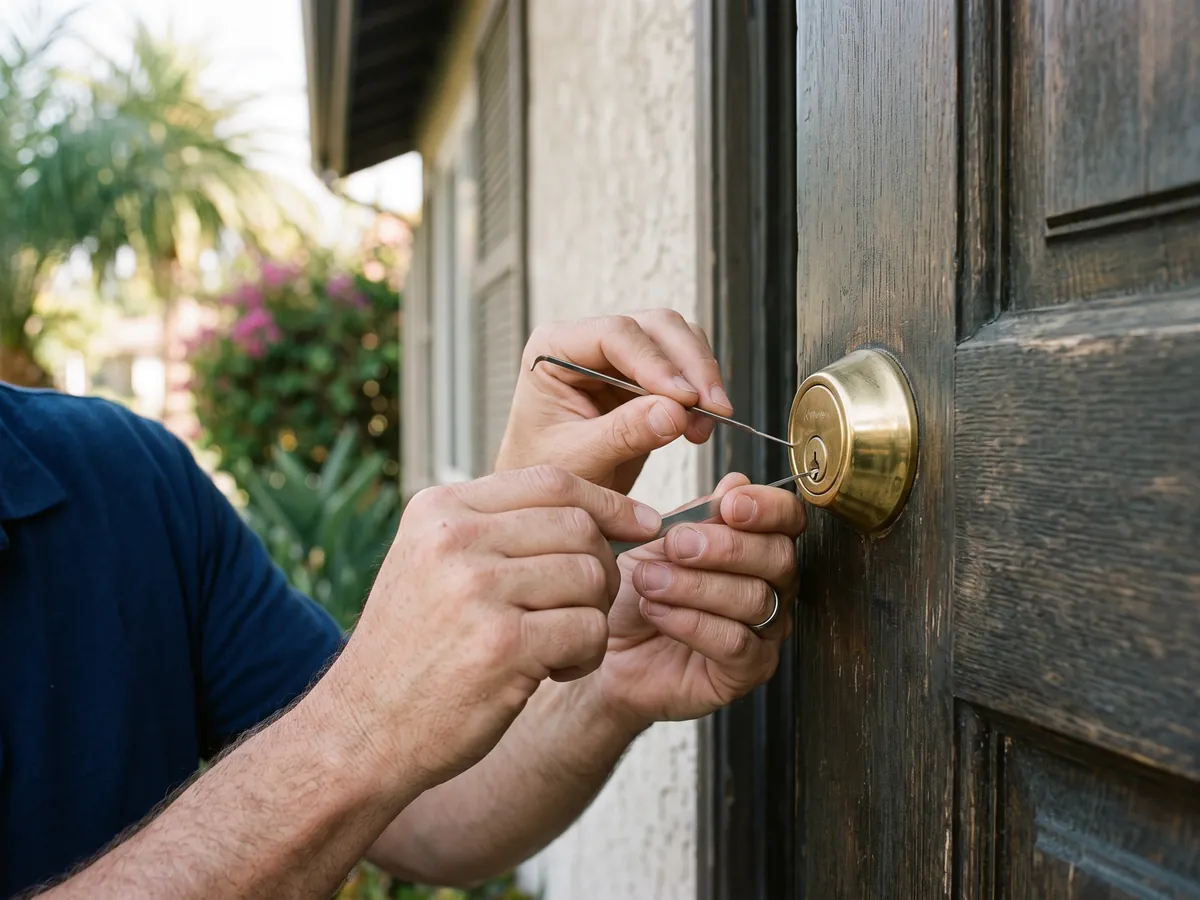
For many homeowners in Claremont, a house lockout really begins in the garage. The opener runs on house power, so an outage leaves the big door shut. The keypad outside has its own battery that fades without much warning. The service door on the side of the garage often carries a cheap knob lock nobody has a key for, and the door from the garage into the house closes and latches by itself. We work through those layers in order, choosing whichever door opens cleanly with the least risk to your hardware. What we won't do is fish a coat hanger over the top of the garage door to yank the release; there are cleaner ways in.
Single-family lockouts in Claremont tend to repeat a few patterns. Keys left inside is the classic. Close behind is the push-button knob lock that engages when a Santa Ana gust pulls the door shut behind you. Then there is the keypad deadbolt whose batteries gave out during a hot week, and the side door that was bolted from inside so the family would all use the front. The lock type decides the method. A knob lock with a spring latch and no deadbolt can often be slipped open, which is also a good reason to add a deadbolt afterward. A deadbolt that was properly thrown takes more work, and we may decode the cylinder or remove it. The garage-to-house door deserves a try first, since people rarely bolt it. Hillside homes in Claraboya and Padua Hills tend to have heavy doors, long driveways and side gates, so tell us which door you can reach and whether a gate code is needed. If children or pets are inside, say so when you call and use 911 if anyone is in distress. We check ID and proof of residence before opening a house, so a lease, a utility bill or a vehicle registration on your phone speeds things up.
How this works in Claremont
The locks on a typical single-family house tell a story, and reading it is half of a quick house lockout. Tract homes in Claremont built since the 1990s usually came with builder-grade Kwikset or Schlage knobsets and deadbolts, often keyed alike at the front and garage doors. Older ranch houses tend to be a mix: an original knob on the side door, a deadbolt someone added in the 1980s, maybe a newer smart lock on the front that shares nothing with the rest. Kwikset SmartKey cylinders, recognizable by the small slot beside the keyway, resist ordinary picking, so we plan a different approach for them. Mortise locks on older Spanish and Craftsman-era homes have their own mechanics and their own weak points. Higher-end homes may carry Baldwin, Emtek or high-security cylinders that are slow to open by design. Every door is different, so we look before we promise anything, and we explain which door we'd open and why. That inspection also tells us whether you'd benefit from keying the doors alike afterward, so one spare key covers the whole house next time.
What we can do on-site
- Deadbolt lockouts opened by picking. A deadbolt is the toughest lock on most houses in Claremont, and it's the one most often holding the door during a lockout. Picking is our default approach. Security pins in Grade 1 models add time, so we'll tell you honestly if another door, such as a knob-only side entry, would get you inside faster and for less.
- Knob and lever latch bypass. Plenty of houses in Claremont get locked by the push-button on a knob, not by the deadbolt. In that case we may slip the latch, pick the knob's cylinder, or use a tool that reaches the inside lever. The method depends on the door gap, the latch type and whether a guard plate covers the edge of the door.
- Back, side, patio and French doors. Sliding patio doors are usually a poor entry point. With a dowel or security bar in the track, they can't be opened from outside without damage, and lifting a panel risks the glass and the rollers. French doors with flush bolts behave much the same. We'll normally open a swinging door instead and leave the slider alone.
- High-security locks and drilling as a last resort. Kwikset SmartKey locks use a sidebar instead of a traditional pin stack, so ordinary picking rarely works on them. That doesn't automatically mean drilling; there are other non-destructive approaches, and many houses in Claremont have a second door with a conventional lock. We look for the easiest path before anyone reaches for a drill.
- Keys cut on site after entry. A worn house key causes its own lockouts by slipping past the correct pin heights. Copying a worn key copies the wear, so we cut from the lock's original code or decode the cylinder instead. You'll get a key that turns like the day the lock was new, tested in every door it's supposed to open.
What's different about Claremont
Foothill homes around Claremont deal with Santa Ana winds, wildfire evacuations and Public Safety Power Shutoffs. An outage can leave the garage door down and a keypad lock as the only way inside. Wind-driven grit also stiffens exterior cylinders. Know how to release your garage opener from inside, keep a mechanical key for any smart lock, and call us if a return from evacuation finds you locked out.
Older homeowners in Claremont who get locked out sometimes need us to work around mobility limits, medication schedules or hearing difficulties. We take extra care with verification, often checking with a family member by phone, and we explain each step as we go. A combination key safe, a keypad lock with large backlit buttons, or a trusted neighbor with a spare can prevent the next lockout.
Student rental houses in Claremont usually have several roommates and a scattering of keys, so someone is always locked out. We'll need a lease showing the tenant's name or the landlord's authorization. If former roommates moved out with keys, talk to your landlord about rekeying; California landlords must provide working deadbolts on the main entry doors of rental units, and fresh keys are part of good practice.
Example situations
Imagine a windy October evening in Claraboya. You step onto the porch to bring in a patio cushion, a gust pulls the heavy front door shut and the push-button lock on the handle set clicks. Your phone and keys are inside and the dog is barking behind the door. We would work the latch or the handle set open, confirm your identity and residence, and then suggest swapping that button lock for a keyed deadbolt so the next gust cannot lock you out.
- Imagine a jogger whose house keys, garage remote and a gym tag printed with her address slip out of a jacket pocket on a trail near The Claremont Colleges. She borrows a phone and calls from the trailhead. We'd meet her at the house, open the deadbolt, confirm residence with her ID and mail inside, and offer to rekey every exterior lock and reset the opener that same afternoon.
- Picture an older bungalow with its original mortise lock on the front door and a newer knob on the kitchen entry. The owner locked both and left the keys at the office. The old mortise cylinder can be picked, but the kitchen knob will likely be quicker. We'd open the side door, then check whether the swollen front door is straining the mortise bolt every time it's locked.
- An early-morning example: a commuter off Mills Avenue starts the car, steps back inside for a lunch bag, then walks out again and lets the front door swing shut. The knob was locked; the car key is in hand, but the house keys and a work badge sit on the kitchen counter. We'd open the house with a latch tool so the day still starts close to schedule.
How the visit works
- Call and safety check. Tell us how you got locked out, because it changes the plan. Keys locked inside, keys lost, a dead keypad and a broken key are four different jobs. A minute of detail on the phone means the right tools, batteries and parts are already in the van when we pull up.
- Quote and honest ETA. We quote by situation, not guesswork: knob latch, deadbolt, keypad, broken key or likely drilling. Then we tell you when to expect us. If it's late in our day, we'll say plainly whether we can reach you before closing.
- Arrival and verification. When we arrive, we check a photo ID that shows the property address. If your wallet is inside, we open the door and then confirm with a bill, lease, escrow papers or your ID before we leave. Our work order records who requested the entry.
- Survey every door. Before touching a lock, we walk the house with you: front, side, back, the garage service door and the door from garage to house. We note which locks are engaged and their brands, then choose the door that opens quickest without damage. Often it isn't the front.
- Non-destructive entry. We open the chosen door by the least invasive method: emergency keypad power, a latch bypass, or picking the cylinder. Our tools are padded or slim enough to protect paint and weatherstripping. Drilling only happens with your approval, after we've explained why and quoted the replacement hardware.
- Test, explain and prevent. Before leaving, we confirm ownership if we couldn't at the start, run each lock several times, and look for the real cause: a misaligned strike, an auto-lock setting, a worn key. You decide whether anything else gets fixed today, and nothing is added without asking.
What affects the cost
- Which lock is holding the door. Count the locks on the door you need opened. One knob, one deadbolt, a keypad lever plus a deadbolt, or a mortise set with a separate cylinder: each additional locked mechanism adds time. We'll often choose a different door with fewer engaged locks to keep your cost down.
- Drilling and replacement hardware. Most house lockouts end without new parts. When drilling is necessary, the cost includes the replacement cylinder or deadbolt, which ranges from basic residential grade to high-security. We quote the hardware options before drilling, and you can choose to match your other locks or upgrade.
- Extras after entry. If your keys were lost or stolen, rekeying adds to the bill but protects you from whoever holds them now. Cutting keys from a code or decoding a cylinder costs more than copying a key, but it's the only option when no working key exists anywhere.
Every job gets a clear quote before any work starts. Call (951) 903-3193 with the details and we'll tell you what to expect for your situation in Claremont.
What not to do
- Waiting too long when a child or pet is inside on a hot day. A closed house can heat up quickly during a Claremont summer, especially with the air conditioning off. If anyone inside might be at risk, call 911 rather than waiting for a locksmith, and sort out the door later.
- Kicking or shouldering the door. Done hard enough to work, it splinters the frame, tears the strike out and can crack the door slab. Done badly, it hurts you and leaves a damaged door that still won't open. A properly installed deadbolt is designed to resist exactly that.
- Prying at the strike with a screwdriver or pry bar. Exterior doors in Claremont homes usually hang in softwood jambs that split easily, and a split jamb means the deadbolt can no longer hold. You end up paying for frame repair, a strike and maybe a door, plus the lockout.
Practical tips before you call
- Teach older children how to turn the deadbolt thumbturn and the knob button from inside, and practice once together. During a lockout, a calm eight-year-old can often open the door before help arrives. Never pressure a frightened or very young child, and call 911 if their safety is in question.
- Keep a photo of your ID and a recent utility bill in a secure album on your phone. If your wallet is locked inside, a digital copy helps a locksmith verify residence sooner, although we may still ask to see the originals once the door is open.
- Leave a spare house key with a neighbor or relative you trust, not under the mat, in a planter or inside the fake rock by the porch. Burglars check those spots first. If nobody nearby can hold a key, a combination key safe mounted out of sight is a reasonable backup.
- Find out today how your keypad lock gets emergency power. Look under the keypad for 9-volt terminals or a USB port, or locate the override key and label it. Knowing this turns a dead-battery lockout into a short inconvenience instead of a service call.
Service in Claremont
Claremont is about 30 miles from our San Bernardino base, roughly 34 minutes in light traffic via University Parkway to I-215 South. When you call, you get an arrival estimate based on where the technician is and the traffic at that moment.
Rush hour on Mount Baldy Road can stretch a drive considerably. We'd rather give you a realistic arrival window than an optimistic one, and we'll call you if a closure or a crash changes the plan.
About Claremont: City parkland totals about 2,534 acres, most of it wilderness in the San Gabriel foothills, and the paved Thompson Creek Trail runs 2.8 miles through north Claremont.
| Neighborhoods | Village expansion and Claremont Packing House, Claraboya, South Claremont, El Barrio Park area, Padua Hills, North Claremont |
|---|---|
| ZIP codes | 91711 |
| Main routes | I-10, SR-210, Foothill Boulevard, Base Line Road |
| From our San Bernardino base | about 30 miles via University Parkway to I-215 South, then SR-210 West (Foothill Freeway) through Rialto, Fontana, Rancho Cucamonga and Upland to the Base Line Road exit for north Claremont or the Towne Avenue exit for Foothill Boulevard and the Village; I-10 West to Towne Avenue or Indian Hill Boulevard for the south side |
Friday is a full day for us. We begin at 6:30 a.m. and close at 11:30 p.m., the same as every other day, Saturday included. If a lock fails after 11:30 p.m., call us when we reopen at 6:30 a.m., and in the meantime fall back on a neighbor's spare key, a night with family, or a door you can secure from inside.
California's Locksmith Act requires a signed work order when a locksmith opens a residence or commercial property, recording the requester's name, address, phone number, date of birth and ID number. Business and Professions Code §6980.55 has us keep those records for two years, available to BSIS and peace officers on request.
Locked out in Claremont?
Call (951) 903-3193 with the address and what's locked. You'll get an arrival estimate and a quote before anyone heads out, and when we arrive we'll ask for ID that ties you to the property. If a child or pet is shut inside a hot car or building, call 911 first.
Frequently asked questions
Are you open right now?
Our hours are every day from 6:30 a.m. to 11:30 p.m. We're closed between 11:30 p.m. and 6:30 a.m. Outside those hours, try a spare-key holder, your landlord or a family member, and call 911 if anyone's safety is at risk. You can reach us as soon as we open.
What if my keys were stolen along with my ID?
Then the thief may have both your house keys and your address. After we open the house, we strongly suggest rekeying the exterior locks the same day, changing your garage keypad code and deleting or changing smart lock codes. Rekeying in Claremont keeps your existing hardware but makes the stolen keys useless.
What ID do I need for a house lockout?
A photo ID showing the property address is easiest. If your ID has an old address or is sitting inside the house, we can open the door and verify with mail, a utility bill, a lease, a property tax bill or closing paperwork before we leave. If nothing connects you to the house, we won't complete the job.
My keypad lock is dead. Can you open it without breaking it?
Usually. Many keypad deadbolts can be powered briefly from outside, through 9-volt terminals on some Yale and Lockly models or a USB port on others, so you can enter your code. If the lock has a key override, we can pick that cylinder. Afterward we replace the batteries and look at why they died early.
Can you open my garage door when the power is out?
We're locksmiths, not garage door technicians, so we don't service openers. What we can do is open the side service door or the front door, so you can pull the opener's emergency release from inside. If your garage door has an exterior emergency release lock, we can open that cylinder too, then show you how it works.
My child is locked inside. Should I call you or 911?
Call 911 if a young child is alone inside, can't open the door, or could be in any kind of danger. Fire departments serving Claremont can force entry and often arrive faster than any locksmith. If the child is safe and calm, say watching TV behind a door that simply locked, call us at (951) 903-3193 and we'll treat the call as a priority.
How far is Claremont from your base?
Claremont is about 30 miles from our San Bernardino base, roughly 34 minutes in light traffic. Arrival time depends on traffic and on the job the technician is finishing, so we give you an estimate on the phone before you commit.
Related services in Claremont
- Home Lockout in Claremont
- Locked Out of House in Claremont
- Mobile Locksmith for House Lockout in Claremont
- Emergency Locksmith in Claremont
- Rekey Locks after Losing Keys in Claremont
- Smart Lock Troubleshooting in Claremont
- Broken Key Stuck in Door in Claremont
- Spare House Key in Claremont
- Deadbolt Replacement in Claremont
- House Rekey in Claremont
House Lockout in nearby cities
- House Lockout in MontclairSan Bernardino County
- House Lockout in La VerneLos Angeles County
- House Lockout in UplandSan Bernardino County
- House Lockout in PomonaLos Angeles County
- House Lockout in San DimasLos Angeles County
- House Lockout in OntarioSan Bernardino County
- House Lockout in ChinoSan Bernardino County
- House Lockout in Charter OakLos Angeles County