
Arcadia, Los Angeles County
Locksmith for Retail Store Openings, Remodels and Closings in Arcadia
Short answer: Retail's busiest day is our closed day, so timing matters. Julian's Locksmith works every day from 6:30 a.m. to 11:30 p.m., Saturdays included. Book rekeys, repairs and staff key changes for your Arcadia store ahead of busy days, and call (951) 903-3193 before a big weekend sale if a door is sticking.
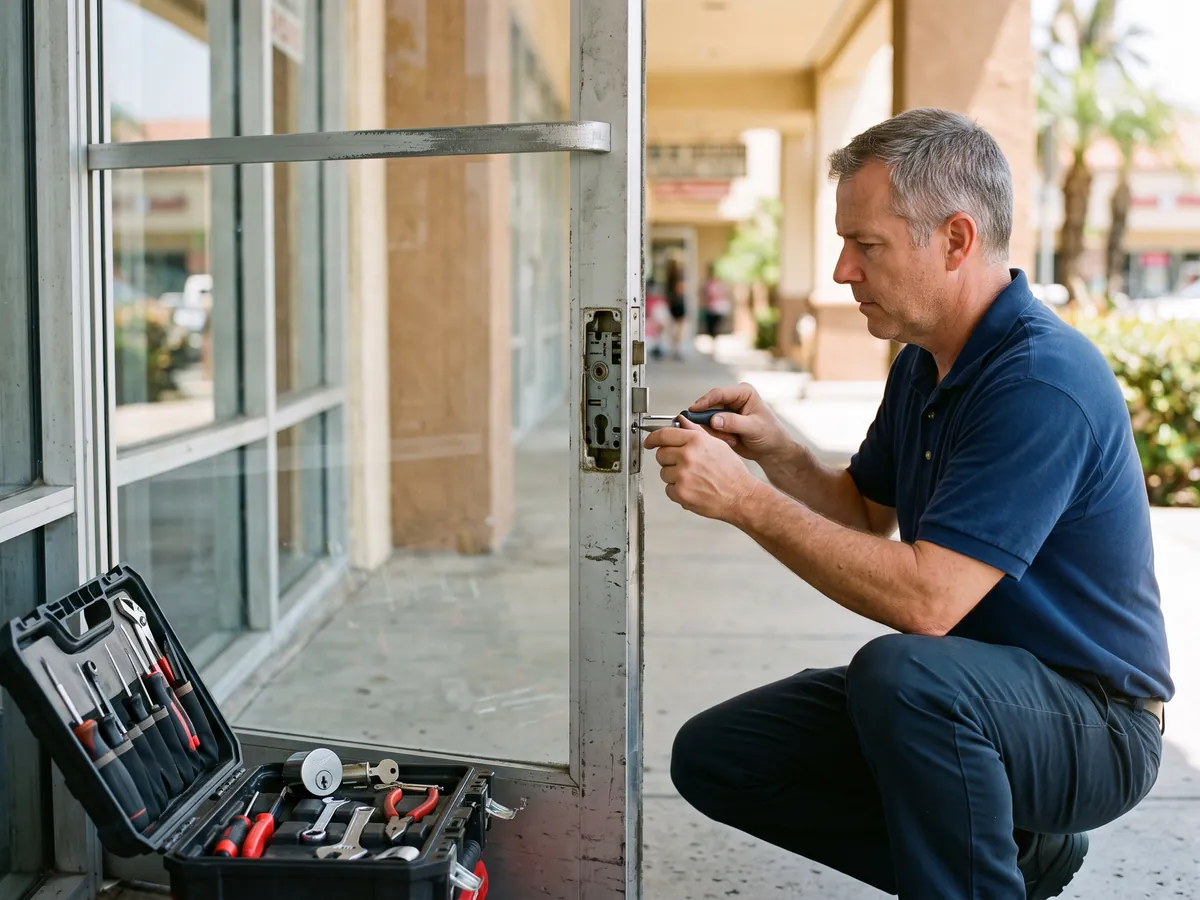
Searching for a locksmith for retail store help usually means one of three things: a door is failing now, you're opening or leaving a space, or you want to tidy up keys before a busy season. This page covers all three. Julian's Locksmith serves Arcadia every day from 6:30 a.m. to 11:30 p.m. We're open Saturday too, but it's a big retail day, so we'll help you plan work around it. Call (951) 903-3193, tell us what you sell, and we'll work out what the store actually needs.
What to know first in Arcadia
Retail runs on a calendar that doesn't line up neatly with a locksmith's. Julian's Locksmith works every day from 6:30 a.m. to 11:30 p.m. We're closed overnight, and Saturday is a big sales day for most stores. That is workable if you plan for it. Schedule rekeys, repairs and staff changes ahead of busy days, test your front and back doors the day before a big sale, and keep a simple plan for an overnight failure, such as who can secure the door and who calls us when we reopen. A locksmith for retail store owners should be upfront about hours, and we are. Late-evening work after you close, within our schedule, often suits Arcadia stores better than daytime. If something does fail overnight, secure the opening with your staff or the landlord's resources, photograph the damage for any report and call us when we reopen, so the permanent repair starts at the first opportunity.
Work included on a typical visit
- Convenience stores and corner markets. Stockroom doors take abuse from carts, boxes and tired hands. We fit strong strikes, check frames for movement and replace weak latches before they fail. Inside, a locked office door and a drop safe keep end-of-shift cash separate from the sales floor.
- Jewelry and other high-value merchandise. High-value stores justify high-security cylinders with restricted keys, so copies can't be made at a kiosk. We install them on the entrance, back door and any vault-style room. Safes are a separate conversation: some can be serviced on site, while others must be drilled or opened with specialized equipment.
- Thrift, consignment and resale shops. Resale shops accept goods all day and rely on many helpers. We can fit a drop box that locks securely, key the stockroom separately from the sales floor and add a keypad to the rear door so each volunteer's access can change without cutting a single key.
- Furniture, hardware and big-item showrooms. Large stores have oversized doors: loading entrances, roll-up doors and fenced yards. We service the cylinders and latches on roll-up doors, add padlock protection for the yard gate and make sure the main entry works with a closer that can handle wind and weight.
- Build-outs, remodels and expansions. If you expand into the neighboring unit, the connecting door matters. We fit hardware that matches your existing keys, so one key family covers both spaces, and we keep the shared wall secure until the opening is built. You won't end up with two sets of keys to track.
What's different about Arcadia
Stores at the edge of foothill and canyon communities near USC Arcadia Hospital deal with wind, dust, ash and sometimes road closures that keep staff from reaching the shop. Exterior doors and gates must latch firmly in strong gusts, and key holders should include more than one person, since the owner may not be able to reach the store in an emergency. We help you set up a backup key plan.
In older neighborhoods near Los Angeles County Arboretum and Botanic Garden, small shops often operate from converted houses, bungalow storefronts or 1940s commercial strips with original hardware, wooden doors and painted-in strike plates. Those buildings may have residential locks on business doors. A locksmith for retail store use in an older building keeps what is solid, rekeys what can be rekeyed and replaces what cannot be trusted, instead of bolting a modern lock onto a worn frame.
Shopping centers and strip malls along Huntington Drive put many stores behind one rear service lane, so the back door of your shop shares a space with everyone else's trash, deliveries and cut-throughs. A locksmith for retail store tenants in those centers should start with the rear door, frame and latch, and then handle the front. Know which doors the landlord controls, such as common corridors and roof access, and which are yours, because leases in Arcadia divide that line differently.
Example situations
- For example, a family-run corner market near Arcadia High School finds that the walk-in cooler latch has started sticking and the hasp is rusting. The owner worries about getting locked in as much as stock walking out. We'd replace the latch, test the inside release until it opens easily every time, fit a corrosion-resistant hasp and rekey the back door the delivery drivers use.
- At 10:30 on a Friday night, the front deadlatch on a gift shop sticks, and a weekend sale is advertised. We stop at 11:30 p.m. and reopen at 6:30 a.m. The owner calls right away so we can see what's possible before the cutoff. If a repair can't be finished in time, we'd help choose a temporary way to keep the store secure.
- Say a phone accessories shop in a mall near Arcadia Metro A Line station loses a key to its display cases. The cases all use different cam locks, and the manager has been borrowing keys from other cases. We'd replace the cam locks with keyed-alike cylinders, give the manager one key family and the owner a master, and show how to label spares so none ends up in a pocket.
- A store owner closing a location near Arcadia County Park learns that the lease requires returning the unit with all original keys, and one is missing. We'd check what the lease and landlord need, rekey the doors to the landlord's standard if permitted, document every key returned and repair the screw holes left by removed hardware, so the landlord's walk-through goes smoothly.
How the visit works
- Tell us what you sell and when you trade. Start with the deadline. A store opening in two weeks needs a different plan from one that wants tidier keys by spring. Tell us the date, the space and the problem, and we'll fit a visit into our schedule, which runs every day from 6:30 a.m. to 11:30 p.m.
- Show us the lease and confirm who decides. Retail leases usually say who may change locks and whether the landlord keeps a key. We read the relevant sections with you, which prevents surprises later. If the landlord must approve, we wait for their sign-off and note it in our paperwork.
- Walk the store from front to back. A good walk includes the places customers never see: the stockroom shelf, the receiving door, the back corridor, the roof hatch. We ask who goes through each, because the answer tells us how to set up keys by role.
- Agree a plan, a quote and a schedule. Because stores can't close for a day, we plan around trading. Early starts, after-close visits within our 6:30 a.m. to 11:30 p.m. hours and phased work can keep the shop open. We discuss the options and let you choose.
- Do the work and test it like an opening day. After rekeying or installing hardware, we run through your actual routine: open the front, enter the stockroom, lock the office, close up. We test each key on its intended door and make sure doors latch, close and exit freely.
- Set up keys by role and leave a record. You get a one-page key record: how many keys of each type, who holds them and which doors they open. Keep it with the lease paperwork. If you later need more keys or a rekey, the record saves time.
Pricing factors
- Doors, fixtures and cabinets. Many stores have more locks than their owners realize. Fitting rooms, drop boxes, cabinets and padlocked cages all count. A walk-through often finds a dozen small locks that can be keyed alike, which cuts the number of keys even if it adds a little labor.
- Landlord and mall requirements. Leases may require restoration at the end. If you install hardware that damages a door or frame, the landlord may bill for repairs. Choosing hardware that can be reversed cleanly can lower the cost of handing the space back, and we'll point out which choices are reversible.
- Hardware grade, finish and appearance. Commercial-grade locks from makers such as Schlage, Sargent and Corbin Russwin last longer under daily use than light-duty sets. Storefront doors may need specific cylinders and cams. Price differences are real, and we explain what you get for each step up.
Every job gets a clear quote before any work starts. Call (951) 903-3193 with the details and we'll tell you what to expect for your situation in Arcadia.
Common errors that cost time and money
- Ignoring a sticking front lock until the weekend sale. A lock that sticks on Wednesday often fails when the store is busiest and nobody has time to deal with it. Fix it earlier in the week, so your biggest day starts with a door that works.
- Assuming the landlord handles the interior doors. In most retail leases, the tenant is responsible for everything inside the space. Find out what your lease says before a door fails, not after, so you know whom to call and who pays.
- Letting contractors or vendors keep keys after a job ends. Remodel crews, sign installers and cleaners often hold on to a copy by habit. Collect keys at the end, or use a temporary core so their keys stop working when the job is done.
Practical tips before you call
- Do lock checks and repairs before the weekend rush, not during it. We close at 11:30 p.m. and reopen at 6:30 a.m., so a door that sticks late at night must be secured by your own staff until we reopen.
- Keep a spare set of keys off site with someone you trust, not in the building and not hidden outside. A spare under a mat or planter is the first place anyone looks. Tag it with a code, and tell the holder exactly who may ask for it.
- Always duplicate from an original key, not from a copy. Copies of copies drift out of tolerance and eventually stick in the lock. If you've been cutting keys at a kiosk, bring your original to Arcadia for a check before another copy goes out.
- Read the alterations and locks section of your lease before ordering anything. Some landlords require approval, a copy of every key or a particular keyway. A short email asking permission, kept on file, prevents arguments at move-out and shows you acted in good faith.
Service in Arcadia
Arcadia is about 46 miles from our San Bernardino base, roughly 50 minutes in light traffic via Palm Avenue to I-215 North, I-15 South to the SR-210/I-210 Foothill Freeway. When you call, you get an arrival estimate based on where the technician is and the traffic at that moment.
Commercial jobs on busy stretches like Michillinda Avenue sometimes need a parking plan, especially for storefront doors or roll-up gates. Let us know about loading zones, red curbs or parking structures before we arrive.
About Arcadia: Methodist Hospital of Southern California joined Keck Medicine of USC in 2022 and became USC Arcadia Hospital, on Huntington Drive opposite Santa Anita Park.
| Neighborhoods | Lower Rancho, Arcadia Highlands, Camino Grove, Baldwin Stocker, Longley Way, Upper Rancho |
|---|---|
| ZIP codes | 91006, 91007 |
| Main routes | I-210, Foothill Boulevard, Huntington Drive, Colorado Boulevard and Colorado Place |
| From our San Bernardino base | about 46 miles via Palm Avenue to I-215 North, I-15 South to the SR-210/I-210 Foothill Freeway, then west through Rancho Cucamonga, Glendora, Azusa and Monrovia to the Santa Anita Avenue, Baldwin Avenue or Michillinda Avenue exits |
We start at half past six every morning, seven days a week. Every day the phones stay on until 11:30 at night, so an after-dinner lockout is usually still within reach. Saturday is no exception, with service ending at 11:30 at night. Call early that day if the problem can't wait until Sunday morning.
Expect a few questions and a signature. A licensed California locksmith has to document who asked for a lock to be opened or a key to be made, and we follow that rule on every job in Arcadia. If a locksmith skips the ID check entirely, ask yourself whose door they'd open next.
Locked out in Arcadia?
Call (951) 903-3193 with the address and what's locked. You'll get an arrival estimate and a quote before anyone heads out, and when we arrive we'll ask for ID that ties you to the property. If a child or pet is shut inside a hot car or building, call 911 first.
Frequently asked questions
Does the type of store change which locks I need?
Yes. A boutique, a corner market, a phone shop and a furniture showroom face different risks. Cash, portable valuable stock, deliveries, walk-in coolers, staff turnover and visible glass all push the plan in different directions. We ask what you sell and how you trade before recommending hardware, so you aren't sold a generic package.
Can seasonal workers get temporary access?
Yes. Keypad locks work well because you can change or delete a code when the season ends, with no keys to collect. Where the lease allows, we fit a keypad on the staff door and leave the front on a keyed deadbolt. For stores that prefer keys, we label them by role and keep a record to count at season end.
How do I prepare my space for handback at the end of a lease?
Read the lease's surrender clause, collect all keys, then walk the space with us. We can restore the landlord's standard hardware, repair holes from removed hardware and rekey if required. Take photos before and after. A list of keys returned, signed by the landlord, saves arguments about missing keys later.
I'm in a mall or managed shopping center. Do I need their permission?
Often yes. Many centers control back corridors, service doors and gate grilles, and leases may restrict what you can change inside your space. Ask the property manager what is allowed, and send us the lease clause if it's unclear. We'll quote within those limits and ask for their sign-off in writing before changing any shared hardware.
An employee quit and still has a key. What should I do?
Rekey the doors that employee could open, not necessarily the whole store. A key map showing who held what makes this quick. For roles with access to the cash office or stockroom, rekey promptly. For others, you may decide the risk is low. We'll help you weigh it and replace only the keys you need to.
Can you help with a pop-up shop that is only open a few weeks?
Yes. Short leases call for simple, reversible solutions: a keypad lock for staff, a rekeyed front door and a record of the original hardware. We plan the end of the lease at the start, including a rekey or return of the original setup, so you aren't stuck with stray keys or a landlord dispute after you've left.
How far is Arcadia from your base?
Arcadia is about 46 miles from our San Bernardino base, roughly 50 minutes in light traffic. Arrival time depends on traffic and on the job the technician is finishing, so we give you an estimate on the phone before you commit.
Related services in Arcadia
- Retail Locksmith in Arcadia
- Storefront Locksmith in Arcadia
- Storefront Lock Repair in Arcadia
- Commercial Locksmith in Arcadia
- Business Locksmith in Arcadia
- Business Lock Rekey in Arcadia
- Commercial Rekey in Arcadia
- Storefront Lockout in Arcadia
- Commercial Security Locks in Arcadia
- Business Security Upgrade in Arcadia
Locksmith for Retail Store in nearby cities
- Locksmith for Retail Store in North El MonteLos Angeles County
- Locksmith for Retail Store in MonroviaLos Angeles County
- Locksmith for Retail Store in Sierra MadreLos Angeles County
- Locksmith for Retail Store in Temple CityLos Angeles County
- Locksmith for Retail Store in East San GabrielLos Angeles County
- Locksmith for Retail Store in BradburyLos Angeles County
- Locksmith for Retail Store in El MonteLos Angeles County
- Locksmith for Retail Store in DuarteLos Angeles County


