
Tenant Turnover Locksmith Guide for Grand Terrace Rentals
By Julian's Locksmith, , 8 min read
A practical, step-by-step guide for Grand Terrace landlords and property managers on handling locks between tenants, from basic checks to professional rekeying.
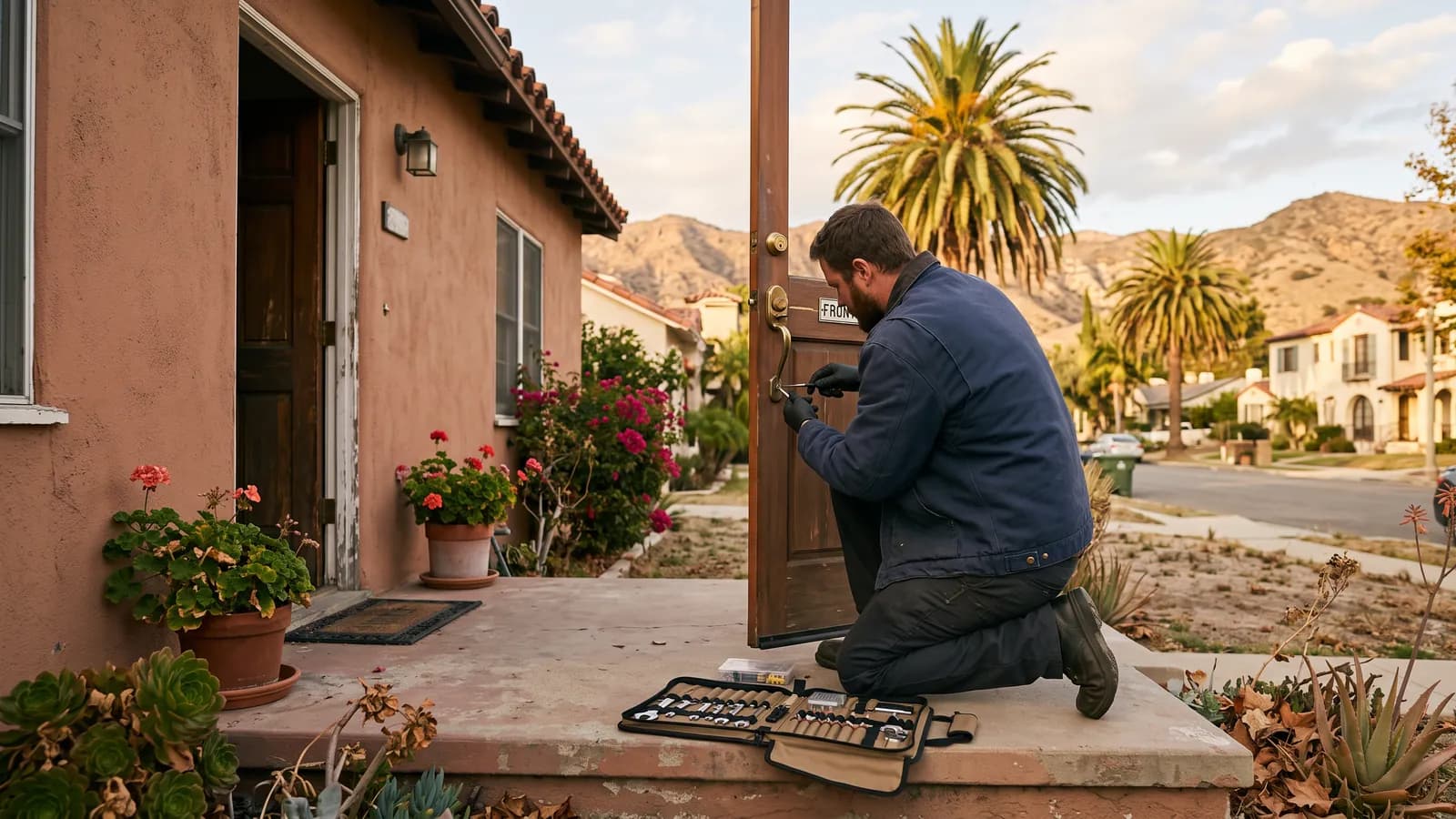
If a tenant just moved out of your Grand Terrace rental, the fastest fix is usually a simple rekey of the existing deadbolts rather than full lock replacement. Start by testing every lock on the unit, checking who still might have keys, and deciding whether your hardware is in good enough shape to reuse. Most turnover situations resolve with rekeying, but some older or damaged locks call for replacement, and a licensed locksmith can tell you which within minutes of inspecting the door.
Grand Terrace landlords deal with a particular mix of conditions: older homes near Mount Vernon Avenue with original 1970s and '80s hardware, newer builds with electronic deadbolts, and a lot of turnover tied to the school calendar and seasonal moves. Fall adds its own wrinkle. Santa Ana wind events can rattle loose strike plates and swell wood doors, and the shift to daylight saving time means tenants are testing their locks in the dark for the first time in months. This guide walks through tenant turnover locksmith troubleshooting from the simplest check to the point where you should call a professional.
Step 1: Inventory Every Key and Every Lock
Before you touch a single lock, make a list. Walk the property and note:
- Front door, back door, and any side or garage entry doors
- Sliding glass doors with separate locks or pin locks
- Window locks, if the unit has ground-floor sliders or louvered windows
- Mailbox locks (cluster box or individual)
- Gate locks, storage sheds, or detached garage locks
Then count how many keys you can actually account for. If a tenant occupied the unit for more than a year, there is a good chance keys were cut for roommates, family members, or a pet sitter that never came back. This is the core problem tenant turnover locksmith work solves: you cannot know how many copies of a key exist once it has been in someone else's hands for months or years.
Step 2: Test Existing Locks Before Assuming They Need Replacement
A lock that sticks, turns hard, or doesn't fully retract its deadbolt isn't automatically broken. Common, fixable issues include:
- Dirty or dry cylinders. Southern California dust, especially after a windy fall week, works into the keyway and makes keys stick. A shot of dry graphite or PTFE lubricant (not oil, which attracts grit) often solves this.
- Misaligned strike plates. Wood doors expand and contract with temperature and humidity swings. If the deadbolt doesn't seat smoothly, check whether the strike plate on the frame lines up with the bolt. A loose strike plate is a five-minute screwdriver fix, not a lock problem.
- Loose door handles or wiggling deadbolts. Tighten the screws on the interior side of the lock. If the lock still wobbles after tightening, the internal mechanism may be worn and the lock itself needs replacing.
If the lock operates smoothly and the only issue is "who might have a key," you don't need new hardware. You need Lock Rekeying, which changes the internal pin configuration so old keys stop working while the existing lock body stays in place.
Step 3: Decide Between Rekeying and Full Replacement
Rekeying makes sense when:
- The lock operates correctly and shows no visible wear or damage
- You want all units in a multi-door property on the same new key
- You're turning the unit over on a tight schedule and want to minimize disruption
Full replacement makes sense when:
- The lock is more than a few years old and shows play in the mechanism, not just the cylinder
- You're upgrading from a lower-security lock to one with better resistance to picking or bumping
- The tenant reported the lock sticking or failing before move-out, suggesting internal wear beyond the pins
- You want a smart lock for easier re-provisioning between future tenants
For a single-family rental or a duplex, a Rekey Locks after Tenant Moves Out approach usually covers the front and back door deadbolts, with replacement reserved for any lock that's visibly failing.
Step 4: Confirm California Deadbolt Requirements
California Civil Code 1941.3 requires that rental units have a working deadbolt on the main entry door. This isn't optional maintenance, it's a baseline habitability standard. During turnover, verify:
- The deadbolt throw extends at least one inch into the frame
- The strike plate is secured with screws long enough to reach the stud, not just the door jamb trim
- The lock operates without a key from the inside, for fire egress
If a tenant previously reported a landlord-related dispute involving locks, protected tenants under Civil Code 1941.5 and 1941.6 may have additional rights regarding lock changes, particularly in situations involving domestic violence or elder abuse protective orders. These situations call for prompt professional handling rather than a DIY rekey, since timing and documentation matter.
Step 5: Handle Multi-Unit or Multi-Door Properties With a Keying Plan
If you manage more than one rental in Grand Terrace, or a single property with several structures, turnover is a good moment to simplify your key system rather than just swapping pins one door at a time. Two common approaches:
- Keyed-alike locks, where every exterior lock on a single unit uses the same key, so tenants carry one key instead of three.
- Master key systems, where each unit has its own tenant key but you retain a master that opens all units for maintenance access.
Keyed Alike Locks are worth considering any time you're rekeying more than one door on the same property, since the labor is similar whether the locks end up matching or not, and a single-key setup reduces the odds of a tenant locking themselves out of one door while holding the key to another.
Step 6: Walk the Property for Fall-Specific Wear
Fall in Grand Terrace brings Santa Ana wind events strong enough to slam unlatched doors repeatedly, which loosens hinges and strike plates over a season. Combined with fire season dust and the dry heat that precedes red flag warnings, exterior hardware takes more abuse than people expect. Before handing keys to a new tenant, check for:
- Hinges with wind-loosened screws
- Weatherstripping that's pulled away, letting wind-driven dust into the lock mechanism
- Gate latches that have warped slightly from heat, making the keeper misalign
None of this requires a locksmith on its own, but these are the kinds of small issues that compound and eventually get blamed on "the lock" when the real problem is the door or frame. If you find frame damage, warping, or a door that doesn't close flush anymore, that's worth mentioning when you call for turnover rekeying, since it may affect hardware choice.
Step 7: Know When DIY Stops Being the Right Call
Rekeying a single pin-tumbler deadbolt with a kit from a hardware store is within reach for a handy landlord. But several situations push this into licensed locksmith territory:
- Multiple doors on a tight turnaround. If you have a new tenant moving in within a day or two and several locks to handle, a professional with the right tools works faster and with less risk of error than learning rekeying on the fly.
- Electronic or smart locks. Reprogramming codes, re-pairing apps, and resetting factory defaults on a lock you didn't install yourself can be more complicated than the manual suggests, and a mistake can lock you out of the lock's admin settings entirely.
- Lock bodies in unknown condition. If you don't know the lock's full history, including whether it's been drilled, bumped, or tampered with, a locksmith can inspect it properly before you rely on it to secure a tenant.
- Any dispute involving a difficult move-out. If the previous tenant was evicted, left on bad terms, or there's any question about who still has access, verified, documented professional rekeying protects you if the situation is ever questioned later.
A Tenant Turnover Locksmith in Grand Terrace typically handles the whole process in a single visit: inspecting each lock, rekeying or replacing as needed, and confirming every door functions correctly before leaving. Pricing depends on the number of doors, the lock brand, and whether any hardware needs replacing rather than rekeying, and should always be quoted before work begins.
Step 8: Document the Turnover
Once the work is done, keep a simple record:
- Date of rekey or replacement
- Which doors were serviced
- Lock brand and whether keyed alike or individually keyed
- Number of keys issued to the new tenant
This record matters more than it seems. If a security question ever comes up during the tenancy, you'll have a clear answer about when locks were last changed and who has keys. It also speeds up the next turnover, since you'll know exactly what hardware is installed without re-inspecting from scratch.
Landlords Managing Several Grand Terrace Properties
If you're managing more than one rental in the area, a Landlord Locksmith in Grand Terrace relationship pays off over time. Instead of calling around for each individual turnover, you have a known contact who understands your properties, your preferred lock brands, and your timeline expectations around move-in and move-out dates. This matters especially during back-to-school season in late summer and early fall, when many leases turn over at once and schedules get tight.
For properties with recurring turnover, a Tenant Turnover Rekey in Grand Terrace service can also be set up as a standing arrangement, so you're not starting from zero each time a lease ends.
A Quick Pre-Move-In Checklist
Before handing keys to a new tenant, confirm:
- Every exterior door lock operates smoothly and the deadbolt fully extends
- Locks have been rekeyed or replaced since the last tenancy
- Keys issued match the number agreed upon in the lease
- Mailbox and gate locks (if applicable) have been checked
- Smart locks, if installed, have been reset to factory defaults and reprogrammed with new codes
- Any fire-season or wind damage to doors and frames has been addressed
Working through this list takes less time than dealing with a lockout call from a confused new tenant during their first week, or worse, a liability question later about who had access to the unit.
Reaching Julian's Locksmith in Grand Terrace
Julian's Locksmith is a licensed, insured, and bonded mobile locksmith (California locksmith company license LCO7891, verifiable at search.dca.ca.gov) serving Grand Terrace and the surrounding San Bernardino County area around the clock, including overnights, weekends, and holidays. Whether you need a single deadbolt rekeyed between tenants or a full multi-unit property converted to a keyed-alike system, a technician will verify your identity and ownership or management authority before any work begins, and provide a quote before starting.
For general residential lock needs beyond turnover, see our Locksmith in Grand Terrace page. To schedule tenant turnover work or ask questions about your specific property, call (951) 903-3193 or reach out through our Contact page. We're based at 2544 Rosemary Ln, San Bernardino, CA 92407, and serve 119 cities across San Bernardino, Riverside, Los Angeles, and Orange counties.
Frequently asked questions
Do I have to rekey locks every time a tenant moves out in California?
California law does not require rekeying between every tenancy, but it is standard practice and strongly recommended. Civil Code 1941.3 requires working deadbolts on rental units, and many landlords rekey as routine turnover maintenance to control who holds working keys and to limit liability if a dispute ever arises over unauthorized entry.
Is rekeying cheaper than replacing the whole lock?
Usually yes, because rekeying reuses your existing lock hardware and only changes the pins and keys, while replacement involves new hardware. The actual cost depends on the number of doors, lock brand, and whether hardware is worn or damaged. A locksmith can quote both options on site before starting work.
Can I rekey locks myself between tenants?
If you have the right pinning kit and some mechanical skill, basic rekeying is possible on certain lock brands. Many landlords find it faster and more reliable to hire a licensed locksmith, especially when managing multiple units or keyed-alike systems where a mistake could lock out the wrong person or leave doors improperly secured.
What should I check before a new tenant moves in?
Test every lock on every entry door, including deadbolts, sliding door locks, and any gate or mailbox locks. Confirm deadbolts extend fully, strike plates line up, and keys turn smoothly. Also verify Civil Code 1941.3 compliance for deadbolts and walk the exterior for worn hardware, loose strikes, or weather damage from wind or heat.
How do I know if a locksmith is actually licensed in California?
California requires locksmiths to hold a license from the Bureau of Security and Investigative Services. You can verify any company's license number at search.dca.ca.gov. Ask for the license number before scheduling work, and confirm it matches the technician who arrives, since this protects you from unlicensed operators handling your property's security.
More locksmith advice
- Home Lockout Decision Guide: Wildomar Service Options Compared
- Your On-the-Spot Checklist for Keys Locked in Trunk in Cypress
- Cypress Multi-Door Access Control: Detailed Compliance Checklist
- Smart Deadbolt Installation in La Mirada: Deep-Dive FAQ
- Transponder Key Replacement in Glendora: Step-by-Step Guide
- High Security Key Duplication Checklist for Perris Homes