
Panic Bar Repair in Santa Fe Springs: A Full FAQ Guide
By Julian's Locksmith, , 7 min read
A deep-dive FAQ on panic bar repair in Santa Fe Springs, covering code requirements, warning signs, repair vs. replacement, and what to expect from a licensed locksmith.
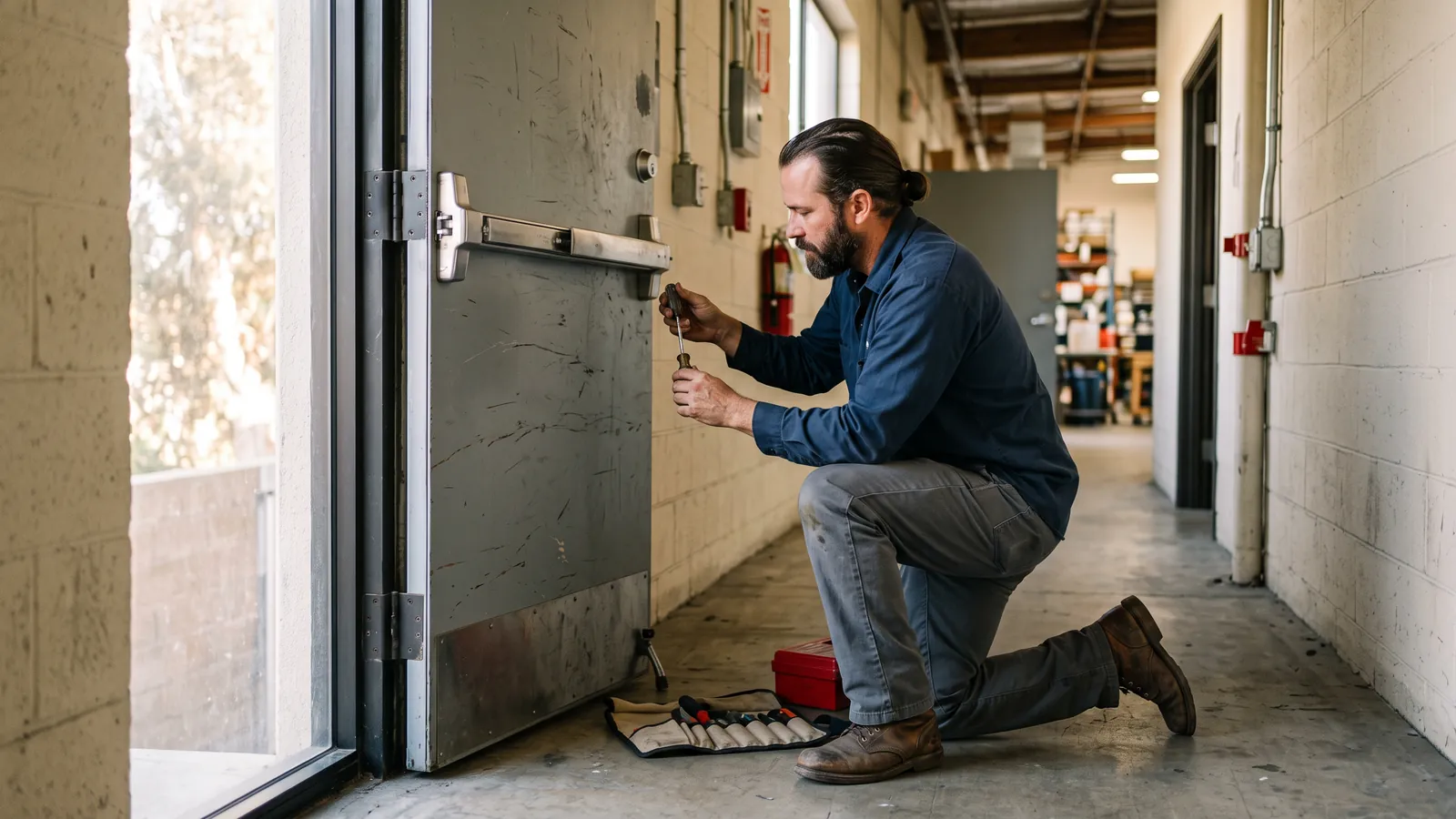
If the exit door at your business sticks, won't latch, or requires a hard shoulder shove to release, you're dealing with a panic bar problem that shouldn't wait. Panic bar repair restores the quick, single-motion exit that fire and building codes require on public and commercial doors, and in most cases a licensed locksmith can diagnose and fix the device without replacing the whole door. This guide answers the questions Santa Fe Springs business owners and property managers ask most about panic bar repair, including cost factors, code requirements, and what to expect from a service call.
What Is a Panic Bar and Why Does It Fail?
A panic bar, also called a crash bar or exit device, lets someone open a door by pushing a horizontal bar rather than turning a knob or finding a key. Codes require them on doors in assembly occupancies, many retail spaces, and other buildings where quick egress matters during an emergency. Underneath the bar sits a mechanism of rods, latches, springs, and a strike plate, all of which take repeated daily impact.
Failure usually comes from one of these:
- Mechanical wear. Springs weaken, rods bend, and latch bolts round off after thousands of cycles.
- Door and frame movement. Buildings settle, and a door that used to align perfectly can drift out of true, throwing off the strike.
- Corrosion or debris. Dust, salt air drift from nearby coastal influence, or simple age can gum up moving parts.
- Impact damage. Forklifts, carts, and foot traffic in warehouse and retail settings in Santa Fe Springs put more stress on exit hardware than most people realize.
- Improper past installation. A device mounted slightly off, or paired with the wrong strike, will wear unevenly and fail sooner.
Knowing the cause matters because it determines whether a technician adjusts the existing device or recommends new hardware. For a closer look at local repair work, see Panic Bar Repair in Santa Fe Springs.
What Are the Warning Signs a Panic Bar Needs Attention?
Panic bars rarely fail without warning. Watch for:
- The bar feels stiff, gritty, or requires more force than it used to.
- The door doesn't latch fully after the bar is released, leaving a visible gap.
- The bar depresses but the latch doesn't retract, so the door stays locked.
- You hear grinding, clicking, or scraping when the bar moves.
- The device is visibly bent, cracked, or rattles when touched.
- The door drifts open on its own because the latch isn't catching the strike.
Any of these is worth a professional look. A door that won't latch is a related but distinct issue covered in Commercial Door Won't Latch in Santa Fe Springs, since sometimes the panic bar is fine and the frame or strike is the actual culprit.
Is a Broken Panic Bar a Code Violation?
Yes, in most cases. Exit devices on required egress doors fall under fire and building code, not just general maintenance. If the bar doesn't release the latch smoothly in one motion, if it requires two hands, or if the door doesn't open at all, the exit technically fails its purpose. Fire inspectors check these during routine visits, and a failed device can result in a citation or an order to fix it before reopening to the public.
This is separate from lock code sections that apply to rental housing, such as Civil Code 1941.3, which addresses deadbolts in residential units — panic bar requirements for commercial exits come from fire and building codes enforced locally and by the State Fire Marshal's office, not from the residential landlord-tenant statutes. If you manage a commercial property in Santa Fe Springs, it's worth treating panic bar function as a life-safety item that gets checked on the same schedule as fire extinguishers and exit signage.
For buildings where an exit route is completely compromised, see Emergency Exit Door Repair in Santa Fe Springs for guidance on urgent situations.
Can a Panic Bar Be Repaired, or Does It Need Full Replacement?
Most panic bar issues are repairable. A technician typically:
- Removes the cover to inspect springs, rods, and the latch mechanism.
- Checks alignment between the door, frame, and strike plate.
- Tests whether the chassis itself is cracked or warped versus just worn.
- Confirms whether the manufacturer still produces replacement parts for that model.
Repair makes sense when the housing is intact and parts are available. Replacement becomes the practical choice when:
- The device is an older or discontinued model with no parts supply.
- The chassis is cracked or the mounting holes are stripped.
- The door has been rehung or replaced and the old device no longer fits properly.
- You're upgrading to add alarm notification, electric latch retraction, or compatibility with an access control system.
If you're weighing a full upgrade rather than a patch repair, Panic Bar Installation covers what that process involves.
What Does a Panic Bar Repair Visit Actually Involve?
A straightforward repair visit generally follows this sequence:
- Assessment. The technician checks the door, frame, hinges, strike, and the device itself, since a panic bar problem is often a symptom of a door alignment issue rather than a hardware defect on its own.
- Diagnosis and quote. Once the cause is clear, you get a quote before any work starts, so there are no surprises about what the repair involves.
- Parts sourcing or adjustment. Minor fixes, like tightening a loose strike or lubricating a stiff latch, can often be done on the spot. Parts replacement may require sourcing the correct spring, rod, or latch assembly for that brand and model.
- Testing. After repair, the technician tests the bar through multiple full cycles, checking that it releases smoothly, the door latches completely, and the device meets the touch-and-release standard required for code compliance.
- Documentation. For commercial accounts, especially those preparing for fire inspections, having a record of the repair date and parts used is useful to keep on file.
Related hardware, like strike plates and latch guards, sometimes needs attention at the same time. If the whole exit device assembly is the concern rather than just the bar, Exit Device Repair in Santa Fe Springs covers the broader category.
How Does Fall Weather in Southern California Affect Panic Bars?
Fall in Santa Fe Springs brings Santa Ana wind events, drier air, and bigger day-to-night temperature swings than summer. None of that is dramatic on its own, but it can push a borderline panic bar into failure:
- Wind pressure on exterior exit doors during Santa Ana events can stress hinges and frames, especially on wider commercial doors, making a loose or misaligned device more obvious.
- Dust and dry debris carried by wind can work into latch mechanisms that haven't been cleaned recently.
- Temperature swings cause slight metal expansion and contraction, which can tighten tolerances just enough to turn a smooth-operating bar into a stiff one.
- Daylight saving time ending means more of your business hours happen in darkness. If your exit path depends on a panic bar and the exterior lighting near that door isn't great, a stiff or slow-latching device becomes a bigger safety concern during the darker evening hours.
None of this means panic bars suddenly break every fall, but it's a reasonable time of year to walk your exits and make sure everything still releases cleanly, especially before increased foot traffic from back-to-school pickup lines, holiday shopping, or seasonal events brings more people through your doors.
What Should You Check Before Calling a Locksmith?
A few things you can look at yourself, without tools, before scheduling a repair:
- Push the bar through its full range. Does it move smoothly, or catch partway?
- Open the door and check whether the latch bolt extends fully when the bar is released.
- Look at the strike plate on the frame. Is it loose, bent, or misaligned with the latch?
- Check for visible rust, bent rods, or a cracked housing.
- Note whether the problem is on one door or multiple doors sharing the same hardware brand, since that affects whether it's an isolated issue or a batch of aging devices.
Write down what you notice. It helps the technician diagnose faster and gives you a clearer picture of whether you're looking at a quick adjustment or a parts replacement.
Who Is Qualified to Repair a Panic Bar in California?
California requires locksmiths to be licensed under the Locksmith Act (Business and Professions Code 6980 et seq.) through the Bureau of Security and Investigative Services. You can verify any locksmith's license at search.dca.ca.gov before letting them work on your exit hardware. For commercial exit devices tied to fire and building code, it's worth asking specifically about experience with panic bar and exit device brands, since these aren't the same skill set as residential lock rekeying.
Julian's Locksmith holds California locksmith company license LCO7891, and technicians verify ID and property ownership or management authority before performing repair work on commercial hardware. You'll also get a quote before any work begins, so the scope and process are clear upfront.
Panic Bar Repair in Santa Fe Springs: How to Reach Us
If a panic bar at your Santa Fe Springs business is sticking, failing to latch, or showing visible damage, it's worth having it looked at rather than waiting for it to fail completely during business hours. Julian's Locksmith is a licensed, insured, and bonded mobile locksmith available 24 hours a day, seven days a week, including overnight and weekends, serving Santa Fe Springs and surrounding cities across Los Angeles, Orange, Riverside, and San Bernardino counties.
Call (951) 903-3193 to describe the issue and get a quote before any work starts, or visit Contact Julian's Locksmith to reach us another way. For more on general locksmith services in the area, see Locksmith in Santa Fe Springs.
Frequently asked questions
Can a panic bar be repaired, or does it always need replacement?
Most panic bar problems are repairable. Worn latches, bent push pads, loose strikes, and misaligned rods can usually be adjusted or fitted with replacement parts from the same manufacturer. Replacement becomes the better option when the device is older than the parts supply, the chassis is cracked, or the door itself has shifted enough that no amount of adjustment keeps it code-compliant.
Is it legal to keep a business open with a broken panic bar in California?
Operating with a non-functioning panic bar on a required exit door is a fire and life-safety code violation, not just a maintenance issue. Fire marshals and building inspectors can cite a business or order it closed until the device works. If your exit door won't latch or the bar doesn't release properly, treat it as urgent rather than something to schedule around.
Why does my panic bar stick or feel harder to push in the fall?
Temperature swings and Santa Ana wind pressure changes can tighten door frames and shift alignment slightly, making a borderline panic bar feel noticeably stiffer. Dust from dry, windy conditions can also work into the latch mechanism. If the bar suddenly needs much more force, have it inspected rather than assuming it will loosen up again.
How much does panic bar repair typically cost?
Cost depends on the device brand, whether parts are still manufactured, how many doors are affected, and labor time for alignment and testing. A locksmith should inspect the hardware and provide a written quote before starting any work, so you know the scope before committing to a repair or replacement.
Do I need a permit to repair or replace a panic bar?
Routine repair or like-for-like replacement of an existing exit device generally doesn't require a permit. If the repair involves changing the door's fire rating, adding a device where none existed, or altering the exit path, check with the Santa Fe Springs building department, since that can trigger permit and inspection requirements.
More locksmith advice
- Home Lockout Decision Guide: Wildomar Service Options Compared
- Your On-the-Spot Checklist for Keys Locked in Trunk in Cypress
- Cypress Multi-Door Access Control: Detailed Compliance Checklist
- Smart Deadbolt Installation in La Mirada: Deep-Dive FAQ
- Transponder Key Replacement in Glendora: Step-by-Step Guide
- High Security Key Duplication Checklist for Perris Homes