
Lost Safe Combination in Rosemead: How Safe Locks Work
By Julian's Locksmith, , 7 min read
A lost safe combination in Rosemead doesn't mean a ruined safe. Here's how safe lock hardware works and what your realistic options are.
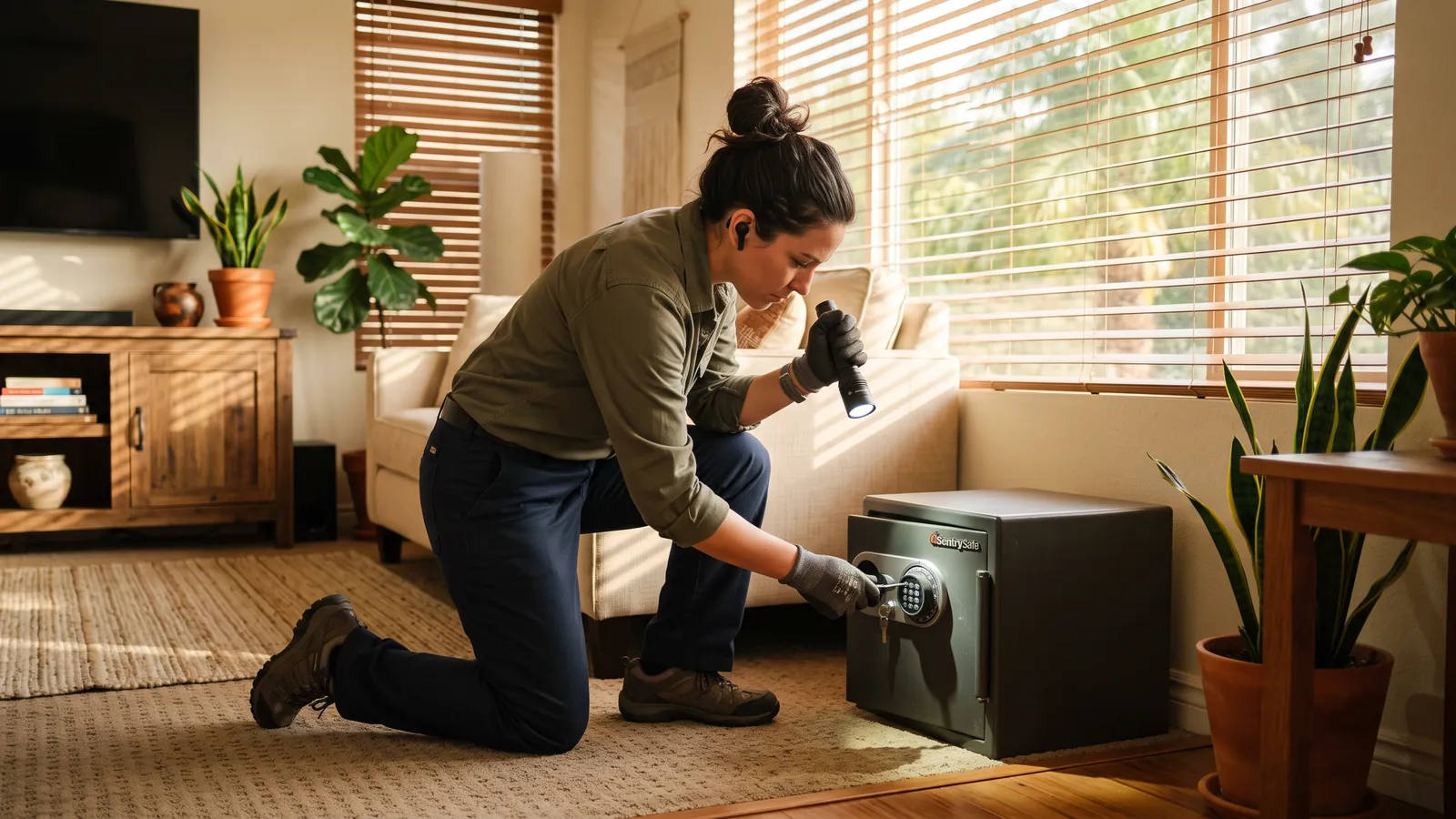
Losing a safe combination in Rosemead is more common than most people expect, and it rarely means replacing the safe. Dial, electronic, and biometric locks each fail or get forgotten in different ways, and understanding how yours works tells you what your realistic options are before anyone touches a drill.
This guide walks through how the major types of safe locks actually function, why combinations get lost in the first place, and what happens when you call someone to get back in.
How Mechanical Dial Locks Work
A traditional dial safe lock relies on a stack of metal wheels, usually three or four, each with a notch cut into it. When you spin the dial to your combination numbers in the correct sequence, each wheel's notch rotates into alignment with the others. Once all the notches line up, a metal fence drops into the aligned gate, allowing the bolt to retract and the door to open.
This is a purely mechanical system with no batteries and no electronics. That's part of why dial locks remain popular on older residential and commercial safes: they don't fail from dead batteries or power surges. But it also means there's no backup code, no app recovery, and no customer service line to call. If you lose the combination, the wheels are still sitting there perfectly aligned to a number sequence nobody remembers.
Mechanical locks can sometimes be opened through manipulation, a technique where a trained locksmith listens and feels for subtle changes in resistance as the wheels fall into place. It takes time and is not guaranteed on every lock, particularly newer high-security dial locks built specifically to resist manipulation. For details on how this applies locally, see our page on Lost Safe Combination in Rosemead.
How Electronic Keypad Locks Work
Electronic safe locks use a battery-powered circuit board connected to a motorized or solenoid-driven bolt. When you enter the correct code on the keypad, the circuit sends a signal that either retracts the bolt directly or releases a mechanical linkage that lets you turn the handle.
These locks store the active code in memory, which means a few additional failure points exist beyond simply forgetting the number:
- Dead or corroded batteries can prevent the keypad from reading input at all, even if you remember the correct code.
- Firmware glitches occasionally cause a keypad to stop responding after a power interruption.
- Lockout timers on many models trigger a temporary disable period after several incorrect entries, which can feel like the safe is "broken" when it's actually a built-in security feature.
- Factory reset codes, if never changed from default, are sometimes still active and unknown to the current owner.
Many electronic locks have a reset or override procedure tied to the manufacturer and model number, and some allow a locksmith to access a recovery mode using the lock's internal programming. This is model-specific, so having the safe's brand and model number ready when you call speeds things up considerably.
How Biometric and Dual-Authentication Locks Work
Fingerprint safes store a mathematical representation of your fingerprint pattern, not an image, in onboard memory. When you place your finger on the sensor, it compares the new scan against stored templates. If they match within the tolerance set by the manufacturer, the bolt releases.
Most biometric safes include a backup key or keypad code precisely because fingerprint sensors can fail to read due to dirt, moisture, or minor skin changes. If you've lost both the backup key and can't recall whether a backup code was ever set, you're dealing with a lock that has two independent systems to work around rather than one. This is a case where contacting a Safe Locksmith early is worthwhile, since diagnosing which subsystem has failed changes the approach.
Why Combinations and Codes Get Lost More Often Than You'd Think
It's easy to assume forgetting a safe combination only happens to careless people. In practice, a handful of ordinary situations account for most calls:
- A safe inherited from a previous homeowner or relative with no documentation of the code.
- A combination written down once, years ago, on paper that's since been lost or thrown out.
- A code changed by a household member who later moved out, passed away, or is simply unreachable.
- Daylight saving time ending in November, which shifts routines and sometimes surfaces safes that haven't been opened since the last time clocks changed.
- Seasonal home resets before the holidays, when people pull out safes stored in closets or garages to add jewelry or documents and realize the code no longer works.
Fall in Southern California brings its own version of this. As Santa Ana wind events and fire season prompt households in Rosemead to gather important documents, passports, and valuables into a go-bag or safe in case of evacuation, some discover for the first time in months that the combination doesn't work the way they remembered. That's a bad moment to be troubleshooting a lock for the first time, which is part of why checking your safe's accessibility before fire season peaks is a reasonable habit.
What a Locksmith Actually Checks Before Opening Anything
A competent approach to a lost combination starts with identification, not tools. Before any attempt to open the safe, expect a locksmith to:
- Confirm the safe's brand, model, and lock type.
- Ask how long it's been since the safe was last opened and whether the combination was ever changed.
- Verify your identification and that you own the safe or live at the property where it's located.
- Explain the likely method, whether manipulation, decoding, a manufacturer reset, or, if nothing else is viable, drilling.
- Provide a quote before any work begins, based on the lock type and condition rather than a flat fee.
This verification step matters. Safes often hold financial documents, firearms, or jewelry, and a licensed locksmith treats proof of ownership as a non-negotiable part of the job, not paperwork. California locksmiths operating as a business are regulated under Business and Professions Code 6980 et seq., the Locksmith Act, and license status can be checked directly at search.dca.ca.gov.
Manipulation, Decoding, and Resetting: What's the Difference
These terms get used loosely, so it helps to know what each actually means in practice.
Manipulation
Used mainly on mechanical dial locks. The locksmith works the dial by feel and sound, narrowing down the wheel positions without drilling. It's slower than other methods and depends heavily on the lock's design and the technician's experience with that specific mechanism.
Decoding
A more technical process, sometimes involving specialized tools to read the internal wheel positions without fully manipulating the lock by feel. Decoding is more common on commercial and high-security safes where manipulation resistance is built in.
Resetting
Applies to electronic locks. If the lock has a documented factory reset sequence or a manufacturer-issued reset code tied to a serial number, a locksmith can restore access without physically altering the lock. This is often the fastest and least invasive route when it's available for your specific model.
Drilling
Reserved for situations where the above methods aren't viable or the lock mechanism has genuinely failed. A precise drill point targets the lock's internal components, and in most cases the safe body itself isn't damaged. Afterward, the lock is typically replaced rather than reused. If you're already at the point of wondering whether your safe is simply broken rather than just locked, our page on Safe Won't Open in Rosemead covers how to tell the difference.
What to Do Before You Call Someone
A little groundwork can save time once a locksmith arrives:
- Look for any written combination in old paperwork, a password manager, or files from when the safe was purchased.
- Check the manufacturer's website or manual for the model number, often found on a label inside the door.
- Note whether the safe has ever been opened since you moved in or inherited it, and by whom.
- Avoid forcing the dial or handle repeatedly, since this can sometimes damage a mechanism that would otherwise have been opened cleanly.
- If it's an electronic lock, try replacing the batteries first. A simple dead battery is one of the most common and least dramatic explanations for a "lost" combination.
None of this guarantees a DIY fix, but it narrows down what a technician is dealing with and can shorten the visit considerably.
Safe Types Common in Rosemead Homes and Businesses
Rosemead's mix of single-family homes, apartments, and small businesses means the safes a locksmith encounters locally vary quite a bit. Older homes sometimes still have floor safes or wall safes installed decades ago with simple mechanical dials. Newer home safes, including the compact fireproof boxes sold at hardware and big-box stores, almost always use electronic keypads. Small businesses along Rosemead's commercial corridors more often rely on commercial-grade dial or electronic locks rated for higher security, sometimes with dual-control requirements for cash handling.
Knowing which category your safe falls into helps set expectations. A basic home electronic lock is often resolvable through a reset procedure. A commercial high-security dial lock may require manipulation or decoding by someone familiar with that exact mechanism. For a broader look at what safe work in the area typically involves, see Safe Locksmith in Rosemead.
Getting Help in Rosemead
If you're staring at a safe you can't open, the combination is only half the story. The lock type, how long it's been since it was last used, and whether you can verify ownership all shape what happens next.
Julian's Locksmith is a licensed, insured, and bonded mobile locksmith (California license LCO7891) available 24 hours a day, including overnight and weekends, serving Rosemead and the surrounding region. A technician will ask about your safe's make and model, verify your identification and ownership, and provide a quote before starting any work, whether that means manipulation, a manufacturer reset, or, as a last option, drilling.
For general local service information, visit Locksmith in Rosemead, or reach out directly through our Contact page. To talk through your specific safe situation now, call (951) 903-3193.
Frequently asked questions
Can a locksmith open a safe without drilling it?
Often, yes. Many lost-combination jobs are resolved by manipulation, decoding factory reset procedures, or using manufacturer reset tools, depending on the lock type. Drilling is typically a last resort reserved for safes where manipulation isn't feasible or the lock has failed internally. A locksmith usually inspects the model and lock type before recommending an approach.
Will opening my safe without the combination damage it?
Not necessarily. Manipulation and decoding methods are non-destructive when they work. If drilling becomes necessary, a competent technician drills a small, precise access point that can often be repaired or plugged, and in many cases only the lock itself needs replacing afterward, not the whole safe body.
What information do I need to provide before a locksmith opens my safe?
Expect to show identification and proof that you own the safe or reside at the property, such as a lease, utility bill, or purchase receipt. This verification step is standard practice and protects you from someone else accessing your safe's contents. A locksmith should explain this requirement before scheduling work.
Is it worth trying to remember or guess my combination before calling someone?
If you have any written record, old paperwork, or a pattern you used for other locks, it's worth checking first. Avoid excessive guessing on mechanical dial locks, since repeated wrong attempts can sometimes affect wear on older mechanisms, though it won't lock you out permanently like some electronic keypads can after repeated failed codes.
Do fire-rated safes have different locks than security safes?
The fire rating refers to the safe's insulation and door seal, not the lock mechanism itself. Fire-rated residential safes commonly use the same types of dial, electronic, or key locks found on non-fire-rated models. The lost-combination recovery process is generally the same regardless of a safe's fire rating.
More locksmith advice
- Home Lockout Decision Guide: Wildomar Service Options Compared
- Your On-the-Spot Checklist for Keys Locked in Trunk in Cypress
- Cypress Multi-Door Access Control: Detailed Compliance Checklist
- Smart Deadbolt Installation in La Mirada: Deep-Dive FAQ
- Transponder Key Replacement in Glendora: Step-by-Step Guide
- High Security Key Duplication Checklist for Perris Homes