Locksmith for Office Building in Chino: A Local Guide
By Julian's Locksmith, , 9 min read
A practical guide for Chino business owners and property managers on finding a licensed locksmith for office building lockouts, rekeys, and access control.
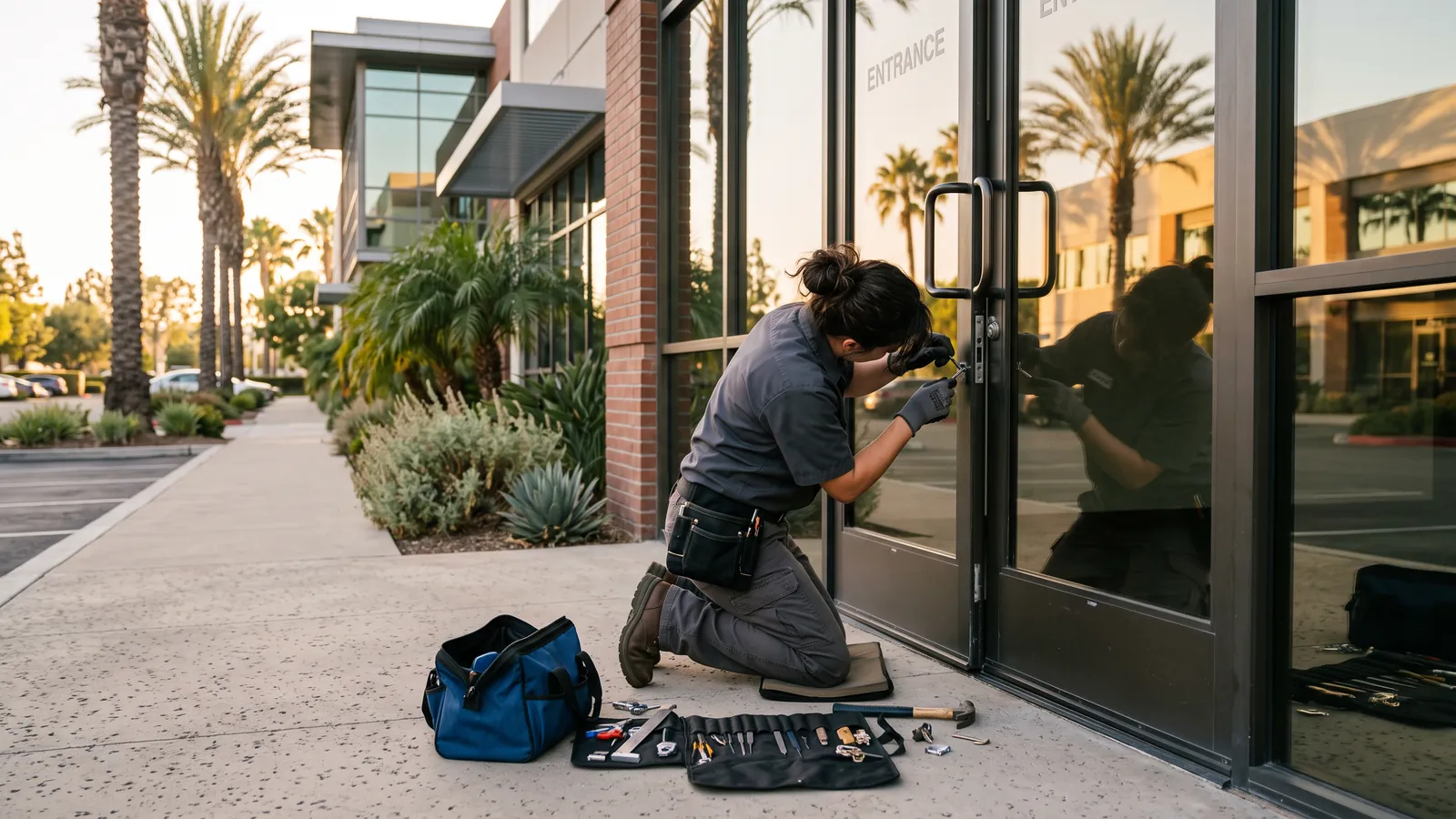
If your office building in Chino has a lock that won't turn, a door that won't latch, or a key system nobody can account for anymore, a locksmith for office building work can usually resolve it in a single visit. This guide covers what office managers, business owners, and property managers in Chino should know before they call, from lockouts to master key systems to access control upgrades.
Why Office Buildings in Chino Have Unique Locksmith Needs
Chino sits in a part of San Bernardino County that mixes industrial parks, retail centers, and office complexes along corridors like Central Avenue and Grand Avenue. Many office buildings here were built decades apart, which means the locking hardware varies widely from one suite to the next, even within the same business park. A property that started as a single-tenant office might now have multiple small businesses sharing a lobby, each with different access needs.
That variety matters because a locksmith working on an office building has to account for:
- Door closers and hardware that may be original to a 1980s or 1990s build
- ADA-compliant hardware requirements for public-facing entries
- Fire and life-safety codes that affect which locks are legal on exit doors
- Shared common areas versus private suites, each needing separate keying
If your building has gone through tenant turnover, additions, or a change in property management, the existing key system may no longer match who actually has access. That's a common reason Chino businesses call a Commercial Locksmith rather than trying to sort it out with a generic hardware store key cutter.
Common Office Lockout Situations in Chino
An office lockout rarely looks the same twice. Some examples of situations that come up for businesses in Chino:
- An employee arrives early to open for a delivery and the key doesn't turn, possibly because the lock cylinder has worn down or the door has shifted slightly in its frame
- A manager loses the only set of keys to a server room or supply closet inside the building
- A keypad or electronic lock on a conference room stops responding after a power outage
- A property manager needs entry to a vacant suite for a scheduled walkthrough but the keys on file don't match the lock
Each of these calls for a different approach. A worn cylinder might just need rekeying, while a shifted door might need the strike plate adjusted rather than the lock replaced. For a deeper look at troubleshooting a locked-out office specifically, see Office Lockout in Chino.
What to Check Before You Call
Before assuming you need a full lock replacement, it helps to rule out a few things:
- Try the key in the lock slowly and check for resistance versus a key that simply won't fit, which can indicate a bent key rather than a lock problem
- Look at the door itself for sagging or misalignment, since a door that has dropped slightly can bind a lock that is otherwise fine
- If it's an electronic lock, check for a battery warning light or try a backup code if one exists
- Confirm whether anyone else in the office has a spare key or fob before escalating to an emergency call
If none of that resolves it, a mobile locksmith can assess the hardware on-site and give you a clear picture of whether you're looking at a quick fix or a full lock change.
Master Key Systems for Chino Office Buildings
A master key system lets a building owner or manager open any door in the property with one key, while individual tenants or departments only have keys to their own spaces. This is especially useful in Chino's multi-tenant office parks, where a single building might house several small businesses under one roof.
Setting up a master key system involves mapping out:
- Which doors need to be accessible to all key holders (building entrances, shared restrooms, loading areas)
- Which doors should be restricted to specific tenants or departments
- Whether you need multiple levels of access, such as a grand master for ownership and sub-masters for individual floor managers
A poorly planned master key system can create security gaps, for example if a sub-master key accidentally opens more doors than intended. This is worth having a licensed locksmith map out properly rather than guessing with generic hardware store cylinders, since the pinning has to be calculated correctly across every lock in the system.
If your building is managed by a third party, coordinating this work often goes through the Locksmith for Property Manager in Chino service, which covers the kind of multi-unit key tracking that property managers deal with regularly.
Access Control and Electronic Locks for Offices
A growing number of Chino office buildings are moving away from traditional keyed entry toward keypad locks, fob-based access control, or app-controlled smart locks. These systems have real advantages for an office setting:
- You can deactivate a single employee's access without rekeying the whole building if they leave the company
- You get a log of who entered and when, which some businesses want for liability or insurance reasons
- Visitors or contractors can be given temporary codes that expire automatically
That said, electronic locks aren't maintenance-free. Keypads can fail after power surges, which aren't uncommon during Santa Ana wind events in the fall when gusty conditions sometimes knock out power in parts of San Bernardino County. Battery-powered fob readers need their batteries checked periodically, and a dead battery at the wrong time can lock out an entire office.
If you're weighing whether to switch from mechanical locks to electronic access control, a locksmith familiar with commercial installs can walk through the tradeoffs for your specific building layout, including whether your existing door hardware can accept an electronic retrofit or needs full replacement.
Fall Season Considerations for Chino Offices
Southern California's fall brings a few seasonal factors that affect office security in Chino, even though the weather doesn't change as dramatically as it does elsewhere in the country.
Santa Ana winds and fire season. Strong wind events can cause power flickers or outages, which matters for any office relying on electronic locks or keypad entry. If your building depends on an electronic access system, it's worth confirming there's a mechanical key override in place before wind season peaks.
Daylight saving time ending. When clocks fall back in early November, offices that open or close near dawn or dusk see a shift in lighting conditions around entrances. Poor lighting near an office entry can make it harder to spot a worn lock, a loose strike plate, or signs of attempted tampering. It's a reasonable time of year to walk the exterior of your building and check that entry points are well lit and that locks turn smoothly.
Back-to-school and holiday prep. Many Chino businesses see schedule changes in the fall as staff adjust around school calendars, and retail or service businesses start preparing for a busier holiday season. That often means more staff turnover or temporary hires, which is a good trigger to review who has keys or access codes and whether that list still matches who currently works there.
Office Buildings vs. Warehouses: Different Locksmith Needs
Chino has a significant industrial and logistics presence, and some businesses operate out of combined office-and-warehouse spaces. It's worth knowing that the locksmith needs for each differ:
- Office spaces typically need glass door hardware, interior suite locks, and sometimes ADA-compliant lever handles
- Warehouse spaces often need heavy-duty padlocks, roll-up door locks, and exterior hardware rated for higher security
If your business occupies both an office and a warehouse area under one roof, you may need a locksmith who can address both in the same visit. For the warehouse-specific side of things, see Locksmith for Warehouse in Chino.
What a Licensed Locksmith Verifies Before Working on an Office Building
California locksmiths are regulated under Business and Professions Code 6980 et seq., commonly called the Locksmith Act. As part of that framework, a licensed locksmith should verify identification and your connection to the property, whether that's as an owner, employee, or someone acting on behalf of a property manager, before opening a locked door or cutting new keys.
For an office building specifically, that verification process might include:
- Checking your name against a lease agreement or employment records
- Confirming authorization from a property manager if you're not the direct tenant
- Asking for government-issued photo ID to match against the business information on file
This isn't a formality meant to slow things down. It protects the business from unauthorized access and protects the locksmith from being party to a break-in. A company operating under California locksmith company license LCO7891 can be verified through the Bureau of Security and Investigative Services at search.dca.ca.gov, which is worth checking for any locksmith you're considering, especially for commercial work where more is at stake than a single residential door.
You should also expect a price quote before any work begins. The cost of a given job depends on factors like the number of doors involved, the type and age of the hardware, whether a master key system needs to be calculated, and whether the work happens during standard hours or outside them.
Rekeying After Tenant Turnover or Staff Changes
When a Chino office building changes tenants, or when a business goes through significant staff turnover, rekeying is usually the more practical option over replacing hardware outright. Rekeying changes the internal pin configuration of a lock cylinder so that old keys stop working, without needing to swap out the door hardware itself.
Situations that commonly call for a rekey:
- A tenant moves out and the property manager needs to make sure old keys won't work for the next occupant
- A former employee didn't return their office key
- A business suspects a key was copied without authorization
- Multiple sets of keys have been issued over the years and nobody has an accurate count anymore
For buildings with several suites or a layered master key system, rekeying needs to be planned carefully so the new keys still work correctly within the master system, rather than accidentally locking out levels of access that should still function.
Finding a Locksmith for Office Buildings in Chino
If you manage or own an office building in Chino and need lock work done, it helps to work with a locksmith who regularly handles commercial properties rather than only residential or automotive jobs. Commercial lock hardware, master key planning, and access control systems require different expertise than a home deadbolt.
For general locksmith coverage across the city, including residential and vehicle needs, see Locksmith in Chino. For office-specific services, the dedicated page at Locksmith for Office Building in Chino covers this category in more depth.
Julian's Locksmith is a mobile, licensed locksmith serving Chino and 119 cities across San Bernardino, Riverside, Los Angeles, and Orange counties. The company operates 24 hours a day, seven days a week, including overnight, weekends, and holidays, which matters when an office lockout happens before regular business hours or after everyone else has gone home. Technicians are licensed, insured, and bonded, and identification along with proof of ownership or authorization is verified before any lock is opened or any key is cut. You'll receive a quote before work starts, with no surprise charges added afterward.
How to Reach Julian's Locksmith in Chino
If your Chino office building needs a locksmith, whether it's an emergency lockout, a rekey after staff turnover, or a master key system for a multi-tenant building, call (951) 903-3193. The line is answered around the clock, so you can reach someone whether the issue comes up at 7 a.m. before opening or late on a Friday night. You can also reach out through the Contact page with details about your building and the work you need done, and someone will follow up to discuss scheduling and provide a quote before any work begins.
Frequently asked questions
Can a locksmith open an office building without the property manager present?
A licensed locksmith will typically verify that you have legitimate access rights before opening any door, which usually means confirming your name against a lease, employment record, or authorization from the property manager. If you cannot show that connection, the locksmith may need to contact the property manager or owner directly before doing any work.
How much does it cost to rekey an office building in Chino?
Cost depends on the number of doors, the lock hardware involved, and whether you need a master key system. A locksmith should walk the space with you and provide a quote before starting any work, rather than charging based on a flat guess over the phone.
What's the difference between rekeying and replacing office locks?
Rekeying changes the internal pins so old keys no longer work, while keeping the existing hardware. Replacing locks swaps the entire mechanism, which is usually necessary if the hardware is damaged, outdated, or you want a different lock type like an electronic or high-security cylinder.
Do I need a master key system for a small office in Chino?
If you have more than a few interior doors, departments, or shared tenants, a master key system can save time by letting management open any door while giving staff access only to their own areas. For a single-suite office with one or two doors, a simpler keying setup may be enough.
What should I do if my office door lock breaks after hours?
Check whether the issue is the lock mechanism, the door alignment, or a broken key before assuming you need a replacement. If the building is secure but you can't get in, a mobile locksmith can inspect the hardware on-site, since some fixes don't require full lock replacement.
More locksmith advice
- Home Lockout Decision Guide: Wildomar Service Options Compared
- Your On-the-Spot Checklist for Keys Locked in Trunk in Cypress
- Cypress Multi-Door Access Control: Detailed Compliance Checklist
- Smart Deadbolt Installation in La Mirada: Deep-Dive FAQ
- Transponder Key Replacement in Glendora: Step-by-Step Guide
- High Security Key Duplication Checklist for Perris Homes