House Rekey Mistakes to Avoid in Corona, CA
By Julian's Locksmith, , 8 min read
A house rekey is one of the simplest ways to secure a Corona home, but a few common mistakes can leave gaps. Here's what to watch for.
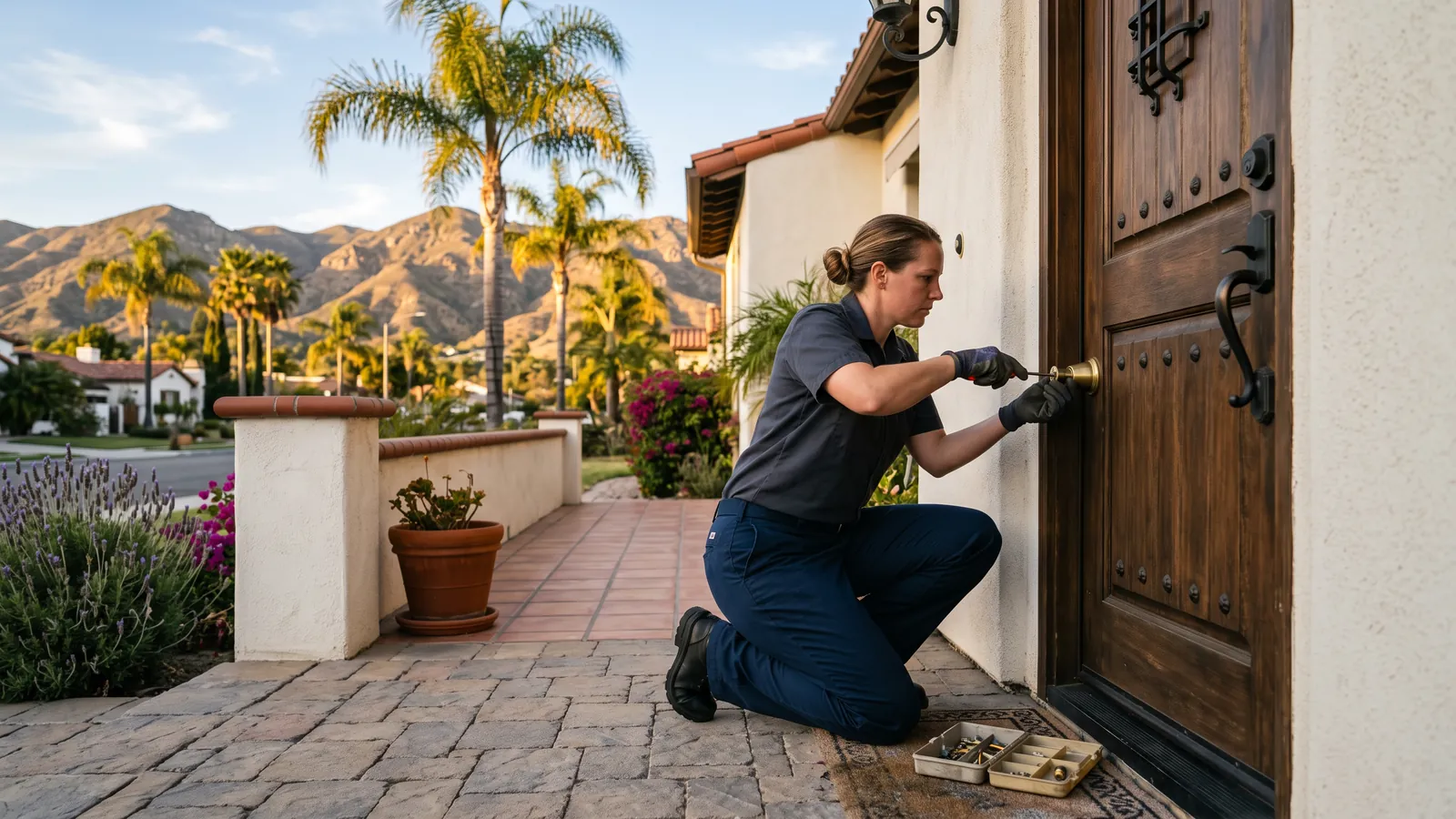
A house rekey replaces the internal pins in your existing lock cylinders so old keys stop working, without swapping out the hardware itself. It's one of the most cost-effective ways to secure a Corona home after a move-in, a lost key, or a tenant change. The mistakes below are the ones that most often leave homeowners with a false sense of security.
Skipping the Back Door, Side Gate, or Garage Entry
The front door deadbolt is usually top of mind, but it's rarely the only way into a house. Corona homes often have a side gate leading to the backyard, a slider off the patio, a laundry room door facing the driveway, or an interior door connecting the garage to the house. If you rekey the front entry and forget the rest, anyone holding an old key to a side or garage door still has a way in.
This happens most often with homes that have had multiple occupants over the years — a rental that's changed tenants, a property bought from an estate sale, or a house where a previous owner ran a home business and handed out keys to contractors. Before scheduling, walk the exterior of your home and list every door that locks, including the one from the garage into the laundry room. A rekey all house locks approach covers every cylinder on the property in one visit, which is almost always simpler than handling doors one at a time as you remember them.
Assuming Every Lock Can Be Rekeyed to the Same Key
Pin-and-tumbler cylinders can usually be rekeyed to match a single key, but "usually" is doing some work in that sentence. Mixing lock brands, lock grades, or older hardware with newer hardware sometimes means a cylinder isn't compatible with a shared keyway. Homeowners who assume everything will match without checking first can end up disappointed when the locksmith arrives and finds a mismatched set.
The fix isn't complicated: have a locksmith inspect each lock before work starts. Compatible cylinders get grouped into one keyed-alike set, and anything incompatible gets flagged so you can decide whether to replace just that one lock. Keyed alike locks service exists specifically for this — getting every door on a single key is the point, and it's worth confirming compatibility up front rather than assuming it.
Not Deciding Rekey vs. Replace Before the Appointment
Rekeying and replacing solve different problems, and conflating them leads to either overpaying for new hardware you didn't need or settling for a rekey on a lock that's actually failing. Rekeying makes sense when the lock body itself is sound — no worn cylinder, no loose strike plate, no sticking bolt — and you simply want old keys invalidated. Replacement makes more sense when the hardware is old, damaged, doesn't meet current security preferences, or doesn't match the rest of your doors.
A few signs a lock may need replacing rather than rekeying:
- The key already wiggles or sticks before you touch the pins
- The deadbolt doesn't fully extend into the strike plate
- The exterior is visibly corroded or the finish has failed
- You want to upgrade to a higher security-grade cylinder
If you're not sure which category your locks fall into, a locksmith can evaluate them in person. The rekey or replace locks guide breaks this down further if you want to think it through before anyone arrives.
Confusing "Change the Key" With "Change the Lock"
Some homeowners call asking to "change the locks" when what they actually want is new keys for locks that are otherwise fine. Others ask for a rekey when a lock is genuinely failing and needs full replacement. The terminology mix-up isn't a big deal on its own, but it can lead to the wrong service being booked, which wastes a visit.
It helps to know the difference going in:
- Rekeying changes the internal pins so a new key works and the old one doesn't — the lock body stays the same.
- Key replacement without lock replacement is effectively the same thing as rekeying, just described from the key side rather than the lock side.
- Lock replacement swaps out the entire mechanism, cylinder and all, usually because of damage, age, or a desired upgrade.
If your goal is simply to make old keys stop working, change key without replacing lock is the service category you want, and it's worth naming that clearly when you call so the right work gets scheduled.
Rekeying Only After Something Goes Wrong
A lot of house rekey calls come in reactively — after a breakup, a bad contractor experience, a lost key, or a burglary attempt. Reactive rekeying isn't a mistake exactly, but waiting until there's a problem means you're doing it under stress, often at odd hours, and sometimes after an incident that could have been prevented.
Fall is a reasonable time to get ahead of it in Corona. Daylight saving time ends in November, which means it gets dark earlier and porches, driveways, and side gates get less daylight scrutiny in the evening hours when people are coming and going from school pickups or holiday errands. It's also a season when Santa Ana wind events prompt power shutoffs in some foothill-adjacent neighborhoods, which can affect electronic locks and alarm systems that rely on steady power. A rekey ahead of the holidays — before houseguests, package deliveries, and out-of-town trips pick up — is simple preventive maintenance rather than a response to an incident.
Forgetting About Spare Keys Already in Circulation
Rekeying addresses the cylinder, but it doesn't retrieve keys that are already out in the world. If you've given spares to a dog walker, a former roommate, a contractor who did a kitchen remodel, or a neighbor who waters your plants, those keys become useless the moment you rekey — which is the point. But homeowners sometimes forget to think through who currently holds a key before scheduling, and end up surprised later when someone mentions they still have one, not realizing it stopped working months ago.
Before your appointment, it's worth making a short mental list of who has keys to your home right now. That list often includes people you wouldn't think of immediately: a house sitter from two summers ago, a lockbox code shared with a real estate agent during a sale, or a hidden key under a planter that a neighbor knows about. Rekeying handles all of it at once, but only if you follow through and actually schedule it rather than assuming an informal "I'll ask for the key back" conversation covers the same ground.
Not Verifying the Locksmith's License Before Scheduling
California requires locksmiths to be licensed through the Bureau of Security and Investigative Services under the Locksmith Act (Business and Professions Code 6980 et seq.). This matters for a house rekey specifically because the work involves someone accessing the inside of your lock cylinders and, in many cases, being alone at your front door with tools that can open it. Skipping this check is an easy mistake to make when you're in a hurry, but it's worth the extra minute.
You can verify any California locksmith company's license directly at search.dca.ca.gov. A legitimate locksmith should also expect to verify your identity and proof of ownership or residence before doing any work — that's a normal part of the process, not an inconvenience, and it protects you as much as it protects them. If a locksmith skips that step entirely, treat it as a red flag rather than a convenience.
Not Getting a Clear Quote Before Work Starts
Costs for a house rekey depend on a few real factors: how many locks are involved, whether the cylinders are standard or high-security, whether any hardware turns out to need replacement instead of rekeying, and how accessible the property is. None of that can be estimated accurately over a text message. A locksmith should look at your doors, or at minimum ask detailed questions about them, before giving you a number — and that number should be confirmed before any work begins, not adjusted afterward.
Homeowners sometimes skip this step because they're focused on getting the job done quickly, especially during a stressful move or after a lock-related scare. It's worth the extra two minutes to get a quote locked in first, so there's no ambiguity once the work is finished.
Overlooking Rental Property Rules If You're a Landlord
If you own rental property in Corona, California law places specific obligations on you around locks. Civil Code 1941.3 requires a working deadbolt on the main entry door of a rental unit. Civil Code 1941.5 and 1941.6 address lock changes related to protected tenants, including situations involving domestic violence, and establish timelines for when a landlord must rekey after a tenant request in those circumstances. Treating a rekey as purely discretionary when a legal obligation applies is a mistake that can create liability down the line, separate from the security question.
If you manage turnover between tenants, rekeying between every occupancy — regardless of whether a tenant asks for it — is a reasonable baseline practice, since you generally don't know how many keys a departing tenant had made during their lease.
How to Get This Right the First Time
The simplest way to avoid most of these mistakes is to handle the whole property in one visit rather than piecing it together over time. A locksmith can walk your doors with you, confirm what's compatible for a keyed-alike set, flag anything that genuinely needs replacing instead of rekeying, and quote the full job before touching a single cylinder. If you're in Corona and want this done as one coordinated job rather than several smaller ones, house rekey in Corona covers exactly this scope, and rekey locks has more detail on how the service works generally.
For anything outside rekeying — lock repair, lockouts, or other residential work — Locksmith in Corona covers the broader range of services available in the area.
Reach Julian's Locksmith in Corona
Julian's Locksmith is a licensed, insured, and bonded mobile locksmith (California locksmith company license LCO7891, verifiable at search.dca.ca.gov) serving Corona and 118 other cities across San Bernardino, Riverside, Los Angeles, and Orange counties. We're available 24 hours a day, every day of the year, including overnight and holidays, and we verify ID and ownership or residence before opening any lock or starting a rekey. You'll get a clear quote before any work begins.
To schedule a house rekey in Corona, call (951) 903-3193, email info@julians-locksmith.com, or reach out through our contact page.
Frequently asked questions
How long does a house rekey take in Corona?
Most single-family homes take under an hour once a locksmith is on-site, depending on how many locks need new pins. Older or stiff mechanisms, security hardware, or mismatched brands can add time. A locksmith can give you a firm estimate after looking at your doors and confirming how many locks are involved.
Can all my locks be rekeyed to one key even if they're different brands?
In many cases, yes. Pin-and-tumbler cylinders from different manufacturers can often be rekeyed to a shared key if the cylinders are compatible. A locksmith checks each lock before starting. If a lock can't be matched, replacing just that cylinder with a compatible one is usually simpler than replacing the whole set.
Is rekeying enough, or should I replace the locks instead?
Rekeying is usually sufficient if the hardware itself is in good condition and you simply want old keys invalidated. Replacement makes more sense if a lock is worn, damaged, lacks reinforced strikes, or you want to upgrade to a higher security grade. A locksmith can walk through each door with you.
Do I need to rekey if I just bought a house in Corona?
It's worth doing. You generally don't know how many keys exist or who holds them after a sale, including past owners, agents, or contractors. Rekeying resets the locks to new keys you control, and it doesn't require swapping out the hardware if the existing locks are in good shape.
What should I have ready before a rekey appointment?
Have photo ID and proof of ownership or residency, such as a deed, lease, or utility bill, since locksmiths verify this before working on a home. Also walk through your property beforehand and make a list of every door, gate, and shed that needs a new key so nothing gets missed.
More locksmith advice
- Home Lockout Decision Guide: Wildomar Service Options Compared
- Your On-the-Spot Checklist for Keys Locked in Trunk in Cypress
- Cypress Multi-Door Access Control: Detailed Compliance Checklist
- Smart Deadbolt Installation in La Mirada: Deep-Dive FAQ
- Transponder Key Replacement in Glendora: Step-by-Step Guide
- High Security Key Duplication Checklist for Perris Homes