Employee Key Control System Cost: Newport Beach Guide
By Julian's Locksmith, , 8 min read
A plain-English look at what drives the cost of an employee key control system in Newport Beach, so you can budget accurately before calling a locksmith.
A functional employee key control system for a Newport Beach business typically costs more or less depending on how many doors and key holders you have, whether you need a master key hierarchy, what keyway technology you choose, and whether you want a physical key cabinet, tracking software, or both. The biggest overpayment risk is buying more restriction and software than your staff size actually needs, or rekeying hardware that didn't need replacing. This guide breaks down each cost factor so you can budget accurately before calling a locksmith.
What an Employee Key Control System Actually Includes
"Employee key control system" covers more than a lockbox on the wall. It's the combination of hardware, key authority, and record-keeping that determines who can get a key cut, who holds which key, and what happens when someone leaves the company or loses one. For a retail strip near Fashion Island or an office suite off MacArthur Boulevard, this usually means:
- Restricted or patented keyways that can't be duplicated at a hardware store
- A documented master key hierarchy showing which keys open which doors
- A physical key cabinet or electronic key tracking system
- A signed-out log tying each key to a named employee
- A policy for what happens after a termination or a lost key
Each of these pieces has its own cost driver, and you don't necessarily need all of them to get meaningful control over who can get through your doors.
Lock Hardware and Keyway Technology
The single biggest line item is usually the lock hardware itself, specifically the keyway. Standard pin tumbler cylinders are inexpensive but can be duplicated almost anywhere, which defeats the purpose of key control. Restricted keyways use geometry that's patented or factory-controlled, so blanks are only available through an authorized locksmith, and every cut gets logged against your account.
Restricted keyway systems cost more upfront than generic cylinders for a few reasons:
- The cylinders themselves are manufactured to tighter tolerances
- Key blanks are sourced through a controlled supply chain rather than a hardware store rack
- The locksmith has to maintain signature cards or digital authorization records tied to your business
If your property already has compatible commercial-grade cylinders, you may only need master key rekey work rather than full hardware replacement, which keeps costs down considerably. A locksmith evaluating your commercial locksmith needs will usually check cylinder brand and condition before recommending a swap.
Number of Doors, Keys, and Access Tiers
Cost scales with the number of doors in the system and how many different access tiers you need. A single-tenant office with one exterior door and a storage closet is a simple job. A multi-tenant commercial building in Newport Beach with a leasing office, common areas, mechanical rooms, and individual suite doors is a much bigger undertaking, because each tier of access needs its own key cut within the master hierarchy.
Typical access tiers for a mid-sized commercial property include:
- Grand master key for ownership or facilities management
- Building master key for property managers
- Sub-master keys for department heads or shift supervisors
- Individual change keys for line staff, limited to their own work area
The more tiers you need, the more complex the pinning schedule, and the more time a locksmith spends designing and cutting the hierarchy correctly. A master key system with three or four tiers takes considerably more planning than a flat system where everyone shares one key.
Master Key System Design and Rekeying Scope
Designing the key hierarchy itself is labor, separate from the hardware. A locksmith has to map every door, decide which keys should open which combinations of doors, and build a pinning chart that won't create unintended overlaps. Getting this wrong is a common and expensive mistake: a poorly designed hierarchy can accidentally let a low-tier key open a high-security door, or lock out an employee from a room they legitimately need.
Rekeying scope affects cost directly:
- Rekeying existing cylinders to match a new hierarchy is less expensive than replacing cylinders outright
- Adding new doors to an existing master system costs less than designing a system from scratch
- Properties with mismatched cylinder brands often need standardization first, which adds labor
If your Newport Beach property already has some restricted hardware installed from a previous tenant or owner, tell the locksmith up front. Sometimes the existing hierarchy can be extended rather than torn out and redone, which saves significant money. This is worth discussing before scheduling a key control system consultation so the locksmith can plan the visit around what's reusable.
Key Tracking Tools: Cabinets, Logs, and Software
Hardware controls who can physically turn a key in a lock. Tracking controls who's holding which key at any given moment, and this is where many businesses either overspend or underspend.
Physical Key Cabinets
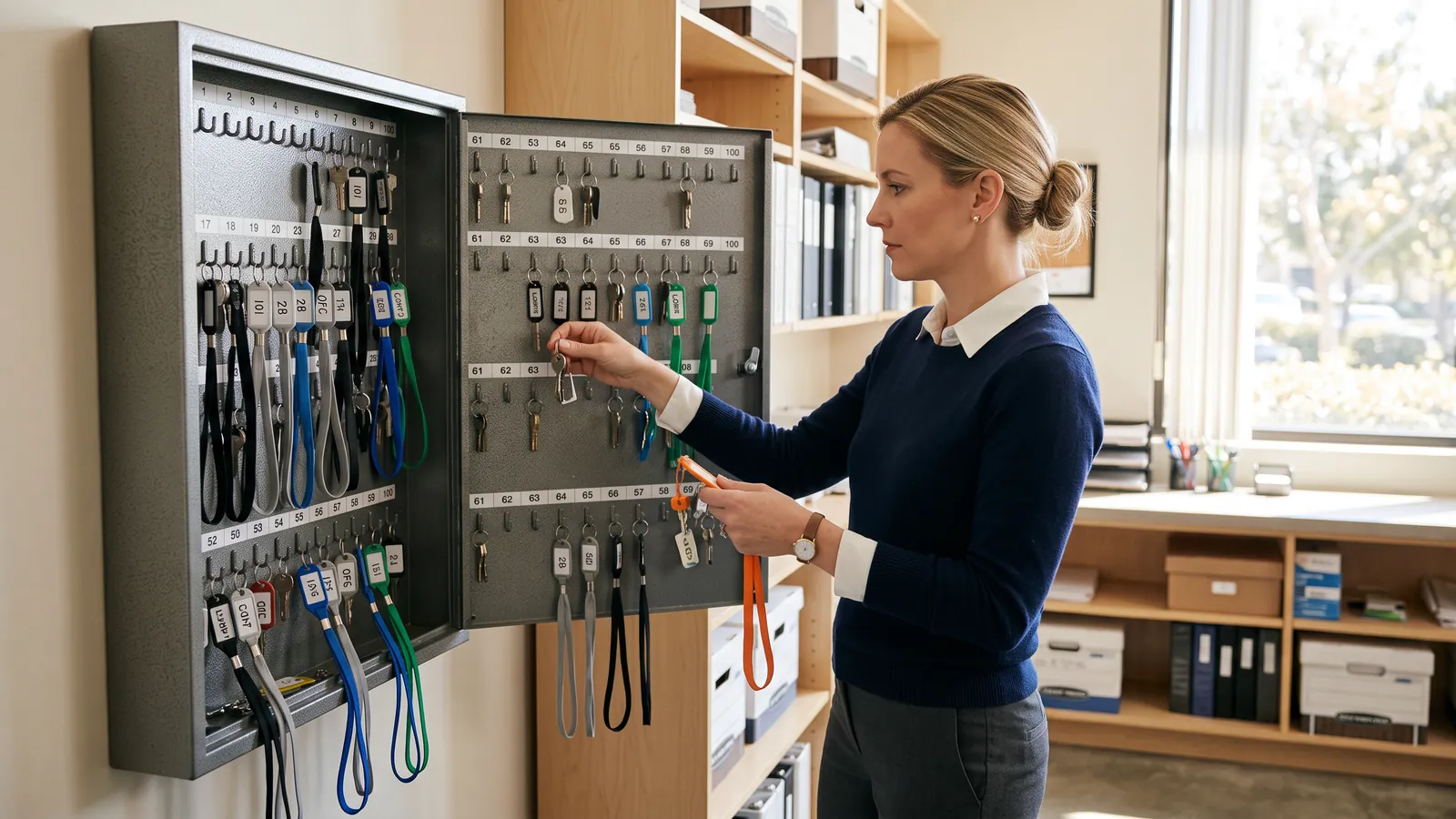
A locking key cabinet with numbered hooks and a sign-out sheet is the simplest and least expensive tracking method. It works well for smaller staff counts where a manager can realistically monitor sign-outs. The cost here is mostly the cabinet itself and a bit of locksmith time to label it against your key schedule.
Electronic Key Tracking
Larger operations, or those with high turnover, sometimes move to electronic key cabinets that log every checkout and return automatically, sometimes tied to an employee badge. This costs more than a basic cabinet but reduces the labor of manual tracking and gives you a digital audit trail if a key ever goes missing. Whether this makes sense depends on how many employees handle keys and how often your roster changes.
Paper or Digital Logs
Even without a dedicated cabinet, a simple log — paper or spreadsheet — that records who holds which numbered key costs nothing beyond the time to set it up. Many smaller Newport Beach businesses start here and upgrade to a cabinet or software only after growing past a handful of key holders.
Matching the tracking method to your actual staff size, rather than buying the most advanced option available, is one of the easiest ways to avoid overpaying.
Site Complexity and Newport Beach Property Factors
Where your property sits and how it's built affects labor time, which affects cost. A single-story retail unit is straightforward. A multi-building complex, a marina-adjacent property, or a building with restricted parking and limited loading access takes a locksmith longer to service, which shows up in labor time even though the hardware itself doesn't change.
Coastal exposure is also worth factoring in. Salt air along the Newport Beach coastline accelerates corrosion in lower-grade cylinders and exterior hardware faster than inland properties. Choosing corrosion-resistant finishes on exterior doors as part of your key control upgrade can cost a bit more initially but reduces how often hardware needs servicing later.
Fall brings its own scheduling pressure in Southern California. Santa Ana wind events and elevated fire-season risk sometimes affect power and access to certain areas, and many businesses use the slower post-summer stretch to handle facility projects before the holiday retail rush and daylight saving time's earlier darkness increase foot traffic and after-hours activity. Scheduling a key control project in September or October, before back-to-school and holiday staffing changes bring on new employees who'll need keys, is a practical way to avoid doing the work twice.
Labor, Access Logistics, and Licensing
Labor cost reflects the time a locksmith spends on-site: measuring doors, cutting and testing keys, re-pinning cylinders, and verifying that every tier of the hierarchy actually works as designed before they leave. A rushed installation that isn't tested door-by-door often leads to a callback, which costs you more in the long run than paying for a thorough initial visit.
Before hiring anyone for commercial key control work, confirm they're licensed under California's Locksmith Act (Business and Professions Code Section 6980 et seq.) and that the license is active. You can verify any California locksmith company's license at search.dca.ca.gov. Julian's Locksmith holds company license LCO7891 and carries insurance and bonding, and we verify identification and proof of ownership or management authority before beginning commercial key work, which protects you as the property owner.
A quote should always come before work starts, based on an actual look at your doors, hardware, and the access tiers you need — not a flat rate quoted sight unseen over the phone.
A Checklist to Avoid Overpaying
Use this sequence before committing to a full employee key control system install:
- Count your actual doors and group them by who needs access to each one.
- Check whether existing cylinders are commercial-grade and compatible with restricted keyways, which may avoid a full hardware replacement.
- Decide how many access tiers you genuinely need — don't default to a four-tier hierarchy if two will do.
- Match your tracking method (cabinet, log, or software) to your current staff size, not an anticipated future size.
- Ask whether an existing master key hierarchy on the property can be extended rather than rebuilt.
- Confirm the locksmith's license number and get a written quote based on an on-site assessment.
- Schedule the work during a lower-traffic period, such as before the holiday staffing ramp-up, to avoid disrupting operations.
Related upgrades, like a safe combination change for a cash office or back-of-house vault, are often bundled into the same visit as a key control project, since the locksmith is already on-site verifying your security setup. Bundling compatible jobs together can reduce overall labor time compared to scheduling separate visits.
Why Businesses in Newport Beach Specifically Should Plan Ahead
Newport Beach has a mix of retail, hospitality, marine-adjacent commercial properties, and professional office space, each with different foot traffic and turnover patterns. A boutique with seasonal hiring needs a different key control setup than a professional office with a stable staff roster. Before committing to a system, think through how often your staff actually turns over, since every departure that isn't tracked by a key control system is a potential unaccounted-for key in circulation.
If you manage a building with several tenants, a dedicated employee key control system designed around your specific tenant mix, rather than a one-size-fits-all package, generally costs less over time because you're not paying to maintain tiers of access nobody uses.
How to Get a Quote in Newport Beach
Julian's Locksmith is a licensed, insured, and bonded mobile locksmith (license LCO7891) available 24 hours a day, seven days a week, including overnight and weekends. We serve Newport Beach and the surrounding Orange County area as part of our coverage across 119 cities in Southern California.
To get an accurate quote for an employee key control system, master key hierarchy, or related commercial hardware work, call (951) 903-3193 or reach out through our contact page. We'll ask about your door count, current hardware, and staff size before quoting, and we verify ID and proof of ownership or management authority before any commercial work begins. No work starts until you've approved a price based on your actual property.
Frequently asked questions
How much does an employee key control system cost in Newport Beach?
Cost depends on the number of doors, keyway type, whether you need a master key hierarchy, and if you want tracking software or a physical key cabinet. A licensed locksmith can only give an accurate figure after seeing the property, which is why Julian's Locksmith provides a quote before any work starts.
What is the difference between a key control system and a master key system?
A key control system governs who holds keys, how they're logged, and how lost keys get handled. A master key system is the physical lock and key hierarchy that lets different staff access different doors with one master key opening everything. Most commercial properties in Newport Beach use both together.
Do I need to rekey everything to add key control?
Not always. If your existing cylinders are in good condition and compatible with restricted keyways, a locksmith may only need to rekey or re-pin them rather than replace hardware. Full replacement is usually only needed when cylinders are worn, mismatched, or use a keyway that's no longer restricted.
Can a key control system stop employees from copying keys?
Restricted keyways use patented key blanks that hardware stores and most key-cutting machines can't duplicate without authorization from the locksmith of record. This is one of the main cost drivers, since it requires controlled key blanks and documented authorization for every cut.
How often should a business audit its key control system in Newport Beach?
Many property managers review their key log and master key hierarchy at least once a year, plus any time there's staff turnover, a lost key, or a tenant change. Seasonal turnover around back-to-school and the holidays is a common trigger for a review.
More locksmith advice
- Home Lockout Decision Guide: Wildomar Service Options Compared
- Your On-the-Spot Checklist for Keys Locked in Trunk in Cypress
- Cypress Multi-Door Access Control: Detailed Compliance Checklist
- Smart Deadbolt Installation in La Mirada: Deep-Dive FAQ
- Transponder Key Replacement in Glendora: Step-by-Step Guide
- High Security Key Duplication Checklist for Perris Homes