
Commercial Door Repair in Fontana: How Hardware Works
By Julian's Locksmith, , 9 min read
A plain-language guide to how commercial door hardware works, what fails first in Fontana's climate, and what to expect from a commercial door repair visit.
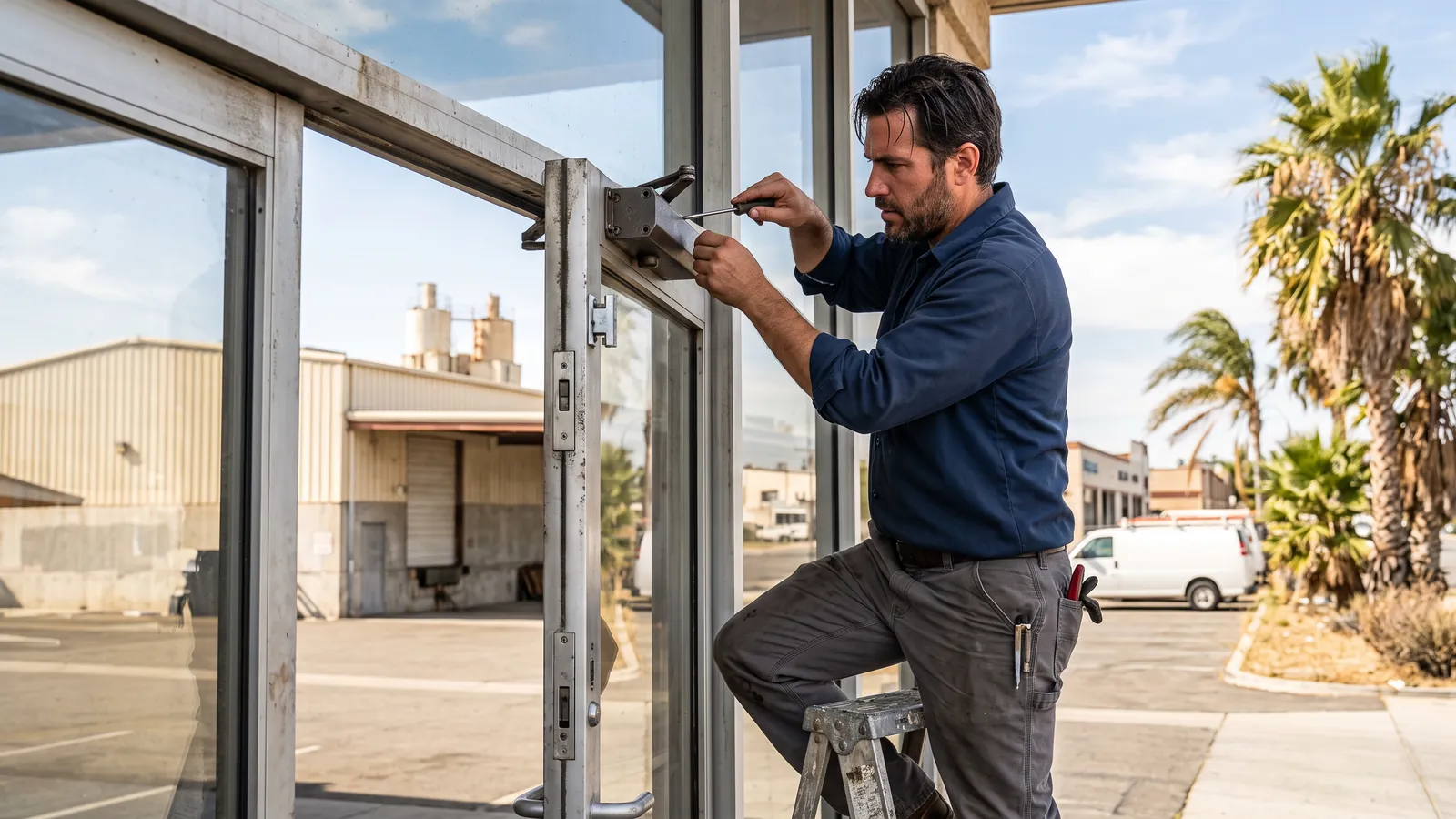
If a storefront door in Fontana won't latch, a panic bar sticks, or a closer leaks fluid, the cause is almost always mechanical wear in a handful of parts: hinges, strike plates, closers, or latch mechanisms. Understanding how these parts work together makes it much easier to describe the problem accurately and get it fixed quickly. This guide walks through the hardware piece by piece, in plain language, with an eye toward the heat, wind, and heavy daily use that commercial doors face in Fontana.
How a Commercial Door Actually Closes and Locks
A commercial door isn't just a slab of metal or glass on hinges. It's a small system of coordinated parts, and each one has a job:
- Hinges hold the door in the frame and let it swing. Commercial hinges are heavier than residential ones because the doors are heavier and get opened far more often, sometimes hundreds of times a day.
- The latch is the spring-loaded piece that extends from the door edge into the strike plate on the frame, holding the door shut without being locked.
- The strike plate is the metal plate mounted on the frame with a cutout that receives the latch (and deadbolt, if there is one).
- The door closer is the hydraulic or spring-loaded arm, usually mounted at the top of the door, that pulls the door shut after someone walks through and controls how fast it swings.
- The panic bar (exit device) is the horizontal bar across the inside of the door that lets people exit by pushing, without needing a key, often required by fire and building code for public-facing spaces.
When all of these are aligned and adjusted correctly, the door closes smoothly, the latch lands squarely in the strike, and the lock engages without anyone forcing it. When one part drifts out of adjustment, the whole system can start to fail, even if the lock itself is fine. If you want a deeper breakdown of how these pieces interact, Commercial Door Hardware covers the mechanical side in more detail.
Why Hinges and Alignment Matter More Than the Lock Itself
A surprising number of "broken lock" calls turn out to be alignment problems. Doors are heavy, and over thousands of open-close cycles, hinge screws loosen in the frame, the hinge pins wear down, or the door itself sags slightly on its hinges. Even a sag of a fraction of an inch is enough to throw the latch out of line with the strike plate.
This matters in Fontana specifically because many commercial buildings run exterior doors constantly through a hot, dry climate. Metal frames expand in heat and contract at night, and that daily cycling, repeated across months, gradually shifts tolerances that were cut tight when the door was installed. Add a gusty afternoon and a door that gets caught by the wind and slammed, and you accelerate the wear considerably.
Signs the Problem Is Alignment, Not the Lock
- The key turns fine, but the door still won't latch unless you lift or push it.
- The latch audibly scrapes against the strike plate instead of sliding in cleanly.
- The door looks slightly crooked in the frame when closed.
- You can see daylight or a gap between the door and frame that wasn't there before.
If this sounds familiar, the detailed troubleshooting guide at Commercial Door Won't Latch in Fontana walks through what to check before assuming you need an entirely new lock.
How Door Closers Work, and Why They Fail
A door closer is a small hydraulic cylinder, usually mounted on the top of the door or the frame, connected by an arm. When someone opens the door, the closer compresses internally. When they let go, hydraulic fluid and spring tension push the door closed at a controlled speed.
Closers fail in a few predictable ways:
- Fluid leaks. Over years of use, seals wear and hydraulic fluid seeps out, usually visible as an oily residue near the cylinder. Once enough fluid is gone, the door swings shut too fast, slamming instead of closing gently.
- Arm misadjustment. The arm has screws that control closing speed and latching speed separately. If these drift, the door may close most of the way, then stop just short of the frame.
- Mounting plate loosening. Constant motion loosens the screws holding the closer to the door or frame, which changes the angle of the arm and throws off the whole mechanism.
In a dry climate, heat can also make hydraulic fluid thinner and seals more brittle, which is one reason closers in Southern California commercial buildings sometimes need adjustment more often than the manual schedule suggests.
Panic Bars: A Safety Device With Its Own Failure Points
Panic bars (also called exit devices) are required in many commercial and public buildings specifically so people can exit quickly during an emergency without needing a key. They work by connecting the horizontal push bar to a latch mechanism inside the door, usually through a rod or cable system that retracts the latch when the bar is pushed.
Because panic bars get used constantly, and because many jurisdictions require them to work reliably at all times for occupied buildings, their failure points are worth knowing:
- Internal rod misalignment, where the connecting rod between the bar and the latch mechanism shifts and no longer fully retracts the latch.
- Spring fatigue, where the bar itself feels loose or doesn't snap back fully after being pushed.
- Strike side wear, where the latch keeps catching on a worn strike plate even though the bar itself works fine.
- Dogging mechanism issues, for exit devices that have a feature allowing the latch to be held retracted (common in retail storefronts during business hours).
A panic bar that sticks or doesn't fully latch isn't just an inconvenience, it can be a liability and life-safety issue, so it tends to be one of the higher-priority repairs for commercial property owners. Panic Bar Repair in Fontana covers the specific signs that indicate a panic bar needs service rather than replacement.
Storefront Doors: Glass, Aluminum Framing, and Their Own Quirks
Storefront doors (the narrow-stile aluminum-and-glass doors common on retail strips and small commercial buildings) use a different hardware profile than solid steel commercial doors. The lock cylinder, latch, and closer are built into a narrower frame, which means tolerances are tighter and there's less room for error when something shifts.
Common storefront-specific issues include:
- Pivot hinges at the top and bottom of the door wearing unevenly, causing the door to drop slightly on one side.
- Thin aluminum framing flexing under wind pressure, especially on exposed storefronts that catch gusts directly.
- Deadbolts mounted in narrow stiles that are more sensitive to alignment than wider commercial doors, since there's less metal to work with.
Fontana's Santa Ana wind season, typically running through fall, puts extra pressure on storefront doors that face open parking lots or wide intersections, since gusts can catch an opening door and strain the hinges or slam it hard enough to jar the closer's adjustment. If you manage a retail space and you're noticing new rattling, dragging, or gaps around a glass storefront door, Storefront Door Repair in Fontana covers what's specific to that hardware type.
Latch Mechanisms: The Small Part That Causes Big Problems
The latch itself, the spring-loaded bolt that extends from the door edge, seems simple, but it's often the actual point of failure even when people assume the whole lock is broken. Latches can fail for a few reasons:
- Spring fatigue inside the latch mechanism, so it doesn't extend fully or retracts too easily.
- Dirt and debris buildup inside the latch housing, especially in dusty conditions, which can slow the mechanism down.
- Worn latch bolt, where the beveled edge that should slide smoothly into the strike has worn flat, making it catch instead of sliding.
Because the latch is a mechanical part with moving pieces, it wears out independently of the lock cylinder. You can have a perfectly good lock cylinder attached to a latch that no longer functions correctly. If a door is sticking, dragging, or not fully clicking shut, the detailed explainer at Commercial Latch Repair in Fontana walks through how to tell whether the latch, the strike, or the alignment is the actual problem.
Seasonal Factors That Affect Commercial Door Hardware in Fontana
Fall in Southern California brings a specific combination of conditions that stresses commercial door hardware more than people expect:
- Santa Ana winds put repeated pressure on exterior doors, especially storefront and warehouse doors that aren't shielded by awnings or windbreaks. Gusts can slam doors shut hard enough to jar closers and loosen hinge screws over a season.
- Temperature swings between hot afternoons and cooler nights cause metal frames to expand and contract daily, gradually shifting alignment on doors that were already close to the edge of tolerance.
- Fire season air quality sometimes means buildings keep doors closed more consistently to manage dust and smoke, which actually increases wear on closers since they're doing more of the latching work rather than doors being propped open.
- Back-to-school and holiday prep often means more foot traffic through commercial entrances for a few months, which accelerates wear on hinges, latches, and panic bars that are already due for adjustment.
None of this means doors fail on a predictable schedule, but it does explain why problems that were minor in summer sometimes become obvious glitches by late fall. A door that dragged slightly in August can stop latching altogether by November once wind and temperature cycling finish the job.
What a Commercial Door Repair Visit Typically Involves
For property owners and managers unfamiliar with this kind of work, it helps to know what to expect. A technician handling commercial door hardware will typically:
- Test the door's current behavior, opening and closing it to observe where in the cycle the problem occurs.
- Check hinge alignment and tightness, strike plate position, and whether the latch extends fully.
- Inspect the closer for fluid leaks, adjustment screw settings, and arm angle.
- If a panic bar is involved, test the internal rod or cable mechanism and the dogging feature if present.
- Identify whether the fix is adjustment (tightening, realigning, lubricating) or replacement of a worn part.
- Provide a quote before doing any further work, since some repairs are quick adjustments and others involve ordering a replacement part.
Before any lock-related work begins, a technician will also verify that you own or manage the property, since commercial door hardware repair often overlaps with security and access control. This isn't a formality, it protects the business and is standard practice for licensed locksmith work in California under the Locksmith Act (Business and Professions Code 6980 et seq.).
Finding Reliable Commercial Door Repair in Fontana
If you're dealing with a door that won't latch, a panic bar that sticks, or a closer that's started slamming the door instead of easing it shut, it's worth getting the hardware looked at before it becomes a bigger access or security issue. A full breakdown of the service area and what's covered locally is available at Commercial Door Repair in Fontana, and general locksmith services for the area are listed at Locksmith in Fontana.
Julian's Locksmith is a mobile, licensed locksmith company (California license LCO7891, verifiable at search.dca.ca.gov) serving Fontana and 118 other cities across San Bernardino, Riverside, Los Angeles, and Orange counties. The company operates 24 hours a day, every day of the year, including overnight and holidays, and provides a quote before any work begins.
To reach us in Fontana, call (951) 903-3193, available around the clock, or visit the Contact page to send details about your door hardware issue in advance.
Frequently asked questions
Why does my commercial door suddenly stop latching after years of working fine?
Most of the time it's gradual wear catching up with you: hinges sag a fraction of an inch, the strike plate shifts, or the door closer loses tension. Heat and wind cycles in Fontana speed this up by expanding and contracting the frame. It rarely fails instantly, it just crosses a threshold where the latch no longer reaches the strike.
Is a panic bar the same thing as a door closer?
No. A panic bar (exit device) is the hardware that lets people push to exit without a key, often required by fire code for occupied commercial spaces. A door closer is a separate mechanism, usually mounted at the top of the door, that controls how the door swings shut and at what speed. A door can have one, both, or neither.
Can Santa Ana winds really damage commercial door hardware?
Yes. Sustained wind pressure and sudden gusts stress hinges, closers, and alignment, especially on exterior storefront and warehouse doors that get pushed or slammed repeatedly. Over a windy season this can loosen screws, bend strike plates, or wear out closer arms faster than normal use would.
Do I need a licensed locksmith for commercial door hardware repair?
California requires locksmith companies to hold a license from the Bureau of Security and Investigative Services under Business and Professions Code 6980 et seq. You can verify any company's license at search.dca.ca.gov before scheduling work on commercial door hardware.
What should I have ready before a commercial door repair technician arrives?
Have proof you own or manage the property, a general description of the problem (door won't latch, panic bar is stuck, closer leaks fluid), and access to the building. A technician will typically verify ID and ownership or authorization before doing any work and will quote the job before starting.
More locksmith advice
- Home Lockout Decision Guide: Wildomar Service Options Compared
- Your On-the-Spot Checklist for Keys Locked in Trunk in Cypress
- Cypress Multi-Door Access Control: Detailed Compliance Checklist
- Smart Deadbolt Installation in La Mirada: Deep-Dive FAQ
- Transponder Key Replacement in Glendora: Step-by-Step Guide
- High Security Key Duplication Checklist for Perris Homes