
Bump-Resistant Locks in Homeland: A Step-by-Step Guide
By Julian's Locksmith, , 8 min read
A step-by-step guide to understanding and installing bump-resistant locks for commercial properties in Homeland, Riverside County.
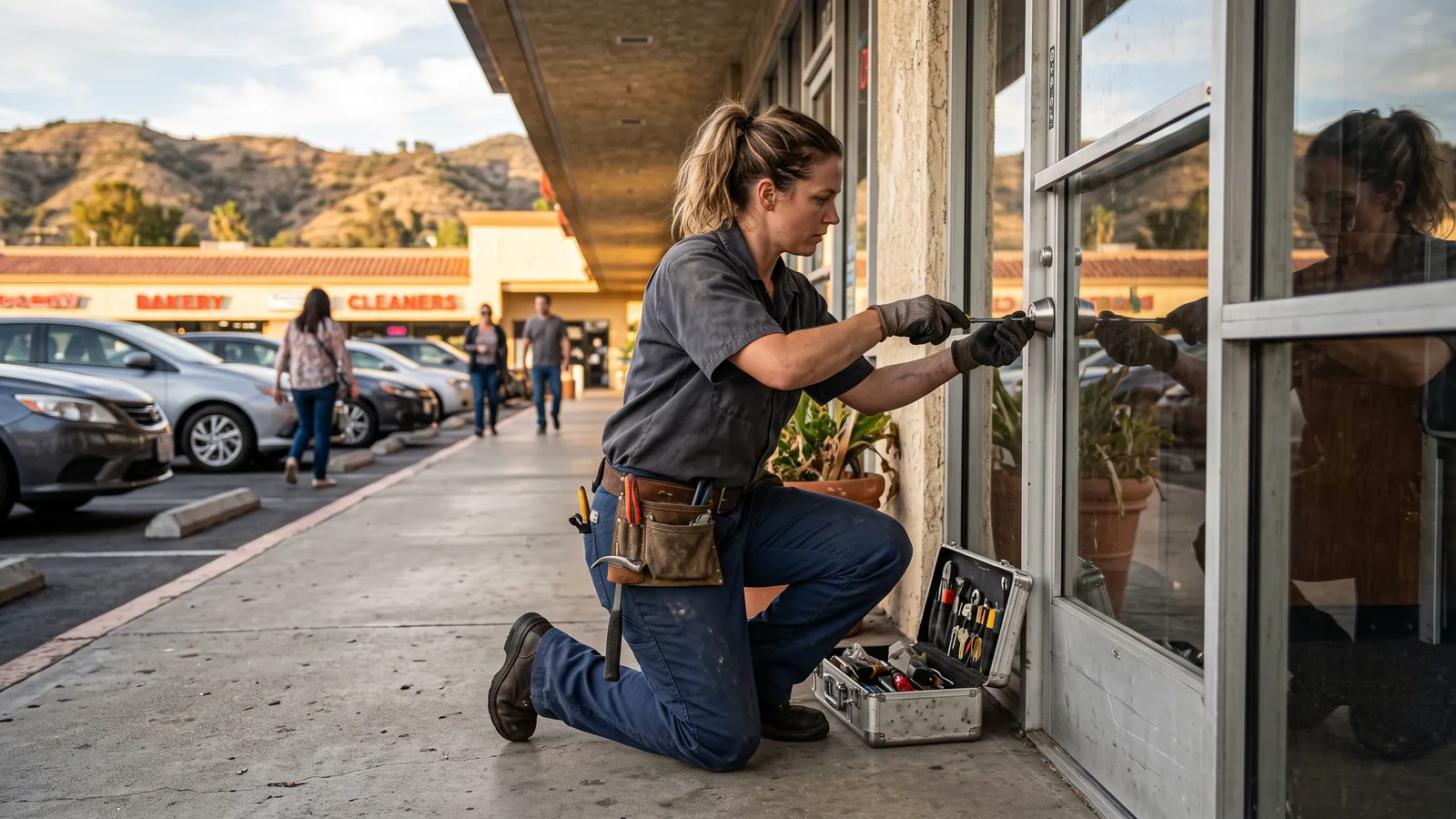
If you manage a shop, warehouse, or office in Homeland and you're worried about lock bumping, the short answer is this: swap standard pin-tumbler cylinders for high-security, bump-resistant hardware on every exterior door, starting with whichever entrance sees the least foot traffic and the most after-hours risk. The process is straightforward when you follow it in order — audit your doors, pick the right cylinder type, confirm keyway control, then schedule installation. Below is the full walkthrough.
Why Lock Bumping Matters for Homeland Businesses
Lock bumping is a manipulation technique that uses a specially cut key, called a bump key, paired with a sharp strike to force pins in a standard pin-tumbler lock to jump to the shear line momentarily. Done correctly, it opens a door without a trace of forced entry. No broken glass, no pried frame, nothing for a responding officer or an insurance adjuster to point to.
Homeland sits in a part of Riverside County that's grown fast, with new retail pads and light-industrial buildings going up near Highway 74 and Sultana Avenue. A lot of that construction still ships with builder-grade cylinders, the kind most vulnerable to bumping. If your business occupies a newer build or a space that's changed hands a few times, there's a decent chance nobody has ever swapped the original locks for anything stronger.
Fall adds its own pressure. Santa Ana wind events and fire-season power shutoffs around Southern California sometimes mean entry systems lose power or backup cameras go dark for stretches, which makes the physical lock the one thing you can still count on. Heading into the holiday shopping stretch and the shift back to standard time, shorter daylight hours mean more of your building sits in darkness during business hours and after. None of that causes lock bumping specifically, but it's a reasonable moment to take inventory of door hardware before the season gets busy.
Step 1: Audit Every Exterior Door
Before buying anything, walk the property and log what you actually have.
- Front and rear entry doors
- Side or alley doors used for deliveries
- Gates or roll-up doors with cylinder locks
- Interior doors protecting inventory, server rooms, or cash handling areas
- Any door with a lock that predates your tenancy
For each one, note the lock brand if visible, whether it's a deadbolt or a lockset, and how many people currently hold keys. This audit also tells you where rekeying alone might solve the problem versus where a full hardware swap makes more sense. If you've recently taken over a space and have no idea who's held a key before you, a straightforward lock rekeying might be the first move even before you think about bump resistance, since a new cylinder means a fresh start regardless of hardware grade.
Step 2: Understand What "Bump-Resistant" Actually Means
Not every lock marketed as "high security" resists bumping the same way. The mechanical answer varies by brand, but the common approaches include:
- Spool and serrated pins that bind at odd angles instead of cleanly reaching the shear line under a bump strike
- Sidebar mechanisms that require a secondary element (beyond pin height) to rotate the plug, which a standard bump key can't replicate
- Disc-detainer systems that use rotating discs instead of spring-loaded pins, a fundamentally different mechanism that bump keys don't address at all
For a commercial property in Homeland, the practical takeaway is to ask any locksmith or supplier directly whether a given cylinder is rated bump-resistant by independent testing, not just labeled "high security" on the box. Our high security locks page breaks down the cylinder types we install and how they compare on pick resistance, drill resistance, and bump resistance specifically, since those are three separate threats.
Step 3: Decide Between Rekeying, Upgrading, or Both
These are different projects and it's worth being clear on which one you need.
Rekeying
Rekeying changes the internal pin configuration so old keys stop working, but it doesn't change the lock's underlying mechanism. If your current hardware is already a decent high-security brand and you just need to cut off a former employee or contractor, rekeying is faster and less involved than hardware replacement.
Hardware Upgrade
If your existing cylinders are basic builder-grade pin tumblers, rekeying them still leaves you vulnerable to bumping, because the mechanism itself hasn't changed. A security lock upgrade swaps the cylinder or the whole lockset for hardware built around bump-resistant principles from the start.
Both Together
Many Homeland business owners do both at once: install new bump-resistant cylinders and, in the same visit, set up a keying scheme that limits who can duplicate keys going forward. That naturally leads into the next step.
Step 4: Consider a Restricted Keyway
A restricted keyway is a patented key profile that blank-key cutters at hardware stores and big-box retailers don't carry. Only the manufacturer or an authorized locksmith can cut keys for that profile, and usually only with signed authorization on file.
This matters for bump resistance in a roundabout but important way: even the best bump-resistant cylinder doesn't help much if anyone can walk into a hardware store and get a duplicate key cut without your knowledge, then later use that legitimate-looking key to let themselves in. A restricted keyway closes that gap by controlling who can get a key made in the first place, not just how hard the lock is to manipulate.
For multi-door commercial properties, pairing a restricted keyway with a documented key control system gives you a record of exactly who holds which key, when it was issued, and what happens when an employee leaves. That combination — hardware that resists bumping, plus a keyway nobody can duplicate off the shelf, plus a log of who has keys — covers the three most common ways commercial locks actually get compromised.
Step 5: Prioritize Doors by Risk, Not Just Visibility
It's tempting to upgrade the front door first because it's the one customers see. But from a security standpoint, rank doors by a few factors:
- How exposed is it after hours? A rear delivery door facing an alley with no cameras is a higher priority than a front door on a lit, visible street.
- What's behind it? A door leading to a cash office, server closet, or narcotics cabinet (for pharmacies or clinics) deserves hardware upgrades before a storage closet does.
- How many people currently have keys, and how long has that list gone unreviewed? Doors with a long, unverified key history are weaker even with decent hardware.
- Is it a shared access point? Strip-mall suites in Homeland sometimes share a rear corridor or loading area with neighboring tenants. Shared doors are worth discussing with your property manager since any upgrade needs everyone's buy-in.
Work down that list rather than treating every door identically. A ten-door retail space doesn't need to upgrade all ten at once; it needs the two or three highest-risk doors handled first, with a plan to get to the rest.
Step 6: Match Hardware to Door Type
Bump-resistant cylinders aren't one-size-fits-all. The door type and existing hardware affect what's possible:
- Storefront aluminum doors with narrow stiles often need mortise cylinders designed for that frame depth.
- Steel commercial doors usually accept standard deadbolt or lockset cylinders but may need reinforced strike plates to match the upgraded lock's resistance to forced entry, not just bumping.
- Roll-up or overhead doors typically use a separate cylinder style (often a disc-tumbler padlock or slide bolt lock), and bump resistance for these looks different than for a swinging door.
- Interior doors protecting sensitive areas can often use a lighter-duty bump-resistant cylinder since they're a second layer behind an already-secured exterior door.
A locksmith familiar with commercial locksmith services in Homeland can tell you on-site which cylinder format fits your existing door prep, since swapping formats sometimes means replacing more than just the cylinder.
Step 7: Schedule Installation Around Your Business Hours
Commercial lock upgrades don't have to mean closing your doors. Most installations happen door by door, so a retail space can stay open while a locksmith works through the list in order of priority. A few scheduling notes specific to this time of year:
- If you're near areas affected by Red Flag Warning wind events, plan for the possibility that a scheduled visit might shift by a day if road conditions or utility shutoffs affect travel.
- With daylight saving time ending in early November, evenings get dark earlier. If your business relies on after-hours deliveries or late closing shifts, prioritize getting bump-resistant hardware on doors used during those darker hours before the time change rather than after.
- Back-to-school season and the run-up to the holidays tend to increase foot traffic and delivery volume for retail and food-service businesses. Scheduling hardware upgrades before that rush, rather than during it, means less disruption.
Step 8: Verify the Work and Keep Records
Once bump-resistant hardware is installed, confirm a few things before considering the job done:
- Get documentation of which cylinder brand and model was installed on each door, for insurance and future service records.
- If you added a restricted keyway, confirm who's listed as authorized to request duplicate keys, and update that list whenever staff changes.
- Test every key issued against every door it's supposed to open, and confirm old keys no longer work if this project included rekeying.
- Store a spare or master key somewhere secure and documented, not in a desk drawer anyone can open.
Any locksmith doing this work for you should also verify your identity and your ownership or authority over the property before cutting keys or opening anything, and should give you a quote before starting any work. That's standard practice and it protects you as much as it protects the locksmith.
What This Costs to Plan For
There's no fixed number here because every property is different, but the main cost drivers are:
- Number of doors being upgraded
- Cylinder brand and security grade chosen
- Whether you're adding a restricted keyway or key control system alongside the hardware
- Condition of existing door prep (whether frames or strike plates need reinforcement too)
- Rekeying needs if you're also clearing out old key history
A locksmith who walks your property can give you a written quote covering all of that before any work begins, so there's no guessing involved.
Reach Julian's Locksmith in Homeland
If you're ready to look at bump-resistant hardware for your Homeland business, or you just want someone to walk the property and tell you where you stand, call (951) 903-3193. Julian's Locksmith is a licensed, insured, and bonded mobile locksmith (California locksmith company license LCO7891, verifiable at search.dca.ca.gov) that operates 24 hours a day, seven days a week, including overnight and holidays. We serve Homeland and 119 cities across San Bernardino, Riverside, Los Angeles, and Orange counties.
You can also visit our dedicated bump-resistant locks page for Homeland for more detail on the specific cylinder brands we carry, or reach out through our contact page to schedule a property walkthrough and get a written quote before any work starts.
Frequently asked questions
What makes a lock bump-resistant?
Bump-resistant locks use pin designs, sidebar mechanisms, or disc-detainer systems that resist the shearline manipulation a bump key relies on. Many high-security cylinders combine spool or serrated pins with hardened inserts and tight manufacturing tolerances, making the bumping technique unreliable or impossible without specialized tools the manufacturer controls.
Can any locksmith install bump-resistant locks, or do I need something special?
Any licensed locksmith can install standard bump-resistant cylinders, but true high-security systems with restricted keyways typically require authorization from the manufacturer. Ask whether the locksmith is an authorized dealer for the brand you're considering, since that affects whether you can get duplicate keys cut elsewhere later.
Are bump-resistant locks required by California law for commercial buildings?
California law does not mandate bump-resistant hardware for commercial properties. Civil Code 1941.3 addresses deadbolts in residential rentals, and Business and Professions Code 6980 et seq. governs locksmith licensing. Upgrading to bump-resistant hardware is a security decision business owners make voluntarily, often tied to insurance or lease requirements.
Do bump-resistant locks also stop lock picking?
Not automatically. Bumping and picking exploit different mechanical weaknesses. Many high-security cylinders address both by adding pick-resistant features like spool pins and anti-drill plates alongside bump resistance, but it's worth confirming with your locksmith which threats a specific lock model is rated to resist.
How much does it cost to upgrade a storefront to bump-resistant locks?
Cost depends on the number of doors, the hardware brand, whether you also want a restricted keyway or key control system, and the condition of existing door prep. A locksmith can walk your property and provide a written quote before any work starts, so you know the full scope in advance.
More locksmith advice
- Home Lockout Decision Guide: Wildomar Service Options Compared
- Your On-the-Spot Checklist for Keys Locked in Trunk in Cypress
- Cypress Multi-Door Access Control: Detailed Compliance Checklist
- Smart Deadbolt Installation in La Mirada: Deep-Dive FAQ
- Transponder Key Replacement in Glendora: Step-by-Step Guide
- High Security Key Duplication Checklist for Perris Homes