
Yucaipa, San Bernardino County
Fixing a Loose Door Lock in Yucaipa: Tighten, Repair or Replace
Short answer: A loose lock is a weaker lock. Wobble lets the bolt and latch drift out of line with the frame, and a knob that already moves is easier to twist off or work loose by force. Fixing a loose door lock in Yucaipa early costs far less than replacing hardware that has worn itself out. Call (951) 903-3193 and describe exactly which part moves.
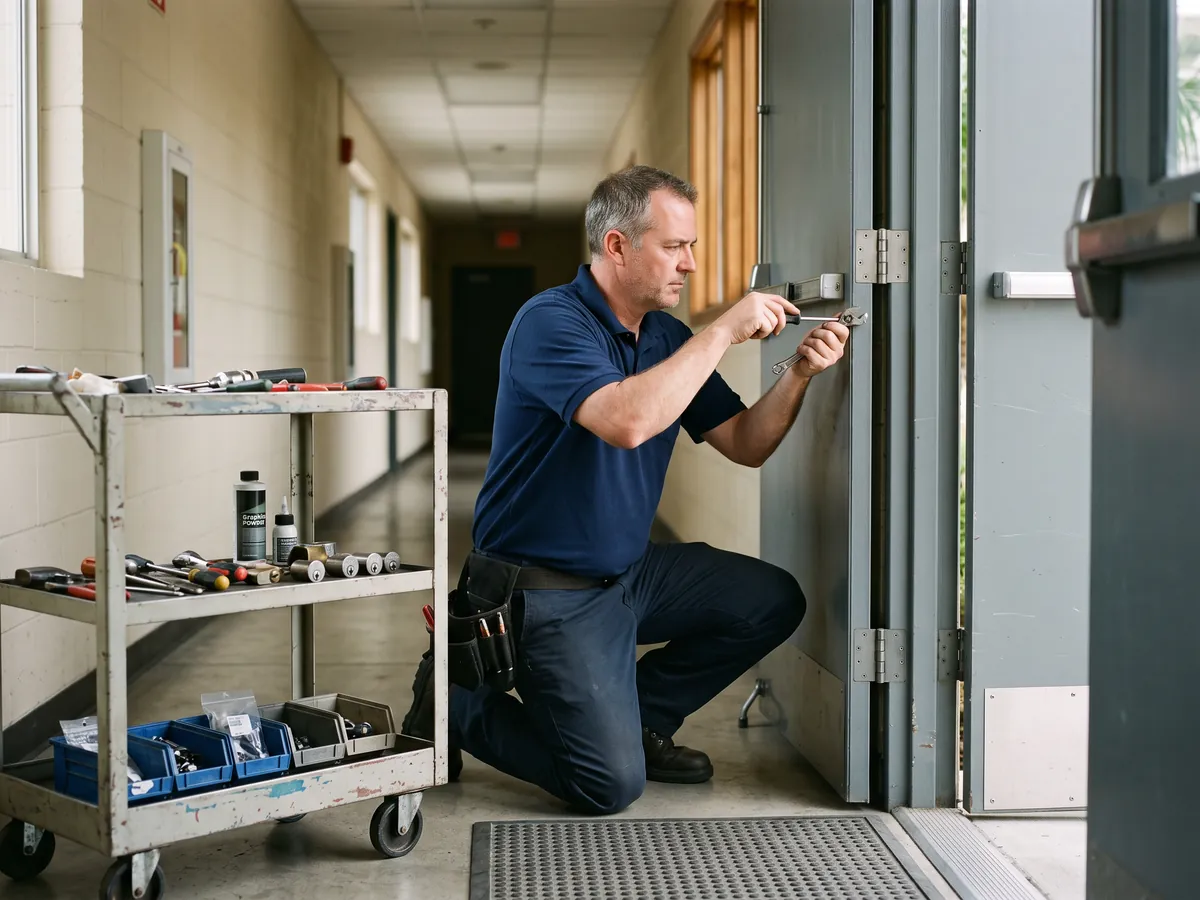
It usually starts small. You pull the front door shut and the knob rattles a little, or you turn the key in the deadbolt and the whole cylinder shifts with it. Weeks later the wobble is worse, and one morning the handle spins without opening anything. A loose door lock rarely stays at the annoying stage, because every use works the screws a little looser and wears the parts that remain. Julian's Locksmith repairs loose door locks across Yucaipa, driving to your home or business with the parts, thread-locker and boring tools to fix it on the spot. Call (951) 903-3193, tell us which lock moves, and we'll give you an honest estimate before we roll.
How this works in Yucaipa
Knowing what holds a lock in a door makes every wobble easier to read. A standard residential knob or lever set sits in a 2-1/8 inch hole drilled through the face of the door, with a 1 inch hole in the edge for the latch. The outside and inside halves are pulled together by two long screws, and a square spindle passes between them so that turning either handle retracts the latch. A deadbolt uses the same cross hole and edge hole, with the key cylinder outside, a thumbturn inside and a bolt that slides into the frame. When one of those joints loosens, you feel it as play. Backed-out screws cause general wobble. A worn spindle hole lets the handle turn without catching. A cylinder held by a weak ring rotates with the key. A latch whose faceplate screws have stripped rattles in the edge. Each is a small, specific failure with a specific fix: re-torque, replace the worn part, re-seat the cylinder or repair the wood. A good repair finds the actual joint instead of tightening everything in sight.
What we can do on-site
- Tightening knobs and levers the right way. Sometimes the screws are fine and the wobble lives in the handle itself. Many levers and knobs slide onto the spindle and are held by a set screw or a spring catch. We find the one your lock uses, snug it with the correct hex key or release the catch properly, and make sure the handle seats fully against the rose.
- Spinning trim rings and cover plates. On older doors a loose plate can be a symptom: the bore behind it may be oversized, or the wood around it may have crumbled. Before reattaching anything, we look at the opening itself. A cover plate can't hold on rotten wood, so the real repair is rebuilding the surface it sits against.
- Loose deadbolt cylinders and thumbturns. A deadbolt that wobbles only while you turn the key often points to a worn cylinder collar or a cylinder that was never fully seated. We check door thickness, screw length and tailpiece, then reinstall the cylinder square to the door. If the cylinder is badly worn, we can rekey or replace it during the same visit.
- Knobs that spin without opening the door. Free-spinning handles are common on old interior locks with decades of use, and on hardware where a child pulled hard on a knob. Once the lock is apart, we check the retractor tabs and spindle ends. Rounded corners on a spindle mean a new spindle or a new lock, because that edge can't be restored.
- Patio, garage-entry and side doors. Sliding glass door handles screw into thin aluminum, and the threads often strip out. We can fit larger screws, thread inserts or a replacement handle set that bolts through the frame. Because slider hardware is a common weak spot, ask us whether a secondary lock or a security bar would help.
Local factors in Yucaipa
In 55-plus communities across Yucaipa, a loose lever or sagging handle is more than a nuisance. A lock that needs a firm grip, wobbles under pressure or fails to return to level can make a door hard to use for someone with arthritis. We repair or replace with easy-grip levers, keep keys unchanged where possible, and show residents or family how to test locks. Caregivers can book on a resident's behalf, and we confirm the resident's authorization at the door.
Inland heat is hard on door hardware. Dark steel and fiberglass doors facing the sun expand through the afternoon and contract at night, which works mounting screws loose and tightens latch tolerances. Plastic parts in budget sets can soften and crack. If your loose door lock sits on a south or west wall in Yucaipa, expect to re-torque it each season, use thread-locker, and consider a lock with brass or steel internals. Shade or weatherstripping on the door helps too.
Family homes in Live Oak Canyon put locks through constant abuse: doors pushed open with a shoulder, handles used as hanging bars, backpacks swinging off knobs. A bedroom or bathroom privacy knob is the most common casualty, and a child stuck behind a jammed door is exactly when you want a lock that opens. We repair or replace worn parts, and where it makes sense we suggest sturdier levers and door stops that take the hits instead.
Example situations
- Picture a rental where a lever handle droops and the interior trim spins. The tenant sends the property manager a photo and a short note, and the manager books us to repair or replace the set. We'd check the door and strike while there, tighten whatever needs it, and leave a note listing exactly what was done and which keys still work.
- A garage-to-house door is a classic: steel slab, a lever that wiggles, and a closer that slams it every day. The slam is what loosened the lock. We'd tighten the hardware with thread-locker, confirm the strike still catches the latch cleanly, and suggest adjusting the closer speed so the door stops shaking the lock loose again.
- Suppose a small office's side door, used daily by the cleaning crew, has a handle held on by two stripped screws and a lot of hope. The manager only noticed when the door stopped latching on its own. We'd stop by during the workday, rebuild the screw bosses, replace the lever if it is too worn, and make sure the door locks behind everyone.
- Before listing a house in Yucaipa, a seller and an agent walk through and note six wobbly door locks that a buyer's inspector would flag. We'd go room by room, tighten what only needs tightening, replace the worn ones, and hand back a short written list of what changed, so the hardware stops being a negotiating point.
From your call to the finished job
- Tell us exactly what moves. When you call (951) 903-3193, say which door and which part moves: the whole knob, the trim ring, the key cylinder, the thumbturn or the latch. Mention whether the lock still opens and locks. That tells us what to bring, and whether this is a quick visit or a longer repair.
- Get a quote and a time. We give you an honest arrival estimate and a price based on what you've described. It's a plan, not a trap, and we'll adjust it only if we find something different on site. If the problem sounds bigger than a simple tightening, we'll explain what that could involve.
- Test and diagnose on site. We start with the lock still on the door: rock it, turn it, throw the bolt, and watch exactly where the movement happens. Then we open the door fully and repeat. That separates a lock problem from a door or alignment problem before a single screw comes out.
- Choose repair or replacement. If replacement makes sense, we show you options in your finish, match your existing backset and, if you like, rekey the new lock to the keys you already carry. That avoids a new key ring and keeps any keyed-alike locks working together.
- Refit and test under load. Alignment gets a last look: the latch should enter the strike without scraping, the bolt should extend its full length, and nobody should have to lift or pull the door to lock it. A lock that is tight but fighting the frame will loosen again.
- Hand-off and follow-up checks. We also glance at your other locks. If one came loose, the rest of the house often has the same screws and the same age. We'll tell you which show early wear and which can wait, so you can plan ahead instead of reacting.
Pricing factors
- How deep the problem goes. A loose lock repaired early is generally the cheapest version. Left alone, wobble wears the spindle, chews the screw threads and sometimes cracks the housing, turning a simple adjustment into a replacement. Calling when you first notice play usually means a smaller bill.
- Door and frame condition. If the frame is the problem, fixing the lock alone won't last. A strike plate in a split jamb or a door sagging on loose hinges keeps pulling the hardware out of line. Repairing the jamb or hinge screws adds a little to the visit but saves you from paying twice.
- Timing, travel and access. We're a mobile business based in San Bernardino, so the distance to Yucaipa and the traffic on the way are part of the price. A midday visit can cost less than a late-evening one, and we'll tell you the difference before we come. Our hours are 6:30 a.m. to 11:30 p.m., seven days a week.
Every job gets a clear quote before any work starts. Call (951) 903-3193 with the details and we'll tell you what to expect for your situation in Yucaipa.
What not to do
- Overtightening until the screw strips. When a lock still wobbles, the instinct is to crank harder. Past a certain point you only crush a hollow-core door, strip the threads or distort the latch tube, and the lock binds. Snug is the goal. If snug isn't enough, something else is wrong.
- Spraying oil all over a loose or sticky lock. Heavy oil washes into the latch, collects dust and eventually turns the mechanism gummy, which makes it harder to repair. Stick to dry graphite or PTFE in the keyway and a drop of light lubricant on the latch.
- Stuffing toothpicks into stripped holes on a high-use door. A glued toothpick may hold a hinge screw on a closet door, but an entry door takes daily torque. Proper dowels, reinforcers or longer screws into the framing hold up far better.
Practical tips before you call
- Never ignore a knob that spins freely. It's more than an annoyance: the broken piece inside can drop out and jam, and a door that won't open from the inside is a safety issue. Keep a way into the room and call before it fails completely.
- Blue thread-locker is your friend. A tiny dab on set screws and mounting screws holds them against vibration but still lets you remove them later. Skip the red kind, which is meant to be permanent and can ruin the screw or the chassis the next time you need to open the lock.
- Use the right lubricant. A puff of dry graphite or PTFE spray in the keyway and a drop of light lubricant on the latch edge keep things moving. Heavy oil collects dust in our dry inland air, gums up the mechanism and makes tight parts fight each other.
- Look closely at the strike plate. If the bolt or latch scrapes it, rattles in it or doesn't reach full depth, the hole may need deepening or the plate may need moving. A latch fighting the frame sends that stress straight back into the lock and loosens it again.
Getting to Yucaipa
Yucaipa is about 25 miles from our San Bernardino base, roughly 32 minutes in light traffic via University Parkway to I-215 South, SR-210 East through Highland to I-10 East in Redlands. When you call, you get an arrival estimate based on where the technician is and the traffic at that moment.
Rush hour on County Line Road can stretch a drive considerably. We'd rather give you a realistic arrival window than an optimistic one, and we'll call you if a closure or a crash changes the plan.
About Yucaipa: Yucaipa Regional Park on Oak Glen Road has three fishing lakes stocked with trout in winter and catfish in summer, a swim lagoon with water slides, and full-hookup RV sites.
| Neighborhoods | Live Oak Canyon, Wildwood Canyon, Chapman Heights, Yucaipa Boulevard corridor, Bryant Street area, Oak Glen Road corridor |
|---|---|
| ZIP codes | 92399 |
| Main routes | I-10, SR-210, Yucaipa Boulevard, Oak Glen Road |
| From our San Bernardino base | about 25 miles via University Parkway to I-215 South, SR-210 East through Highland to I-10 East in Redlands, then Yucaipa Boulevard (Exit 83) into town; Oak Glen Road/Live Oak Canyon Road (Exit 85) or County Line Road (Exit 87) for the south and east sides |
Lock or door hardware trouble in Yucaipa?
Call (951) 903-3193 with the address and what the door or lock is doing. We'll quote the repair before any work starts.
Frequently asked questions
Can you fix a loose smart lock or keypad deadbolt?
Often. Heavy battery-powered locks put extra weight on the mounting, and many come loose from a mismatched backset, a short bolt or a bore that is a bit large. We tighten and align them before we blame the electronics. Electronic faults, such as a failing motor or an app problem, are a different job, and we'll tell you if the lock needs the manufacturer's support.
Can I tighten a loose door lock myself?
Often, yes. Remove the interior trim or cover plate, find the two long mounting screws, and snug them evenly while checking that the handle still turns freely. A dab of blue thread-locker helps them stay. If the screws spin without gripping, the lock still wobbles after tightening, or the latch starts to bind, stop and call us before something strips.
How long does a loose door lock repair take?
Simple re-tightening is a short task once we're at the door. Replacing worn parts, repairing stripped holes or fitting a new lock takes longer, and several doors take longer still. We'll give you our best estimate of both the arrival time and the work time when you call, and we'll tell you if something changes after we've looked at the lock.
Why does my doorknob spin without opening the door?
The link between the handle and the latch has failed. Usually it's a rounded spindle, a slipped set screw or a broken retractor inside the latch. Sometimes the knob simply no longer grips the spindle. Because the door may refuse to open from inside, treat it as time-sensitive. We open the lock up, replace the broken part, or recommend a new set.
Do you work evenings and weekends?
Julian's Locksmith works every day from 6:30 a.m. to 11:30 p.m. We're closed between 11:30 p.m. and 6:30 a.m., and we aren't a 24/7 service. A loose lock that still latches can usually wait for the next opening. If a door won't secure, tell us when you call and we'll talk through a safe temporary arrangement.
I rent my home. Who fixes a loose lock?
Tell your landlord or property manager in writing first. California Civil Code §1941.3 requires landlords to provide and maintain working deadbolts on main swinging entry doors, and general lock repair on the unit is usually theirs to handle. Many managers book us directly, and we can coordinate with them. Please don't remove or alter a landlord's lock without permission.
How far is Yucaipa from your base?
Yucaipa is about 25 miles from our San Bernardino base, roughly 32 minutes in light traffic. Arrival time depends on traffic and on the job the technician is finishing, so we give you an estimate on the phone before you commit.
Related services in Yucaipa
Loose Door Lock in nearby cities
- Loose Door Lock in MentoneSan Bernardino County
- Loose Door Lock in RedlandsSan Bernardino County
- Loose Door Lock in HighlandSan Bernardino County
- Loose Door Lock in Loma LindaSan Bernardino County
- Loose Door Lock in Moreno ValleyRiverside County
- Loose Door Lock in San BernardinoSan Bernardino County
- Loose Door Lock in Grand TerraceSan Bernardino County
- Loose Door Lock in ColtonSan Bernardino County
