
Walnut, Los Angeles County
Mortise Lock Repair for Walnut Homes and Buildings
Short answer: Before you replace a mortise lock, find out whether it can be rebuilt. Many cases can be repaired with the original trim kept. If parts are discontinued, a modern mortise case often fits the same pocket with no new cutting. We quote both routes before starting. In Walnut, call (951) 903-3193; photos of the door edge help.
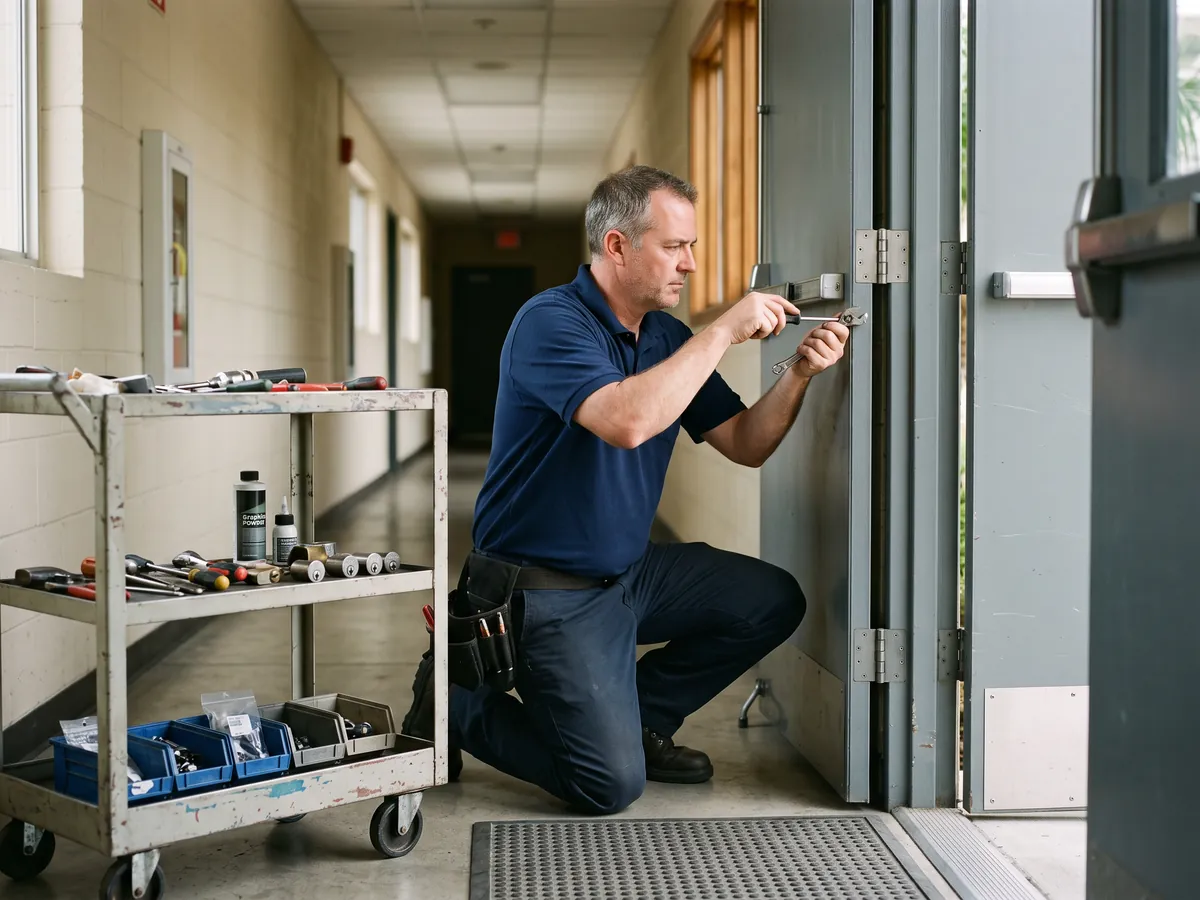
Original mortise locks are one of the pleasures of an older house and one of its maintenance puzzles. They were built heavy, with a steel or brass case that has lasted for decades; what wears out are springs, cams, the key mechanism and the grime of many repaints. Replacing them means cutting into the door, and most owners in Walnut would rather keep the hardware that came with the house. Julian's Locksmith repairs mortise locks on site: we remove the case, identify it, clean and rebuild what can be saved, and tell you plainly when a part is gone. Call (951) 903-3193 and describe what the lock does.
Mortise Lock Repair in Walnut: what to expect
Mortise locks tend to fail in recognizable ways. Springs fatigue, so levers droop and latchbolts hang. Cams crack or loosen, so the key turns without moving the bolt. Set screws back out, so cylinders spin in place or handles loosen. Spindles shear or round off, so handles turn without engaging anything. Old grease and paint make bolts sluggish, and years of door movement bend or wear the strike. Occasionally someone has forced the door and bent the case or cracked the forend. Each failure has its own signature, and we can often diagnose from your description alone. Heavy old doors add their own wear: a dropped hinge side loads the latchbolt against the strike and wears the case internals faster. That is why we check the door, the hinges and the strike before assuming the lock itself is at fault anywhere in Walnut. The inspection costs you nothing extra, and it often saves a part.
How we can help in Walnut
- Identifying an unknown mortise lock. If the lock is too old or obscure to name, we measure instead of guessing: case depth, forend dimensions, spindle size, the distance between holes. Those numbers show which current cases could replace it and which parts could be adapted. You get a plain statement of what is possible and what isn't.
- Knobs, levers, spindles and trim. Loose roses and escutcheons let handles wobble and feed grit into the case. We refasten them with the correct machine screws, add thread locker where appropriate and check alignment with the case. For antique plates we use period-correct screws or match the finish, so repairs don't stand out.
- Deadbolt and thumbturn problems. Doors move with the seasons, and a deadbolt that throws in winter may bind in summer when the door swells. We check the bolt, ease the strike, and say so when the real problem is the door itself, which may need a hinge adjustment or planing rather than a new lock.
- Latchbolt, strike and door alignment. Strikes on old doors are sometimes set into thin trim or painted over, and the bolt hits the edge. We deepen the pocket, reset the strike and plug old holes. Where a jamb is cracked, we reinforce it so the latchbolt and deadbolt land in solid wood.
- Changing handing and function. Many modern mortise cases can be reversed for a door's swing by flipping the latchbolt, and some functions can be changed by swapping parts inside. We reverse the hand if a case was installed wrong or moved to a new door, and confirm the function suits the door: entry, passage, storeroom, office or privacy.
What's different about Walnut
In 55-plus communities, older mortise locks can be heavy to operate and hard on arthritic hands. A tired spring makes a lever stiff or droopy, and a sticky bolt makes the key hard to turn. We rebuild or replace the case for smoother action, fit easier-to-grip levers where possible, and keep the door safe for emergency access. Adult children can call for a parent; we'll confirm authorization with the resident or the community office.
Older buildings around campuses in Walnut, including converted houses now split into student rentals, often keep their mortise locks. A lost key or jammed bolt is a common call before a semester starts. We confirm authorization from the landlord or property manager, then repair, rekey or open the door without damage. Students renting should notify the landlord in writing and ask for repairs rather than drilling or prying anything themselves.
Large homes in Walnut frequently feature custom mortise entry sets from makers like Baldwin, hung on heavy solid-wood doors with ornate levers. Repairs here are about preserving the look as well as fixing the function. We protect finishes, use the maker's parts where available, and avoid unnecessary cutting. If a rare lock needs a specialty restorer, we say so. A higher-grade cylinder can be added in the existing case without altering the door's appearance.
Example situations
- Consider a mixed-use building near Meadow Pass Road where a stairwell door's mortise storeroom lock has lost its grip on the cylinder. The cylinder spins and won't hold. We'd find the set screw missing, install a cylinder of the right length, secure the retaining screw with thread locker, and rekey it to the building's key system so existing keys keep working.
- For example, the lever on a sunroom door in Walnut droops like a wilted flower, and the door barely latches. Everyone assumes the handle has failed. We'd remove the trim, find a tired hub spring in the case, replace it, and tighten the set screw holding the lever to the spindle. The original lever stays, and the door springs shut again.
- Say a decorative Baldwin mortise entry set on a hillside home in Walnut stopped latching after the door was repainted. Paint filled the forend recess and gummed the latchbolt, and the strike is buried under paint. We'd cut the paint line, free the case, clean it and reseat the strike, with no new hardware and the finish intact.
- Think about a church hall in Walnut where the old mortise lock binds, the bolt rubs the strike, and a volunteer oils it every week. We'd chalk the bolt, find loose hinge screws and a worn strike, and fix the door before touching the lock. Often the lock is fine, and the door is dragging it out of alignment.
From your call to the finished job
- Describe the lock and the symptom. The first call tells us whether we're facing a spring, a cam, a cylinder or a door problem. Tell us what you see, what you hear and how the key feels. If you can read a name on the faceplate or cylinder, share it. Say whether the door is interior or exterior, and whether anyone is locked in or out.
- Verify who authorizes the work. Historic and shared buildings have extra considerations: an association, landlord or preservation rule may govern what can change. Tell us if the hardware is original or protected, and we'll follow those wishes while we repair what is allowed.
- Examine the door, then remove the case. Removing a mortise case takes patience. Decades of paint can lock the forend in place, and the case fits snugly in its pocket. We protect the door edge with tape, work the case free without prying on the wood, and keep each screw and part organized by position.
- Identify, inspect and quote. With the case open, we read the maker's marks, check each spring and lever, measure bolt travel and inspect the gears for wear. Then we explain what we found and give you two options when they exist: rebuild with listed parts, or replace with a matching case. We quote both before proceeding.
- Rebuild, rekey or replace. We clean the case, replace springs, cams, hubs and spindles as needed, and reassemble to the maker's layout. Cylinders are rekeyed or replaced as agreed. If we replace the case, we fit it in the existing pocket and reuse trim where it fits.
- Test every function and hand over keys. A mortise lock should feel smooth and solid. If the key sticks or the handle lags, we adjust until it doesn't. We leave you with a written note of the lock's make, function and any parts we replaced, so you can find a match later.
How we quote the job
- Rebuild versus replace. A rebuild uses small parts and labor but keeps the door and trim. A replacement case costs more in parts and less in labor, provided it fits the existing pocket. Which wins depends on the lock's make, condition and parts supply. We quote both so you can compare them side by side.
- Make, age and parts availability. Parts availability swings the price more than anything. A popular modern case might be fixed from stock; an obsolete one may need a part machined or found in salvage. We'll tell you if the wait or the cost is too great and whether a modern replacement fits better.
- Trim, finish and matching. Standard finishes like satin nickel or oil-rubbed bronze are easy to match. Historic or custom finishes may involve special-order trim and a wait. We note finish requirements early, so the quote reflects them and you can decide whether the look is worth the lead time.
Every job gets a clear quote before any work starts. Call (951) 903-3193 with the details and we'll tell you what to expect for your situation in Walnut.
Practical tips before you call
- Test the strike once a year. Close the door, push on it, and look for the bolt scraping the strike or a gap on the latch side. Heavy mortise doors move seasonally, and a few minutes with a screwdriver on the hinges prevents wear inside the lock.
- Photograph the door edge, the faceplate and both sides of the trim before you call. A clear shot of the forend usually shows a maker's stamp, and the trim reveals the era. Those three pictures let us give you an honest read on whether your lock can be rebuilt in Walnut.
- Before buying a mortise lock online, measure the pocket: backset, forend length and width, and case depth. Many 'universal' ones aren't, and you can't unsee a door edge you've already cut. We can measure for you and tell you which models fit.
- Don't unscrew the faceplate just to see what's inside. On many mortise doors the case is snug in its pocket and painted in, so pulling on it can chip the door edge. Leave disassembly to someone who will protect the wood and keep the parts in order.
Common errors that cost time and money
- Drilling out a mortise lock because the key won't turn. The fault is usually a loose cylinder or a broken cam, and drilling ruins the cylinder, the case and sometimes the door edge. A locksmith can open most doors without drilling, then repair the actual cause.
- Ordering a replacement online by looks alone. Mortise cases differ in dimensions, handing, function and cam type, and photos hide those details. A wrong case leaves you with a return shipment and a door that still won't lock. Measure first or send us the specs.
- Living for months with a failing lock on an exterior door. A mortise lock that sticks can lock you out, or stay unlocked without you noticing, and an unreliable deadbolt is a security gap. Get it checked before the door fails completely.
Reaching Walnut
Walnut is about 40 miles from our San Bernardino base, roughly 46 minutes in light traffic via I-215 South briefly to SR-210 West. When you call, you get an arrival estimate based on where the technician is and the traffic at that moment.
Once the evening commute thins out on Valley Boulevard, drive times usually shrink. That makes an evening call before closing a practical option for non-urgent jobs that you couldn't fit into the workday.
About Walnut: Mt. SAC is by far the largest employer in Walnut, and homebuilder Shea Homes keeps its headquarters in the city.
| Neighborhoods | Walnut Grove senior condominiums, Suzanne Park area, Walnut Hills, West Valley, Snow Creek, Three Oaks |
|---|---|
| ZIP codes | 91789 |
| Main routes | SR-60, SR-57, I-10, Valley Boulevard |
| From our San Bernardino base | about 40 miles via I-215 South briefly to SR-210 West (Foothill Freeway) through Rialto, Fontana, Rancho Cucamonga and La Verne, then SR-57 South to the Temple Avenue exit and west past Mt. SAC to Grand Avenue, Amar Road and La Puente Road; I-10 West to SR-57 South as the alternate, and SR-60 West through the 57/60 confluence to Lemon Avenue, Fairway Drive or Nogales Street for Valley Boulevard and West Valley |
Lock or door hardware trouble in Walnut?
Call (951) 903-3193 with the address and what the door or lock is doing. We'll quote the repair before any work starts.
Frequently asked questions
Can a mortise lock be rekeyed?
Mortise locks that use pin tumbler cylinders can be rekeyed, and because the cylinder usually comes out of the case, it's quick. Warded skeleton-key locks can't be rekeyed in the usual sense. Some commercial mortise locks use interchangeable cores that come out with a control key. We confirm which system you have, then rekey or replace the cylinder.
Do I need a new door if I replace a mortise lock?
Usually not. A replacement mortise case designed to match the existing pocket, backset and forend can go in without altering the door. Converting to a cylindrical lock is the choice that requires door work. We measure the pocket and match dimensions so the door stays intact. Rarely, an oversize or damaged pocket needs a filler piece.
My key turns but the bolt doesn't move. What's wrong?
Usually the cam on the back of the cylinder is broken, the wrong style or loose, or the cylinder has backed out and is spinning in the case because its set screw loosened. Less often, the bolt or its lever inside the case is broken. We can often diagnose from your description and fix it in place in Walnut, without replacing the lock.
Can you make a key for my old skeleton-key mortise lock?
In many cases, yes. Warded locks have no pins, so a blank is filed by hand to clear the wards and move the bolt. We examine the lock, cut a trial key and test it. Heavily worn or damaged locks may need repair first. If the original key is lost, we can usually open the door without damage and make one afterward.
Can my old mortise lock be repaired, or must it be replaced?
Often it can be repaired. Springs, cams, hubs, spindles and cylinders are separate parts, and many cases return to smooth operation after cleaning and replacing the weak ones. Replacement makes sense if the case is cracked, the gears are stripped, or parts no longer exist. We open the lock, tell you honestly which category yours is in, and quote both routes.
Why does the lever on my mortise lock droop?
A drooping lever is most often a weak or broken return spring inside the case, or a loose set screw holding the lever on its spindle. Sometimes the spindle is rounded off or the rose is loose. We take off the trim, find which it is, and replace the spring, spindle or screw. The original lever usually stays on the door.
How far is Walnut from your base?
Walnut is about 40 miles from our San Bernardino base, roughly 46 minutes in light traffic. Arrival time depends on traffic and on the job the technician is finishing, so we give you an estimate on the phone before you commit.
Related services in Walnut
Mortise Lock Repair in nearby cities
- Mortise Lock Repair in West CovinaLos Angeles County
- Mortise Lock Repair in Diamond BarLos Angeles County
- Mortise Lock Repair in ValindaLos Angeles County
- Mortise Lock Repair in Rowland HeightsLos Angeles County
- Mortise Lock Repair in CovinaLos Angeles County
- Mortise Lock Repair in City of IndustryLos Angeles County
- Mortise Lock Repair in Charter OakLos Angeles County
- Mortise Lock Repair in La PuenteLos Angeles County
