Walnut, Los Angeles County
Exit Device Installation for Walnut Doors and Tenant Spaces
Short answer: For most Walnut businesses, exit device installation is a single visit when the door is a standard steel or wood leaf and the device is in stock. Fire-rated doors, aluminum storefronts, pairs and electrified devices can add a parts order or other trades. We're open every day, 6:30 a.m. to 11:30 p.m., and we verify your authority over the space first.
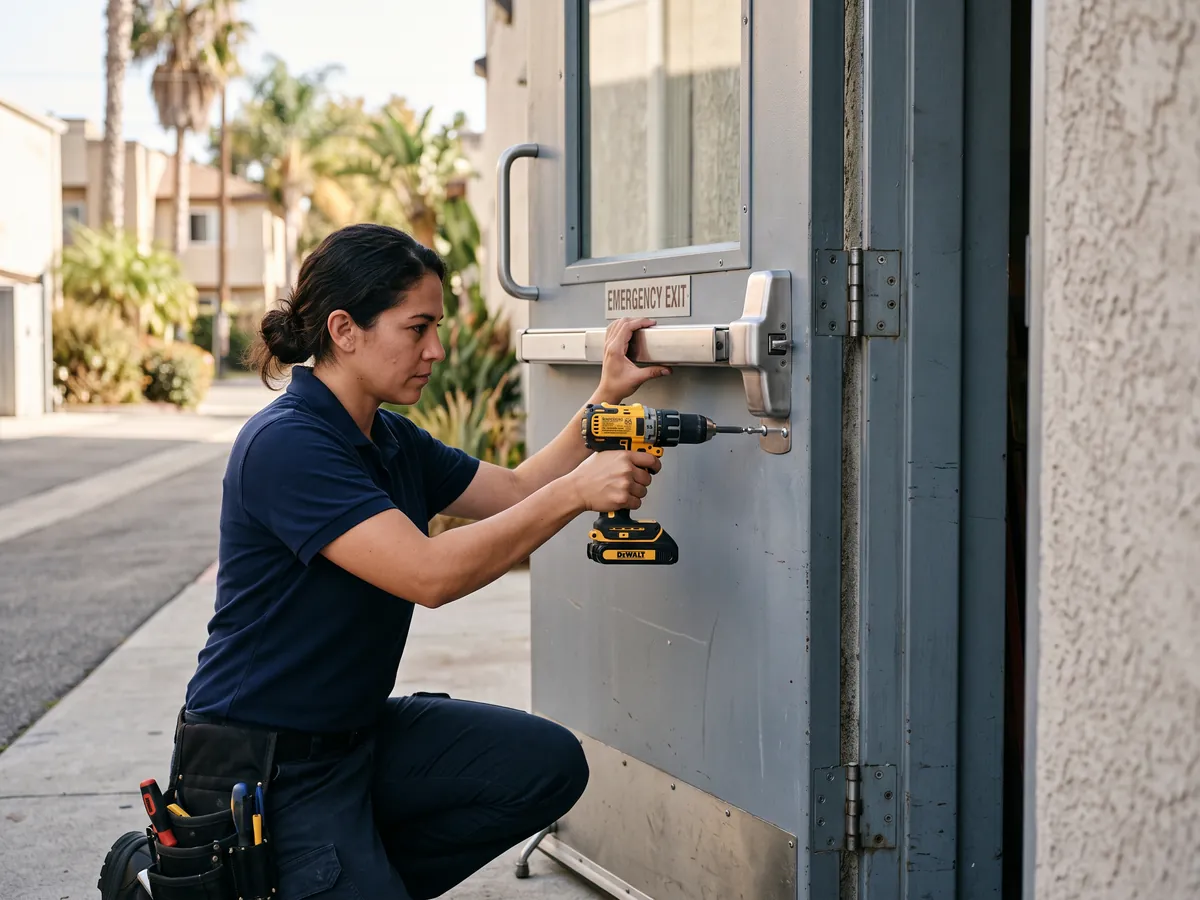
A correction note on your plans, or a letter after a fire inspection, can say it in six words: provide exit device at this door. What the note leaves out is everything an installer needs, such as the door's material and rating, which way it swings, how wide the stile is and whether anyone must get in from outside. This page walks through exit device installation in Walnut from the first look at the opening to the final test, so you can answer those questions before work starts. Julian's Locksmith comes to the building, measures the door, quotes before we begin and installs hardware that matches your approved plans. Call (951) 903-3193 when you're ready.
What to know first in Walnut
An exit device is a system of parts that only works when the door around it cooperates. On the inside face sits the case, which holds the latch mechanism, and the push pad or crossbar you press to retract it. A rim device carries a latch that grabs a strike on the frame. A vertical rod device runs rods up and down to catch the header and the floor. A mortise device drops a lockbody into a pocket cut in the door's edge. The device is held to the door with through-bolts or sleeve bolts that pass from one face to the other, which is why the door's internal reinforcement matters so much. Outside you may find nothing at all, or a pull, a thumbpiece or a lever with a cylinder. The closer, hinges and strike complete the system. If the closer lets the door drift, the hinges have sagged or the strike sits a quarter inch off, the best device in the catalog will still fail. In Walnut we inspect every one of those parts before installing anything, because they decide whether the new hardware works for years or sticks within a month.
How we can help in Walnut
- Function and trim selection. A delivery door that staff open from the lot at dawn needs different trim than a stairwell exit that should never admit anyone. We match the function to the job the door really does, then confirm the lever, pull or plate style meets the accessibility needs of the space.
- Frame, strike and threshold work. The latch needs something to catch. A rim device needs a strike on the frame at exactly the right height, and a vertical rod device needs a head strike and often a floor strike. We reinforce the frame where needed and set strike depth so the door latches positively without slamming.
- Pairs, astragals and meeting-stile alignment. Gaps between leaves tell a story. A wide gap means the doors have shifted or an astragal is missing, and a tight one means rubbing and a latch that won't catch. We measure the meeting stiles, correct what we can with hinge adjustment and choose hardware that fits what remains.
- Electrified options and access-control tie-ins. A common pattern is staff badging in from the lot, a door position switch reporting to the alarm panel, and anyone inside simply pushing the bar. That calls for an exit device with electrified trim and a contact. We coordinate with your security vendor on who installs and tests which part.
- Final adjustment, testing and documentation. The last step is a short walkthrough of living with the new hardware. We show you where to look when the door sticks, who should hold the dogging key and what a monthly test looks like. A short talk now often saves a repair call months from now.
Local factors in Walnut
Clubhouses, activity rooms and care facilities in Walnut need exit devices with low operating force, lever trim and slow, gentle closers. Residents may use walkers or wheelchairs, so we check clear opening width, threshold height and closer force along with the device itself. Electrified options let staff monitor doors without adding obstacles for residents who can leave when they choose, and we test with your staff present.
Inland summers in Walnut push door surfaces past what bare hands can touch, and heat warps frames, thins closer fluid and fades finishes. We check closer settings in the afternoon, when doors behave worst, choose finishes that resist fading and suggest early start times. We open at 6:30 a.m. every day, so most installations finish before the worst heat. Shaded interior corridors are easier on hardware than sun-baked exterior doors.
Learning centers, youth sports facilities, swim schools and small churches in Walnut's family neighborhoods often occupy strip-center suites and need exit devices on every public room. Doors that children use must release easily and close without slamming. We install low-force devices, set closers to a gentle sweep and keep our schedule outside class hours, so parents and instructors never see a door standing open for work.
Situations this covers
- A self-storage office near Grand Avenue adds a steel walk-in door beside its roll-up. That door is the building's second exit, and the manager wants it always openable from inside and always locked from outside. Exit-only trim on a rim device does exactly that. We install the device, adjust the strike on the frame and show the staff how to test the latch weekly.
- A contractor on a tenant improvement in Walnut needs hardware set the week before the final inspection. The doors arrived pre-prepped from the supplier, and the schedule calls for Grade 1 devices with lever trim. We bring the devices and a tester, mount them to the templates, adjust the strikes to the finished floors and leave the hardware ready for the inspector's walkthrough.
- A property manager in Walnut oversees six apartment buildings whose stairwell doors each carry a different brand of exit device, and parts for two of the brands are hard to find. Over several visits we replace them with a single series keyed to one maintenance key, checking each door for a fire label as we go. The manager ends up with one parts list instead of six.
- Picture a rental event hall near Walnut High School with a side patio door that still has a thumbturn deadbolt. The owner wants guests to walk out freely but not wander in without paying. We fit an exit-only device with a fixed pull plate outside, add a door position switch so the alarm panel notices when it opens, and show the manager how to check the latch before each event.
How the visit works
- Walk the openings. On arrival we confirm you can authorize work on the space, with a lease, a work order from the owner or property manager, or a business license with your ID. Then we survey, starting with the door that has the strictest requirement, since that one sets the pace.
- Choose the hardware and approve the quote. Fire-rated and electrified doors get an extra check here. We confirm the device's listing fits the door's label, that any required power and wiring exist and who is responsible for each piece, before the quote is final. Surprises on those doors are expensive, so we look for them first.
- Stage the parts and plan the day. Common devices are often on the van. Special lengths, finishes and electrified models come from suppliers, and we tell you the lead time honestly. Then we schedule the installation around your business hours, deliveries and tenants, so the work doesn't collide with your busiest stretch.
- Prepare the door and frame. If a door proves thinner or weaker than the survey suggested, we stop and show you before going further. A backing plate or a different device is a better answer than a cracked door skin, and you decide how to proceed with the facts in front of you.
- Mount, align and connect. Electrified models get their wiring and switches connected, usually in coordination with your security contractor. We test the mechanical side first, then each electrical function one at a time, so any fault is easy to trace back to one part of the installation.
- Test, document and hand over. We test the device the way an inspector would: pad pressure, latch engagement, mounting height, pad length, trim operation and any alarm. Then we walk the finished door with you, show you how the hardware should feel when it's working properly and answer questions.
What affects the cost
- Door material and existing prep. A door that already has the right internal reinforcement and a matching prep is the least expensive to equip. One that needs new reinforcement, bolt sleeves, a filled lock bore or a repaired skin takes more time and more parts, and the quote reflects that. We spot these issues on the survey, not halfway through the job.
- Electrified hardware and other trades. Electric trim, request-to-exit switches and electric latch retraction add parts, testing and often a power supply and a wire run through the frame. When access control or a fire-alarm panel is involved, other trades may bill separately for their part, and the whole schedule depends on their availability too.
- Schedule, access and site conditions. Distance matters for a mobile service. Our base is in San Bernardino, and a farther site takes longer to reach. We factor that into the quote, along with whether we expect to need a second visit for special-order parts. Grouping several doors into one visit is the best way to make a trip count.
Every job gets a clear quote before any work starts. Call (951) 903-3193 with the details and we'll tell you what to expect for your situation in Walnut.
What not to do
- Laying new flooring after the device is set. A thicker floor raises the finished surface, and the door may then drag, a bottom rod may miss its strike or the latch may no longer line up. Finish the floor first, or plan an adjustment visit once the new surface is in.
- Overtightening the through-bolts. Cranking them until the skin dimples can twist the case, make the pad stiff and crush the core of a wood door. The bolts should seat the case firmly without deforming the door, and the pad should still travel freely and return crisply afterward.
- Skipping the closer. A new exit device only secures the door if the door shuts and latches on its own. A closer that is missing, undersized or worn out leaves the door ajar by an inch, which looks locked from across the lot and is not. Budget for closer adjustment or replacement in the same visit.
Advice before you book
- Choose the finish with neighboring hardware in mind. A satin chrome device beside oil-rubbed bronze lever handles looks like an afterthought. Sending us a photo of nearby hardware lets us suggest a finish that blends in or deliberately matches your building standard, which helps when a landlord must approve the work.
- Check which way the door swings. Doors serving larger rooms are generally expected to swing in the direction of exit travel, and hardware alone can't fix a door that swings the wrong way. If yours swings in, raise it with your plan checker before ordering anything, because the answer may change the whole scope.
- If an architect or hardware consultant prepared a hardware schedule, send us the page for your doors. When what arrived on site differs from the schedule, fixing it before installation day costs far less than discovering the mismatch with the door already cut. We'll compare the two lines before anyone drills.
- Warn your alarm company before we test door contacts or electric hardware. A monitored door that opens during testing can trigger a dispatch. A quick call to put the system on test status avoids false alarms and the fees that sometimes follow them, and it keeps your relationship with the monitoring center friendly.
Reaching Walnut
Walnut is about 40 miles from our San Bernardino base, roughly 46 minutes in light traffic via I-215 South briefly to SR-210 West. When you call, you get an arrival estimate based on where the technician is and the traffic at that moment.
Most trips into Walnut use Amar Road for at least part of the drive, and the technician keeps an eye on live traffic along the way so the arrival estimate you heard on the phone stays honest.
About Walnut: Mt. SAC is by far the largest employer in Walnut, and homebuilder Shea Homes keeps its headquarters in the city.
| Neighborhoods | Ridge Estates, West Valley, Timberline, Three Oaks, Creekside, Walnut Grove senior condominiums |
|---|---|
| ZIP codes | 91789 |
| Main routes | SR-60, SR-57, I-10, Valley Boulevard |
| From our San Bernardino base | about 40 miles via I-215 South briefly to SR-210 West (Foothill Freeway) through Rialto, Fontana, Rancho Cucamonga and La Verne, then SR-57 South to the Temple Avenue exit and west past Mt. SAC to Grand Avenue, Amar Road and La Puente Road; I-10 West to SR-57 South as the alternate, and SR-60 West through the 57/60 confluence to Lemon Avenue, Fairway Drive or Nogales Street for Valley Boulevard and West Valley |
Lock or door hardware trouble in Walnut?
Call (951) 903-3193 with the address and what the door or lock is doing. We'll quote the repair before any work starts.
Frequently asked questions
Do I need a door closer with an exit device?
Almost always. A closer pulls the door shut so the latch engages, and fire-rated doors must close and latch themselves. We check the existing closer during installation and adjust or replace it. Without a working closer, an exit device can look latched while the door sits slightly open, which is the most common reason doors fail inspection.
Can you install electrified exit devices?
We install the device and test the mechanical side. Electrified versions with electric trim, switches or latch retraction also need power and wiring, which may involve your access-control or electrical contractor. We coordinate on who does what, so there are no gaps when you reach the final test, and we tell you early if a low-voltage contractor is needed.
What's the difference between Grade 1 and Grade 2?
Grades come from the hardware industry's testing standard for exit devices. Grade 1 is built and tested for the heaviest use, such as schools, hospitals and busy retail. Grade 2 suits lighter duty. Your specification may call for one or the other, and we'll tell you which fits your door's traffic so you aren't paying for more than you need.
Can you rekey the rest of the building while you're there?
Yes. If you're adding cylinders on exit devices, it's a good time to rekey other doors to the same system or set up a master key. We quote the extra work separately, and combining it with the exit device installation saves a second trip. Ask about restricted keyways if you want to limit who can copy keys for the building.
Is exit device installation the same as panic bar installation?
The hardware is the same family. Exit device is the manufacturer and industry term, panic bar is the everyday name, and code language uses panic hardware and fire exit hardware. When you ask us for any of them, we confirm which listing your door needs and install accordingly. Tell us the term on your plans or inspector's note and we'll translate it.
Can you install an exit device on a wood door?
Yes, if the door is solid enough. Wood doors need careful boring and bolt sleeves so the through-bolts don't crush the core, and the latch edge should have solid blocking. We check thickness and condition during the survey. Thin hollow-core interior doors usually are not suitable for panic hardware and may need to be replaced before any device goes on.
How far is Walnut from your base?
Walnut is about 40 miles from our San Bernardino base, roughly 46 minutes in light traffic. Arrival time depends on traffic and on the job the technician is finishing, so we give you an estimate on the phone before you commit.
Related services in Walnut
Exit Device Installation in nearby cities
- Exit Device Installation in West CovinaLos Angeles County
- Exit Device Installation in Diamond BarLos Angeles County
- Exit Device Installation in ValindaLos Angeles County
- Exit Device Installation in Rowland HeightsLos Angeles County
- Exit Device Installation in CovinaLos Angeles County
- Exit Device Installation in City of IndustryLos Angeles County
- Exit Device Installation in Charter OakLos Angeles County
- Exit Device Installation in La PuenteLos Angeles County