
Walnut, Los Angeles County
Business Lock Rekey in Walnut When Staff or Owners Change
Short answer: Rekey your business locks whenever a key leaves your control: an employee quits or is let go without returning keys, a manager changes, you buy the business, you move into a space someone else leased, or a key ring disappears. Rekeying is usually faster and less costly than replacing commercial hardware, and it can be scheduled before you open or after you close.
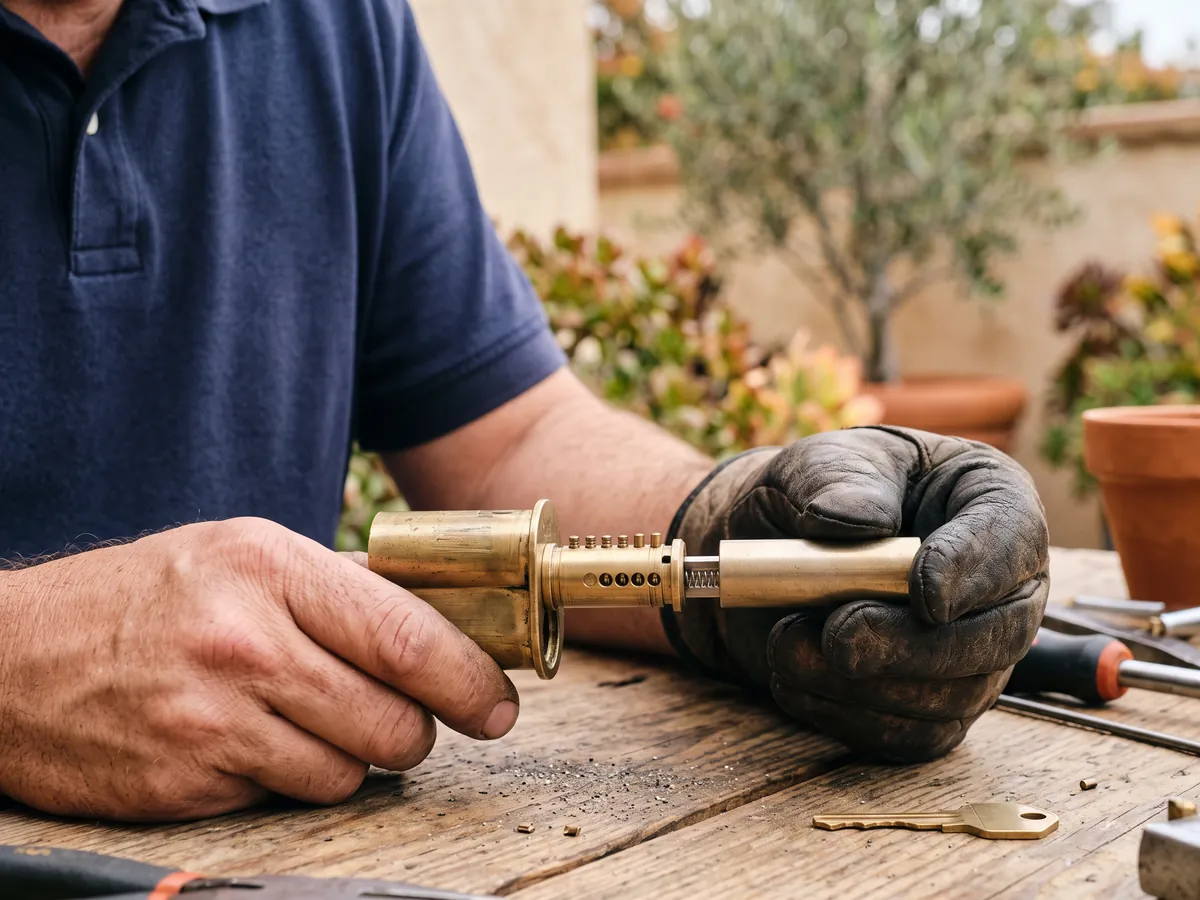
Buying an existing business usually comes with a box of keys and no way to know how many more are out there. The seller's relatives, former staff, the cleaning crew, an old alarm company: anyone could have one. A business lock rekey is one of the first things a new owner in Walnut should schedule, ideally before the first full day of operating. Julian's Locksmith rekeys entrances, offices, storage rooms, padlocks and cabinets to keys only you control, then hands you a list of which key fits what. Tell us the date you take possession, and we'll plan the visit for that day or the morning after.
What to know first in Walnut
New keys don't stay secure by themselves. The businesses that rarely need an emergency rekey tend to follow a few habits. They give out the fewest keys possible, with most staff getting an entrance key and only owners and managers holding the office or cash room key. They stamp each key with a number, log who holds it, and collect keys as part of every exit checklist, right alongside the final paycheck paperwork. They keep spares locked up, not in a desk drawer. Some go further and move to a restricted keyway, where blanks are sold only through an authorized dealer, so an employee can't make a copy on the way home. For businesses with very high staff turnover, a keypad lock or an access control system on the main entrance can be worth considering, since a code can be deleted in seconds. Larger electronic systems may involve a low-voltage contractor, and we'll say so honestly. Whatever you choose, a business lock rekey is the clean starting point.
Work included on a typical visit
- Rekey after buying a business. If the purchase includes staff who are staying on, a rekey isn't a statement about them. It simply resets keys that were issued under the previous owner. You can then hand out new keys under your own rules, with numbers and a log, which is a good habit to set from the first week.
- Rekey and repair after a break-in. If burglars got in with a key rather than force, that's a strong sign a key is circulating that shouldn't be. Rekeying every lock that key could open is the priority. We'll also look at the door, frame and strike, since a weak strike or a loose cylinder often invites a second attempt.
- Separate keys for staff and management. A business lock rekey is the right time to stop giving everyone the same key. We can set your locks so staff keys open the entrance, while a manager key also opens the office, stockroom and cash room. That's a small master key setup, and it limits what a lost staff key can expose.
- Padlocks, gates, cabinets and lockers. Desk drawers, file cabinets, display cases and employee lockers usually take small cam locks. Those can often be rekeyed or swapped so a former manager's cabinet key doesn't still open the file with payroll records. We can key them alike for convenience or individually where privacy matters.
- Restricted keys staff can't copy. Standard keys can be copied at any hardware store in minutes. If that worries you, we can rekey onto a restricted keyway whose blanks are sold only through authorized dealers. Copies then require your authorization, so the number of keys you issue stays the number in circulation.
Local factors in Walnut
Neighborhood businesses in Walnut, such as daycares, tutoring centers, salons and small professional suites, often share a center with families coming and going all day. A business lock rekey is common after a staff change, especially where children or sensitive records are involved. Interior doors for supplies, records and cash deserve their own keys, separate from the one that opens the front.
Feed stores, tack shops, boarding stables and farm stands in Walnut operate on large properties with several outbuildings. Gates, barns, feed rooms and a small office may all share keys with trainers, employees and boarders. A business lock rekey is the moment to separate them: boarders get the tack-room key, staff get gates and feed rooms, and only the owner holds the office. Weather-resistant padlocks last longer around dust and moisture.
Summer heat in Walnut is hard on door hardware. Metal storefront doors expand, aluminum frames shift, and exposed cylinders and padlocks dry out and gather dust, so keys stick right when you need them. When we do a business lock rekey, we clean each cylinder, replace tired springs and check that doors still latch in hot weather. Mention any lock that already feels rough, since it may be worth replacing.
Example situations
- A contractor sets his key ring on the roof of his truck at a gas station, and it is gone by the time he drives back. The ring held his shop key, office key, a padlock key and a keychain with the company name. We confirm his business license on arrival, rekey the shop door, office and padlocks to one key, and cut four copies for his crew.
- A small hauling company keeps tools and parts behind a rolling gate on a lot near I-10. A driver who quit last month still has the gate padlock key and one for the shop's walk door. We replace the old padlock with a keyed-alike model, rekey the walk door to match, and give each of three drivers a numbered key. The owner locks the spare in a cabinet.
- Burglars pry open a boutique's back door, yet the cash drawer key, which hung on a hook by the register, has vanished. Police take their report, then the owner calls us. We replace the damaged back-door lock, rekey the front deadbolt and office, and swap the drawer's cam lock too, because a copied drawer key stops working once the cylinder changes.
- A dental office in Walnut lets a front-desk employee go. The patient records room and the supply closet turn out to share a key with the front entrance, which nobody realized. We rekey all three onto separate keys so the front-desk key opens only the front. The practice manager keeps the records room key, and the dentist carries an owner-level key.
From your call to the finished job
- Tell us what happened and which doors are involved. A photo helps. Snap each door's lock from both sides, plus any padlocks and cabinets, and send what you have. We can often tell the brand and type from a picture, spot a lock that won't rekey, and bring the right pins and parts on the first trip.
- Show who you are and that you can authorize the work. California's Locksmith Act, which the Bureau of Security and Investigative Services administers, expects locksmiths to confirm they're working for someone entitled to the job. That's why we ask. A quick look at your paperwork also protects you from a former partner or employee ordering the same work.
- Survey the doors and test the old keys. On arrival we walk the premises with you, door by door. We try the old key in every lock, including ones you didn't expect, and note brand, cylinder type and condition. That test shows exactly what the missing key could open, so the scope rests on facts, not guesses.
- Decide key levels, key count and who holds what. Before any pin changes, choose your structure. A common small-business plan has an owner key that opens everything, a manager key for daily doors and a staff key for the entrance. We write it down, cut the agreed quantities and stamp keys with numbers, never with the business name.
- Rekey in sequence while you stay open. Where a lock can't be rekeyed, like some budget padlocks or a worn knob, we stop and tell you instead of improvising. Replacements are keyed to match the plan, so your final key set still works across the whole job. Nothing is installed without your okay.
- Hand over keys, record them and reset the extras. A rekey doesn't touch alarm codes, keypad codes, remote fobs or logins to camera and POS systems. We'll remind you to change those the same day, and when an item needs a low-voltage contractor, such as an alarm panel or card reader, we say so honestly.
What affects the cost
- The kind of locks on your doors. Commercial hardware varies. A storefront Adams Rite deadbolt, a mortise cylinder, a rim cylinder on a panic bar and a key-in-knob lock all rekey differently. Some are quick, and some need disassembly. We identify each type during the walk-through and price accordingly.
- Key levels and how many keys you want. Setting different keys for owners, managers and staff means extra pins in some locks and a slightly longer job. It's usually worth it. The more levels and keys you cut, the more the quote includes, so settle on a plan before the visit.
- Standard keys or copy-resistant keys. Standard keys are the most affordable option, and duplicates are available anywhere. Copy-resistant keyways use controlled blanks that dealers must authorize, which adds hardware cost but gives you real control over how many keys exist. The tradeoff is convenience: a lost key means going back through the dealer, not any key counter.
Every job gets a clear quote before any work starts. Call (951) 903-3193 with the details and we'll tell you what to expect for your situation in Walnut.
What to do before we arrive
- Use roles, not names, to decide who gets keys. Most staff need only the entrance. The office, cash room and stockroom belong to managers. If seasonal or part-time workers are the sticking point, a keypad code you can change when they leave is easier to control than a metal key someone can copy.
- Keep one complete spare set off-site, such as in a home safe or bank box, never in the cash drawer or a desk by the register. If a fire, a break-in or a lost ring hits, you'll have a way back in, and your spare set won't sit in the most obvious hiding place.
- Pick a quiet window. Early weekday mornings before you open, or evenings after close, work well, and a technician can work around staff without much interruption. We work weekends too, but a shop that is busy on weekends is still better off rekeying early in the week.
- Count your keys twice a year. Lay out every key you issued beside your written list. If the numbers don't match, a key is missing, and a rekey on your own timeline beats one forced by a surprise. A short audit turns key control into a habit instead of a crisis.
Common errors that cost time and money
- Handing the same new key to everyone. Rekeying fixes the old problem, but if every employee carries a key to every door, the next departure triggers another full rekey. Split keys by role, and the next time a cashier leaves you may only need to rekey the entrance.
- Rekeying only the front door. Keys rarely fit a single lock, and many businesses key the back door, office and padlocks alike without realizing it. Test the missing key in every lock before deciding the scope, or you could leave behind a key that still opens the cash room.
- Waiting for a quiet moment that never arrives. Owners put off a rekey because it feels like an overreaction, and the missing key stays in circulation for months. Next to replacing stolen inventory or cash, rekeying a few cylinders is a small decision. Schedule it when the doubt begins.
Reaching Walnut
Walnut is about 40 miles from our San Bernardino base, roughly 46 minutes in light traffic via I-215 South briefly to SR-210 West. When you call, you get an arrival estimate based on where the technician is and the traffic at that moment.
Commercial jobs on busy stretches like Meadow Pass Road sometimes need a parking plan, especially for storefront doors or roll-up gates. Let us know about loading zones, red curbs or parking structures before we arrive.
About Walnut: Walnut maintains 23.5 miles of multi-use trails for hikers, equestrians and cyclists, and the county's Schabarum-Skyline Trail crosses the city on its way between Covina and Whittier.
| Neighborhoods | Hunter Hills Estates, Ridge Estates, Snow Creek, Lemon Creek, Creekside, Walnut Hills |
|---|---|
| ZIP codes | 91789 |
| Main routes | SR-60, SR-57, I-10, Valley Boulevard |
| From our San Bernardino base | about 40 miles via I-215 South briefly to SR-210 West (Foothill Freeway) through Rialto, Fontana, Rancho Cucamonga and La Verne, then SR-57 South to the Temple Avenue exit and west past Mt. SAC to Grand Avenue, Amar Road and La Puente Road; I-10 West to SR-57 South as the alternate, and SR-60 West through the 57/60 confluence to Lemon Avenue, Fairway Drive or Nogales Street for Valley Boulevard and West Valley |
Planning a rekey in Walnut?
Call (951) 903-3193 and tell us how many doors you want on the new key and the brand of the locks if you know it. We'll quote the rekey before any work starts.
Frequently asked questions
How much does it cost to rekey a business?
Price depends mainly on how many cylinders you're rekeying, the lock types, how many keys and key levels you want, and the timing of the visit. We quote the whole job before starting, and no work begins until you approve it. Call (951) 903-3193 with your door count and lock types for a quote you can plan around.
Can you rekey while customers are inside the shop?
Usually yes. We work one lock at a time, so the entrance stays usable, and a small job is quiet. For a front door that customers use constantly, we may schedule that lock during a lull or send people to another entrance while we finish it. Tell us your busiest times and we'll plan around them.
Is rekeying enough after a break-in?
Only if the locks weren't damaged and the burglars didn't use a key. After forced entry, cylinders, strikes or frames are often bent, so we inspect first. If a key was used or taken, we rekey. Either way, talk to the police before repairs, since they may want photos, and tell us what you saw.
Is your locksmith license current, and how can I check it?
Julian's Locksmith operates under California locksmith company license LCO7891, issued by the Bureau of Security and Investigative Services. You can verify it yourself at search.dca.ca.gov. We also confirm who you are before rekeying a business, because the Locksmith Act expects it and it protects you as the owner of the business and everything inside. That check takes only a moment at the door.
Will a rekey change my alarm code or keypad codes?
No. A business lock rekey only changes the keys that work in mechanical cylinders. Alarm codes, keypad lock codes, remote fobs and any app or camera logins stay as they were, so change those the same day. For keypad locks and some electric strikes we can help. For alarm panels, your alarm company handles the code.
How often should a business rekey its locks?
There's no calendar rule. Rekey when a key you can't account for leaves your control, such as an employee departure, a lost ring, a break-in or a change of ownership. Some businesses also rekey every year or two for tidiness and use the same visit to audit their key list. Either approach beats waiting for a crisis.
How far is Walnut from your base?
Walnut is about 40 miles from our San Bernardino base, roughly 46 minutes in light traffic. Arrival time depends on traffic and on the job the technician is finishing, so we give you an estimate on the phone before you commit.
Related services in Walnut
Business Lock Rekey in nearby cities
- Business Lock Rekey in West CovinaLos Angeles County
- Business Lock Rekey in Diamond BarLos Angeles County
- Business Lock Rekey in ValindaLos Angeles County
- Business Lock Rekey in Rowland HeightsLos Angeles County
- Business Lock Rekey in CovinaLos Angeles County
- Business Lock Rekey in City of IndustryLos Angeles County
- Business Lock Rekey in Charter OakLos Angeles County
- Business Lock Rekey in La PuenteLos Angeles County
