
Temecula, Riverside County
Temecula Storefront Door Repair: Fix the Door, Not Just the Lock
Short answer: A storefront door that scrapes the floor or needs a lift before the key turns has usually dropped on a worn bottom pivot or loose hinge, and the lock is innocent. Check the top edge: a wider gap at the lock-side corner than the hinge side means the door has sagged. Julian's Locksmith repairs that in Temecula. Call (951) 903-3193 and describe what you see.
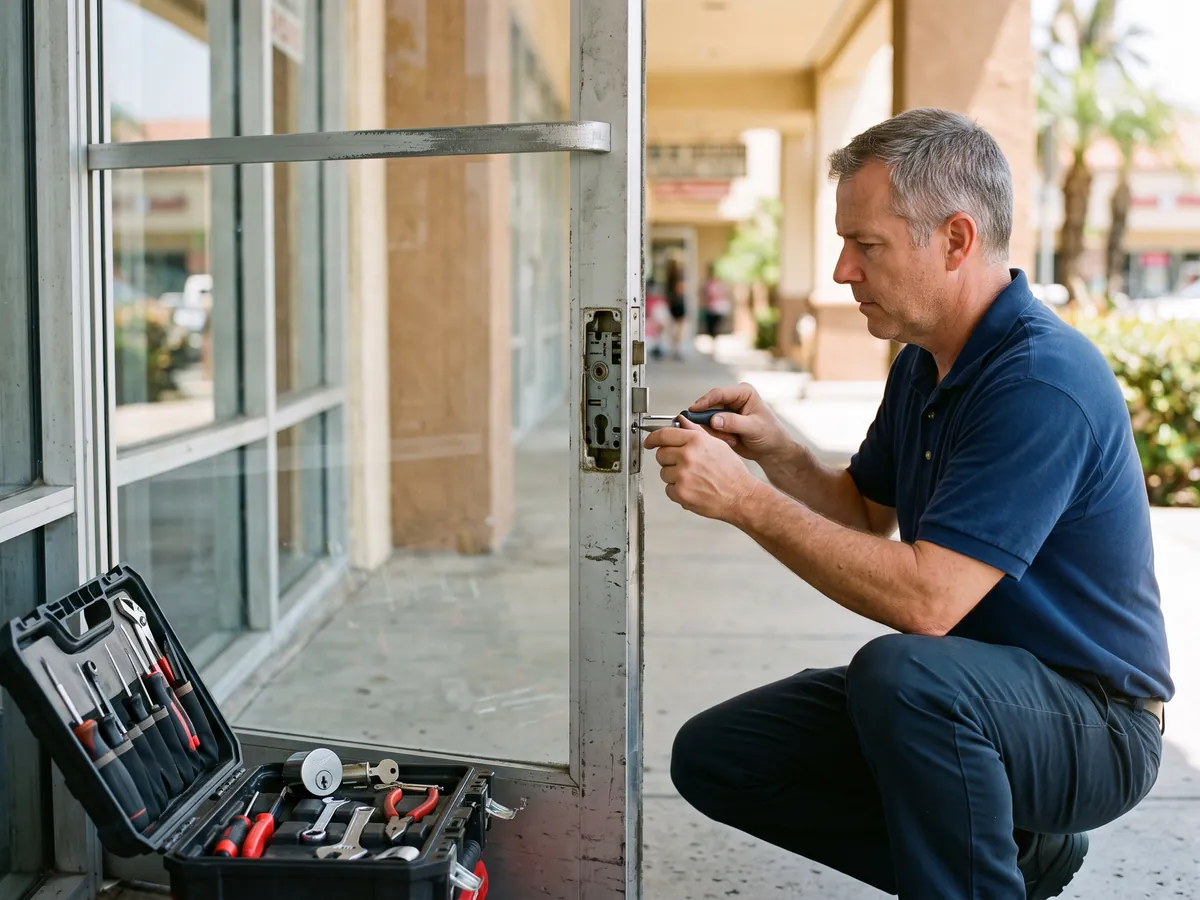
If you lease space in a center off Old Town Front Street, a failing entrance door raises a second question beside how to fix it: whose job is it? Some leases make the tenant responsible for door hardware and the landlord for frame and glass, others reverse that, and plenty are vague. Before ordering storefront door repair in Temecula, read your lease and send your property manager a quick note with a photo of the problem. Julian's Locksmith asks for authorization, such as ID plus a lease page or a note from the owner, before working on any door. We also keep notes on what we found and what we replaced, which makes the landlord conversation easier. Call (951) 903-3193.
Storefront Door Repair in Temecula: what to expect
A glass-and-aluminum entrance door looks simple, but it hangs on very little. On most single doors the leaf turns on two points, a top pivot in the header and a bottom pivot in the floor or threshold, while some older or lighter doors swing on butt hinges or a long continuous geared hinge. Nearly all of the weight rides on the bottom bearing, a small bushing that sees every opening and closing for years. As that bushing wears, the whole door settles. At first it simply sits lower in the opening. Then the bottom rail scrapes the threshold, the latch edge stops lining up with the strike, and the hookbolt has to be coaxed into its hole. That chain of events is why storefront door repair in Temecula so often begins with a complaint about the lock. We replace worn bushings and pivot hardware, set the door back in the opening with even gaps, and only then move the strike if it is still off. Fixing the door first keeps you from paying for a lock that was never broken.
How we can help in Temecula
- Hinge repair and continuous hinge replacement. A hinge-side gap that opens up while the latch side sags usually means the hinge screws have pulled loose. Longer screws only strip the hole further. We use proper anchors, renew worn hinges or pins, and check that the door meets its stop evenly all the way down.
- Weatherstripping, sweeps and thresholds. Seals do more than save air conditioning. A good sweep wipes grit off the bottom rail and keeps wind from whistling and rattling the door. We pick the profile for your floor and threshold, install it square, and check it doesn't catch during the swing.
- Pairs, meeting stiles and astragals. Pairs often wear unevenly: the active leaf takes all the traffic while the inactive one stays tight. We rebalance both so the strike lands in the right place, then test the bolts at head and floor for full engagement before we leave.
- Repair after impact or forced entry. A forced door can look fine and still be weak. We check the pivots for bending, the lock stile for twist, the strike anchors for pulled threads and the seals for tears, then restore security. Photos and notes from the visit help with an insurance claim.
- Scheduled door checks for multiple suites. A routine look at an entrance costs far less than an emergency repair. For businesses with a few doors, we do a periodic walk-through, test movement and wear, and note when parts are due for replacement so the work can be planned.
How Temecula shapes the job
Lobbies, gift shops and restaurants that welcome visitors with luggage carts and strollers need doors that open smoothly and look good. A scraping or rattling door sets a poor first impression. We repair hardware quietly and quickly, match finishes so the entrance still looks tidy, and set closers so a family with a stroller can get through without a struggle.
A newly built center can still have door problems in its first year. Concrete slabs settle, frames shift slightly, and entrance hardware is often set to builder-grade specifications. Closers installed at the factory settings may not suit the way your customers use the door. We tune the hang, closer and seals so the entrance performs properly after the punch list is finished.
On a shopping corridor near Pechanga Parkway, a whole row of storefronts often shares the same age, the same door system and the same wear. When one suite's door starts to drop, its neighbors usually follow. Storefront door repair here works well as a scheduled walk down the frontage: pivots, sweeps and closers checked door by door, with the landlord's hardware standards noted so replacement parts match.
Example situations
- A neighborhood restaurant fails a routine inspection because daylight shows under the front door. The vinyl sweep has cracked in the sun and a threshold seal has lifted at one end. For example, we would measure the opening, fit a sweep cut to the door width, adjust the door height so the new seal doesn't ride up on the threshold, and keep the clearance within accessibility limits.
- A salon on the sunny side of a strip center notices a hot draft along the bottom of its door every afternoon, plus a gritty sound as it opens. Heat has hardened the pile weatherstripping on the lock stile and warped the sweep. We replace both, clean the threshold, and lubricate the pivots, which together cut the draft and the noise. The owner never needed a new door.
- A medical office in Temecula has a door that won't latch on the first try. Staff shoulder it shut each evening and wonder if the lock needs replacing. The hookbolt works fine with the door open. The real trouble is a quarter inch of vertical drop at the lock edge. A pivot service and a small strike adjustment fix it, and the existing lock stays, saving the office a part it never needed.
- After closing, the owner of a phone repair shop finds the door will not stay shut. The top pivot pin has slipped out of its socket in the header after a hard slam, though nothing is cracked. It is early evening, still inside our hours, so he calls (951) 903-3193. We re-seat the pivot, check the leaf for twist, and make the door close and lock again so he can go home.
How the visit works
- Describe the symptom and send photos. A few quick answers shape the visit: single door or pair, who installed it, whether it has a closer, and whether the lock still works. Send a photo or two if you can, and we'll tell you honestly what the likely cause is.
- Confirm authority to work on the door. Before we touch a door, we confirm you can authorize the work: photo ID plus a lease page, business license or a note from the owner. If the landlord controls exterior doors, we'll help you get that approval first.
- Read the reveals and the door's travel. Looking before loosening anything matters. We note gaps, rub marks, light showing at the edges and how the closer pulls the door home, then test the pivots by lifting. A few minutes of observation usually points straight at the cause.
- Isolate the part that failed first. We take the lock out of the equation by working the bolt with the door open, then remove load from the pivots to see how far the door settles. That tells us whether a part is worn out or simply needs adjusting.
- Quote, then repair. We lay out the options in plain terms: what we can fix today, what needs a part ordered and what belongs to a glazier. You choose, then we start. If something unexpected turns up mid-job, we stop and talk first.
- Test everything and hand over notes. Before we leave, we open and close the door several times from both sides, confirm it latches and locks firmly, and look for any remaining drag. You get a note listing the parts used and anything worth monitoring.
What affects the cost
- Door system and parts availability. Common storefront hardware is easy to find. Older or discontinued entrance systems can need adapter plates, creative sourcing or a second visit for a special-order part. We tell you early if your door falls into that group, before any money is spent.
- Door size, weight and glass. A heavy glass door with a thick leaf puts more load on the pivots and takes more hands to lift. Large doors and pairs need more time and sometimes more equipment, so we note the size and glass type when we quote the visit.
- Timing and urgency. A scheduled repair during regular hours generally costs less than a rushed call late in the evening. If the door still locks and isn't a safety problem, booking earlier in the week gives us time to bring the right parts.
Every job gets a clear quote before any work starts. Call (951) 903-3193 with the details and we'll tell you what to expect for your situation in Temecula.
What not to do
- Chaining or padlocking a damaged door while people are inside. It feels like a quick way to secure the shop, but an exit door must open from the inside without a key. If the door can't latch, call for help and keep the exit usable until it is repaired.
- Ignoring a door that merely drags. A little rubbing wears the bottom rail, shreds the sweep and slowly pushes the bolt out of line with its strike. By the time the key sticks, you may be paying for pivots, strike and lock together instead of one inexpensive bushing.
- Stripping out a loose hinge or strike with longer screws. In thin aluminum, a longer screw just chews the hole bigger and can strike glass stops or wiring inside the frame. Rivet nuts or proper inserts hold firmly and can be re-tightened for years.
What to do before we arrive
- Tell your alarm company when a door is being adjusted. A small shift in the jamb can change what the contact sees. A brief heads-up beats a false alarm the next morning, and they can re-test the sensor once the work is done.
- Take a phone video of the door opening and closing in good light. Intermittent problems often vanish the moment a technician arrives, but a clip shows the scrape, the slam or the catch exactly, and it saves a lot of back-and-forth on the phone.
- Add a proper stop. A floor or wall stop that catches the door before it swings into glass or a display is cheap protection, and it spares the pivots and hinge anchors from hard slams on windy days when the closer can't keep up.
- Ask opening and closing staff to report changes. The person who locks up every night is first to notice a stiffer key, a new squeak or a door that sits differently. A shared note or text message is enough to catch a sag early.
Service in Temecula
Temecula is about 55 miles from our San Bernardino base, roughly 55 minutes in light traffic via University Parkway to I-215 South through Riverside, Perris and Menifee to the I-15 merge in Murrieta. When you call, you get an arrival estimate based on where the technician is and the traffic at that moment.
Most trips into Temecula use I-215 for at least part of the drive, and the technician keeps an eye on live traffic along the way so the arrival estimate you heard on the phone stays honest.
About Temecula: Temecula incorporated on December 1, 1989, and grew from 27,099 residents at the 1990 census to 110,003 at the 2020 census.
| Neighborhoods | Vintage Hills, Vail Ranch, Roripaugh Ranch, Redhawk, Old Town, Meadowview |
|---|---|
| ZIP codes | 92590, 92591, 92592 |
| Main routes | I-15, SR-79, I-215, Rancho California Road |
| From our San Bernardino base | about 55 miles via University Parkway to I-215 South through Riverside, Perris and Menifee to the I-15 merge in Murrieta, then I-15 South to the Winchester Road (SR-79), Rancho California Road or Temecula Parkway (SR-79 South) exits; Pechanga Parkway and Butterfield Stage Road lead on to the Pechanga area and wine country |
Lock or door hardware trouble in Temecula?
Call (951) 903-3193 with the address and what the door or lock is doing. We'll quote the repair before any work starts.
Frequently asked questions
How can I tell whether the lock or the door is the problem?
Open the door and turn the key. If the bolt slides smoothly in and out, the lock is working and the door is probably the culprit. If the key turns only when you lift the handle, or the bolt misses its hole when the door is closed, the door has dropped. Fixing the hang usually restores the lock without replacing it.
Can you repair just one leaf of a double door?
Yes, and we frequently do. One leaf usually takes more use and wears faster. Because a dropped leaf pulls its partner out of line, we normally check and realign both so the meeting stiles, flush bolts and astragal work together. If only one leaf needs parts, you only pay for those parts.
Do you replace door sweeps and weatherstripping?
Yes. Cracked vinyl sweeps, worn pile weatherstripping and flattened threshold seals are routine work for us, and they often explain drafts, dust and pests at the entrance. We match the profile to your door, install it so it doesn't drag, and keep the clearance at the bottom within accessibility requirements.
Why is my storefront door dragging on the floor?
The most common reason is a worn bottom pivot bushing, which lets the whole door settle until the bottom rail scrapes the threshold. Loose hinge screws and a racked frame can cause the same thing. Lift the handle gently with the door closed. If the door moves, the pivot is worn. We can usually replace the bearing and reset the clearances in one visit.
Our storefront door was pried open. Can it still be repaired?
Often it can. Pry attempts commonly bend the lock stile slightly, pull screws and damage the latch or bolt, but leave the leaf usable. We inspect for twist, restore the hardware and make the door secure again. If the stile or frame is badly bent, a glazier or door contractor may need to replace it, and we'll say so honestly.
How long does storefront door repair usually take?
It depends on what failed. Adjustments, sweep replacement and pivot service are often completed in a single visit when the parts are common. A discontinued pivot or an unusual finish may mean ordering a part and returning. We give you an honest estimate when you call and confirm it once we've examined the door.
How far is Temecula from your base?
Temecula is about 55 miles from our San Bernardino base, roughly 55 minutes in light traffic. Arrival time depends on traffic and on the job the technician is finishing, so we give you an estimate on the phone before you commit.
Related services in Temecula
- Storefront Lock Repair in Temecula
- Storefront Door Lock Replacement in Temecula
- Aluminum Storefront Door Repair in Temecula
- Glass Door Lock Repair in Temecula
- Storefront Door Closer Repair in Temecula
- Commercial Door Repair in Temecula
- Commercial Door Won't Close in Temecula
- Commercial Door Won't Latch in Temecula
- Locksmith for Retail Store in Temecula
- Storefront Locksmith in Temecula
Storefront Door Repair in nearby cities
- Storefront Door Repair in MurrietaRiverside County
- Storefront Door Repair in WildomarRiverside County
- Storefront Door Repair in MenifeeRiverside County
- Storefront Door Repair in Canyon LakeRiverside County
- Storefront Door Repair in WinchesterRiverside County
- Storefront Door Repair in Lakeland VillageRiverside County
- Storefront Door Repair in Quail ValleyRiverside County
- Storefront Door Repair in HomelandRiverside County

