
Stanton, Orange County
Stanton Business Lock Rekey Without Closing for the Day
Short answer: After a business lock rekey, decide who gets which key before the new ones are cut. Owners and managers may need the office and cash room; most staff only need the entrance. Julian's Locksmith in Stanton can set up two or three key levels, stamp keys with numbers instead of door names, and suggest restricted blanks that hardware stores can't copy.
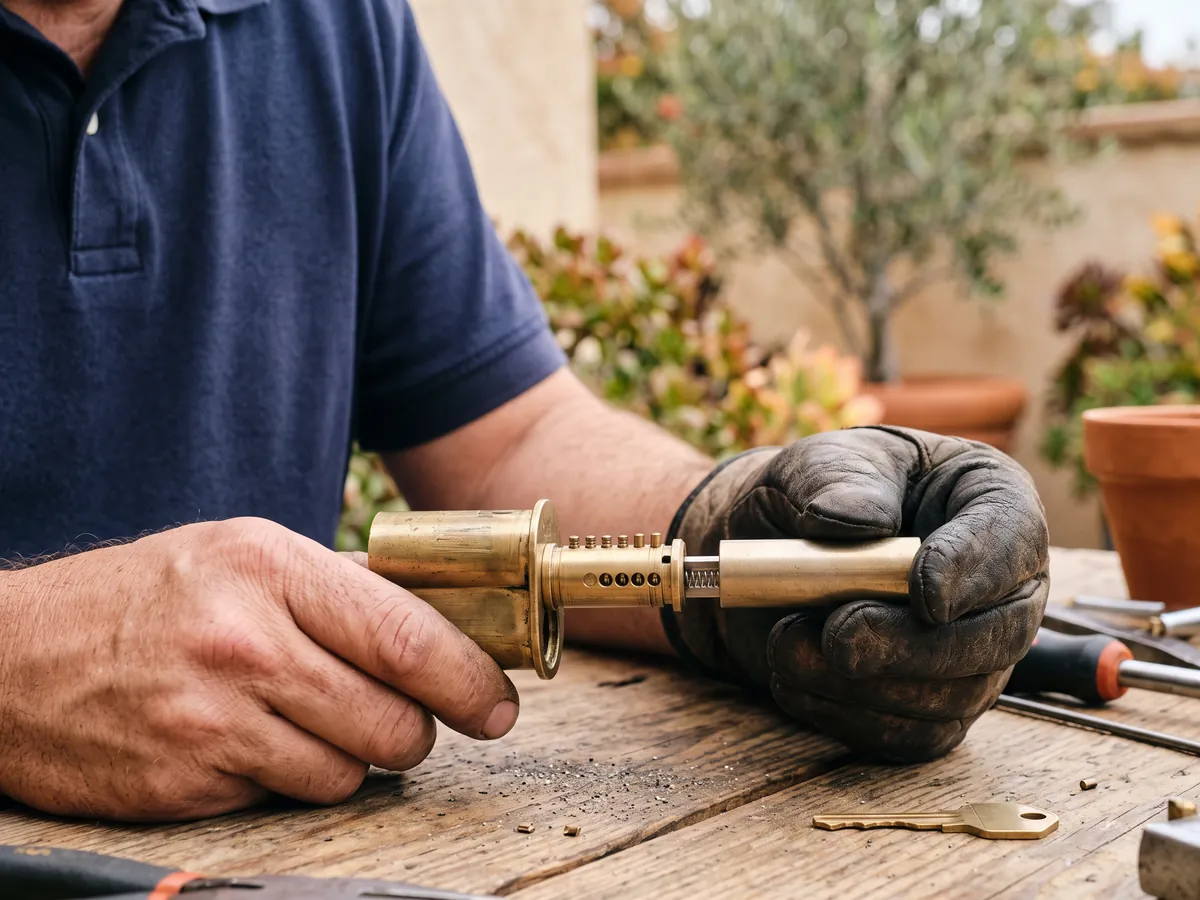
Most business owners don't think about their keys until someone leaves on bad terms. A shift lead who quit without notice, a manager who was let go, a seasonal hire who never came back for a final paycheck: any of them might still have a key to your front door. A business lock rekey in Stanton makes those keys useless without replacing the locks your business already paid for. Julian's Locksmith comes to your location, confirms you're the owner or an authorized manager, and re-pins each cylinder to a new key. You approve the price before we start, and new keys are cut in our van while you watch. Call (951) 903-3193 to schedule.
What to know first in Stanton
From the owner's side, a business lock rekey is simple: the same locks stay on your doors, the old keys stop working, and you walk away with new ones. Inside each lock, we replace the small pins that match the cuts on a key, setting them to a new combination. Small businesses usually have a predictable mix of hardware. The front may be an aluminum storefront door with an Adams Rite deadbolt, or a glass office door with a lever lock. The back is often a steel door with a deadbolt or a panic bar with an outside key cylinder. Inside, there's typically an office or cash room lock, maybe a stockroom, plus padlocks on a gate, cage or dumpster enclosure. Each of those can usually be rekeyed in place. Replacement makes more sense when a lock was damaged in a break-in, when a cheap residential knob is wearing out on a heavy-traffic door, or when you want a different kind of lock altogether, such as a keypad. We'll tell you which category each lock falls into before quoting.
Work included on a typical visit
- Rekey after buying a business. If the purchase includes staff who are staying on, a rekey isn't a statement about them. It simply resets keys that were issued under the previous owner. You can then hand out new keys under your own rules, with numbers and a log, which is a good habit to set from the first week.
- Lost or stolen business keys. If your business keys are lost or stolen, especially with anything that identifies the business, rekey the locks they opened. We rekey the affected doors, padlocks and cabinets, cut replacement keys for everyone who still needs access, and confirm the lost key no longer works anywhere.
- Rekey and repair after a break-in. After a break-in, locks may be damaged as well as compromised. We assess each one: a pried storefront deadbolt or a punched cylinder usually needs replacement, while undamaged locks can be rekeyed if keys were taken. Either way, you leave with secure doors and a clear list of what changed.
- Cash rooms, offices and stockrooms. Interior doors protecting cash, records or high-value stock deserve their own key. We rekey office and stockroom locks so only the people you choose can open them, even if a staff entrance key goes missing. Many businesses discover their office lock has worked with the front-door key all along.
- Restricted keys staff can't copy. Do Not Duplicate stamps are a request, not a lock. Restricted and patented key systems actually enforce it, because blanks aren't on the shelf at key counters. Upgrading means new cylinders rather than re-pinning old ones, so we'll quote both paths and let you decide whether the added control is worth it.
What's different about Stanton
Neighborhood businesses in Stanton, such as daycares, tutoring centers, salons and small professional suites, often share a center with families coming and going all day. A business lock rekey is common after a staff change, especially where children or sensitive records are involved. Interior doors for supplies, records and cash deserve their own keys, separate from the one that opens the front.
Owners who travel into Stanton from across the region often rely on early openers and late closers, which puts keys in more hands. A business lock rekey is easy to schedule around that. We start at 6:30 a.m. every day, so an owner can meet us before opening, and we're done before the evening drive home. Give openers numbered keys and keep a spare set at home.
Shops along Cerritos Avenue and in nearby strip centers tend to share one pattern: a glass storefront with a single aluminum door, a back door off a service alley and a rotating cast of part-time staff. A business lock rekey in Stanton usually covers those two doors, the stockroom and any display case locks. Landlord rules in multi-tenant centers matter, so check your lease first and ask whether center management keeps a key.
Example situations
- Two partners who co-own a retail shop decide to part ways, and one wants the locks changed before the lease conversation. We explain that we cannot take sides. We need whoever has legal authority over the space, often both owners or the person named on the lease, to approve the work. Once both sign off in writing, we rekey and split the new keys evenly.
- Someone buys a small bakery and inherits a coffee can holding fourteen unlabeled keys. We test every key in every lock with the new owner and discover that one old key opens the front door, the office and the flour room alike. We rekey the set to a plan with separate staff and owner keys, so by the time the ovens go on, the previous owner's copies are dead.
- A family restaurant near Stanton Family Resource Center loses its closing manager midweek. His ring opens the alley door, the office, the dry-storage room and a padlock on the cage around the walk-in's condenser. After the dinner rush winds down, we rekey all four, give the owner a top-level key and two numbered staff keys, and try each one before we leave the lot.
- A shared office suite in a converted house near Southern Stanton has six tenants on month-to-month terms. One tenant moves out without returning the suite key or the supply closet key. The landlord arranges a rekey of both locks. The remaining tenants collect new keys at a short handoff and sign a simple list, so everyone knows how many keys exist.
How the visit works
- Tell us what happened and which doors are involved. A photo helps. Snap each door's lock from both sides, plus any padlocks and cabinets, and send what you have. We can often tell the brand and type from a picture, spot a lock that won't rekey, and bring the right pins and parts on the first trip.
- Show who you are and that you can authorize the work. Before work begins, we need photo ID and something tying you to the business: a business license, a fictitious business name filing, a lease or ownership papers. A manager can authorize the job with the owner's written permission. We check this on every business call.
- Survey the doors and test the old keys. The survey also finds weak points. A back door that doesn't latch, a storefront cylinder that spins loosely or a residential knob guarding a cash room can undo a rekey. We tell you what we see and quote repairs separately, so you approve only what you want.
- Decide key levels, key count and who holds what. Before any pin changes, choose your structure. A common small-business plan has an owner key that opens everything, a manager key for daily doors and a staff key for the entrance. We write it down, cut the agreed quantities and stamp keys with numbers, never with the business name.
- Rekey in sequence while you stay open. Each cylinder is removed, emptied of its old pins and rebuilt to the new key code at a bench in our van. It goes back in, gets cycled several times and is tested with the new key. We also try the old keys, to confirm they no longer turn anything.
- Hand over keys, record them and reset the extras. At the end, we give you the key set, show you which key opens what and leave a short written record. You count the keys with us before we go. Keep that sheet somewhere private, since it shows exactly where each key fits.
Pricing factors
- How many doors, padlocks and cabinets are on the list. Quotes follow the number of cylinders. A shop with a front door, back door and office is a short job, while a suite with a stockroom, cash room, gate padlocks and a row of cabinets takes longer. A complete list when you call helps us quote accurately and arrive with the right parts.
- The kind of locks on your doors. Commercial hardware varies. A storefront Adams Rite deadbolt, a mortise cylinder, a rim cylinder on a panic bar and a key-in-knob lock all rekey differently. Some are quick, and some need disassembly. We identify each type during the walk-through and price accordingly.
- Key levels and how many keys you want. Setting different keys for owners, managers and staff means extra pins in some locks and a slightly longer job. It's usually worth it. The more levels and keys you cut, the more the quote includes, so settle on a plan before the visit.
Every job gets a clear quote before any work starts. Call (951) 903-3193 with the details and we'll tell you what to expect for your situation in Stanton.
What to do before we arrive
- Inland summers are hard on outdoor padlocks and gate cylinders, which get gritty and sun-baked. Dry PTFE or graphite lubricant helps, while oil attracts dust and gums up pins. Wipe off dust before you spray, and if a key suddenly feels rough, mention it so we can clean or replace the cylinder.
- Read your lease before rekeying. Many commercial leases require the landlord's consent, a copy of every key or a master key for management. Send the property manager a short email first and keep the reply. If your building has a fire department Knox Box, ask the department before touching it.
- Ask the vendors who enter after hours, especially janitorial companies, how many keys their crew holds and how they track them. A company that cleans your shop at night may have given a copy to each employee. Ask them to sign for each key and call you when their staff changes.
- Include the small locks. Cash drawers, file cabinets, display cases and the key to the drop safe all hang on someone's key ring, and a former manager may hold every one. List them when you call, since cam locks are quick to rekey but easy to forget until the quote is done.
Common errors that cost time and money
- Labeling keys with the business name and address. A lost ring with a tag or branded fob tells whoever finds it exactly which door to try. Use numbers, keep your list private, and don't clip parking passes or company cards onto the same ring.
- Leaving alarm and keypad codes alone. A former employee may still know the code that disarms your system, and no new key changes that. Reset codes and remote programming on the same day as the business lock rekey, or you've secured only half the building.
- Rekeying only the front door. Keys rarely fit a single lock, and many businesses key the back door, office and padlocks alike without realizing it. Test the missing key in every lock before deciding the scope, or you could leave behind a key that still opens the cash room.
Getting to Stanton
Stanton is about 55 miles from our San Bernardino base, roughly 60 minutes in light traffic via I-215 South through Colton and Grand Terrace to SR-91 West in Riverside, SR-91 West through Corona and Santa Ana Canyon to SR-57 South. When you call, you get an arrival estimate based on where the technician is and the traffic at that moment.
Homes and businesses just off Dale Avenue are routine stops for us. Give the suite or unit number and any gate instructions, and say whether the van can park out front or should pull into a side lot.
About Stanton: Before 1911 the community was called Benedict; it incorporated that year and took the name Stanton after Philip A. Stanton, a Republican state assemblyman.
| Neighborhoods | Civic Center area along Katella Avenue, Southern Stanton between Garden Grove and West Garden Grove, Hollenbeck Park area off Cerritos Avenue, Beach Boulevard corridor, Stanton Central Park area off Western Avenue, Cedar Street |
|---|---|
| ZIP codes | 90680 |
| Main routes | Beach Boulevard, Katella Avenue, Western Avenue, Knott Avenue |
| From our San Bernardino base | about 55 miles via I-215 South through Colton and Grand Terrace to SR-91 West in Riverside, SR-91 West through Corona and Santa Ana Canyon to SR-57 South, then SR-22 West (Garden Grove Freeway) to Beach Boulevard (SR-39) north into Stanton; alternate is SR-91 West to the Beach Boulevard exit in Buena Park and south on Beach, or I-10 West to SR-57 South when the 91 is jammed |
Planning a rekey in Stanton?
Call (951) 903-3193 and tell us how many doors you want on the new key and the brand of the locks if you know it. We'll quote the rekey before any work starts.
Frequently asked questions
Can I stop my employees from copying keys?
Not with a standard keyway. A Do Not Duplicate stamp is only a request, and many hardware kiosks will copy the key anyway. A restricted keyway, whose blanks are sold through authorized dealers, makes unauthorized copies far harder. It usually involves new cylinders, so we quote it separately from a plain rekey. Many shops find the control worth it.
How many keys should I have cut?
Cut as few as your operation really needs, then add one spare set kept off-site. For a small shop, that usually means one owner key, one for each manager and an entrance key for each staff member who opens or closes. Fewer keys means fewer problems when someone leaves. We'll help you count by role, not by habit.
Can a manager or employee authorize the rekey?
A manager can authorize it when the owner gives written permission and the manager shows ID. We won't rekey a business at the request of a former employee, or when two owners disagree about who controls the space. If you're a tenant, we may also want to confirm your lease allows lock changes before we start.
What do I need to show you for a business lock rekey?
Bring a government photo ID plus something that connects you to the business, such as a business license, a fictitious business name filing, a lease or ownership papers. If you manage the place for someone else, a signed note or email from the owner usually works. We verify authority before every business job, which protects your property as much as ours.
Do you replace my business locks, or rekey them?
Whenever the hardware is sound, we rekey it. We change the pins inside so new keys work and old ones don't, and your locks, handles and panic bars stay where they are. We replace a lock only when it's damaged, worn out, a budget model that can't be rekeyed, or when you ask for a different type. You'll know which before we begin.
Is rekeying enough after a break-in?
Only if the locks weren't damaged and the burglars didn't use a key. After forced entry, cylinders, strikes or frames are often bent, so we inspect first. If a key was used or taken, we rekey. Either way, talk to the police before repairs, since they may want photos, and tell us what you saw.
How far is Stanton from your base?
Stanton is about 55 miles from our San Bernardino base, roughly 60 minutes in light traffic. Arrival time depends on traffic and on the job the technician is finishing, so we give you an estimate on the phone before you commit.
Related services in Stanton
Business Lock Rekey in nearby cities
- Business Lock Rekey in Garden GroveOrange County
- Business Lock Rekey in CypressOrange County
- Business Lock Rekey in WestminsterOrange County
- Business Lock Rekey in Buena ParkOrange County
- Business Lock Rekey in Los AlamitosOrange County
- Business Lock Rekey in La PalmaOrange County
- Business Lock Rekey in Hawaiian GardensLos Angeles County
- Business Lock Rekey in AnaheimOrange County
