
Home Gardens, Riverside County
Locked Out of Your House in Home Gardens? Here's How We Get You In
Short answer: If a young child or a vulnerable adult is alone inside, or a pan is sitting on a lit burner, call 911 before anyone else; firefighters can force entry and are usually closer than any locksmith. For an ordinary house lockout in Home Gardens, even with a dog barking behind the door, call (951) 903-3193. We confirm residence and open the door without damage.
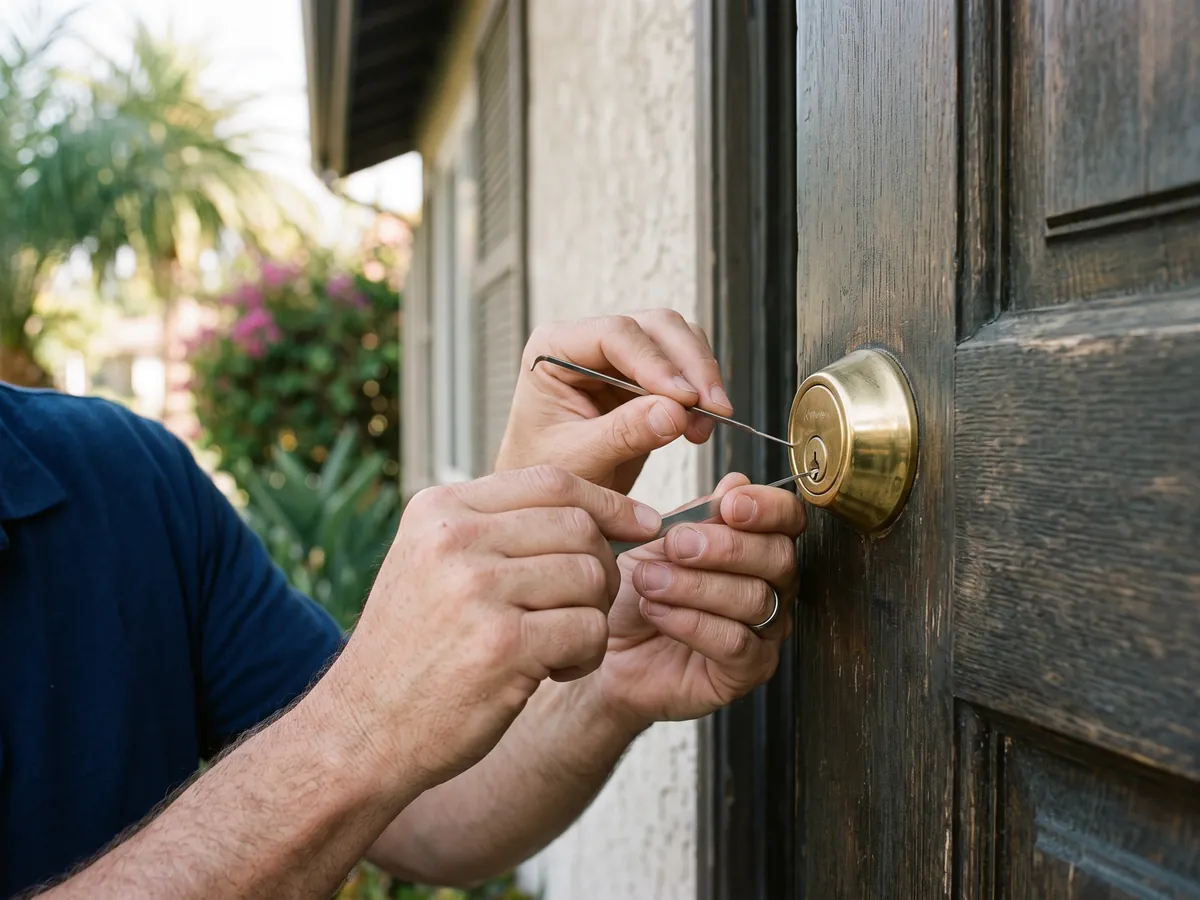
Most house lockouts in Home Gardens start the same way: the door swings shut, and either the knob was set to lock or someone turned the deadbolt on the way out. Those are two very different problems. A spring latch in a knob or lever can often be slipped or bypassed with thin tools, as long as its anti-shim plunger isn't doing its job. A deadbolt throws a solid steel bolt about an inch into the frame, and the usual non-destructive answer is picking the cylinder pin by pin. Tell us which lock you think is engaged when you call (951) 903-3193. It helps us bring the right tools, choose the right door and give you a more accurate quote before we drive out.
House lockouts here are usually single-family, single-story homes with a deadbolt on the front door, a knob lock on a side or kitchen door, and a garage entry door that nobody remembers locking. Those details change the approach. A spring-latch knob on a 1970s house can often be slipped in seconds. A deadbolt thrown fully into the jamb needs a different method, and a worn or misaligned bolt may bind even when you hold the right key. Keypad and smart locks cause a growing share of calls. In the heat, a keypad on a sun-facing door can drain its batteries early, and fall Santa Ana dust can stick a keyway. We can often bypass the electronics, open the mechanical cylinder underneath and then replace the batteries. With four people in the average household, the first question is who is inside. A kid home from Home Gardens Academy or a pet shut in a warm house changes the order of work, so tell us before we arrive. If it is a true emergency, call 911 first. We check ID and proof of residence before opening any house.
House Lockout in Home Gardens: what to expect
The locks on a typical single-family house tell a story, and reading it is half of a quick house lockout. Tract homes in Home Gardens built since the 1990s usually came with builder-grade Kwikset or Schlage knobsets and deadbolts, often keyed alike at the front and garage doors. Older ranch houses tend to be a mix: an original knob on the side door, a deadbolt someone added in the 1980s, maybe a newer smart lock on the front that shares nothing with the rest. Kwikset SmartKey cylinders, recognizable by the small slot beside the keyway, resist ordinary picking, so we plan a different approach for them. Mortise locks on older Spanish and Craftsman-era homes have their own mechanics and their own weak points. Higher-end homes may carry Baldwin, Emtek or high-security cylinders that are slow to open by design. Every door is different, so we look before we promise anything, and we explain which door we'd open and why. That inspection also tells us whether you'd benefit from keying the doors alike afterward, so one spare key covers the whole house next time.
What we can do on-site
- Garage service doors and garage-to-house doors. Doors between the garage and the living space in California homes are usually self-closing, so they latch behind you while you're moving trash cans or unloading groceries. We open them by bypassing the latch or picking the knob, then check the closer or spring hinges if the door slams. A rekey can make one key fit garage and house.
- Child or pet locked inside. A toddler who pressed the knob button or turned the thumbturn is one of the most common reasons for an urgent house lockout. We talk with you on the phone, ask whether the child is safe and calm, and pick the quickest non-destructive method once we arrive. If waiting isn't safe, 911 is the right call, not us.
- Broken key in the front door. A key that snaps inside the deadbolt turns a quick errand into a lockout. We extract the broken piece with thin hooked extractors, then open the lock and cut you a new key, often from the broken pieces or by decoding the cylinder. Glue, tweezers and paper clips usually push the fragment deeper and make the job harder.
- Keys cut on site after entry. A house lockout is a good reminder that one key isn't enough. After opening your door in Home Gardens, we can cut spares for the front, side and garage doors, and if they're keyed differently, we can rekey them so one key fits all. It's quoted separately and completely optional, so skip it if you like.
- Rekeying after lost house keys. Rekeying after a house lockout means taking the cylinder out, swapping the pins for a new combination and handing you fresh keys. It costs less than new hardware and works on most Kwikset, Schlage and similar residential locks. In Home Gardens, we can rekey every exterior door to one key during the same visit if you'd like.
What's different about Home Gardens
Inland heat is hard on house locks. Sun-facing doors in Home Gardens expand and shift, deadbolts start binding in their strikes, and keypad batteries lose capacity faster than the label suggests. Many summer lockouts turn out to be a smart lock that stalled mid-throw or a key that twisted in a hot cylinder. After opening your door, we can adjust the strike and treat the cylinder with a dry lubricant that won't collect dust.
Older houses in Home Gardens often carry a patchwork of locks: an original knob on the side door, a deadbolt added decades later, maybe a mortise lock on a front door that predates both. During a house lockout that variety helps, because one of those doors is usually easy to open without damage. We also run into warped wood doors and painted-over strikes that bind, so we check alignment once you're back inside.
In family neighborhoods, house lockouts often involve kids: a toddler who pressed a knob button, a teenager home from school without a key, or a parent locked out in the middle of a bedtime routine. We treat a child inside as a priority and ask questions to confirm they're safe. Afterward, a keypad lock with a separate code for each kid can break the cycle of lost keys in Home Gardens.
Situations this covers
Picture a mother pulling into the driveway of a stucco tract house on April Drive with two kids and a trunk full of groceries, only to find the front deadbolt stuck halfway. The key goes in but won't finish the turn. We confirm she lives there, ease the door against the strike while turning the key, and then look for the cause. Often the house has settled and the bolt scrapes the strike hole. We file the hole, tighten the plate and leave her with a smoother turn.
- For example, a tenant in a single-family rental gets home from an evening shift and finds the key won't turn because the old deadbolt has worn out inside. The landlord lives out of state and isn't answering. With a lease and ID showing the address, we'd open the door, then let tenant and landlord know the deadbolt needs replacing, since California landlords must keep entry deadbolts working.
- A typical call: you step out to grab the mail, and your two-year-old, fiddling with the front knob, presses the lock button. The door clicks shut behind you. The child is fine and watching cartoons, but can't reach the deadbolt or understand the button. If you're at all worried, call 911. If the child is calm and safe, we'd treat it as a priority, bypass the knob latch and get you through the door.
- Say a homeowner in Home Gardens wheels the trash bins to the curb before dawn, and the kitchen door, its knob set to lock, latches behind them. The front deadbolt was thrown the night before, and the family's anxious terrier is barking inside. We'd check the side and garage doors first, then likely bypass the kitchen latch, with the owner standing at the opening so the dog sees a familiar face.
How the visit works
- Call and safety check. When you call (951) 903-3193, we first ask whether anyone inside is in danger: a child alone, a burner on, a bath running. If so, we'll tell you to call 911. Otherwise we ask which door, which lock and where you're standing in Home Gardens.
- Quote and honest ETA. You'll know what the house lockout will cost and roughly when we'll arrive before you agree to anything. We base the estimate on real traffic toward Home Gardens, not a sales promise. If you find a key or a neighbor turns up with a spare, just call back and cancel.
- Arrival and verification. First thing at the door: identification. A license with the house address settles it quickly. Renters can show a lease, and new owners can show closing documents. If nothing proves residence, we contact the owner or decline, which protects every homeowner in Home Gardens, including you.
- Survey every door. Before touching a lock, we walk the house with you: front, side, back, the garage service door and the door from garage to house. We note which locks are engaged and their brands, then choose the door that opens quickest without damage. Often it isn't the front.
- Non-destructive entry. Most house lockouts in Home Gardens end at this step with a pick and tension wrench or a latch tool. The door opens, the lock still works and you're inside. If a keypad needs power, we use its backup terminals or override cylinder, then swap the batteries right away.
- Test, explain and prevent. Before leaving, we confirm ownership if we couldn't at the start, run each lock several times, and look for the real cause: a misaligned strike, an auto-lock setting, a worn key. You decide whether anything else gets fixed today, and nothing is added without asking.
What affects the cost
- Lock grade and security features. Kwikset SmartKey locks, high-security deadbolts and anti-pick cylinders are designed to be slow to open without a key. That's good security, but it affects a house lockout quote. If you know your lock's brand or notice a small slot next to the keyway, mention it when you call.
- Keypad or smart lock condition. Battery-related lockouts tend to cost less than mechanical failures. If your keypad in Home Gardens beeped low-battery warnings for weeks, it's probably power. If it died suddenly in summer heat or after a hard slam, the motor or bolt alignment may be involved, which adds diagnosis and possibly parts.
- Drilling and replacement hardware. If a cylinder is seized, broken internally or too secure to bypass, replacement hardware becomes part of the cost. Matching the finish and keyway of your other doors may affect which lock we recommend. We always tell you before the drill comes out, never after the fact.
Every job gets a clear quote before any work starts. Call (951) 903-3193 with the details and we'll tell you what to expect for your situation in Home Gardens.
Common errors that cost time and money
- Prying at the strike with a screwdriver or pry bar. Exterior doors in Home Gardens homes usually hang in softwood jambs that split easily, and a split jamb means the deadbolt can no longer hold. You end up paying for frame repair, a strike and maybe a door, plus the lockout.
- Squirting glue, digging with tweezers or jamming a hairpin into a lock with a broken key inside. Each attempt tends to push the fragment deeper or damage the pins, turning a simple extraction into a cylinder replacement. Leave the broken piece where it is and call a locksmith.
- Breaking a window to get in. Replacement glass, especially dual-pane or tempered, usually costs more than a lockout service, and broken glass causes real injuries when people reach through to a latch. The house is also left unsecured until a glass shop can get there.
Advice before you book
- Keep a photo of your ID and a recent utility bill in a secure album on your phone. If your wallet is locked inside, a digital copy helps a locksmith verify residence sooner, although we may still ask to see the originals once the door is open.
- Save our number, (951) 903-3193, in your phone now and note our hours: every day from 6:30 a.m. to 11:30 p.m. Knowing who to call, and when we're closed, prevents a rushed search while you're standing outside a locked door.
- Turn off auto-lock on a smart deadbolt, or lengthen its delay, before yard work, unloading groceries or carrying trash to the curb. Many lockouts in Home Gardens happen in the few seconds a door is out of sight. Keep your phone or key on you whenever you step out, even briefly.
- Teach older children how to turn the deadbolt thumbturn and the knob button from inside, and practice once together. During a lockout, a calm eight-year-old can often open the door before help arrives. Never pressure a frightened or very young child, and call 911 if their safety is in question.
Service in Home Gardens
Home Gardens is about 31 miles from our San Bernardino base, roughly 39 minutes in light traffic via I-215 South from San Bernardino through Colton and Riverside. When you call, you get an arrival estimate based on where the technician is and the traffic at that moment.
Homes and businesses just off Neece Street are routine stops for us. Give the suite or unit number and any gate instructions, and say whether the van can park out front or should pull into a side lot.
About Home Gardens: Home Gardens Academy on Tolton Avenue is the Corona-Norco Unified campus serving the unincorporated western part of the community.
| Neighborhoods | April Drive and July Drive tract, Magnolia Avenue corridor, Park Lane Mobile Home Estate, Brotherton, Neece Street and Tolton Avenue, Magnolia Avenue and North McKinley Street junction |
|---|---|
| ZIP codes | 92879 |
| Main routes | SR-91, Magnolia Avenue, North McKinley Street, Indiana Avenue |
| From our San Bernardino base | about 31 miles via I-215 South from San Bernardino through Colton and Riverside, then SR-91 West (Riverside Freeway) about 13 miles to the North McKinley Street exit in Corona; south on North McKinley Street to Magnolia Avenue, the main street through Home Gardens. Neece Street and Tolton Avenue are southwest along Magnolia Avenue, and Indiana Avenue and Harvill Lane are to the east. |
Planning a non-urgent job like a rekey, a smart lock install or a safe combination change? Every day of the week, appointments are available from first thing in the morning into the late evening, with 11:30 p.m. as closing time. Fridays and Saturdays follow the same schedule.
Safes get the same scrutiny. Before drilling or manipulating one, we need reason to believe it's yours: a purchase record, the fact that it sits in your home or business, or estate paperwork if you inherited it. A safe exists to keep people out, so proof of ownership isn't optional.
Locked out in Home Gardens?
Call (951) 903-3193 with the address and what's locked. You'll get an arrival estimate and a quote before anyone heads out, and when we arrive we'll ask for ID that ties you to the property. If a child or pet is shut inside a hot car or building, call 911 first.
Frequently asked questions
Is it faster to open the front door or the side door?
Often the side or garage door. Those frequently have only a knob or lever lock, which can be bypassed more quickly than a Grade 1 deadbolt on the front. During a house lockout in Home Gardens, we check every door and choose the one that's quickest to open without damage, unless you'd prefer a particular entry.
What if the key broke off in my lock?
Don't try to dig it out with tweezers or glue; that usually pushes the fragment deeper. We extract the broken piece with thin hooked tools, open the lock and cut a new key. Then we check why it broke, since stiff cylinders and misaligned strikes tend to break the next key the same way.
How much does a house lockout cost in Home Gardens?
It depends on which lock is engaged, the lock's security level, whether drilling is needed and how far we drive. A knob latch is usually the simplest job; a high-security deadbolt or a failed smart lock takes longer. We don't list prices online, but you get a quote on the phone before we come out, and we requote before doing anything different.
Can you make a new key after opening my door?
Yes. Our van carries key machines, so we can cut a key from the lock's code, decode the cylinder, or rekey the lock to a new key on site. If you have several doors in Home Gardens with different keys, we can rekey them so one key fits all, quoted separately from the lockout itself.
Can you open my house if I'm renting?
Yes, if you can show you live there: a lease, a utility bill in your name at the address, or ID with that address. Your landlord or property manager can also authorize entry. California landlords can't lock tenants out to force them to move, so if that's what happened, you need legal help rather than a locksmith.
Can a house sitter or family member call you?
They can, but we'll need the homeowner's authorization. Usually that means reaching the owner by phone, matching names, and having the person at the door show their own ID. If we can't reach anyone who owns or lives in the house, we won't open it. That rule protects your home too when you're the one traveling.
How far is Home Gardens from your base?
Home Gardens is about 31 miles from our San Bernardino base, roughly 39 minutes in light traffic. Arrival time depends on traffic and on the job the technician is finishing, so we give you an estimate on the phone before you commit.
Related services in Home Gardens
- Home Lockout in Home Gardens
- Locked Out of House in Home Gardens
- Mobile Locksmith for House Lockout in Home Gardens
- Emergency Locksmith in Home Gardens
- Rekey Locks after Losing Keys in Home Gardens
- Smart Lock Troubleshooting in Home Gardens
- Broken Key Stuck in Door in Home Gardens
- Spare House Key in Home Gardens
- Deadbolt Replacement in Home Gardens
- House Rekey in Home Gardens
House Lockout in nearby cities
- House Lockout in El CerritoRiverside County
- House Lockout in CoronaRiverside County
- House Lockout in NorcoRiverside County
- House Lockout in EastvaleRiverside County
- House Lockout in PedleyRiverside County
- House Lockout in Mira LomaRiverside County
- House Lockout in RiversideRiverside County
- House Lockout in Jurupa ValleyRiverside County