
Home Gardens, Riverside County
Emergency Locksmith Open Now in Home Gardens
Short answer: An emergency call to us is short on purpose. We need your exact location in Home Gardens, what the lock or vehicle is, what went wrong and whether anything is at risk. Then you get a firm quote and an ETA based on where our technician really is. On arrival we verify ID or ownership, open or secure the door with minimal damage, and fix what we can on the spot.
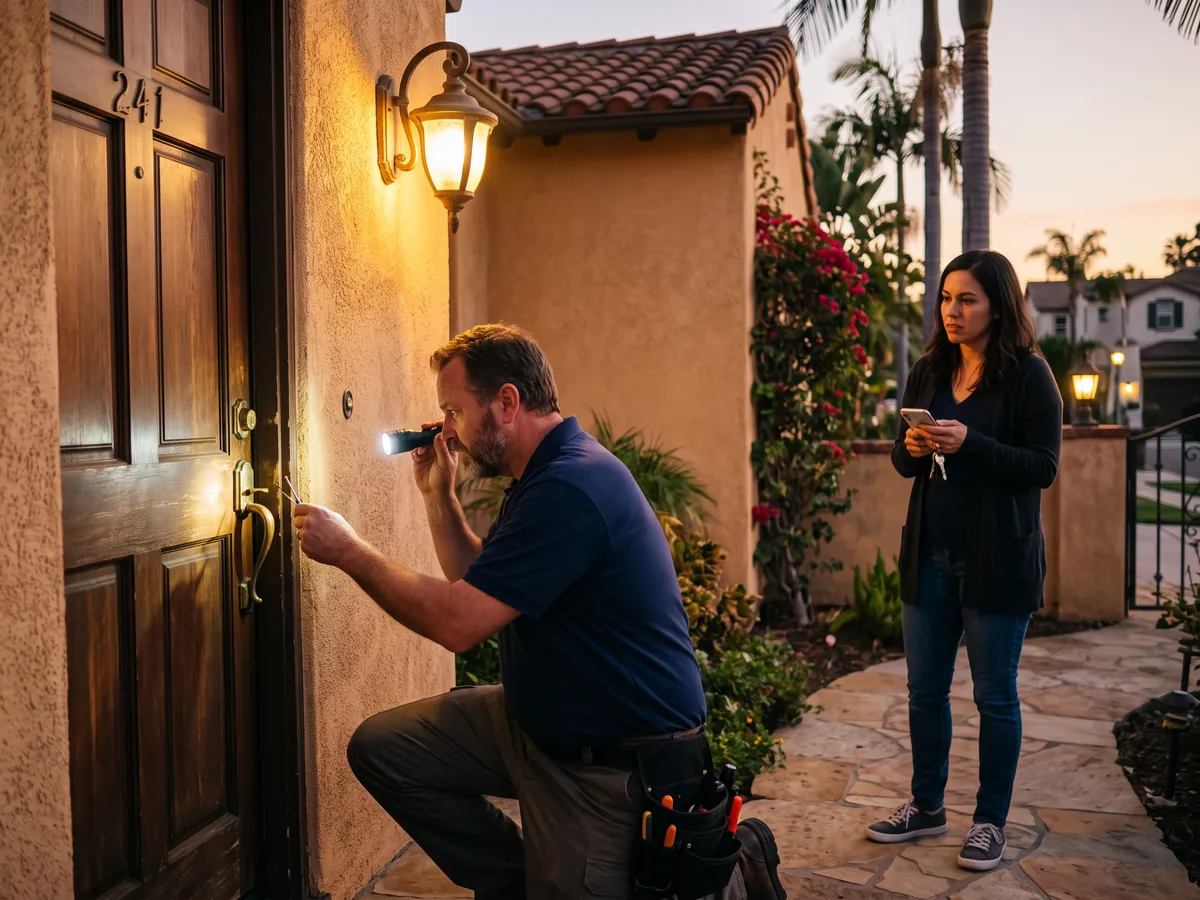
Before anything else, a locksmith can't help a person in danger behind a door. If someone inside a home or car in Home Gardens isn't answering, is hurt, or is a child or an animal in rising heat, dial 911. Firefighters and police have the training and the authority to force entry, and a few minutes matter more than a tidy lock. Everything else on this page is for the other kind of emergency: you're safe, but a door won't close, a key is gone, or you're stuck outside something you need. If you need an emergency locksmith open now for that second kind, call Julian's Locksmith at (951) 903-3193 during our hours. We'll work out which kind of call you're making, then move quickly.
What to know first in Home Gardens
Think of emergencies as a ladder with four rungs, because that is how a locksmith sorts the day. The top rung is a person at risk: a child shut in a hot car, someone unresponsive behind a locked door, an occupant who can't get out. That is a 911 call, not a locksmith call. The second rung is a safety threat or exposed property: a door that can't be closed after a break-in, a former partner or employee who still holds a key, a stolen set of keys with an address attached. We put those ahead of routine work whenever the schedule allows. The third rung is stranded and stuck: locked out with dinner on the stove, a car at a trailhead, a shop that must open at seven. The fourth rung is annoying but stable: a sticky lock, a spare key, a rekey that could just as easily happen tomorrow. When you call, we'll tell you which rung we think you're standing on. If it's the fourth, we'll say so plainly and offer the next opening instead of burning a rush on it.
Work included on a typical visit
- Lockouts where waiting is the problem. A lockout turns urgent when something inside is still running or someone who depends on you is behind the door. We ask what's on, who's inside and how quickly it matters, because the answer decides whether we recommend 911, a neighbor with a spare, or a straight call to us. Most openings take only a few minutes once we're at the door.
- Forced doors and broken frames after a break-in. Entry doors hit by a kick tend to fail at the weakest point: the short screws holding the strike plate. We replace the plate with a heavy-gauge one fastened with three-inch screws and reset the deadbolt, so that bolt engages solid wood. It's a modest fix that often makes the door stronger than it was before the break-in.
- Keys stolen, lost with an address, or in the wrong hands. Lost keys are one thing; keys in hands you don't trust are another. A fired employee, an ex-roommate or a former partner who never returned a copy is reason enough to rekey. Rekeying changes the inside of each cylinder, so your existing hardware stays and only the key changes.
- Safety-driven lock changes. We treat these calls quietly and without questions about your reasons. Tell us what you need: all exterior doors rekeyed, a keypad code changed, a garage entry secured. We can often handle the whole house in one visit, and we'll suggest practical add-ons such as a door viewer, a longer strike screw or a sliding-door bar.
- Vehicles stuck at the curb, the trailhead or the garage. Car emergencies cover three situations: keys locked inside, keys lost, and a key that won't turn. We open most vehicles without damage, cut and program keys on site for many makes, and tell you honestly when a model needs the dealer. Your location and the vehicle's year, make and model are the first things we ask.
How Home Gardens shapes the job
Older homes in Home Gardens often carry original hardware: worn mortise locks, brass knobs with loose spindles, wood doors whose jambs have been shimmed for decades. Those weak points show up in emergencies as a kicked door that splinters old wood, or a lock that finally gives out. We try to save historic hardware by rebuilding it, and we'll say honestly when the frame needs a carpenter before any new deadbolt can hold.
Commuters meet lock emergencies at the edges of the day. Leaving at dawn, you notice a deadbolt that won't throw. Coming home near 11 p.m. after a long drive on Promenade Avenue, the key won't turn. We take calls from 6:30 a.m. to 11:30 p.m. every day. That covers most commutes. Call before you commit to a rideshare or a sick day. A fix on the way out the door beats a house left unlatched all day.
Shop owners in the retail strips of Home Gardens hit emergencies at closing: a hookbolt that won't retract, a cylinder that spins, a back door that stopped latching after a delivery. A storefront with a bad lock is an overnight risk to cash, stock and equipment. Tell us the center, the unit and which door, and have the lease or a manager's authorization handy. We can usually repair or replace storefront hardware from the van and confirm the door locks from outside before you leave.
Example situations
- A typical outside-hours example: it's 11:45 p.m. on a Saturday, and a family returns from a trip to find the front lock won't turn. We closed at 11:30 p.m. Our advice would be to check for an unlocked slider or garage door, try a neighbor's spare key, call a home-warranty line if one applies, and ring us at 6:30 a.m. Sunday, when we'd drive over.
- Picture 6:40 on a Monday morning near Corona Hills Marketplace. A restaurant owner turns the key in the back-door lock and it spins freely, with the cylinder cam sheared. Deliveries arrive at seven. Because we start at 6:30 a.m., we'd quote by phone, bring a replacement cylinder and a cam, and have the door working before the first truck backs in.
- Here's a common emergency: a tenant leaves an unsafe situation with a protective order in hand and asks the property manager for a lock change. The manager can't answer until morning. We'd explain what we can do tonight, rekey the exterior locks with her ID and lease, and she'd forward a note about it to the property office.
- Take a driver who snaps the only car key off in the ignition at a trailhead lot outside Home Gardens. No cell signal at the pullout means she walks to a spot with coverage and calls. We'd ask for the exact trailhead, drive out in daylight hours, extract the broken piece, then cut and program a replacement key on site where the make allows.
How the visit works
- Answer the four questions. If you can, step somewhere with good signal and light before you call. Read us the brand off the lock, the year and make of the car, or the type of door. Don't worry if you don't know the details; we'll ask follow-ups, and a quick photo by text often settles the rest.
- Decide whether to go, wait or refer. Safety questions come first because they change everything. If you mention someone unresponsive, smoke, or a child in a closed car, the answer is 911 right now, and we'd rather you hang up on us than delay. For calls that clearly belong to us, we move on to timing and price.
- Hear the quote and the ETA. Before the van leaves, you hear a price for the job as you've described it and an arrival estimate based on where we are and current traffic. It is an honest estimate, not a promise we'd have to break. If something changes on site, we requote before doing any extra work.
- Stay safe and reachable while we drive. Wait somewhere lit, visible and comfortable: inside an open store, a lobby, or a neighbor's porch if they offer. Keep your phone charged and answer unknown numbers, since the call may be us confirming your gate or exact spot. Don't wait beside a busy road or in dry brush on a windy day.
- Verify, then open or repair with the least damage. We work slowly, because speed that scratches a door or bends a frame isn't a good trade. If a lock has to be destroyed, we explain why first and quote the replacement. For forced doors, we assess the frame at this stage and decide what can be fixed tonight and what needs a carpenter.
- Secure it, test it and plan the follow-up. We write up the work with an itemized invoice, which helps with insurance claims and landlord paperwork. If a second visit makes sense, we'll suggest a time within our regular hours, usually the next day. If you'd rather think it over, that's fine, and our number stays the same.
Pricing factors
- What failed and what it takes to fix. Entry-only and entry-plus-repair are different jobs on the same call. If we open a door and the cylinder is also worn out, the repair is optional work we explain and price separately. You approve each piece before it starts, so the quote you agreed to on the phone doesn't quietly grow while the door is open.
- Hardware on the van versus hardware to order. High-security cylinders from Medeco, Mul-T-Lock or ASSA Abloy, older mortise bodies and some commercial exit devices often need to be ordered. In that case we secure the opening with a temporary measure tonight and install the correct part later. The parts cost reflects the brand and grade, and we explain the difference between Grade 1, 2 and 3 hardware if you're choosing.
- Paperwork for police, insurers and landlords. Renters should keep the receipt and the date. If your lease makes the landlord responsible for entry-door security, a forced or failed lock may be theirs to repair, and a written record helps with reimbursement. For safety-driven changes, we can tell you what to send the property office so the paper trail stays tidy.
Every job gets a clear quote before any work starts. Call (951) 903-3193 with the details and we'll tell you what to expect for your situation in Home Gardens.
Common errors that cost time and money
- Paying a rush price for something that can keep. A spare key, a sticky lock or a rekey on a routine move rarely needs an urgent visit. Book the next opening, save the cost of a late-evening call and keep emergency slots open for people with a door that won't close.
- Cleaning up or replacing the lock before documenting anything. Fresh photos and the original damaged hardware help with police reports, insurance claims and landlord disputes. Take pictures first, keep the broken parts in a bag, and then let us repair the opening.
- Accepting help from an unsolicited stranger after a break-in. People sometimes appear offering to fix your door within minutes of police arriving. Hire a locksmith you called yourself, whose license you've checked, rather than someone who found you first. Unsolicited repairs can mean inflated bills and unfinished work.
Practical tips before you call
- If your keys were stolen with something showing your address, treat it as an active problem, not a maybe. File the police report, then rekey the exterior locks the same day. Waiting to see whether the thief shows up is a poor bet when rekeying takes one visit and changes every key.
- Before calling about a lockout, check the other legal ways in: the garage side door, a slider you left unlatched, a neighbor holding a spare. Don't climb, jump or break glass. A fall from a balcony or a gash from a window costs more than any locksmith visit and may end the evening at an emergency room.
- Have your alarm code, gate code and the names of any pets ready before we arrive. A technician who opens a door into a screaming alarm or a worried dog loses time. If an alarm monitoring company will phone you, tell them a licensed locksmith is on the way so the call doesn't escalate.
- With a car, work out whether the keys are locked in or lost before you call. Locked in means an opening; lost means cutting and programming, which is a bigger job. Compare your roadside benefit's wait with ours, and keep a photo of your registration so ownership checks go fast once we arrive.
Reaching Home Gardens
Home Gardens is about 31 miles from our San Bernardino base, roughly 39 minutes in light traffic via I-215 South from San Bernardino through Colton and Riverside. When you call, you get an arrival estimate based on where the technician is and the traffic at that moment.
If you're close to North McKinley Street, tell us which exit or cross street you're nearest. It trims the last mile and keeps the van from circling a block that looks right on the map but isn't.
About Home Gardens: The community covers about 1.5 square miles, all of it land, and counted 11,203 residents in the 2020 census, a density of roughly 7,400 people per square mile.
| Neighborhoods | April Drive and July Drive tract, Park Lane Mobile Home Estate, Avenida, Neece Street and Tolton Avenue, Brotherton, Indiana Avenue and Harvill Lane |
|---|---|
| ZIP codes | 92879 |
| Main routes | SR-91, Magnolia Avenue, North McKinley Street, Indiana Avenue |
| From our San Bernardino base | about 31 miles via I-215 South from San Bernardino through Colton and Riverside, then SR-91 West (Riverside Freeway) about 13 miles to the North McKinley Street exit in Corona; south on North McKinley Street to Magnolia Avenue, the main street through Home Gardens. Neece Street and Tolton Avenue are southwest along Magnolia Avenue, and Indiana Avenue and Harvill Lane are to the east. |
Late calls are fine, up to a point. We run until 11:30 p.m. every night, but a call at 11:10 from a city far from our base may be booked for the next morning rather than rushed. We'll tell you which it is on the phone, plainly, so you can decide whether to wait for us or make other arrangements.
Safes get the same scrutiny. Before drilling or manipulating one, we need reason to believe it's yours: a purchase record, the fact that it sits in your home or business, or estate paperwork if you inherited it. A safe exists to keep people out, so proof of ownership isn't optional.
Locked out in Home Gardens?
Call (951) 903-3193 with the address and what's locked. You'll get an arrival estimate and a quote before anyone heads out, and when we arrive we'll ask for ID that ties you to the property. If a child or pet is shut inside a hot car or building, call 911 first.
Frequently asked questions
How can I tell the locksmith is licensed?
Ask for the company's legal name and California locksmith license number before the van moves. Ours is LCO7891, issued by the Bureau of Security and Investigative Services, and you can verify it at search.dca.ca.gov in under a minute. Be wary of ads that never name a business or quote a vague price. A licensed locksmith gives you the name, the number and the full price.
Do you handle emergencies for businesses?
Yes: storefront locks that won't latch, hookbolts that stick, back doors that fail after a delivery, padlocks on yards and gates, and exit hardware that needs repair. We need authorization from an owner or manager, such as a lease, business license, utility bill or a call to the property owner. We start at 6:30 a.m. every day, so an early opening problem can often be solved before customers arrive.
My smart lock or keypad died. Is that an emergency?
It can feel like one when you're standing outside. Most units have a hidden mechanical key, an outside battery contact or a backup code, and we can walk you through them by phone. If those fail, we open the door and diagnose a dead battery pack, a lost network link or a failed motor, then repair it or fit a plain deadbolt for tonight.
Do you help with car emergencies too?
Yes: lockouts, lost keys, snapped keys and keys the car no longer recognizes. We open most vehicles without damage, cut keys on site and program many transponder keys and fobs, though some models need the dealer and we'll tell you before we start. If a child or animal is inside a closed car, call 911 first. Have your registration and photo ID ready to prove ownership.
What happens if you're already on another job when I call?
We tell you. We're a mobile service, so the technician may be mid-job when you call. We ask the safety questions first, quote the job and give an honest ETA based on where the van is. If you're in a more urgent situation, we'll say how we can fit you in. If another option gets you help faster, such as 911, roadside assistance or a landlord, we'll tell you.
Will you drill my lock to get in?
Only as a last resort, and we tell you first. Most home, car and business locks open by picking, bypass or a shim, none of which damages the hardware. Drilling is for locks that are broken, seized or high-security designs that resist picking, and in that case we quote the replacement before we start. It usually isn't the first move, and you approve it.
How far is Home Gardens from your base?
Home Gardens is about 31 miles from our San Bernardino base, roughly 39 minutes in light traffic. Arrival time depends on traffic and on the job the technician is finishing, so we give you an estimate on the phone before you commit.
Related services in Home Gardens
- Emergency Locksmith in Home Gardens
- Locksmith Open Now in Home Gardens
- 24 Hour Locksmith in Home Gardens
- Emergency Lockout Service in Home Gardens
- Emergency Door Unlocking in Home Gardens
- Home Lockout in Home Gardens
- Car Lockout in Home Gardens
- Broken Key Stuck in Door in Home Gardens
- Mobile Locksmith in Home Gardens
- Same Day Locksmith in Home Gardens
Emergency Locksmith Open Now in nearby cities
- Emergency Locksmith Open Now in El CerritoRiverside County
- Emergency Locksmith Open Now in CoronaRiverside County
- Emergency Locksmith Open Now in NorcoRiverside County
- Emergency Locksmith Open Now in EastvaleRiverside County
- Emergency Locksmith Open Now in PedleyRiverside County
- Emergency Locksmith Open Now in Mira LomaRiverside County
- Emergency Locksmith Open Now in RiversideRiverside County
- Emergency Locksmith Open Now in Jurupa ValleyRiverside County


