
Duarte, Los Angeles County
Lock Not Turning in Duarte
Short answer: A lock that turns stiffly or only part way is usually dirty, dry or out of line. Dust and old grease gum up the pins, and a sagging door makes the bolt rub the strike. Skip the WD-40; use dry graphite or a PTFE lubricant, or call Julian's Locksmith at (951) 903-3193 and we'll clean, repin or realign the lock for you in Duarte.
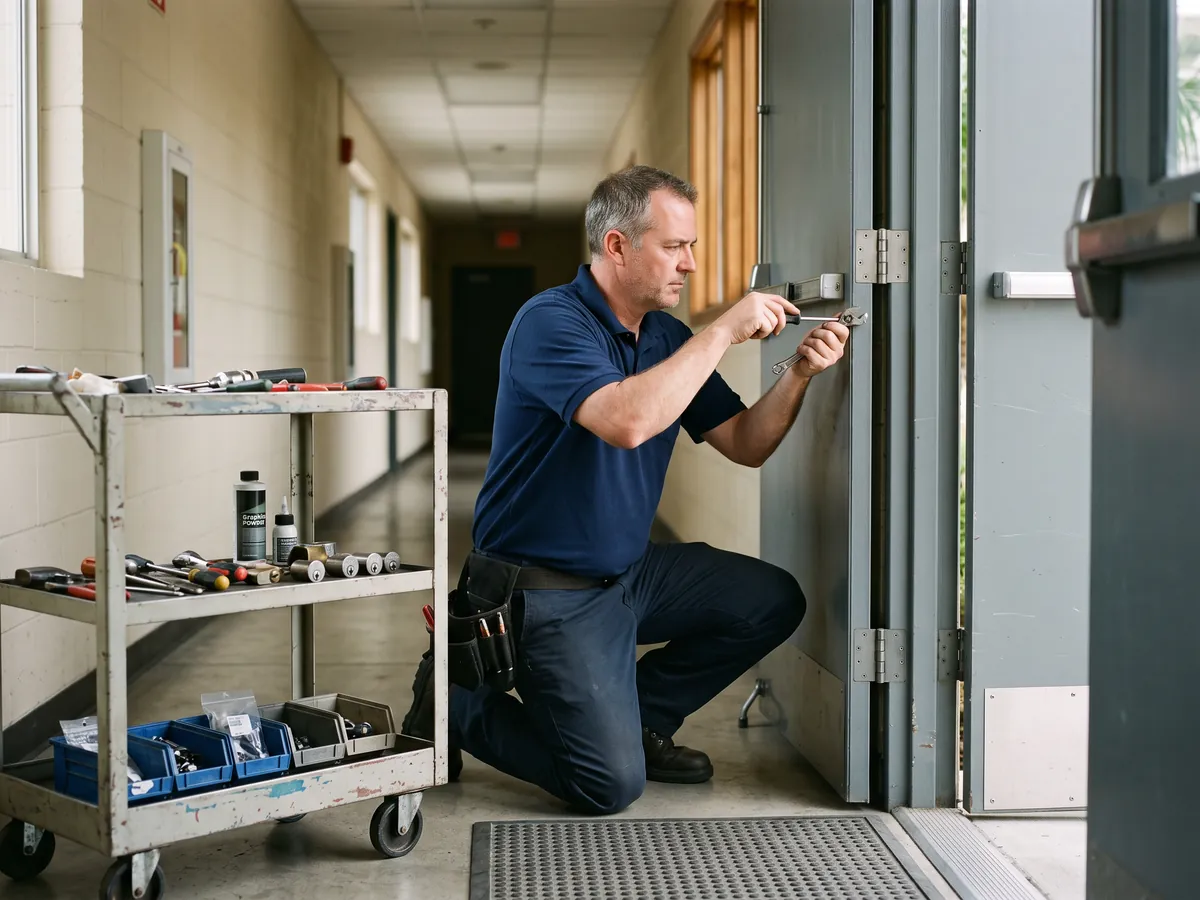
The key slides in all the way, you push to turn it, and nothing happens. Or it turns an inch and stops dead, with a gritty feeling that tells you not to push harder. A lock not turning is a common problem in Duarte, and the cause almost always falls into one of four buckets: the key, the cylinder, the door's alignment, or the mechanism behind the cylinder. Julian's Locksmith comes to you, tests each one in turn, and tells you which it is before we fix anything. Often the diagnosis takes a few minutes with the door open and a spare key, and sometimes no part has to be replaced at all.
What to know first in Duarte
Not every lock fails the same way. Residential pin tumbler cylinders from Kwikset and Schlage fail mostly from worn keys and dirty pins. Wafer locks, common in desks, file cabinets and older mailboxes, wear flat and bind. Padlocks and gate locks live outdoors and corrode. Mortise cylinders in older buildings have long cams that can work loose. Smart locks add a motor that stalls when the bolt drags. High-security cylinders from Medeco and Mul-T-Lock are made to tighter tolerances and keyed under restricted programs, so repair may involve ordering parts and checking authorization. Each type has its own likeliest culprit, and Julian's Locksmith carries common parts for each, so one visit to your Duarte property often finishes the job. Where it can't, we tell you before we start, not after. Mention the brand stamped on the latch edge of the door when you call, and we can usually say which parts we'd bring.
Work included on a typical visit
- Cylinder cleaning and dry lubrication. Dust, lint, pocket grit and old grease form a paste inside a keyway, and the pins stop moving cleanly. We flush the cylinder with a residue-free cleaner, work a dry lubricant through the pin chambers and test the turn repeatedly. The fix is quick and leaves the lock and keys exactly as they were.
- Broken tailpiece, cam and spindle repair. Cams on mailbox, cabinet and mortise cylinders are held by small screws or nuts that work loose. We tighten or replace them, make sure the cam sits in the right orientation for the lock's travel, and add thread-locking compound where vibration is a factor so the problem doesn't come back.
- Smart lock key overrides and stalled motors. Smart locks often get blamed for faults that live in the door. If the bolt scrapes the strike, the motor works harder, drains batteries faster and eventually quits part way. We fix the alignment first, then test the electronics. Often the lock was fine and a small door adjustment ends the whining and the lockups.
- Padlocks, gate locks, mailboxes and cabinet locks. A garage side door, shed or storage cage often carries a cheap lock that sees little maintenance and plenty of weather. We refresh what's worth keeping, replace what isn't with something sturdier, and key it alike with your main set if you'd like a single key on your ring.
- Commercial cylinders, cores and exit door locks. Restricted keyways and master key systems add rules. We confirm you're authorized to work on the system, match pin stacks and key bittings to the records, and avoid disturbing the hierarchy. If your system needs factory parts or an authorization card, we explain what is required and how long it takes.
How Duarte shapes the job
Foothill homes deal with Santa Ana winds that load doors and gates, fine wildfire-season dust, and steep sites where houses shift over the years. A lock not turning on these properties often means a door that has settled or a cylinder packed with dust. We realign strikes, tighten hinges, clean the keyway and advise on gate latches that can handle gusts.
Inland heat expands metal, dries grease and swells wood, so the same lock can feel different at 7 a.m. and 4 p.m. A lock not turning in summer is often a door pushing the bolt against the strike or a cylinder with dried-out lubricant. In Duarte, we adjust the strike, tighten hinges, and apply dry lubricant that doesn't cook off or collect dust the way oil does.
In 55-plus communities, a lock that takes force to turn is more than an annoyance. Arthritic hands can't manage it, and a stuck key can leave a resident outside. We service cylinders so they turn with a light touch, recommend lever handles and easy-grip key heads, and coordinate with the community office. A patient, unhurried visit is part of the service.
Example situations
- A tenant has wiggled the key for months to get the deadbolt to turn, pulling it out a hair and pushing it back in. This morning even that fails. The pins have worn to the point where only one exact position lifts them. We'd verify the key, repin or replace the cylinder, and tell you honestly that the wiggle was the lock's warning sign.
- A deadbolt only turns if you lift the door by the handle while you turn the key. You've done it for months without thinking. The hinges have loosened, the door has dropped, and the bolt now meets the strike low. We'd replace the short hinge screws with long ones, check the reveal, adjust the strike, and ask you to try the key with no lifting at all.
- A smart deadbolt whines, extends part way and gives up. The owner keeps replacing batteries. The real problem is that the door has shifted and the bolt scrapes the strike hole, so the motor works too hard. We'd adjust the strike, confirm the bolt throws freely by hand with the lock detached, and then test the electronics. The keyed override gets cleaned while we're there.
- A typical call: you're home from the store near Santa Teresita on Buena Vista Street with grocery bags in both hands, and the key slides into the front door and stops a quarter turn short. The spare on your partner's ring turns it easily. That's the signature of a worn key, not a failing lock. We'd cut a fresh key from the lock's code, test it, and check the cylinder for wear before we leave.
From your call to the finished job
- Stop and run the quick checks. Stop pushing. Take the key out, look for bends or a burr, and wipe the blade clean. Try it again gently, fully seated, then pulled out a hair, since some keys catch on the last pin. If it still resists, try a second key before you try anything harder. Never use pliers.
- Call and describe exactly what you feel. Call (951) 903-3193 and describe it in terms of your hands: key won't go in, goes in but won't turn, turns part way, turns but the bolt doesn't move, works only with the door open. Add which door, the brand on the latch edge, and whether you have a second key.
- Run the door-open and key tests. We inspect your key under good light for wear, bends and burrs, then compare it to the lock's keyway. We try every key you have and, when we can, a clean test key of the same series. A key that behaves differently in a known-good cylinder tells us the key is at fault.
- Isolate the cause. On smart locks we separate electronics from mechanics: batteries, motor draw, the thumbturn side and the key override. We turn the bolt by hand with the lock detached to confirm it moves freely. That keeps us from blaming the motor for a binding door, or the door for a failing motor.
- Fix the cause, not just the symptom. If the lock belongs to a keyed-alike or master key set, we preserve the keying so the other doors keep working. We note the cylinder type and key series for our records, and we tell you what to ask for if you ever need more keys made.
- Test under real conditions and plan maintenance. We run the lock through dozens of cycles with the door open and closed, from inside and outside, with every key you own. We close the door with ordinary force, check latch and strike, and use the lock the way you actually do, not the way a technician would.
What affects the cost
- What is actually at fault. Because one symptom has many causes, the quote can change after the door-open test. We give you a range on the phone based on what you describe and a firm number once we find the real cause. We never start work before you agree to the price.
- Lock brand, grade and keyway. Smart locks add parts: the motor, the gear train, the keypad and batteries. If the fault is electrical, replacement may be the sensible answer. We test whether the problem is mechanical first, because a door adjustment often costs less than any electronic component.
- Distance, timing and verification. Several locks on the same visit usually cost less per lock than separate trips. If more than one door is stiff, tell us when you call. We can often service them together and sort out which need cleaning, which need replacement and which only need a hinge screw.
Every job gets a clear quote before any work starts. Call (951) 903-3193 with the details and we'll tell you what to expect for your situation in Duarte.
Advice before you book
- Tighten hinge screws twice a year, or whenever the door starts to rub. A sagging door is a leading cause of a deadbolt that seems to be failing. If a screw spins without biting, replace it with a longer one that reaches the framing. The lock may need nothing else.
- Never use a hammer, a pry bar or a tool clamped on the key's head to force a lock. Keys break at the shoulder, cylinders deform, and a lock hit hard can lose its alignment for good. If light pressure doesn't turn it, stop and diagnose rather than push harder.
- Keep one key as a master pattern and never copy from a copy. Store an unused original, or your first duplicate, somewhere safe and cut future keys from it or from the lock's code. Each generation of duplication from a worn key adds error, and the lock pays for it with grinding pins.
- On a smart lock, test the bolt by hand first. With the door open, use the key or thumbturn to move it. If it drags, the motor is fighting friction and the door needs adjusting. If it moves freely, replace the batteries with the type the manufacturer specifies, then test again.
What not to do
- Taking the lock apart without a plan. Springs, pins and cams can launch across the room, and a cylinder reassembled in the wrong orientation may refuse to turn at all. If you try it, photograph each step, keep parts in order, and stop when anything unfamiliar appears.
- Blaming the lock when the door is the problem. People replace perfectly good deadbolts because the door has dropped or the strike has shifted, and the new lock binds in exactly the same way. Run the door-open test first. It takes seconds and can save the cost of hardware.
- Ignoring early stiffness. A key that needs a wiggle is a warning, not a quirk. Pins wear unevenly and then fail suddenly, and the lock gives out when you're in a hurry, after dark or with your hands full. A routine service while it still turns costs less than an emergency visit.
Reaching Duarte
Duarte is about 42 miles from our San Bernardino base, roughly 47 minutes in light traffic via Palm Avenue to I-215 North and I-15 South. When you call, you get an arrival estimate based on where the technician is and the traffic at that moment.
Once the evening commute thins out on Highland Avenue, drive times usually shrink. That makes an evening call before closing a practical option for non-urgent jobs that you couldn't fit into the workday.
About Duarte: The first recorded avocado tree grown in California was planted in Duarte by William Chappelow Sr. in 1893, from seeds sent by the U.S. Department of Agriculture.
| Neighborhoods | Huntington Drive corridor, Encanto Parkway and Valley View Park on the east side, South Duarte around Beardslee Park and Kellwil Way, Duarte Station area at Highland Avenue, Las Lomas and the Rancho Duarte Golf Course area, Central Duarte around Duarte High School and Northview Park |
|---|---|
| ZIP codes | 91010, 91008 |
| Main routes | I-210, I-605, Huntington Drive, Duarte Road |
| From our San Bernardino base | about 42 miles via Palm Avenue to I-215 North and I-15 South, then SR-210 West (Foothill Freeway), continuing as I-210 West through Glendora, Azusa and Irwindale; exit Mount Olive Drive for Las Lomas, Royal Oaks Drive and the east side, or Buena Vista Street for Huntington Drive, City of Hope and Duarte Station |
Lock or door hardware trouble in Duarte?
Call (951) 903-3193 with the address and what the door or lock is doing. We'll quote the repair before any work starts.
Frequently asked questions
The key won't turn and I'm locked out. Can you get in without damage?
Usually yes. After verifying ID or proof of residence, we try non-destructive methods first, such as picking, bypass tools or manipulating the latch. If a cylinder has seized and nothing else works, drilling may be needed, and we replace the cylinder so the door locks again. We explain which approach we're using and why before we begin.
Can you fix a padlock, gate lock or mailbox lock that won't turn?
In most cases, yes. We free seized padlocks and gate locks, replace corroded ones with weather-rated models, and service wafer locks on cabinets and private mailboxes. If the mailbox is a USPS-owned cluster unit, the Postal Service controls the lock and has to handle it. Tell us what's involved when you call, and we'll say honestly whether we can help.
Why does my lock only stick in the afternoon or when it's hot?
Heat expands metal and swells wood, so the door can press the bolt against the strike by late afternoon even though it clears in the morning. Dried lubricant behaves differently in heat too. Mention the time of day when you call. A strike adjustment, hinge tightening or cleaning usually fixes it, and the lock itself is often perfectly good.
Why does my key go into the lock but not turn?
The usual causes are a worn or bent key, dirt or dried grease in the cylinder, a door pressing the bolt against the strike, or a broken part behind the cylinder. A quick test tells you which: try a spare key, then try the lock with the door open. Don't force it. Julian's Locksmith can diagnose it at your Duarte door and fix the actual cause.
Will my old keys still work after you fix the lock?
In most repairs, yes. Cleaning, strike adjustment and key cutting leave your keys as they are, and a replacement cylinder can be keyed to your current key when the design allows. If you want to change keys, say after a tenant leaves or a key is lost, we can rekey so old keys stop working and cut new ones on site.
Is it okay to spray WD-40 into a lock that won't turn?
It's tempting but not a good idea. WD-40 frees a stiff lock briefly, then attracts dust and lint that turn into a gummy paste. If you want to lubricate a lock, use powdered graphite or a PTFE dry lubricant made for locks, and clean the keyway first. For a lock that is already stiff, a proper cleaning does more than extra spray.
How far is Duarte from your base?
Duarte is about 42 miles from our San Bernardino base, roughly 47 minutes in light traffic. Arrival time depends on traffic and on the job the technician is finishing, so we give you an estimate on the phone before you commit.
Related services in Duarte
Lock Not Turning in nearby cities
- Lock Not Turning in BradburyLos Angeles County
- Lock Not Turning in MonroviaLos Angeles County
- Lock Not Turning in IrwindaleLos Angeles County
- Lock Not Turning in AzusaLos Angeles County
- Lock Not Turning in Baldwin ParkLos Angeles County
- Lock Not Turning in ArcadiaLos Angeles County
- Lock Not Turning in North El MonteLos Angeles County
- Lock Not Turning in CitrusLos Angeles County
