
Downey, Los Angeles County
Mortise Lock Repair for Downey Homes and Buildings
Short answer: Mortise locks are repairable more often than people think, because the parts are separate: case, cylinder, hub, spindle, springs and trim. What matters is identifying the make and model, usually stamped on the faceplate or case. Send a photo from Downey and we'll tell you honestly whether it can be rebuilt. Call (951) 903-3193.
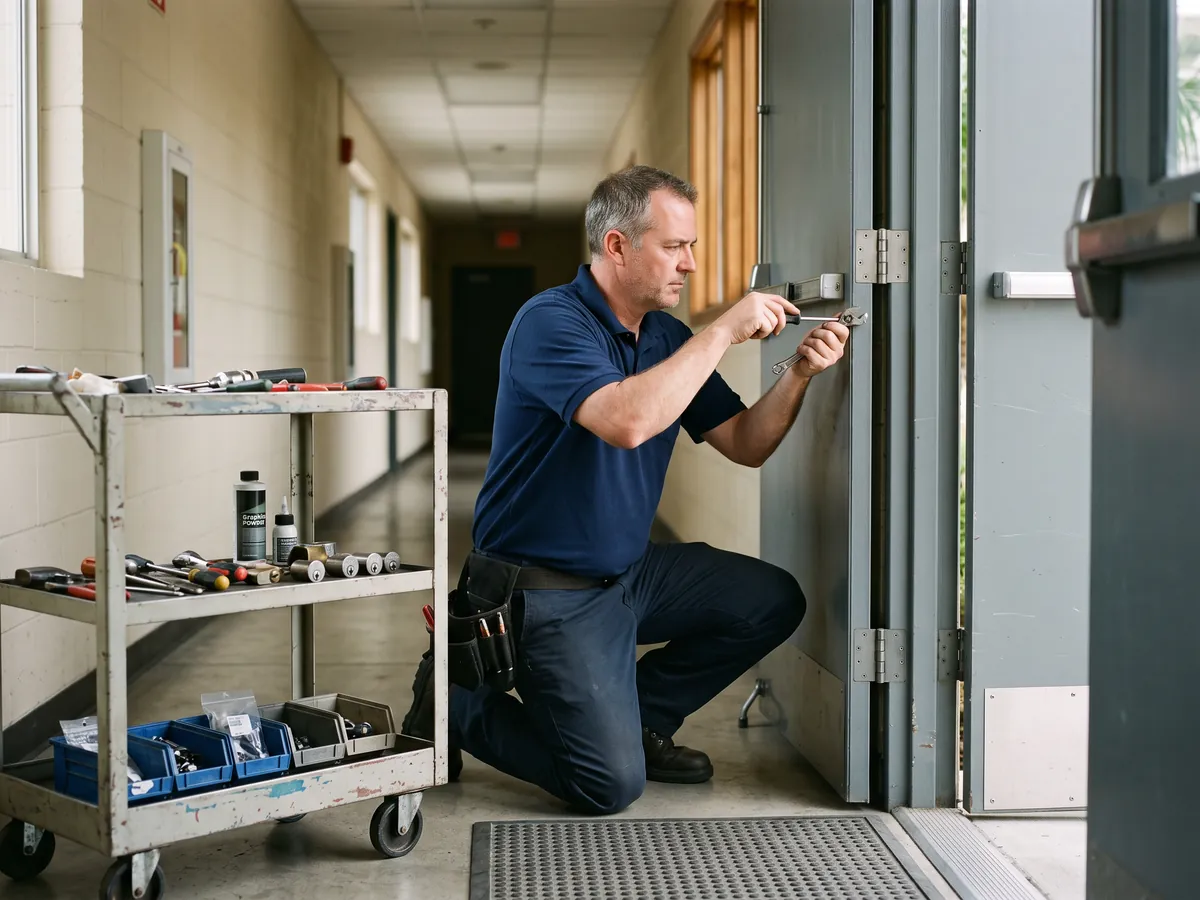
Original mortise locks are one of the pleasures of an older house and one of its maintenance puzzles. They were built heavy, with a steel or brass case that has lasted for decades; what wears out are springs, cams, the key mechanism and the grime of many repaints. Replacing them means cutting into the door, and most owners in Downey would rather keep the hardware that came with the house. Julian's Locksmith repairs mortise locks on site: we remove the case, identify it, clean and rebuild what can be saved, and tell you plainly when a part is gone. Call (951) 903-3193 and describe what the lock does.
What to know first in Downey
A rebuild starts with removing the case, which is trickier than it sounds. Trim and handles come off first, then the cylinder is loosened by its set screw and unthreaded, and the forend screws are backed out, often through decades of paint. We cut the paint line with a blade so the finish doesn't crack, slide the case out of its pocket and open the cover. Inside, we clean out old grease and grit, check each spring and lever, inspect the latchbolt and deadbolt for wear, and replace what's weak or missing. Reassembly follows the maker's layout. On a well-built case this restores decades of service. If the case is cracked, stripped or missing parts we can't source, we say so and talk through a replacement case that fits the same opening, so the door stays intact. A rebuild in Downey usually happens right at your door. You see what we saw, and we show you the worn parts before anything is thrown away.
Work included on a typical visit
- Cylinder, cam and set-screw repair. If the key turns but the bolt doesn't move, the cam on the back of the cylinder may be broken or the wrong style, or the cylinder may have loosened. We check the set screw in the forend, inspect the cam and replace the cylinder or cam as needed, matching length and cam style to your case.
- Knobs, levers, spindles and trim. Spindles in mortise sets can be square or split, and over time the corners round off so the handle spins without moving the latchbolt. We replace the spindle, tighten the set screws and sometimes install a new hub. If the knob is a decorative casting, we take care to preserve it.
- Skeleton-key and antique mortise locks. Skeleton-key mortise locks use simple wards instead of pin tumblers. Repairs mean cleaning, replacing springs and sometimes fitting a new key blank filed by hand to the wards. We tell you honestly how far a vintage lock can be restored, and refer you to a restoration specialist if a piece is rare.
- Latchbolt, strike and door alignment. A mortise latchbolt that drags on the strike, or a lock that works with the door open but not closed, is usually an alignment problem. We chalk the bolt, adjust the strike or the hinge side of the door, and make sure a heavy old door isn't stressing the case internals.
- Rekeying mortise cylinders and keying systems. Offices with a master key system can have mortise cylinders repinned to fit the hierarchy, as long as the keyway supports it. Some commercial mortise locks use interchangeable cores that come out with a control key, which makes changes even faster. We confirm which system you have before quoting.
What's different about Downey
Older shopping centers and professional buildings in Downey may use mortise locks on back-office and storeroom doors, in addition to storefront hardware. Tenants often inherit a lock with unknown keys. We can identify and repair or replace the case, rekey the cylinder so former employees' keys stop working, and confirm what the landlord allows. Aluminum storefront doors use narrow-stile deadlocks, which are a different repair.
Clinics, dental suites and professional buildings near medical centers in Downey often use commercial mortise locks with storeroom or office functions and master-keyed cylinders. Repairs have to fit patient flow and privacy rules, and doors sometimes carry fire ratings. We coordinate with office managers, work around appointment schedules where possible, and record the keying system properly. Electrified mortise locks tied to badge readers may need a low-voltage contractor for the electronics.
Historic downtown buildings in Downey often have upstairs offices, apartments and street-level shops with original mortise doors. Managers call us to repair sticky storeroom functions, rekey after tenant changes and keep old transom and glass doors working. We ask for written authorization from the owner or manager, respect any historic-hardware rules, and plan work on common-area doors around tenants' hours. Tell us the building's age and address when you call.
Example situations
- Picture a dental office in a converted house near Columbia Memorial Space Center with a Corbin Russwin mortise lock that sticks after a long day. The office manager authorizes the work by phone. We'd remove the case, find old grease hardened with dust, rebuild the springs and relubricate, and rekey the cylinder because a former employee still has a key.
- A typical call: a 1920s bungalow near Downtown Downey has its original mortise lock on the front door. The key turns freely and the bolt never moves. We'd check the cylinder set screw first, find it backed out, and inspect the cam on the cylinder's back. A snug set screw and a replacement cam might restore it in one visit, keeping the brass trim that came with the house.
- Say a homeowner with a skeleton-key mortise lock on a bedroom door has lost the key and wants one that works. The lock is warded, so there are no pins to read. We'd open the door by working the latchbolt, inspect the wards, file a new key to fit and clean the lock. We'd also mention that a warded lock offers privacy rather than security.
- Picture a medical suite near Stonewood Center where an electrified mortise lock fails to release for staff. The wiring and the solenoid belong to a low-voltage or access-control contractor, but the mortise case itself may be binding. We'd test the mechanical side by hand, tell you what we find, and coordinate with your electrician if the fault is electrical.
Step by step with Julian's Locksmith
- Describe the lock and the symptom. The first call tells us whether we're facing a spring, a cam, a cylinder or a door problem. Tell us what you see, what you hear and how the key feels. If you can read a name on the faceplate or cylinder, share it. Say whether the door is interior or exterior, and whether anyone is locked in or out.
- Verify who authorizes the work. We confirm the home or building belongs to you, or that you're authorized by the owner or manager. For businesses and rentals, a work order or a quick call with the owner is enough. We follow this for every repair, because a mortise lock protects more than a knob set does.
- Examine the door, then remove the case. Before anything comes out, we agree on how the door stays secure during the work and what happens if parts are needed. If the door can't be locked overnight, we talk through safe interim options with you first, instead of leaving you to improvise.
- Identify, inspect and quote. This is the honest-answer stage. Some cases are rebuilt in a visit, some need parts we have to source, and some can't be saved. We tell you which, with an estimate of any wait, and give you a price before work continues. You can also decline and keep the lock as it is.
- Rebuild, rekey or replace. We clean the case, replace springs, cams, hubs and spindles as needed, and reassemble to the maker's layout. Cylinders are rekeyed or replaced as agreed. If we replace the case, we fit it in the existing pocket and reuse trim where it fits.
- Test every function and hand over keys. A mortise lock should feel smooth and solid. If the key sticks or the handle lags, we adjust until it doesn't. We leave you with a written note of the lock's make, function and any parts we replaced, so you can find a match later.
Pricing factors
- Rebuild versus replace. A rebuild uses small parts and labor but keeps the door and trim. A replacement case costs more in parts and less in labor, provided it fits the existing pocket. Which wins depends on the lock's make, condition and parts supply. We quote both so you can compare them side by side.
- Door and pocket condition. Heavy old doors sag and swell, and a lock in a sagging door wears twice as fast. Fixing the hinges may cost less than the lock work and extend the repair's life. We look at the door before quoting, and tell you what we see.
- Trim, finish and matching. If handles or escutcheons need replacing, matching an aged finish is hard. We discuss options: reuse the original, source a similar style or accept a slightly different finish. The right choice depends on how the door looks and what you value.
Every job gets a clear quote before any work starts. Call (951) 903-3193 with the details and we'll tell you what to expect for your situation in Downey.
What to do before we arrive
- In offices, label each mortise cylinder's key and record who holds copies. When staff change, rekeying a mortise cylinder is quick, and a clean key record means you only change what matters. Ask your locksmith to note the system in writing.
- Don't unscrew the faceplate just to see what's inside. On many mortise doors the case is snug in its pocket and painted in, so pulling on it can chip the door edge. Leave disassembly to someone who will protect the wood and keep the parts in order.
- If your handles droop, tell us which direction and which side. A lever that sags on both sides points to the springs in the case, while one that droops on a single side points to a loose set screw or worn spindle. That small clue changes what we bring.
- If the door sticks in hot weather in Downey, don't assume the lock is failing. A swollen or sagging door presses the bolts against the strike. Tighten the hinges first, and note the time of day it happens. It changes whether we fix the door, the lock or both.
Common errors that cost time and money
- Prying the case out with a screwdriver. A painted-in forend can crack the finish and the door edge, and a bent case may never work smoothly again. Cut the paint line, back out the forend screws and let the case slide free instead.
- Assuming a failure means the key is bad. A key that spins in the cylinder or doesn't throw the bolt usually points to the cam or set screw, not the key. Cutting a new key won't fix it and can mask the real problem for a while.
- Replacing the lock with a bored cylindrical set without checking the pocket. The old mortise cutout stays in the door edge, usually needing a filler, and the new lock may not sit properly. Find out first whether the mortise lock can be repaired or replaced like for like.
Getting to Downey
Downey is about 59 miles from our San Bernardino base, roughly 66 minutes in light traffic via I-215 South to I-10 West through Rialto, Fontana, Ontario, Pomona and West Covina. When you call, you get an arrival estimate based on where the technician is and the traffic at that moment.
Stuck on the shoulder or in a parking lot along Paramount Boulevard? Get somewhere safe, turn on your hazards, and give us the nearest exit or business so we can find the car without guessing.
About Downey: Every Apollo Command and Service Module was built at the Downey plant run by North American Aviation and later Rockwell, and the Space Shuttle was conceived there before the plant closed in 1999.
| Neighborhoods | Columbia Way and the former Rockwell plant site, Furman Park and Rives Avenue, Stonewood Center area, Imperial Highway medical district, North Downey, Civic Center on Brookshire Avenue |
|---|---|
| ZIP codes | 90240, 90241, 90242 |
| Main routes | I-5, I-105, I-605, I-710 |
| From our San Bernardino base | about 59 miles via I-215 South to I-10 West through Rialto, Fontana, Ontario, Pomona and West Covina (or SR-210 West) to I-605 South, then the Florence Avenue, Firestone Boulevard or Imperial Highway exit depending on the address; Firestone Boulevard reaches Stonewood Center and Downtown Downey, Imperial Highway reaches Kaiser Permanente, Rancho Los Amigos and the south end, and Florence Avenue reaches the Lakewood Boulevard corner |
Lock or door hardware trouble in Downey?
Call (951) 903-3193 with the address and what the door or lock is doing. We'll quote the repair before any work starts.
Frequently asked questions
Why does the lever on my mortise lock droop?
A drooping lever is most often a weak or broken return spring inside the case, or a loose set screw holding the lever on its spindle. Sometimes the spindle is rounded off or the rose is loose. We take off the trim, find which it is, and replace the spring, spindle or screw. The original lever usually stays on the door.
Why does my mortise lock work with the door open but not closed?
Almost always an alignment issue. A heavy door sags a little, the strike is painted or worn, or swelling presses the bolts against the jamb. The case may be fine. We chalk the bolt, tighten hinge screws and adjust the strike. Fixing the door often solves the problem and extends the life of the lock.
Can you fix an electrified mortise lock?
We handle the mechanical side, including the case, cylinder, handles and strike alignment. The electrical parts, such as the solenoid or motor, wiring, power supplies and card readers, may need the manufacturer's parts or a low-voltage access-control contractor. We test the mechanics by hand first, so you know whether the problem is mechanical or electrical, and we'll coordinate with your contractor.
Will my existing handles and trim work with a new mortise case?
Often, yes, if the spindle size and hole spacing match. Many old and new cases use similar spindle dimensions, but not all do. We test-fit your handles on the replacement case before committing. If they don't fit, we can suggest matching trim or adapt with a new spindle. Decorative knobs and plates are usually worth saving.
Can my old mortise lock be repaired, or must it be replaced?
Often it can be repaired. Springs, cams, hubs, spindles and cylinders are separate parts, and many cases return to smooth operation after cleaning and replacing the weak ones. Replacement makes sense if the case is cracked, the gears are stripped, or parts no longer exist. We open the lock, tell you honestly which category yours is in, and quote both routes.
Do I need a new door if I replace a mortise lock?
Usually not. A replacement mortise case designed to match the existing pocket, backset and forend can go in without altering the door. Converting to a cylindrical lock is the choice that requires door work. We measure the pocket and match dimensions so the door stays intact. Rarely, an oversize or damaged pocket needs a filler piece.
How far is Downey from your base?
Downey is about 59 miles from our San Bernardino base, roughly 66 minutes in light traffic. Arrival time depends on traffic and on the job the technician is finishing, so we give you an estimate on the phone before you commit.
Related services in Downey
Mortise Lock Repair in nearby cities
- Mortise Lock Repair in BellflowerLos Angeles County
- Mortise Lock Repair in NorwalkLos Angeles County
- Mortise Lock Repair in Santa Fe SpringsLos Angeles County
- Mortise Lock Repair in Pico RiveraLos Angeles County
- Mortise Lock Repair in ArtesiaLos Angeles County
- Mortise Lock Repair in CerritosLos Angeles County
- Mortise Lock Repair in LakewoodLos Angeles County
- Mortise Lock Repair in WhittierLos Angeles County
